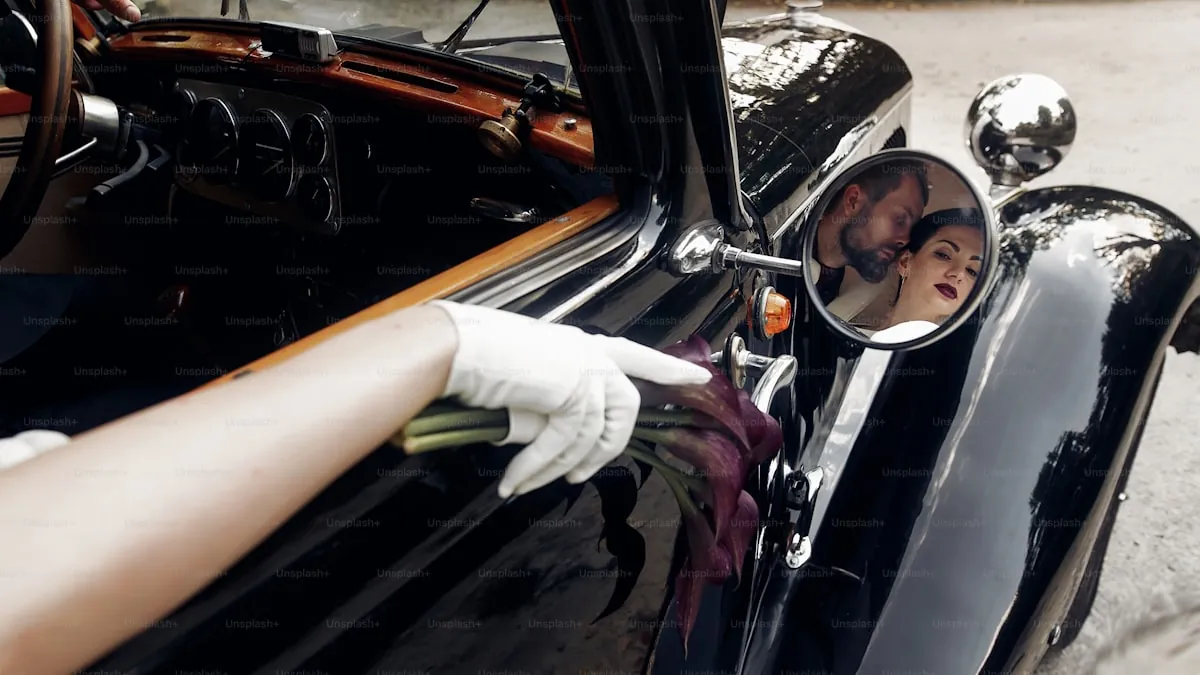

Ceramic coating and gloss depth: what it actually means
When someone picks up a freshly ceramic-coated vehicle and says the paint looks like it has depth to it, they are describing something real, not a sales pitch. The coating changes how light interacts with the surface at a microscopic level, and that change is visible to the naked eye. Understanding what causes it, and what it cannot do on its own, helps you make a more informed decision about how to prepare your car before any coating goes on.
Gloss is not simply shine. A surface can be shiny and still look flat. What people describe as depth is the perception of layered reflections—the kind you see on a piano finish or a freshly polished dark-colored car. Getting there consistently requires understanding both the paint underneath and what the coating contributes on top.
This distinction matters most before service. A vehicle that arrives with surface defects—swirl marks, fine scratches, haze from tunnel washes—will have those imperfections locked underneath the coating once it cures. The coating cannot correct them. It can amplify them. Getting the sequence right is what separates a result that looks exceptional from one that simply looks clean.
What gloss depth actually is
Light hitting a painted surface reflects in two ways simultaneously. Some reflects directly off the top of the clear coat, producing what we call surface gloss. Some penetrates the clear coat, reflects off the base coat or metallic flake below, and returns to the eye with a slight delay or parallax. That second reflection is what creates the perception of depth—the sense that the surface extends inward rather than sitting flat.
On a surface with micro-scratches and swirl marks, those imperfections scatter light in dozens of directions at once. The result is a hazy or milky appearance that reduces both surface gloss and perceived depth. The reflections conflict with each other rather than stacking cleanly.
When those defects are removed through paint correction, the clear coat becomes optically uniform. Light reflecting off it aligns. The surface and sub-surface reflections layer predictably, and the eye reads that layering as depth. That is the foundation the ceramic coating then builds on.
What the ceramic layer contributes
A properly applied Gyeon coating adds a cross-linked silica layer on top of the clear coat that is harder, smoother, and more optically consistent than the paint surface alone. The refractive index of that layer differs slightly from the clear coat beneath it, which adds another boundary at which light bends and reflects. On corrected paint, this additional boundary reinforces the depth effect. On uncorrected paint, it reinforces whatever defects are already present.
The coating also fills microscopic pores and irregularities in the clear coat surface, bringing it closer to optical flatness. This increases what is measured as distinctness of image—the sharpness of a reflection rather than just its brightness. DOI is what separates a reflection that looks like a crisp photograph from one that looks like a smear. High DOI is a large part of what people mean when they call paint liquid-looking.
Flatness matters here. Our climate-controlled installation bay exists partly because dust, humidity, and temperature swings during application affect how the coating levels across the panel. A film that cures unevenly introduces micro-variation in thickness, which introduces micro-variation in that boundary layer. Controlling the environment during application protects the optical result.
Paint correction is not optional for this result
If the goal is strictly protection—blocking UV, simplifying washes, resisting contaminants—then surface defects matter less. The coating will still perform its protective function over imperfect paint. But if the goal includes appearance, then paint correction before coating is not an optional upgrade. It is the step that determines whether the coating enhances the paint or simply preserves its current state.
The type of correction required depends on the vehicle. A new car with factory paint in good condition may need only a light single-stage polish to remove any swirls introduced during dealer prep. A used vehicle with years of automatic car wash damage may require a full two-stage cut and polish. In either case, the correction work is assessed under proper lighting with a paint thickness gauge before any abrasive touches the surface. Clear coat thickness defines how much work is possible without risk.
Dark colors—black, dark navy, deep burgundy—show swirl marks and gloss irregularity most obviously. They also show the most dramatic improvement after correction and coating because the contrast between defected and corrected paint on those colors is high. White and silver cars carry defects that are harder to see in flat light, but they are still present and will still limit the depth result if not addressed before the coating goes on.
How to evaluate gloss depth before and after
The most reliable way to evaluate paint depth is under a focused light source at a sharp angle—a single-point shop light or a direct sun angle in the morning or late afternoon. Soft, diffuse light flattens everything and makes mediocre paint look better than it is. Sharp directional light reveals every scratch, haze mark, and high spot.
Before service, it is worth spending five minutes walking around your vehicle under those conditions. Look at horizontal panels—the hood, roof, and trunk lid—at a low angle. If you see cobweb-like patterns or a general milkiness to the reflection, that is swirl damage. If the reflection of a point light source looks like a smear rather than a crisp dot, that is haze in the clear coat surface.
After paint correction and ceramic coating application, the same test should show a noticeably sharper, deeper reflection. The swirl patterns should be gone or substantially reduced. The light source should reflect as a defined point rather than a diffuse glow. That change is not subjective—it is a measurable optical improvement, and it is what a ceramic coating service on properly prepared paint consistently produces.
Maintenance and long-term appearance
The gloss depth a coating produces at application is its peak. From that point, maintenance determines how long it stays close to that peak. Wash technique is the biggest variable. Every contact wash that uses a dirty mitt, coarse towel, or high-velocity automated brush reintroduces the micro-scratches that correction removed. Those scratches accumulate in the coating layer over time, eventually dulling the surface.
A two-bucket hand wash with a clean, lubricated microfiber mitt removes contamination without abrading the surface. Touchless washes are a reasonable compromise for routine maintenance between hand washes. Tunnel washes with spinning fabric or foam brushes should be avoided entirely on coated vehicles—the abrasion they introduce to the coating surface is the same mechanism as the original swirl damage to the clear coat, just in the coating layer instead.
Annual or biannual inspection services let us evaluate coating integrity under proper lighting and correct minor surface haze before it accumulates. At that interval, most of the original depth can be maintained for the full rated lifespan of the coating without a full reapplication.
What to expect from a realistic result
A ceramic coating will not make mediocre paint look like a show car. It will make well-prepared paint look better and stay looking better longer than it would with wax or sealant alone. That distinction is worth understanding before you commit to the service.
If you bring in a vehicle with significant swirl damage and skip correction, the coating will protect the paint in that condition. It will not improve appearance. If you correct the paint first, the coating locks in that improvement and extends how long it holds. The investment in both services together produces a result that neither produces independently.
For questions about what your specific vehicle needs before coating, or to schedule an assessment, reach out to us at (936) 292-6056. The evaluation looks at paint thickness, existing defects, and your usage pattern to determine the right correction level before any coating work begins.
Gloss depth is an outcome of doing the preparation correctly and applying the coating under controlled conditions. When both happen, the result is visible from across a parking lot—and that is not an accident.