Ceramic coating the lower body panels: the case for rockers and doors
Most conversations about ceramic coating focus on the panels you see from eye level: the hood, the roof, the upper doors, the surfaces that show gloss and depth in a parking lot. Those panels matter, and they are where a coating’s looks pay off most visibly. But the panels that take the real beating on a daily driver are lower down, and they get talked about far less. The rocker panels, the lower halves of the doors, the area behind the front and rear wheels, and the lower portions of the bumpers absorb the constant blast of road film, tar, gravel, and brake dust that the rest of the car never sees. On a coated vehicle, these are the panels where the coating earns its keep the hardest, and they are also the panels owners most often overlook.
The case for paying attention to the lower body is simple. These surfaces accumulate the most aggressive contamination, they are the hardest to keep clean, and they are where neglected paint degrades first. A coating does not stop road debris from hitting these panels, but it changes how that grime behaves once it lands: it sits on top of a slick barrier instead of bonding directly into the clear coat, which means it releases more easily during a wash and has less opportunity to etch or stain while it sits. For a vehicle that runs the highways and gravel-edged roads around North Houston, that difference adds up over a season.
What the lower panels actually take
The lower body lives in a different environment than the rest of the car. Every mile of highway throws a fine mist of water, dissolved road minerals, oil, and rubber up off the pavement, and the panels closest to the road catch the worst of it. That film bakes on in the Texas heat and builds into the dull, gritty haze you see on the rockers of any neglected daily driver. Behind the wheels it is worse, because that is where brake dust and iron fallout concentrate. Those iron particles embed into the clear coat, oxidize, and bond aggressively in the heat, which is why the lower quarter panels and the area behind the front wheels feel rough to the touch long before the upper panels do.
Then there is the physical impact. Gravel, sand, and road debris kicked up by your own tires and the traffic around you pepper the rockers and lower doors constantly. This is mostly low-speed, low-energy impact compared to what the front of the car takes at highway speed, but it is relentless, and over time it chips and abrades the lower panels in a way the upper body never experiences. Tar is the other lower-body specialty. Fresh asphalt, crack-seal, and hot summer roads throw tar that sticks to the lowest panels and is genuinely difficult to remove once it sets, often requiring a dedicated tar solvent.
The result is that the lower body is simultaneously the dirtiest, the most contaminated, and the most physically abused part of the paint, while getting the least attention. A coating does not change the environment, but it gives these panels a fighting chance to come clean and stay presentable instead of slowly turning hazy and rough.
What a coating does for the lowest, dirtiest panels
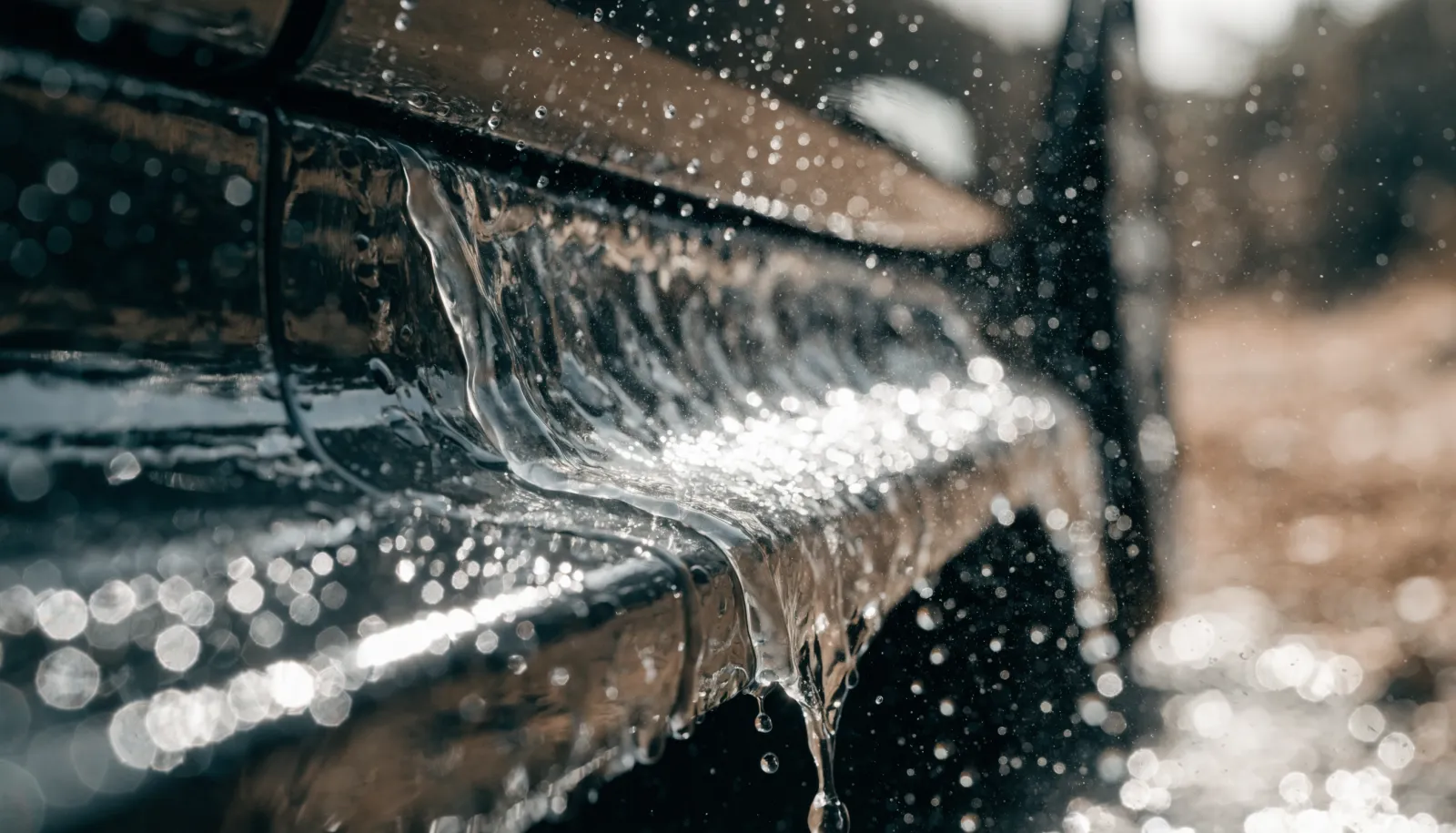
The single most useful thing a ceramic coating does for the lower body is change the release behavior of grime. Road film, brake dust, and light tar that would otherwise bond into bare clear coat instead sit on top of the slick coated surface. During a wash, that contamination lets go with far less effort, which matters most exactly where the contamination is heaviest. A coated rocker panel rinses cleaner than a bare one, and the difference is most obvious on the panels that are hardest to scrub by hand. The coating also sheds the constant road spray more readily, so water and dissolved minerals sheet off instead of sitting and drying into spots and film.
The barrier also buys time against staining and light etching. Tar, oil, and the acidic components of road film are all harder on bare clear coat than on a coating, and when they land on a coated surface they have less opportunity to bond and stain before the next wash takes them off. None of this makes the lower body immune. A coating is a chemical and abrasion barrier, not body armor, and gravel will still chip a coated rocker the same way it chips a bare one. What the coating does is keep the panel cleaner, slow the contamination that dulls it, and make the routine maintenance dramatically less of a fight. Understanding how a ceramic coating behaves across the whole vehicle helps put the lower-body case in context, because the lower panels are simply where those properties matter most.
It is worth being clear about the line between a coating and a film here. A coating protects against the chemical and contamination side of the lower-body problem. It does not absorb stone impact. For owners who are genuinely concerned about chips on the lower rockers and doors, the real impact protection comes from paint protection film applied to those panels, often as a rocker package, with a coating over the top to handle cleaning and contamination. The two solve different halves of the lower-body problem, and on a vehicle that sees a lot of gravel, both have a place.
Prep is even more critical down low
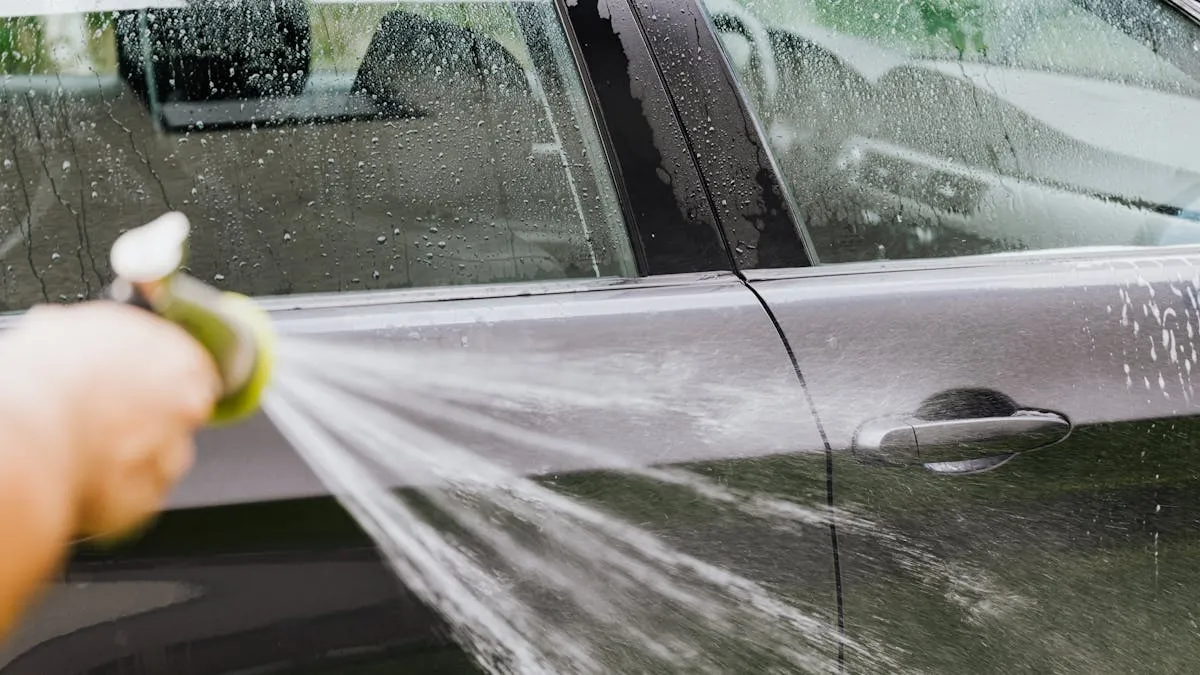
If there is one place on a vehicle where surface prep before coating is non-negotiable, it is the lower body. These are the panels carrying the most embedded contamination, and a coating is only as good as the surface it bonds to. Coating over bonded iron, road film, or tar locks that contamination under the coating, where it stays put and undermines the bond. A proper lower-body prep means a thorough wash, a dedicated tar remover where tar has set, an iron remover to dissolve the embedded brake dust and rail dust, and a clay treatment to pull anything still stuck in the clear coat. Only once the panel is genuinely clean and smooth does a coating belong on it.
This is also why the lower body is a poor candidate for shortcuts. The temptation to spray a quick coating or topper over grimy rockers to make them look better is exactly backward. A coating applied over contaminated lower panels traps the worst contamination on the car under a layer that makes it harder to remove later. The panels that need the most careful decontamination are the ones owners are most tempted to rush, and that combination is how lower-body coatings go wrong.
Because the lower body collects contamination fastest after the coating cures, it also benefits from more frequent maintenance attention than the rest of the car. Washing the lower panels more often, and refreshing protection on them sooner than on the upper body, keeps them releasing grime the way they should. The rockers and the area behind the wheels are the first to lose their slickness, simply because they take the most abuse, and treating them as the high-maintenance zone they are keeps the whole car looking consistent.
Whether it is worth coating the lower body specifically
For most daily drivers in the North Houston area, coating the lower body is part of coating the car, not a separate decision, and it is one of the better-value parts of a full coating. A full-vehicle coating already includes these panels, and given that they are the dirtiest and most contaminated surfaces on the car, they are arguably where the coating delivers the most practical benefit per dollar. The looks payoff is loudest on the upper panels, but the maintenance payoff is loudest down low, where a coated surface turns the worst panels from a constant scrubbing chore into something that rinses mostly clean.
The owners who get the most out of lower-body coating are the ones who put on highway miles, drive gravel or construction-edged roads, or simply cannot stand the dull haze that builds on neglected rockers. If your lower doors and quarters already feel rough to the touch and look hazy compared to the rest of the car, that is the lower body telling you it has been taking the abuse alone, and it is a good candidate for decontamination and protection. The fix is not complicated, but it does need to be done in the right order, with the prep these panels specifically demand.
If you want a straight assessment of what your vehicle’s lower body needs, whether that is a full coating, a rocker film package under a coating, or just a proper decontamination to undo the grime that has built up, that starts with someone looking at the actual panels. At EuroLuxe, Caleb Vasquez evaluates the whole car, including the panels most people forget about, before recommending anything. You can reach the shop at (936) 292-6056 or stop by 11701 Holderrieth Rd in Tomball, and the recommendation will be based on what your lower body is actually carrying, not on a one-size package.