How ceramic coating slows UV fading on car paint
Houston sits at a latitude where the UV index routinely climbs above 10 during summer months, and the sun is strong enough to cause measurable paint damage even on overcast days. Most vehicle owners understand in a general way that sunlight fades paint, but the mechanism matters if you want to make an informed decision about protection. UV radiation does not simply bleach color from the surface — it attacks the molecular structure of the clear coat itself, breaking polymer chains and driving oxidation that eventually turns vibrant paint chalky, dull, and porous.
Ceramic coating is often discussed in terms of water behavior and scratch resistance, and those properties are real. But its UV-blocking capability is arguably the most consequential benefit for any vehicle parked or driven in North Houston. Understanding what the coating actually does at a chemical level — and what it does not do — puts you in a better position to evaluate whether the investment is appropriate for your situation.
What UV radiation does to automotive clear coat
Modern automotive paint is a layered system. The base coat carries pigment and metallic or pearlescent flake. The clear coat sits on top and provides gloss, depth, and chemical resistance. That clear coat is a crosslinked polymer network, typically urethane-based, and it is semi-transparent to UV energy. The radiation that passes through it initiates a chain of photochemical reactions called photo-oxidation.
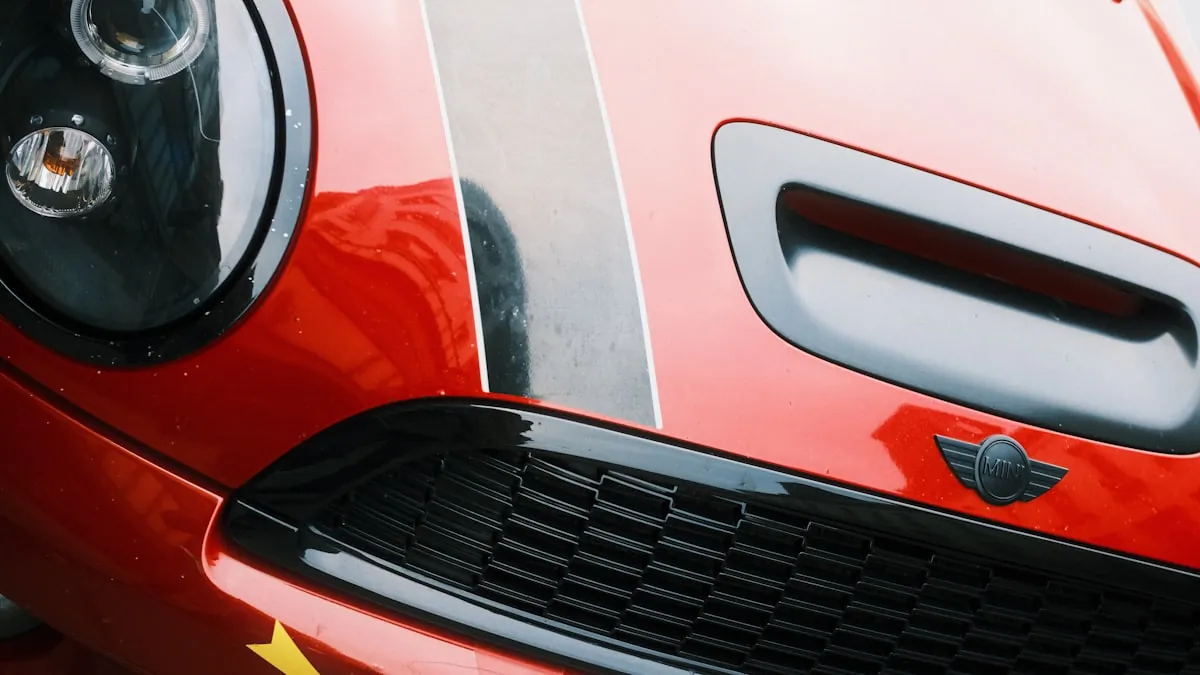
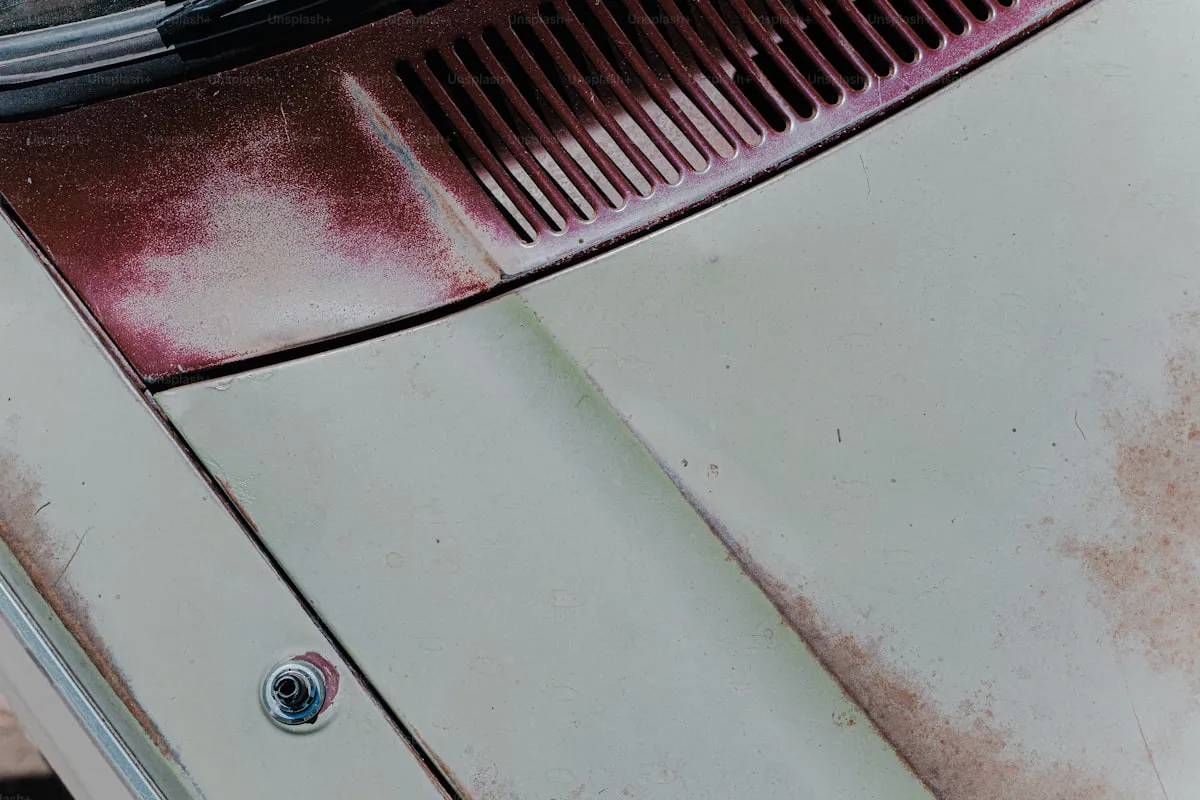
Over time, photo-oxidation degrades the polymer chains, reducing their length and disrupting the crosslinked structure. The clear coat becomes microscopically porous and loses its ability to reflect light evenly. What you see from a few feet away is oxidation — a hazy, flat surface that no longer has depth. On solid colors like red and black, oxidation is immediately obvious. On white and silver vehicles it develops more gradually, but it is still occurring.
Heat accelerates the process. High surface temperatures increase the kinetic energy available for chemical reactions, so a hood sitting in direct Texas sun at 160 degrees Fahrenheit is oxidizing faster than the same panel on a cool day. That combination of UV intensity and ambient heat is why paint deterioration is noticeably faster in this part of the country than in cooler climates.
How a ceramic coating intercepts UV energy
A properly applied ceramic coating — the kind using professional-grade chemistry like Gyeon — bonds to the clear coat at a molecular level and forms a silicon dioxide matrix across the paint surface. That matrix has a higher UV absorption capability than the clear coat beneath it. In practical terms, it acts as a sacrificial layer that intercepts a portion of the UV radiation before it reaches the polymer structure of the clear coat.
The coating does not block UV entirely — no surface coating does. What it does is reduce the UV load that the clear coat is exposed to on every drive and every hour of outdoor parking. Over months and years, that reduction accumulates into a meaningful difference in paint condition. Vehicles coated within the first year of ownership and maintained properly consistently show less oxidation at the three- and five-year marks than uncoated vehicles in the same usage conditions.
The hydrophobic surface the coating creates also plays an indirect role. Water that sheets off quickly carries dissolved contaminants with it rather than leaving them in contact with the surface during the drying process. Those contaminants — acid rain residue, industrial fallout, organic material — act as catalysts for oxidation when they sit on warm paint in direct sun. Faster water evacuation means less dwell time for those compounds.
The role of paint condition before coating
If oxidation has already begun before a ceramic coating is applied, the coating locks in whatever condition the paint is in at the time of application. It does not reverse existing damage. A panel that is already hazy or chalky will remain hazy and chalky under the coating, and no amount of hydrophobic behavior will restore optical clarity to compromised clear coat.
This is why paint correction is a standard step before any professional ceramic coating application. The correction process uses machine polishing to remove the oxidized layer, restoring clarity and gloss to the clear coat that remains. Once that surface is clean, decontaminated, and optically flat, the ceramic coating bonds to a sound substrate and can perform as intended. Skipping correction and coating over oxidized or scratched paint is one of the more common reasons owners end up dissatisfied with the result.
At EuroLuxe, every vehicle goes through a thorough assessment before any work begins. Paint thickness is measured, defects are evaluated under controlled lighting in the installation bay, and the appropriate correction stage is recommended based on what is actually present — not a standardized package assumption.
How long the UV protection holds
Professional-grade ceramic coatings are not a one-time permanent solution. The coating itself degrades through UV exposure, washing, and environmental contact over time — which is by design. It consumes itself protecting the paint beneath it, and eventually it needs to be refreshed or reapplied.
The useful lifespan depends on several variables: the product tier, maintenance habits, whether the vehicle is garaged, and how much direct sun exposure it receives. A daily driver in Tomball that parks outdoors is operating in harsher conditions than a weekend vehicle kept in a climate-controlled garage. Realistic expectations for professional coatings, maintained with pH-neutral washes and periodic booster applications, range from two to five years depending on those conditions.
The two-year inspection is a useful benchmark. At that point, a shop can assess hydrophobic performance, inspect for areas where the coating has thinned or failed, and either apply a booster coat or plan for a full reapplication. Letting a coating deteriorate well past its effective life without intervention leaves the clear coat exposed and accelerates the oxidation process the coating was installed to prevent.
What ceramic coating cannot do
No coating eliminates UV damage. If a vehicle sits outdoors in the Houston sun every day for a decade without any maintenance or reapplication, the paint will show the effects of that exposure regardless of what was applied at the start. Ceramic coating reduces the rate of UV-driven degradation — it does not stop it permanently with a single application.
The coating also cannot protect paint that is not in good condition before application. It cannot fill chips, repair clear coat failure, or add UV resistance to areas that have already oxidized through. And it does not eliminate the need for regular washing. Contamination that builds on the coating surface and is not removed will eventually compromise the coating’s performance and, if left long enough, work its way through it.
Owners who treat a ceramic coating as a maintenance-free solution tend to be disappointed. Owners who understand it as a durable protective layer that still requires appropriate care get results that hold up visibly over years of Houston driving.
If you are evaluating ceramic coating for your vehicle and want to discuss paint condition, coverage options, or what the process actually involves, call EuroLuxe at (346) 920-4372 to schedule an assessment at our Tomball installation bay.
UV oxidation is gradual enough that many owners do not notice it until the damage is significant. The most effective point to intervene is before visible deterioration begins — which means the time to coat is when the paint is still in good condition, not after it has already started to go flat.