
Why North Houston Road Conditions Demand PPF
Houston Roads Don’t Care About Your Paint
Every North Houston driver knows the feeling. You’re cruising down 249, a dump truck changes lanes ahead of you, and you hear the unmistakable tick-tick-tick of gravel hitting your hood. You look at your bumper at the next red light and there’s a fresh chip in the paint, white primer showing through the color coat.
That’s not bad luck. That’s a normal Tuesday in North Houston.
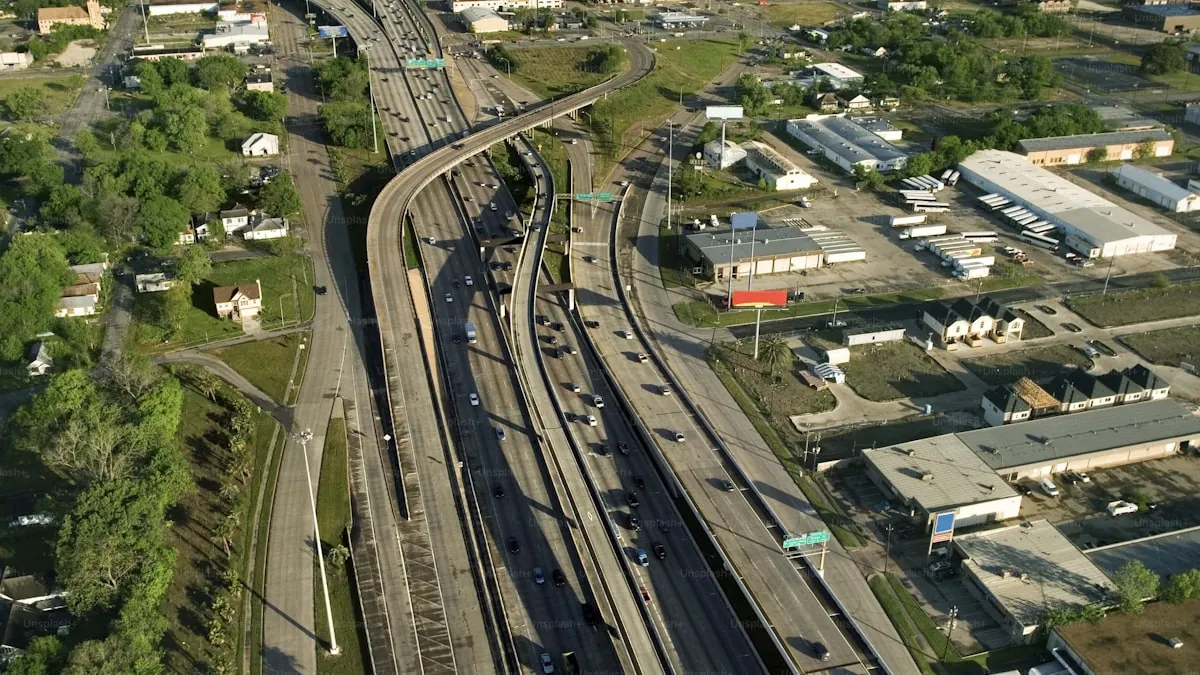
The road conditions in this part of the metro are among the worst for vehicle paint in the state. Between permanent construction zones, heavy commercial traffic, deteriorating road surfaces, and the sheer volume of debris on the highways, your vehicle’s front end is under constant bombardment.
Paint protection film (PPF) exists specifically for this problem. Here’s a highway-by-highway breakdown of what you’re dealing with.
I-45: The North Freeway
Perpetual Construction
I-45 between downtown Houston and Conroe has been under some form of construction for over a decade, and the current expansion project promises years more. Construction zones mean:
- Temporary pavement with loose aggregate that hasn’t bonded
- Steel plates covering utility access points (these shift and throw debris)
- Concrete barrier walls that narrow lanes and compress traffic
- Construction vehicles entering and exiting the highway with dirty tires
The stretch between Beltway 8 and FM 1960 is particularly bad. Lane shifts, concrete grinding, and temporary surfaces create a gauntlet of debris that your paint has to survive twice daily if you commute.
Truck Traffic Volume
I-45 North carries heavy truck traffic between Houston’s industrial areas and distribution centers in Spring, Conroe, and beyond. 18-wheelers throw more debris than passenger vehicles — their higher ride height and dual rear tires create a wider spray pattern of road material.
Following an 18-wheeler on I-45 at 60+ mph is essentially sandblasting your front end. Every mile puts dozens of micro-impacts on your hood, bumper, and windshield.
Highway 249: The Tomball Parkway
Toll Road Debris
The 249 toll road extension north of Tomball is still relatively new, but the connecting sections and access roads generate significant debris. Transition zones between toll and non-toll sections have rough pavement joints that break loose over time.
The toll section itself carries fast-moving traffic (70+ mph speeds are common), which means any debris on the road surface hits your car harder. Higher speed equals more damage per impact.
Shoulder Gravel Migration
249 has gravel shoulders in several stretches, especially north of Tomball. Wind, rain, and vehicles pulling onto shoulders push gravel into the travel lanes. This is worst during and after rainstorms when water runoff carries shoulder material across the pavement.
Commercial Development Zones
The rapid commercial development along 249 between Tomball and Magnolia means construction vehicle traffic — concrete trucks, dump trucks, flatbeds with loose materials. These vehicles shed debris constantly, and the development won’t slow down anytime soon.
Grand Parkway (SH 99)
Commercial Truck Corridor
The Grand Parkway has become a major commercial route, carrying trucks between I-45, US-290, and I-10 without going through central Houston. This means heavy, loaded trucks at highway speed — the worst possible scenario for road debris.
The 99 section between 249 and I-45 (through Spring and The Woodlands) sees particularly heavy commercial traffic. Concrete, gravel, lumber, and construction materials travel this stretch daily, and some of it inevitably ends up on the road surface.
Wide Open Speed
The Grand Parkway’s design encourages high-speed driving. Four lanes, limited access, long sight lines — traffic routinely moves at 75-80 mph despite the 65 mph limit. At those speeds, a pebble becomes a projectile. The kinetic energy of a small rock at 75 mph is enough to crack paint down to bare metal in a single impact.
Wind Exposure
The Grand Parkway’s elevated sections and open terrain create wind exposure that pushes debris laterally across lanes. You don’t even need to be behind a truck — wind can carry gravel from the shoulder into your lane at any time.
FM Roads: The Daily Grind
Loose Gravel Surfaces
FM roads throughout North Houston — FM 2920, FM 1488, FM 2978, FM 1774 — have varying surface quality. Some stretches are well-maintained asphalt. Others have gravel patches, broken edges, and deteriorating surfaces that shed material onto the road.
Driving FM roads at even moderate speeds (45-55 mph) creates enough impact force to chip paint. Oncoming traffic on two-lane FM roads throws gravel across the centerline directly at your front end.
Mowing Season
County road crews mow FM road shoulders throughout the growing season. Mowers throw rocks, dirt, and debris into the travel lane. If you’ve ever driven past an active mowing operation on an FM road, you’ve heard the impacts. That’s paint damage happening in real time.
Ranch and Farm Traffic
Tractors, livestock trailers, and farm equipment share FM roads with passenger vehicles. These slow-moving vehicles often carry or shed mud, hay, gravel, and other materials. Passing them kicks up whatever they’ve left behind.
What PPF Actually Does
Paint protection film is a thermoplastic urethane layer applied directly over your vehicle’s paint. Here’s what it handles:
- Rock chips — PPF absorbs the impact energy that would otherwise crack your clear coat and color coat
- Road debris scratches — the film’s self-healing properties mean light scratches disappear with heat exposure (sunlight or warm water)
- Gravel impacts — even substantial gravel hits are absorbed by the film rather than transmitted to the paint
- Chemical exposure — road tar, bug splatter, and de-icing chemicals sit on the film, not your paint
- Sand abrasion — the fine abrasive particles on Houston roads create micro-scratching that PPF prevents entirely
Coverage Options for Houston Commuters
For daily North Houston driving, we recommend at minimum:
- Full hood — the largest impact zone
- Full fenders — catches side-angle debris
- Full front bumper — the first point of contact
- Mirror caps — small but exposed
- A-pillars and roofline — catches overhead debris
For drivers who commute on I-45 or the Grand Parkway daily, a full front package or full body wrap provides the most complete protection. The investment pays for itself by preventing the accumulation of damage that destroys resale value.
The Math on PPF vs. Paint Repair
A typical rock chip repair costs $50-150 per chip. A full hood repaint runs $500-1,500 depending on the vehicle. A bumper repaint is $400-1,000.
A full front PPF installation typically costs less than a single hood repaint and protects your vehicle for 7-10 years. For a vehicle that commutes North Houston highways daily, the film will prevent hundreds if not thousands of dollars in paint damage over its lifetime.
Combine PPF with a ceramic coating on the rest of the vehicle, and you’ve got comprehensive protection against everything North Houston roads throw at you.
Get a quote for PPF installation at EuroLuxe Detailing in Tomball — right in the middle of the highway chaos.