Protecting your dashboard and interior from sun damage with film
The conversation about window tint usually starts with heat and how the car feels to sit in. That is fair, because the comfort difference is immediate and easy to notice. But there is a slower, more expensive problem that tint addresses just as directly, and it gets far less attention: what the sun does to the inside of your car over years of North Houston ownership. Cracked dashboards, faded seats, brittle trim, and a steering wheel that has gone pale and chalky are not random aging. They are sun damage, and they are largely preventable.
The interior of a parked car in a Tomball summer is one of the harshest environments a vehicle’s materials ever face. Surface temperatures on a dark dashboard sitting in direct sun can climb well past anything the cabin air thermometer would suggest, and the ultraviolet load coming through untreated glass is relentless across every clear afternoon. Plastics, vinyl, leather, and adhesives were not designed to thrive under that. Window film changes the equation by intercepting the two forces doing the damage before they reach your interior, and understanding how it works makes it clear why protecting the inside of a car is one of tint’s most underrated jobs.
What the sun actually does to a car’s interior
Two distinct forces degrade an interior, and they work differently. The first is ultraviolet radiation. UV breaks down the chemical bonds in dyes, plastics, and finishes through the same photodegradation process that fades a shirt left in a window. On a dashboard and door panels, UV bleaches color out of the material and makes the surface brittle, which is the first step toward the cracks that eventually spider across an older dash. On leather and vinyl seats, UV fades the color unevenly and dries the material out, leading to stiffness and cracking. This damage is cumulative and slow, and by the time it is obvious, it is permanent. You cannot put the color or the flexibility back.
The second force is heat, specifically the intense radiant and trapped heat that builds inside a closed car. Heat accelerates the chemical breakdown that UV starts, and it adds problems of its own. It dries the oils out of leather faster, it can cause vinyl and plastic to warp or develop a sticky surface as plasticizers migrate, and it bakes adhesives until trim pieces loosen and rattle. The combination of high UV and high heat is what makes a car interior age so much faster in Texas than the same vehicle would in a milder climate. Each force is bad alone, and together they compound, which is exactly why our region is so hard on interiors.
There is a third, quieter cost worth naming: resale and ownership experience. A cracked dash and faded, stiff seats drag down what a vehicle is worth and make it less pleasant to own long before you sell it. A protected interior that still looks and feels close to new after years of ownership holds value and stays comfortable. The damage is invisible until it is not, which is precisely why so many owners only think about it once it has already happened.
How window film blocks the damage
Window film addresses both forces, and it addresses one of them almost completely. Quality automotive film, including the ceramic film we install, blocks 99 percent or more of ultraviolet radiation. That figure is consistent across nearly all good films and it is the single most important number for interior protection. By stopping essentially all of the UV at the glass, the film removes the primary driver of fading and embrittlement before it ever reaches your dashboard, your seats, or your door panels. For interior preservation, this near-total UV rejection is the headline, and it is something even a moderately priced quality film delivers.
The heat side is where film quality starts to separate, and where ceramic earns its place. By rejecting a large share of infrared radiation, a good ceramic film keeps interior surface temperatures meaningfully lower than they would be behind untreated glass. A dashboard that peaks at a lower temperature ages slower, and leather that is not baked as hard retains its oils and flexibility longer. The film does not make a parked car cool in a Texas July, but it shaves the peak off the worst heat soak, and over thousands of sun cycles that reduction adds up to materials that stay supple and intact far longer. If you want to understand how the heat-rejection side works and how to compare films on it, our window tinting page covers the practical details.
It is worth being precise about coverage, because this is where expectations need to match reality. Film protects the interior surfaces that sit behind tinted glass. In most installs that means the dashboard top, the front seats, the door panels, and the rear cabin are well covered through the side and rear windows. The large area that often is not fully protected is whatever sits directly under the windshield, because Texas law and visibility concerns limit how much the windshield itself can be tinted. That is a real gap to be aware of for the leading edge of the dashboard, and it is part of an honest conversation about what tint can and cannot shield.
The windshield gap and how to manage it
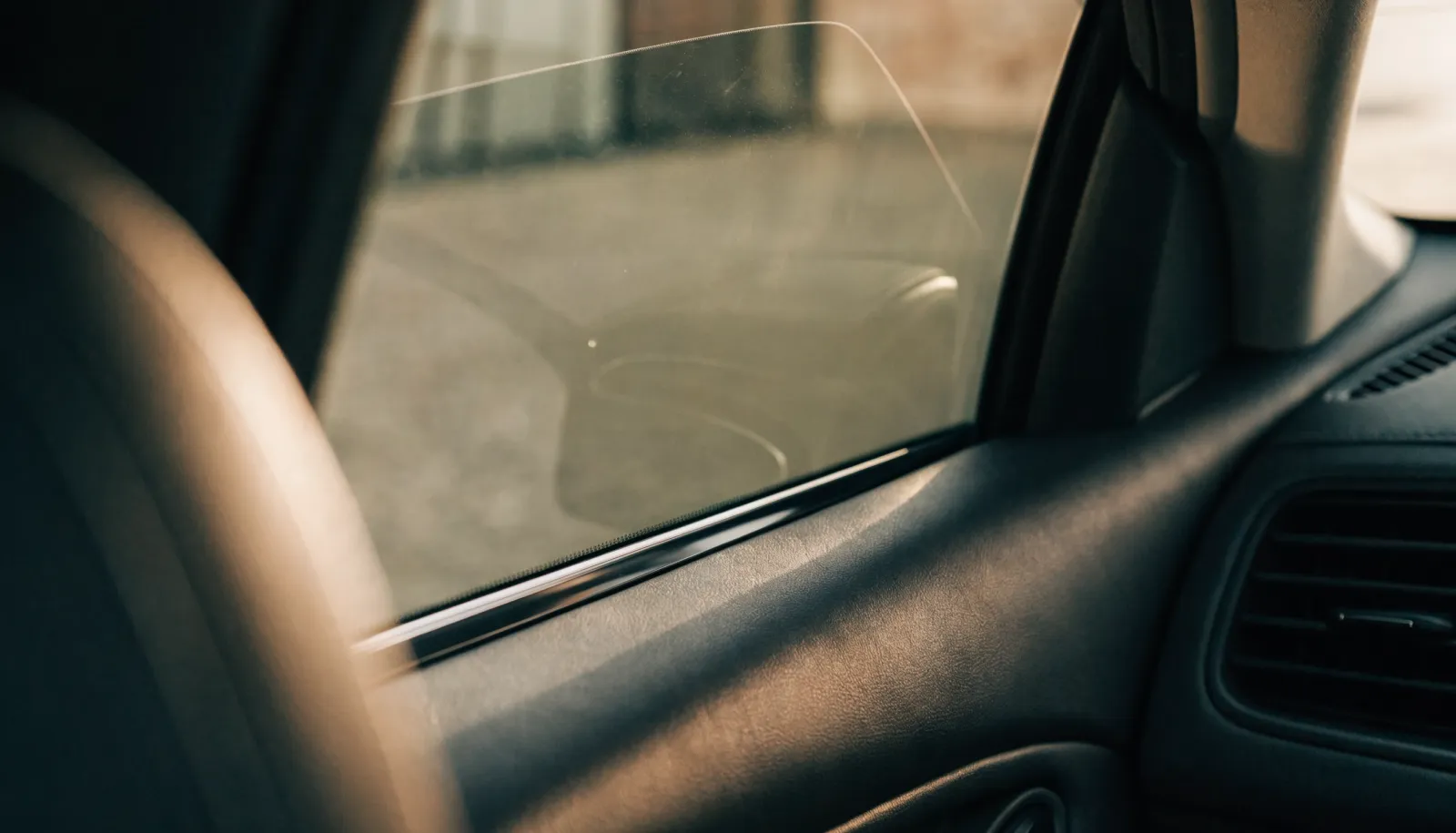
The windshield is the largest piece of glass on the car and it faces the sun most directly while parked nose-out, which makes it the biggest single source of interior UV and heat. It is also the most regulated. Texas allows tint on the windshield only above the manufacturer’s AS-1 line or the top several inches, which protects against glare but leaves most of the windshield clear for visibility. That means the portion of the dashboard directly under the windshield gets far less protection from film than the rest of the interior does, and it is often the first area to show cracking and fading on an older car.
This is not a reason to skip side and rear film, because those windows still cover the majority of the interior and the seats. It is a reason to manage the windshield gap separately. The simplest and most effective tool is an old one: a windshield sunshade when the car is parked in the sun. It is unglamorous, but it directly shields the most exposed part of the dashboard during the hours the car sits still, which is when the worst heat soak and UV exposure happen. Pairing quality side and rear film with disciplined sunshade use when parked covers the weakness that film alone leaves at the front.
Parking choices matter for the same reason. A garage or even consistent shade dramatically reduces both the UV and the heat load on the whole interior, windshield included. Film extends your margin everywhere it is applied, but the windshield will always be the soft spot, and the cheapest way to defend it is to keep the car out of direct sun when you can and to use a shade when you cannot. An honest installer will tell you this rather than implying that tint alone fully protects every interior surface, because it does not, and knowing where the gap is lets you cover it deliberately.
Care that keeps the protection working
Window film protects the interior for years, but the protection works best alongside basic interior care, and the two reinforce each other. Leather and vinyl benefit from periodic conditioning that replaces the oils heat draws out, and film makes that conditioning last longer by reducing how fast the heat dries the material in the first place. A conditioned seat behind UV-blocking film ages far more slowly than an untreated seat behind clear glass. Neither measure alone is as effective as the two together, which is the general theme of protecting anything in a Texas climate. The same logic applies outside the cabin, where a ceramic coating defends the paint against the same ultraviolet load that fades an interior.
The film itself needs only gentle care to keep doing its job. Once the tint has fully cured, clean the inside of the glass with a soft microfiber cloth and an ammonia-free glass cleaner. Ammonia attacks both the film’s dyes and its adhesive over time and can also dry out nearby interior surfaces, so it is worth keeping off the glass and the dashboard alike. A clean, intact film keeps rejecting UV and infrared at full strength, while a scratched or degraded film loses some of its protective value. Treating the film well is a small habit that preserves a benefit you paid for and that your interior depends on every sunny day.
If your dashboard or seats are already showing early sun damage, film cannot reverse what has happened, but it can stop the progression and protect what is still good. Fading and cracking only get worse with continued exposure, so intercepting the UV and heat now preserves the condition the interior is in today rather than letting it slide further. For a car that is still in good shape inside, film applied early is the difference between an interior that still looks and feels close to new in five or ten years and one that has visibly baked.
To talk through what your specific vehicle’s interior needs, how much coverage your windows allow under Texas law, and where the windshield gap leaves you exposed, call EuroLuxe at (936) 292-6056 or visit the shop at 11701 Holderrieth Rd in Tomball. The conversation starts with how you park and drive, not with a package, because the right interior protection depends on your situation.
The inside of a car is easy to take for granted until the dash cracks or the seats go stiff and faded, and by then the damage cannot be undone. Texas sun is relentless on interior materials, and window film is one of the most direct ways to defend against it, blocking nearly all the UV that drives fading and a large share of the heat that bakes leather and warps trim. Pair it with a sunshade for the windshield gap, sensible parking, and a little interior care, and the inside of your vehicle can outlast the brutal seasons that age unprotected cars years before their time.