Window tint and ceramic coating: how they work together
Most vehicle owners approach protection one layer at a time. They book a ceramic coating for the exterior, then later think about tint, or the other way around. What they rarely consider is how these two services complement each other when planned together from the start. Window film and ceramic coating solve different problems, but their combined effect on a vehicle’s long-term condition is greater than either one alone.
This matters more in North Houston than most markets. The UV index here routinely pushes into the extreme range from April through October. Heat soaks into parked vehicles and slowly breaks down interior materials, adhesives, and dashboard plastics. Meanwhile, the exterior takes its own punishment from UV radiation, road grime, and the occasional acid-rain event that follows Houston thunderstorms. Running both services as a coordinated strategy — rather than an afterthought — changes what you can expect from each one.
What each service actually does
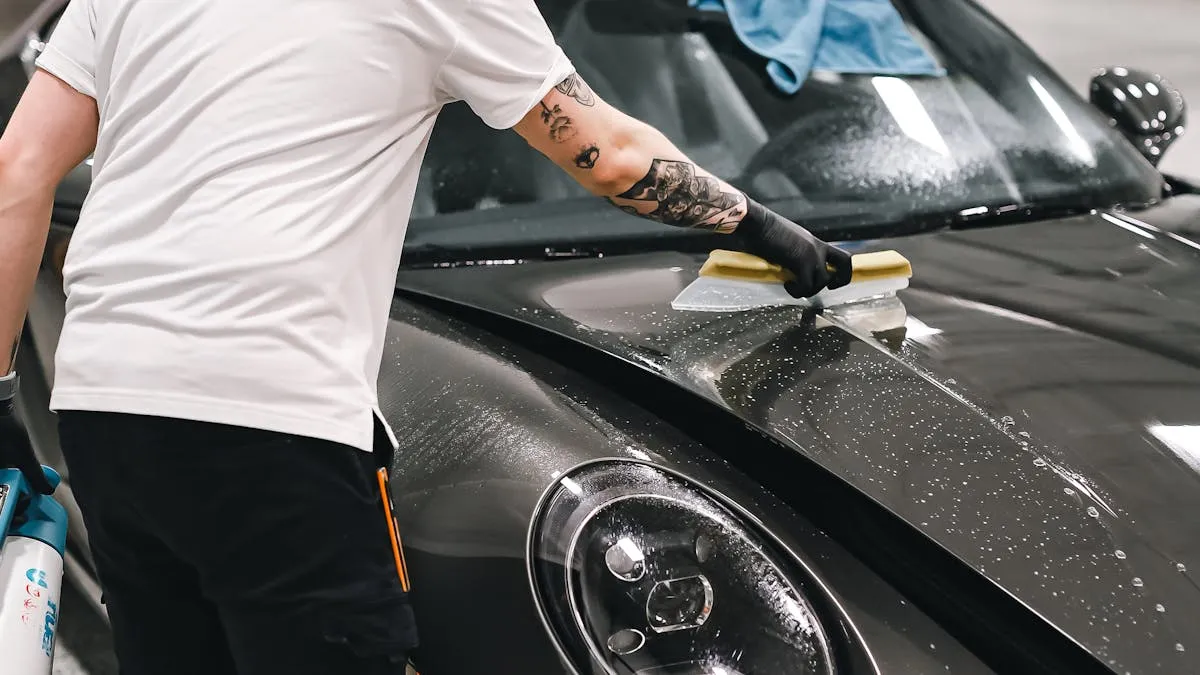
Ceramic coating works on exterior painted surfaces, glass, and sometimes trim and wheels. A properly applied professional-grade coating creates a chemically bonded layer that resists UV oxidation, contamination, water spotting, and light abrasion. What it does not do is block radiant heat from entering the cabin. A coated windshield still transmits solar energy into the interior at nearly the same rate as uncoated glass.
Window film works from the inside out. Its job is to intercept solar energy before it reaches the cabin. A quality ceramic window film blocks upward of 99 percent of UV radiation and can reject 50 percent or more of total solar energy depending on the film selected. What film does not do is protect the painted surfaces on the outside of the vehicle. These are fundamentally different jobs, and understanding that distinction is the starting point for planning both services correctly.
How they interact during installation
Sequencing matters. If you plan to have a ceramic coating applied to your vehicle, that work should happen before window tint is installed — not after. Ceramic coating application involves panel-by-panel work around the exterior, leveling, and curing in a controlled environment. That process does not affect the interior glass, but it is cleaner to have the exterior completed first so the vehicle is not being moved in and out of a bay multiple times with fresh film already applied.
The reverse situation creates a potential problem. If film is installed first and then the vehicle is brought in for a coating job, there is a chance of minor contamination near the window edges during the prep process. It is not a common failure point, but it is an unnecessary risk. At EuroLuxe, we recommend scheduling the coating service first, letting it cure fully, and then returning for tint. The windows remain untouched during coating prep, so there is no conflict.
UV protection above and below the glass line
One of the clearest examples of these services stacking is UV management. Solar radiation attacks the vehicle on two fronts simultaneously. On the exterior, UV causes clear coat oxidation, paint fading, and the breakdown of plastic trim. On the interior, it degrades leather, vinyl, carpet fibers, and the adhesives that hold dashboards together. A ceramic coating addresses the exterior threat. Window film addresses the interior threat. Neither covers the other’s territory.
For vehicles that spend significant time parked outdoors — which is most of North Houston — both surfaces are taking UV damage every day. A driver who coats the exterior but skips tint is protecting the paint while allowing the leather seats to dry out and crack. A driver who tints but skips the coating is keeping the interior cooler while the clear coat fades and loses hydrophobic properties. Running both services closes both gaps.
Temperature management and the coating connection
Ceramic coatings are sensitive to heat during their cure window, typically the first seven to fourteen days after application. During that period, the vehicle should be kept out of direct sun as much as possible, and the interior temperature matters indirectly because it affects how the vehicle is handled. This is a minor operational detail, but it reinforces the value of having tint in place early in a vehicle’s life. A car that parks in the sun with quality window film installed will have a measurably cooler interior, which is relevant to long-term comfort and to how the vehicle ages overall.
Beyond the cure window, window film also reduces the thermal stress on interior trim panels. Dashboard plastics and door cards that are constantly heating to 160 degrees Fahrenheit and then cooling overnight develop microfractures over years that eventually show as warping or discoloration. Keeping those temperatures 30 to 40 degrees lower through quality film extends the useful life of interior components regardless of whether the exterior has been coated.
Planning both services on a new vehicle
The best window to run both services is immediately after purchasing a vehicle, before it accumulates swirl marks, contamination, or UV exposure. A new car arriving from the dealer already has minor paint defects from transport and lot washing, but those are manageable with a quick paint correction step before the coating goes on. The point is that starting both services early means neither the paint nor the interior ever has a chance to degrade in the first place.
For vehicles that have some miles on them, the approach shifts slightly. The exterior may need a decontamination and paint correction pass before coating. The interior glass should be inspected for any existing film or dealer-applied coatings before tint is installed. Neither complication is a reason to skip either service, but they do affect the scope and timeline of the work.
Maintenance after both services are in place
Owners sometimes assume that having both services installed means they can be less careful about washing and upkeep. That is not quite right. Ceramic coating still requires proper wash technique — no automatic tunnel washes, no harsh chemicals, and periodic maintenance washes using products that do not strip the coating. Window film requires avoiding abrasive cleaners on the interior glass surface and using ammonia-free solutions that will not attack the film adhesive.
The good news is that these maintenance requirements are compatible. The same wash behavior that preserves a ceramic coating — hand washing with pH-neutral soap, drying with clean microfiber — is also safe for any film applied to the exterior glass. On the interior, keeping the windows clean with a simple ammonia-free spray does not interfere with anything on the exterior. There is no conflict in the upkeep routines, which makes the combined approach straightforward to maintain over the life of the vehicle.
If you are weighing both services and want to talk through the sequencing, scope, and what makes sense for your specific vehicle, you can reach EuroLuxe Detailing directly at (346) 920-4372.
Treating window film and ceramic coating as a planned pair rather than two separate line items produces a more complete result. The exterior stays cleaner and more resistant to oxidation. The interior stays cooler, UV-protected, and structurally sound for longer. Each service does its job, and together they cover the vehicle’s full surface area from two different directions.