How to read a window tint spec sheet: TSER, IR, and VLT
Walk into any tint shop in North Houston and you will hear numbers. Ninety-eight percent infrared rejection. Ninety-nine percent UV. A darkness percentage that sounds precise but means something different from the rejection figures sitting next to it. The problem is that these numbers get quoted loosely, sometimes by people who do not fully understand what they measure, and a buyer ends up comparing one film’s best-sounding figure against another film’s best-sounding figure without realizing the two are not the same measurement.
The single most useful thing you can do before spending money on tint is to understand what each percentage on a spec sheet actually describes. Three numbers matter most for heat and comfort: total solar energy rejection, infrared rejection, and visible light transmission. A fourth, UV rejection, matters for your skin and your interior but says almost nothing about how cool the cabin will feel. Once you can tell these apart, the marketing gets a lot easier to see through, and you can make a decision based on what the film will actually do in a Tomball summer rather than which brochure had the biggest font.
Total solar energy rejection is the number that matters most
Total solar energy rejection, usually written as TSER, is the percentage of the sun’s total energy that a film blocks across the full solar spectrum. That spectrum has three parts: ultraviolet, visible light, and infrared. Because TSER accounts for all three, it is the most honest single figure for how much heat a film keeps out of your car. A film with 60 percent TSER is rejecting a meaningfully larger share of total solar energy than a film with 45 percent TSER, and you will feel that difference on a long drive on I-45 with the sun overhead.
The catch is that TSER is the number least likely to be quoted prominently, precisely because it is the hardest to inflate. You cannot get TSER into the high 90s the way you can with a narrow infrared figure, because visible light alone carries a large portion of the sun’s heat energy, and any film you can still see through is letting a good deal of that visible light pass. A legal front-side film in Texas has to transmit at least 25 percent of visible light, which puts a ceiling on how high its TSER can climb. When a shop leads with TSER instead of a cherry-picked infrared number, that is usually a sign they understand the product and are not trying to manage your expectations with the flashiest figure available.
If you remember one thing from a spec sheet, remember to ask for TSER and to compare films on that number first. It is the closest thing the industry has to an apples-to-apples heat measurement.
Infrared rejection sounds impressive and is easy to misread
Infrared rejection is where most of the confusion lives. Infrared radiation is the part of sunlight you feel as heat on your skin, and a good ceramic film blocks a large share of it. The trouble is that “infrared rejection” can be measured across the entire infrared band or across a single narrow wavelength where the film happens to perform best. A film advertised at 98 percent IR rejection is often quoting performance at one specific wavelength, frequently around 950 nanometers, not the average across the whole infrared range. The full-band number is almost always lower, sometimes by a wide margin.
This is not necessarily dishonest, but it is selective. Two films can both claim high infrared rejection while delivering noticeably different real-world heat performance, because one is quoting a peak and the other is quoting an average. There is no universal standard forcing every manufacturer to report infrared the same way, which is exactly why the number gets used in marketing. When you see a very high IR figure, the useful follow-up question is simple: is that across the full infrared spectrum or at a single wavelength, and what is the TSER. A shop that knows its products will answer that without hesitation.
Infrared rejection still matters. The direct radiant heat you feel on your arm through a side window is largely infrared, and a film that blocks it well makes a real difference in comfort even when the cabin air temperature is the same. Just do not treat a big IR number as the whole story, because by itself it does not tell you how much total heat the film keeps out.
Visible light transmission controls darkness and the law
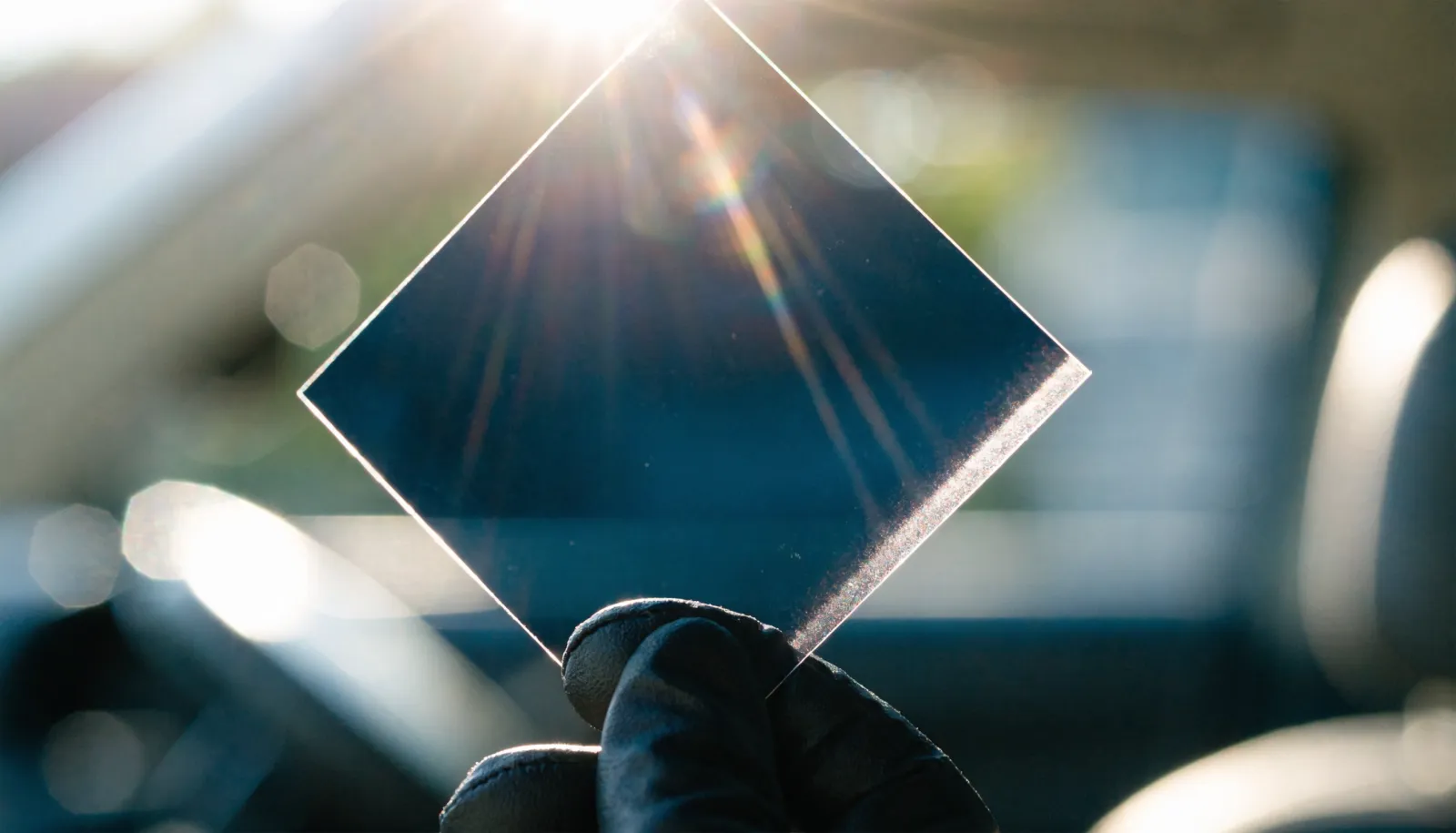
Visible light transmission, or VLT, is the percentage of visible light that passes through the film and glass together. A lower VLT means a darker tint. This is the number Texas regulates. State law requires front side windows to transmit at least 25 percent of visible light, which means the film and glass combined cannot be darker than 25 percent VLT on those windows. Rear side windows and the rear windshield can be any darkness you want under Texas law, so SUV and truck owners often run a much darker film in the back while keeping the legal limit up front.
It helps to understand that VLT describes the combination of film and glass, not the film alone. Factory glass already blocks some light on its own, so a film rated at a certain percentage will produce a slightly darker final result once it is on the window. A reputable installer measures the finished window with a meter rather than guessing from the film’s box rating, which is how you stay on the right side of the 25 percent limit on your front doors. If you want to understand how VLT choices translate into how the car looks and how well you can see out at night, our window tinting page walks through the practical side of picking a shade.
One more point worth making clear: VLT and heat rejection are related but not the same thing. A darker film is not automatically a cooler film. A high-quality ceramic at 35 percent VLT can reject more total solar energy than a cheap dyed film at 5 percent VLT, because the ceramic is engineered to block infrared and the dyed film mostly just blocks visible light by being dark. Darkness is a styling and glare choice. Heat rejection is a materials choice. Confusing the two is how people end up with a very dark car that is still hot inside.
UV rejection protects your skin, not your comfort
Ultraviolet rejection is the most consistent number on any spec sheet, and it is also the one that says the least about heat. Nearly every quality automotive film, ceramic or otherwise, blocks 99 percent or more of UV radiation. That high figure is real and it is valuable, just not for the reason most buyers assume. UV rejection protects your skin from the radiation that causes sun damage and accelerates skin aging, and it protects your interior from the fading and cracking that UV inflicts on dashboards, leather, and trim over years of Texas sun.
What UV rejection does not do is keep the cabin cool. Ultraviolet light is a small fraction of the sun’s total heat energy. A film could block 100 percent of UV and still let most of the sun’s heat through if it did nothing about infrared and visible light. So when a film leads with its UV number as if that proves it is a great heat film, that is a misread. The UV figure is a health and interior-preservation spec, not a comfort spec. The good news is that you essentially get strong UV protection for free with any decent film, which is why it makes a poor point of comparison between products that all hit 99 percent.
If interior protection and skin health are your priority, UV rejection is the right number to care about, and almost any quality film delivers it. If a cooler cabin is your priority, look back to TSER and full-band infrared. The two goals overlap but they are not measured by the same line on the sheet.
Putting the numbers together before you buy
A complete read of a tint quote looks at all four figures in context rather than fixating on one. Start with TSER as your heat baseline and compare films on it directly. Treat infrared rejection as supporting evidence and ask whether it is a full-spectrum or single-wavelength number. Choose VLT based on the look you want and the Texas 25 percent front-window limit. Take UV rejection as a near-given that protects skin and interior regardless of which quality film you pick. When you line the numbers up that way, two quotes that looked identical on the surface often separate clearly, and the film that is genuinely doing more heat work stops being able to hide behind a flattering infrared headline.
It also helps to be honest about the gap between a lab spec and a parked car. Spec sheets are measured under controlled conditions on a single pane. Your car has curved glass, multiple windows at different angles, a large windshield that may not be tinted, and a black interior that absorbs heat. Film makes a real and noticeable difference in all of that, but no film turns a sealed car in a Tomball parking lot in July into a cool one. The right expectation is a cabin that heats up slower, cools down faster, and stays far more comfortable on the move, with far less radiant heat on your skin through the side glass.
If you want to walk through the actual spec sheets for the films we install and see how they compare on TSER and full-spectrum infrared rather than headline numbers, request a quote and the team at EuroLuxe is glad to lay it out plainly. Call (936) 292-6056 or stop by the shop at 11701 Holderrieth Rd in Tomball. Bring your questions about darkness, heat, and the Texas limit, and you will leave understanding exactly what your money is buying.
The numbers on a tint quote are not there to confuse you, but they are easy to confuse on your own when each one is quoted to its own best advantage. Knowing that TSER measures total heat, that infrared can be cherry-picked, that VLT is darkness and the law, and that UV is about your skin and interior gives you a real basis for comparison. A film that earns its price will look good under all four numbers read honestly, not just under the one printed largest on the brochure.