Auto detailing guide for Copperfield and Bear Creek drivers
Copperfield and Bear Creek sit on the western edge of Harris County, roughly twenty miles northwest of downtown Houston. The neighborhoods are mature — mostly built out through the 1980s and 1990s — with large tree canopies, established landscaping, and the kind of shaded streets that look appealing until you realize what drips off those trees onto your paint all year. Residents here also carry a long commute, many running State Highway 6 and the Beltway to get into the Energy Corridor or loop back toward Spring and Tomball. That combination of biological contamination and high-mileage daily driving creates a specific set of paint problems that are worth understanding before you decide how to protect your vehicle.
The drive from Copperfield to EuroLuxe Detailing in Tomball typically runs about twenty-five to thirty minutes up Highway 249, which puts professional-grade paint protection well within reach. What follows is a straightforward look at the threats your vehicle faces in this part of Harris County and what protection actually makes sense given how most people here use their cars.
Tree canopy: the threat that never stops
Copperfield’s mature oak and pine canopy is one of the neighborhood’s selling points. It is also a persistent source of paint contamination. Oak trees drop pollen in spring, then produce tannins throughout the warm months that wash off in rain and settle as a thin, slightly acidic film on horizontal surfaces — the hood, the roof, the trunk lid. Pine trees contribute sap year-round, and pines close to a parking spot can deposit small droplets that, once cooked by the Texas sun, become nearly impossible to remove without a solvent or clay bar treatment.
The physics here are straightforward. Contamination sitting on bare clear coat gets driven into the surface by heat and UV exposure. Once it bonds, normal washing does not remove it. A vehicle that parks under a canopy for months without any form of chemical decontamination will have etching and bonded organic debris well before any visible scratch appears. This is why paint correction work on Copperfield vehicles often reveals more chemical damage than mechanical damage — the tree canopy does more harm than the road in many cases.
The daily driver equation for Bear Creek commuters
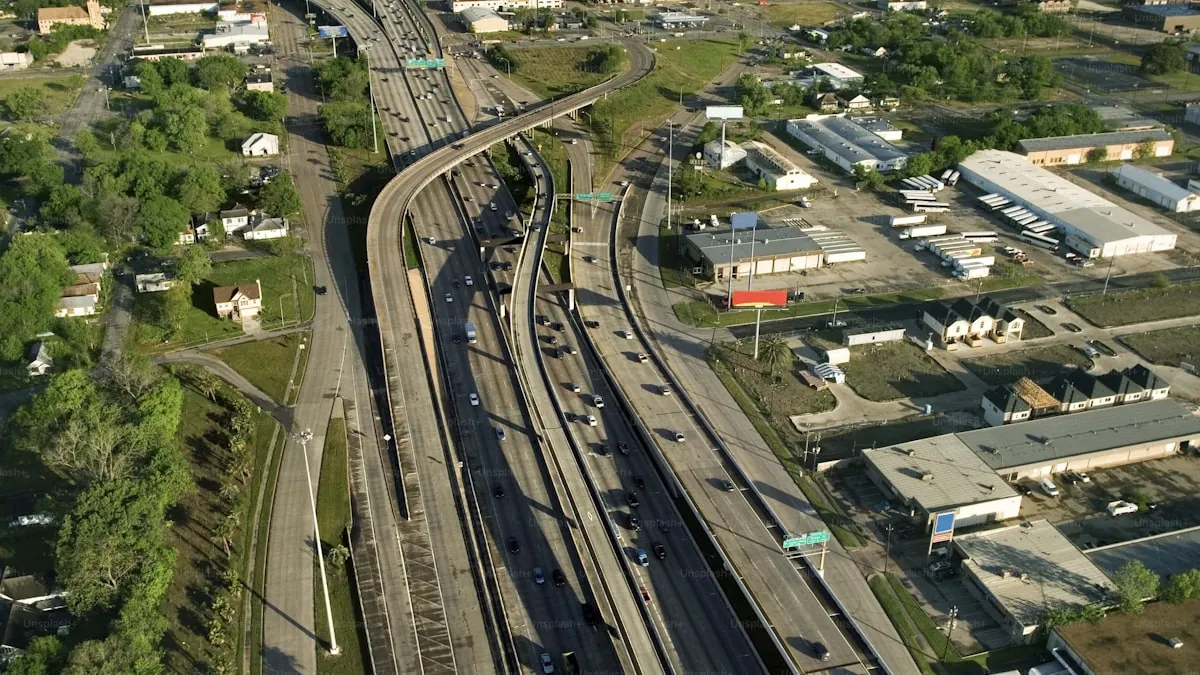
Bear Creek and the surrounding areas funnel commuters onto a small number of corridors: Highway 6, West Road, and the Sam Houston Tollway. These roads share one characteristic — heavy truck traffic, including commercial construction trucks from the ongoing development throughout Cypress and Katy. Construction trucks shed debris. Gravel, sand, and aggregate routinely come off flatbeds and dump trucks at highway speed. If your commute puts you near that traffic for forty or fifty minutes a day, your front bumper, hood, and mirror caps take rock chip damage that accumulates faster than most owners recognize.
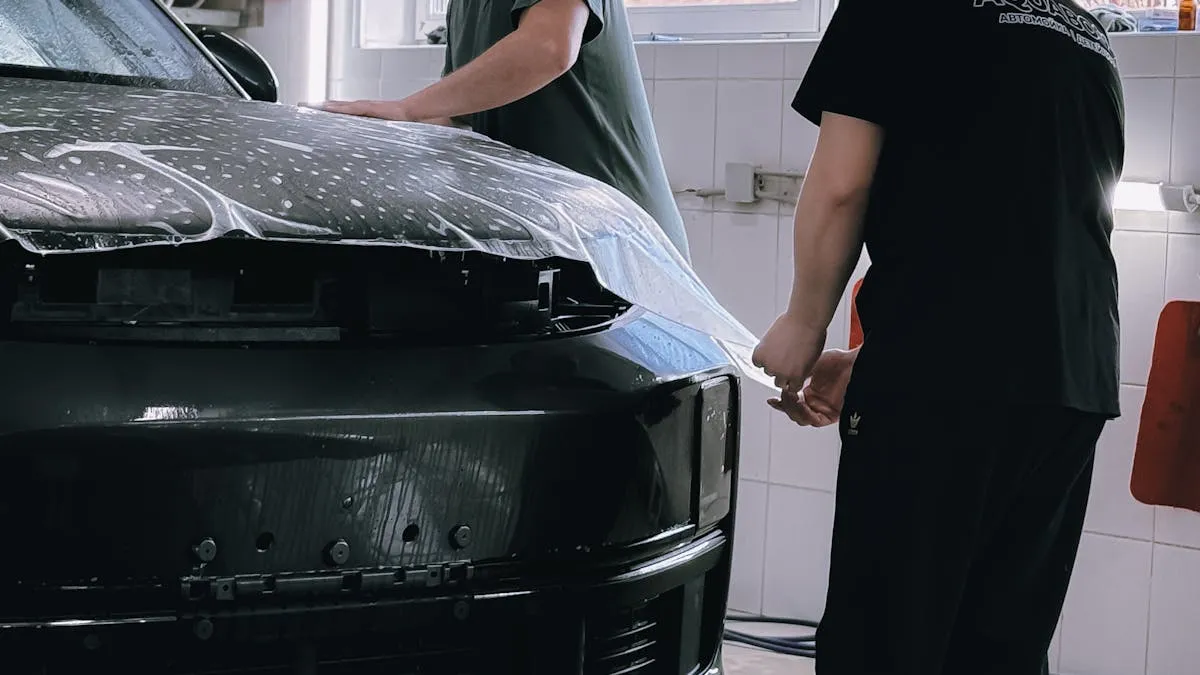
A well-installed paint protection film on the full front end — bumper, hood, fenders, mirror caps, and A-pillars — absorbs that impact damage before it reaches the paint. Paint protection film at EuroLuxe uses UltraFit product, which is cut and fitted in a climate-controlled bay to ensure clean edges and consistent adhesion. For commuters on these specific corridors, a full front package is not an upgrade — it is the practical baseline for keeping a vehicle in reasonable condition over three to five years of daily use.
What ceramic coating does for park-and-soak vehicles
A significant portion of Copperfield and Bear Creek residents park outdoors, either in a driveway or on the street, for most of the day while they commute. That means six to ten hours of direct sun exposure during the hottest months of the year. UV radiation breaks down clear coat gradually, and the process is measurably faster on vehicles that sit in open sun versus those garaged. Oxidation on darker colors, fading on reds, and a general loss of gloss depth on any finish are all functions of cumulative UV exposure.
Ceramic coating applies a semi-permanent silica-based layer over the clear coat that provides UV resistance, makes the surface significantly more hydrophobic, and creates a sacrificial layer that takes the initial damage from contamination before the clear coat does. On a vehicle that will spend years parked in a Copperfield driveway, a properly installed Gyeon ceramic coating extends the interval between paint correction cycles and maintains gloss depth noticeably longer than untreated paint. It does not prevent all contamination, but it substantially reduces the rate at which contamination bonds and causes damage.
Paint correction before protection: why sequence matters
Many vehicles coming in from the Copperfield and Bear Creek area have accumulated years of wash swirls, light scratches, and bonded contamination before the owner considers any kind of protection. The sequence matters: applying ceramic coating or paint protection film over paint that already has defects locks those defects in. Coating makes the paint glossier overall, which can actually make existing swirl marks more visible under certain lighting conditions.
Paint correction should precede any coating or film installation. The correction process involves machine polishing with progressively finer compounds to remove a controlled amount of clear coat and eliminate surface defects. For a vehicle with moderate swirl damage — the typical result of three or four years of automatic car wash use — a two-stage correction is usually sufficient. More severe cases, including chemical etching or deeper scratches, may require a more aggressive approach. The goal in every case is to get the surface to the best correctable condition before sealing it under a protective layer.
Choosing the right scope of protection for your situation
Not every Copperfield driver needs a full-body paint protection film installation. The right scope depends on how the vehicle is used, how long you intend to keep it, and what your primary concerns are. A few practical guidelines:
If you commute on high-debris corridors daily, prioritize PPF on the full front end. If you park outdoors long-term, prioritize ceramic coating. If you have a newer vehicle you intend to keep for seven or more years, combining both — film on high-impact zones and ceramic over the rest — gives you the most durable baseline. If your paint already has significant defects, paint correction has to come first regardless of what you plan to apply afterward.
Budget matters, and a clear conversation about priorities usually leads to a better outcome than defaulting to either the most expensive package or the most minimal one. The goal is matching the protection to the actual use case, not selling the highest-margin combination.
Getting started
For Copperfield and Bear Creek drivers making the trip up 249, the EuroLuxe shop is at 11701 Holderrieth Rd in Tomball. If you want to talk through what makes sense for your vehicle before booking, call (936) 292-6056 and describe how and where the car is typically parked and how far you drive it — that context is enough to start building a realistic plan.
The vehicles that hold up best over a Texas ownership cycle are rarely the ones with the most expensive single service applied once. They are the ones where the owner understood the specific threats their parking situation and commute created, addressed existing damage before adding protection, and then maintained what was installed. That process starts with an honest assessment of the paint, and that assessment does not cost anything to have.