Ceramic Coating for Black Cars: Why Dark Paint Needs It Most
Black Paint Is Beautiful — and Brutally Unforgiving
There’s a reason black is the most popular premium car color worldwide. A clean black vehicle with deep gloss and perfect reflections looks better than anything else on the road. Nothing else comes close to that wet, liquid look when the sun hits it right.
But here’s the trade-off every black car owner learns within the first week: black paint exposes everything. Every micro-scratch. Every swirl mark from a bad wash. Every water spot from the sprinkler that caught your car overnight. Every fingerprint from someone who couldn’t resist touching your fender.
Other colors hide these imperfections. Silver and white cars can go months with swirl marks that are barely visible. A dark blue or green metallic might show defects in direct sunlight but look fine the rest of the time. Black paint shows it all, at every angle, in every lighting condition.
This is why black car owners are, without question, our most frequent ceramic coating clients at EuroLuxe. And it’s why we tell every black car owner: if you’re going to protect one vehicle in your life with a ceramic coating, make it the black one.
What Makes Black Paint So Demanding
Understanding why black is different requires a quick look at how we see paint defects.
Light and Contrast
Scratches and swirl marks are visible because they refract light differently than the surrounding paint. On a white car, the difference between the scratch and the surrounding paint is minimal — both are reflecting most of the light spectrum. On black paint, the contrast is extreme. The undamaged surface absorbs light while the scratch reflects it, creating bright lines against a dark background. It’s the same reason a white hair is visible on a black shirt but invisible on a white one.
Depth of Color
Black paint achieves its depth by absorbing nearly all visible light. When that absorption is interrupted by surface imperfections — swirls, haze, micro-marring — you lose that depth. The paint looks gray or chalky instead of deep and rich. Even a thin layer of dust changes the appearance of black paint more noticeably than any other color.
Temperature Factor
Black paint absorbs significantly more heat than lighter colors. In the Houston sun, a black vehicle’s surface temperature can hit 180-200 degrees on a summer afternoon. That heat accelerates the degradation of unprotected paint, wax, and sealants. Water spots bake on faster. Contaminants bond more aggressively. Every environmental threat hits harder and faster on a black car in Texas.
How Ceramic Coating Changes the Game
A professional ceramic coating addresses the core problems that make black paint so difficult to maintain. Not by making the car invincible — we’ll get to realistic expectations later — but by giving the paint a fighting chance.
Reduced Swirl Mark Formation
Ceramic coating creates a hard, slick surface layer (rated at 9H pencil hardness) that significantly reduces the formation of wash-induced swirl marks. The surface is harder than the clear coat underneath, so light contact that would normally scratch unprotected paint slides across the coating instead.
This doesn’t mean the coating can’t be scratched. It absolutely can. But the threshold for creating visible marring is much higher. A properly coated black car can be hand-washed with correct technique and remain swirl-free for years. An uncoated black car develops visible swirls after a single wash if you’re not extremely careful.
Hydrophobic Water Behavior
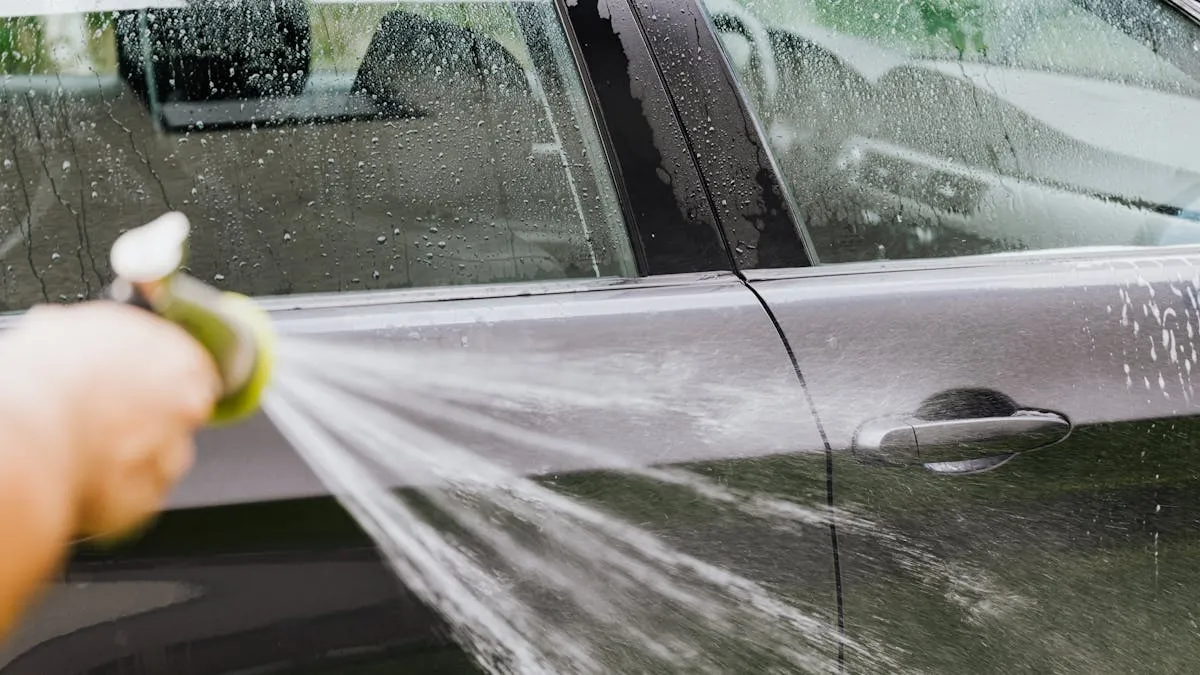
Water on a coated black car behaves differently. Instead of sheeting across the surface and sitting in flat pools that leave mineral deposits, water beads tightly and rolls off. This is a big deal for black paint because water spots are one of its worst enemies.
In Houston, our water is hard. Sprinkler water, rain water, even hose water leaves mineral deposits on unprotected paint. On a white car, you might not notice for weeks. On black paint, they’re visible immediately, and if they bake on in summer heat, they can etch the clear coat permanently.
The hydrophobic surface of a ceramic coating means less water sits on the paint, fewer minerals are deposited, and the spots that do form are easier to remove before they cause damage.
UV Protection
Ceramic coatings provide a measurable UV barrier that slows oxidation and fading. Black paint that isn’t UV-protected will eventually turn gray or develop a chalky appearance, especially on horizontal surfaces like hoods and roofs that take the most direct sun exposure.
In North Houston, your car is getting hammered with UV year-round. A ceramic coating won’t stop oxidation entirely — nothing will — but it dramatically slows the process.
Easier Cleaning, Less Surface Contact
Here’s the practical benefit that black car owners appreciate most: a coated car requires less physical contact to clean. Dirt and contamination don’t bond to the surface as aggressively, so a pressure washer rinse removes 80% of what’s sitting on the paint. The actual wash becomes gentler and faster, which means fewer opportunities to introduce swirls.
For a black car, every reduction in surface contact is a win. Less touching means less marring. Less marring means better appearance for longer.
Paint Correction Before Coating: Black Cars Need More
This is where cost and timeline differ for black vehicles compared to other colors.
Before any ceramic coating goes on, the paint surface needs to be clean, decontaminated, and corrected. On a white or silver car, a single-stage polish might be sufficient — minor swirls that are invisible on lighter paint simply don’t need to be addressed.
Black paint doesn’t get that luxury.
Why Multi-Stage Correction Is Standard
On a black car, we’re working under LED inspection lights that reveal every defect in the clear coat. What looks acceptable on a silver car under those same lights would be unacceptable on black. The standard for black paint correction is higher because the paint hides nothing.
Most black vehicles that come to us — even relatively new ones — require a two-stage paint correction at minimum:
Stage 1: Compounding. A medium-cut compound on a cutting pad removes deeper scratches, heavy swirl marks, and oxidation. This is the aggressive pass that levels the clear coat and removes the most material.
Stage 2: Polishing. A fine polish on a finishing pad removes the haze and micro-marring left by the compounding stage. This is what brings back the clarity and depth that makes black paint look liquid.
Some black cars, particularly those that have been through automatic car washes or improperly maintained, need a three-stage correction that adds an intermediate polishing step.
What This Means for Cost
More correction stages mean more time, more materials, and a higher total investment. A ceramic coating package on a black sedan typically costs 15-25% more than the same package on a lighter-colored vehicle, primarily because of the additional correction work.
It’s not a markup. It’s math. A two-stage correction on a black car takes 8-12 hours. A single-stage polish on a white car might take 4-6. That additional labor is where the cost difference lives.
Paint Depth Matters
Before we start correcting any vehicle, we take paint depth readings across every panel. On a black car, this is especially critical because:
- Some panels may have been repainted with different thicknesses
- Factory paint varies between manufacturers (German cars tend to have harder, thicker clear coat; Japanese and Korean cars tend to be thinner)
- Previous detailing may have already removed significant clear coat material
If a panel is too thin to safely correct, we’ll tell you. Locking in remaining defects under a coating is better than burning through clear coat trying to achieve perfection.
Realistic Expectations: What Coating Won’t Do
We believe in transparency, and this is where some detailers oversell the product.
It Won’t Make Your Black Car Maintenance-Free
A ceramic coating reduces maintenance dramatically. A coated black car is perhaps 60-70% less work than an uncoated one. But it still requires proper washing technique, regular cleaning, and attention. A coated black car that sits for a month without washing will still show dirt and contamination. The difference is that contamination comes off easier and doesn’t damage the surface as readily.
It Won’t Prevent All Scratches
Your keys dragged across the door will still scratch a coated car. A rock chip on the highway will still chip the paint. Shopping cart contact will still leave marks. For that level of physical impact protection, you need paint protection film, which we often recommend combining with ceramic coating for high-impact areas on dark vehicles.
It Won’t Stay Perfect Without Proper Washing
If you run your coated black car through an automatic car wash with spinning brushes, you’re going to induce swirls. The coating raises the threshold for damage, but it doesn’t eliminate it. Automated car washes will eventually mar any coating. Hand washing with proper technique — or at minimum, a touchless wash — is still necessary.
Dust Is Still Visible
A ceramic coating doesn’t repel dust. Your black car will still show dust after a day or two of sitting in a garage. What the coating does is make that dust easier and safer to remove. A light wipe with a ceramic-safe detail spray and a plush microfiber towel handles it without creating swirls.
Best Practices for Maintaining a Coated Black Car
Once your black car is corrected and coated, here’s how to keep it looking right.
Wash Every 1-2 Weeks
In the Houston climate, bi-weekly washing is the baseline. During heavy pollen season (March through May) or if you park under trees, weekly is better. Use the two-bucket method with a pH-neutral soap.
Use a Foam Cannon Pre-Wash
Before touching the paint, blast the car with a thick layer of snow foam from a foam cannon and let it dwell for 3-5 minutes. This loosens and lifts dirt off the surface so you’re not grinding it into the paint during the hand wash. On a black car, this step alone prevents the majority of wash-induced swirls.
Dry Thoroughly
Water spots are the enemy of black paint, even with a coating. Use a filtered air blower or a high-quality drying towel. Don’t let water air-dry on the surface. If you have hard water, consider a deionized water filter for your final rinse.
Annual Maintenance Service
Bring the car in once a year for a professional coating maintenance service. We’ll decontaminate the surface, inspect the coating under corrected lighting, apply a maintenance topper, and address any areas that need attention. This service extends your coating’s life significantly and keeps your black paint looking its best.
Consider PPF on High-Impact Areas
For black cars that are daily driven, combining ceramic coating with paint protection film on the front bumper, hood, fenders, and mirror caps provides the best possible protection. The PPF handles rock chips and physical impacts. The ceramic coating handles everything else and goes over the PPF for a uniform appearance.
Why Professional Application Matters Even More on Black
DIY ceramic coating kits exist, and they work to varying degrees on lighter-colored cars where application imperfections aren’t as visible. On a black car, every mistake shows.
High spots — areas where excess coating wasn’t properly leveled — appear as hazy, rainbow-tinted patches under light. On a white car, you might not notice. On black paint, they’re impossible to miss and often require machine polishing to remove, which defeats the purpose of the coating.
Professional application in a controlled environment with proper lighting ensures:
- Even coating thickness across all panels
- No high spots or missed areas
- Proper cure time in a dust-free environment
- Correct surface preparation that maximizes bonding
If you’re going to invest in ceramic coating for a black vehicle, professional application isn’t a luxury — it’s a requirement for the result you’re expecting.
The Bottom Line
Black cars are harder to maintain, more expensive to correct, and more demanding in every way. But when a black car is properly corrected and coated, nothing else on the road looks as good. The depth, the reflections, the liquid-glass appearance — it’s worth the extra investment and the extra care.
If you’ve got a black vehicle and you’re tired of fighting swirl marks, water spots, and constant maintenance, contact us for a quote. We’ll assess your paint, discuss the correction level needed, and put a protection plan together that keeps your black car looking the way it should.
Have questions? Call us at (936) 292-6056.
Frequently Asked Questions
Does ceramic coating make black cars easier to wash?
Yes, significantly. The hydrophobic surface means dirt and contamination don’t bond as aggressively to the paint. A pressure washer rinse removes most surface contamination, and the hand wash itself takes less effort and less physical contact with the surface. For black cars, less contact means fewer swirl marks.
How much does ceramic coating cost for a black car?
Expect to pay 15-25% more than the standard price for the same vehicle in a lighter color. The additional cost comes from the multi-stage paint correction required before coating — black paint demands a higher standard of surface preparation. At EuroLuxe, packages for black vehicles typically start in the $1,200-$2,500 range depending on vehicle size and correction needs.
Will ceramic coating prevent swirl marks on my black car?
It dramatically reduces them but doesn’t eliminate the possibility entirely. The coating is harder than your clear coat, so light contact that would normally create swirls on unprotected paint won’t affect the coating. However, aggressive contact — like automatic car wash brushes or dirty towels — can still mar the surface. Proper wash technique is still necessary.
Should I get paint protection film or ceramic coating for my black car?
They serve different purposes and work best together. Ceramic coating protects against UV, chemical etching, water spots, and light surface contamination. Paint protection film protects against rock chips, scratches, and physical impacts. For daily-driven black cars, we recommend PPF on high-impact areas (hood, bumper, fenders) with ceramic coating over the entire vehicle.
How long does ceramic coating last on a black car?
The coating itself lasts the same amount of time regardless of paint color — typically 2-5 years depending on the product used and maintenance habits. However, because black cars show degradation more visibly, you may notice reduced performance sooner on dark paint. Annual professional maintenance extends the effective life and keeps the coating performing at its peak.
Can you ceramic coat a black car with existing swirl marks?
You can, but you shouldn’t. Ceramic coating locks in whatever is on the surface — including swirl marks. On a black car where every defect is visible, coating over swirls means locking in a flawed appearance for years. Paint correction before coating is strongly recommended for any dark-colored vehicle.