Ceramic coating hydrophobic effect: how long it actually lasts
One of the first things owners notice after a ceramic coating goes on is how water behaves on the paint. Droplets sheet off in motion and bead tightly at rest, leaving almost nothing behind. That behavior gets described as the hydrophobic effect, and it is real — but it is also finite. The coating itself does not wear out on the same timeline as the hydrophobic layer that sits at the very top of the cured film, and understanding that distinction changes how you think about maintenance.
The confusion is understandable. When a shop installs a coating rated for five or seven years, owners reasonably assume the water-beading will last that same span. It will not, at least not at the intensity seen in the first few months. What the rated lifespan describes is how long the underlying SiO2 layer bonds to the clear coat and continues offering UV resistance, chemical resistance, and hardness. The hydrophobic top layer erodes faster than that — how fast depends almost entirely on what the coating is exposed to and how it is washed.
This is not a defect or a warranty issue. It is chemistry. Knowing what depletes that layer and what restores it is the practical knowledge most owners lack when they drive away after an installation appointment.
What creates the hydrophobic behavior in the first place
A cured ceramic coating is primarily silicon dioxide, the same compound found in glass and quartz. When properly cross-linked onto your clear coat, it creates a surface with very low surface energy. Water, which has high surface tension, cannot spread across a low-energy surface, so it pulls itself into tight beads or sheets off entirely when the vehicle is moving.
The intensity of that behavior — tight, high-contact-angle beads versus flatter, slower-moving droplets — is often called the coating’s hydrophobic strength. In the early weeks after a ceramic coating cures fully, this effect is at its peak. The surface has not yet accumulated environmental contamination, and the polymer chains are fully intact.
Even high-grade coatings like Gyeon products, which use well-formulated SiO2 chemistry, experience some surface-level degradation over time. It is not the base layer failing — it is the outermost nanometers of the coating reacting with UV radiation, alkaline wash chemicals, hard water mineral deposits, and airborne industrial fallout.
The variables that deplete it fastest
Automatic car washes are probably the single largest factor in premature hydrophobic loss. The brushes and friction cloths in tunnel washes create micro-abrasions on the coating surface. More damaging are the high-pH soaps most tunnels use, which are alkaline enough to degrade the top layer of a ceramic film with repeated exposure. A coating that might hold strong hydrophobic performance for two years with proper hand washing can show noticeable degradation in six months if run through a tunnel wash biweekly.
Hard water is the second major factor in the North Houston area specifically. The water here carries dissolved calcium and magnesium carbonates, and when it evaporates on a warm surface — which happens quickly in Tomball, Conroe, or Cypress heat — it leaves mineral deposits. Those deposits bond to the coating surface and physically disrupt the low-surface-energy layer. Left in place, they gradually etch into the coating and become harder to remove.
Direct sunlight accelerates UV-driven polymer breakdown at the surface. Vehicles that park outdoors in full sun year-round will see faster surface degradation than vehicles garaged or shaded the majority of the time. Houston’s sun load is not trivial — UV index values in summer here regularly exceed 10, which is the same range that causes significant polymer degradation in outdoor materials.
What good maintenance actually does for the hydrophobic layer
Two practices do more than anything else to preserve the hydrophobic effect over time: washing correctly and using a coating-compatible maintenance spray.
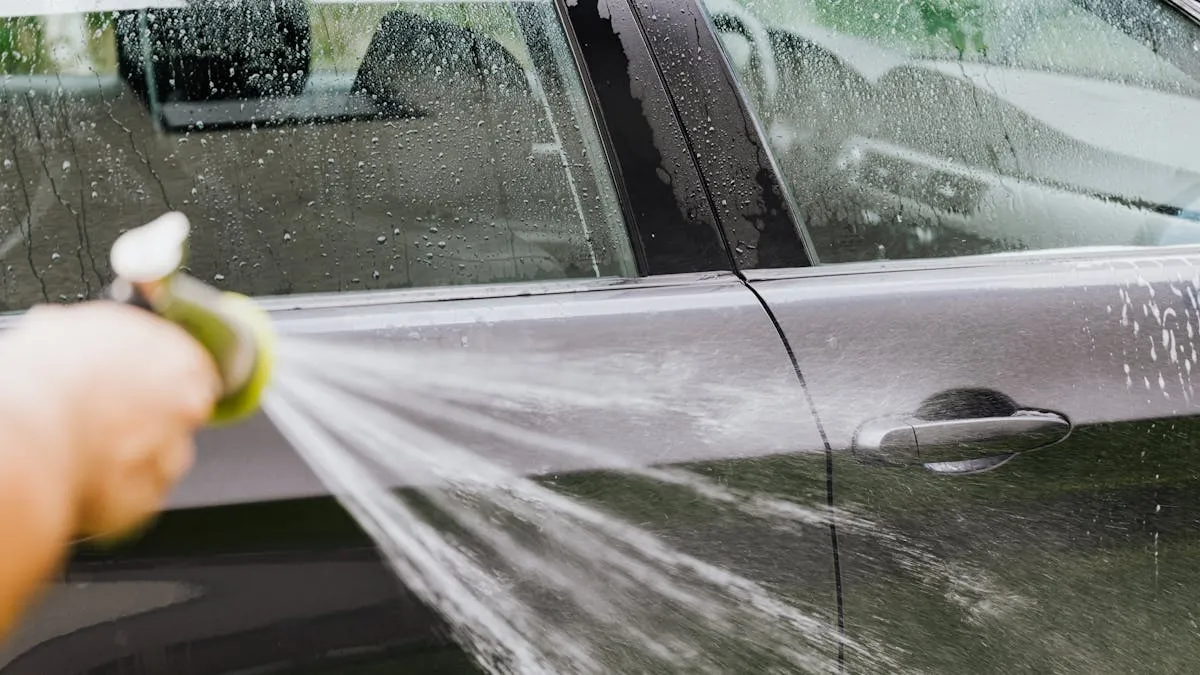
Correct washing means a pH-neutral car shampoo, proper two-bucket or foam cannon technique, and thorough drying with clean microfiber towels. The goal is to remove contamination without stripping the surface chemistry. Harsh detergents strip the coating’s surface faster than anything else in a typical wash routine.
Maintenance sprays designed for ceramic-coated vehicles — often called coating boosters or topper sprays — deposit a thin SiO2 layer onto the existing coating surface during or after a wash. Used every four to eight weeks, they essentially replenish what UV and environmental exposure removes. Gyeon offers several products in this category that work alongside their base coat formulations. This is not the same as reapplying a full coating, but it meaningfully extends the period of strong hydrophobic performance.
Paint decontamination — clay barring or chemical decontamination — also matters once or twice a year. Bonded contamination on the coating surface acts as a physical barrier that prevents water from interacting with the actual ceramic layer beneath. Once that layer of industrial fallout, rail dust, and mineral buildup is removed, the original hydrophobic behavior often comes back noticeably.
When to consider a professional refresh or re-coat
If you have had a ceramic coating on a vehicle for three or four years and the hydrophobic effect has faded significantly despite reasonable maintenance, you are at a decision point. The base layer may still be bonded and providing UV and chemical resistance, but the surface has simply degraded too far to respond to topper sprays.
In that case, a professional inspection can tell you whether a surface prep and booster coat will restore performance or whether a full re-coat is the better path. At EuroLuxe, Caleb typically does a quick water test and surface inspection before recommending anything. Sometimes a thorough decontamination followed by a Gyeon booster layer gets the coating back to near-original performance. On vehicles that have been through tunnel washes consistently for years, the damage can be deeper and a full re-coat is the honest answer.
The economics generally favor re-coating over waiting for the original coating to fail entirely. A full failure means the clear coat is now unprotected and often showing early signs of water spotting, oxidation, or chemical etching directly in the paint. Correcting those issues before re-coating adds cost that a timely re-coat would have avoided.
Reading what your coating is telling you
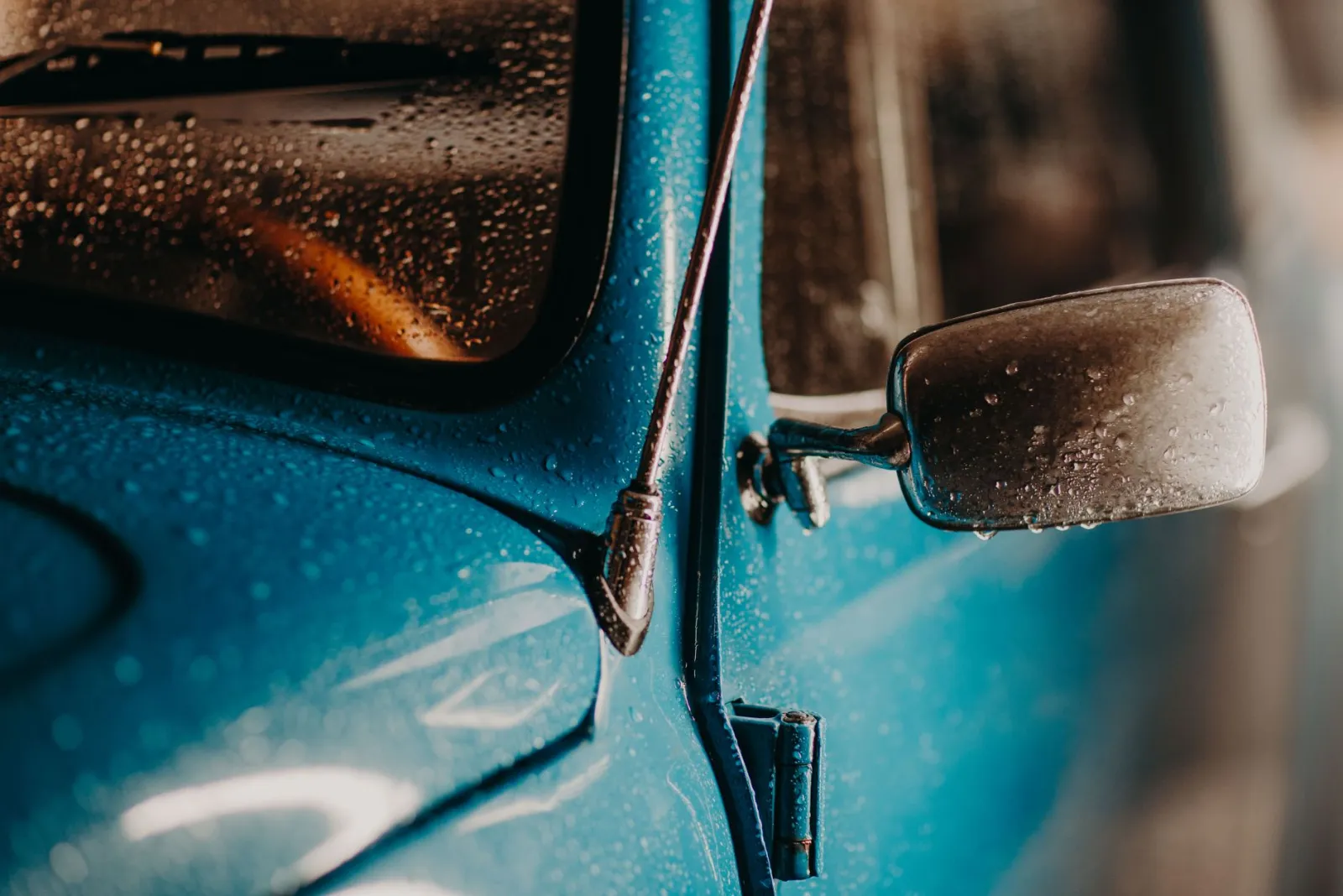
The water-beading test is the most practical diagnostic tool an owner has at home. After a wash, look at how water behaves on flat horizontal panels — the hood and roof get the most abuse and show degradation first. Tight, high-standing beads that roll off with minimal effort indicate a healthy hydrophobic layer. Flat, spreading droplets that sit and spread suggest the surface is contaminated or depleted.
This is worth checking every few months, not because you need to panic at any change, but because catching degradation early means maintenance is simpler and less expensive. A topper spray applied when the coating first starts showing weakness is far more effective than the same product applied after the surface has been compromised for a year.
Texas driving conditions — road construction debris, alkaline water, high UV, and summer heat — are genuinely harder on coatings than climates with cooler, softer water and less sun. Owners here should expect to be more attentive about maintenance than someone in a northern state, and they should factor that into how they plan their detailing schedule.
If you have questions about the current condition of your coating or want to schedule an inspection, the team at EuroLuxe Detailing can be reached at (936) 292-6056. Understanding what you have before deciding what to do next is always the right starting point.
The hydrophobic effect on a ceramic coating is a living indicator of surface health. Treat it as a maintenance signal rather than a fixed warranty feature, and the coating will perform meaningfully longer than one that gets ignored between washes. The chemistry works when you work with it.