
Ceramic coating on white, silver, and gray cars: what to know
White, silver, and gray are consistently the most popular vehicle colors on North Houston roads, and the owners of those cars tend to share a specific frustration: the paint never looks as clean as it did on day one. Water spots appear after every rain event. Hard mineral deposits from lawn irrigation systems etch into the clear coat over time. And while these colors are forgiving about swirl marks compared to black or dark blue paint, they punish neglect in their own quiet way. Ceramic coating addresses these failure modes directly, but only when owners understand what the coating actually does and what it does not.
The assumptions people bring to light-colored paint protection often work against them. Many white and silver car owners defer treatment because the paint looks acceptable at a glance. Dark-car owners see swirls and book paint correction immediately. Light-car owners wait until the clear coat has already taken on mineral etching, oxidation hazing, or a chalky texture that requires significantly more prep work to correct before any coating can be applied. The coating itself is not complicated, but the preparation stage on a neglected light-colored car can be more involved than most owners expect.
Understanding what drives that dynamic, and how to get ahead of it, is the practical purpose of this guide.
Why light paint colors attract different damage patterns
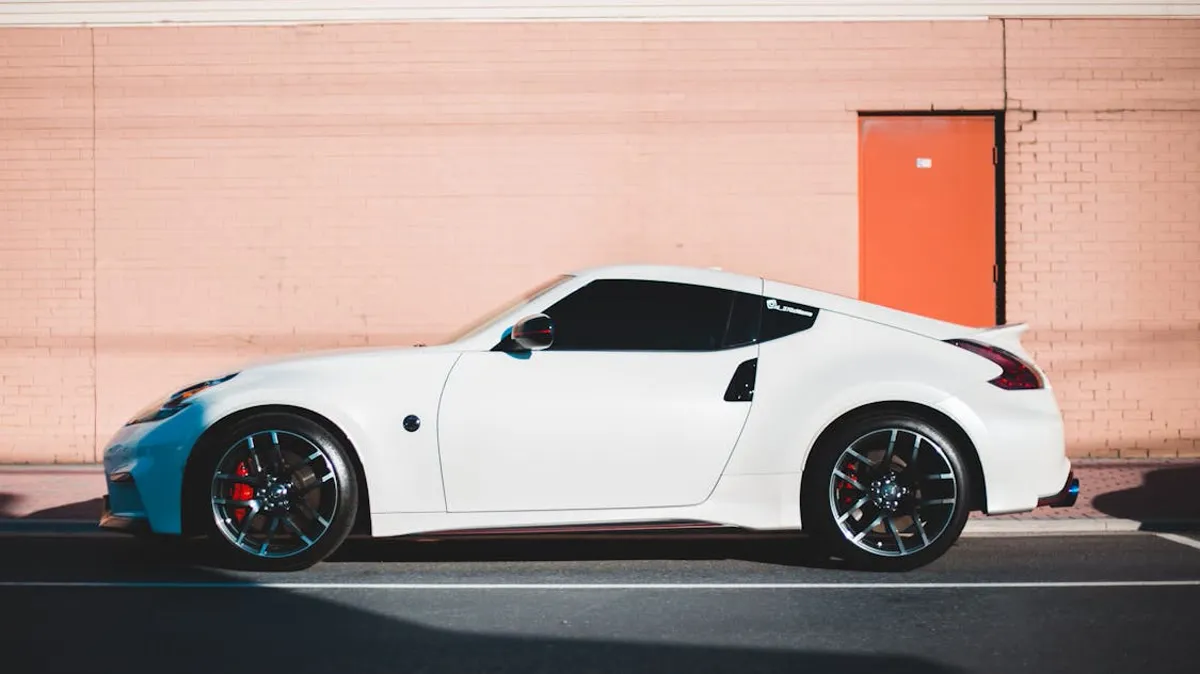
White, silver, and gray paint are not more or less durable than darker colors at the chemistry level. The clear coat sitting on top of the base coat is the same product. What changes is visibility. Swirl marks and fine scratches scatter light at a low angle, which makes them pop dramatically on black paint and nearly disappear on white. That visibility gap encourages owners of light-colored cars to skip paint correction, assuming their paint is in better condition than it actually is.
The damage those owners accumulate instead is mineral and chemical. Every time water evaporates off an untreated surface, it leaves behind dissolved calcium, magnesium, silica, and trace chlorides. In the Houston area, municipal water runs moderately hard, and irrigation systems pulling from wells in Tomball, Conroe, and Magnolia can be significantly harder. Light colors make water spot deposits highly visible, especially on white paint where the mineral residue creates a milky, mottled appearance that worsens with each wash cycle.
UV degradation also reads differently on light colors. Oxidation on white paint appears as a chalky, dull surface rather than the obvious fading seen on red or black. Silver metallic loses its clarity and starts to look flat. These are symptoms of clear coat breakdown, not just surface contamination, and they point to the same conclusion: light-colored paint needs protection as early as dark-colored paint, even if the signals are quieter.
How ceramic coating changes the surface dynamic
A properly applied ceramic coating creates a semi-permanent hydrophobic layer over the clear coat that changes how water and contaminants interact with the paint surface. Water sheets off more aggressively, spending less time in contact with the paint and carrying more of its dissolved mineral content with it before evaporating. This does not eliminate water spots entirely — no coating does — but it reduces their frequency and makes them easier to remove when they do form, because the minerals are sitting on the coating rather than bonding with the clear coat below.
On white paint, this effect is especially visible. A coated white car sheds rain quickly and dries without the mineral haze that builds up on unprotected surfaces over weeks of normal driving. The coating also reduces the adhesion of environmental fallout — iron particles, road film, tree sap, and pollen — which in the Houston area is a year-round concern rather than a seasonal one. Weekly wash maintenance becomes faster and less abrasive because there is less contamination to dislodge.
For silver and gray metallic finishes, the coating adds gloss depth that makes the metallic flake in the base coat appear sharper and more defined. Silver paint that has begun to look flat and dimensionless often recovers noticeable visual clarity after correction and coating, not because the coating itself adds color, but because the surface is now uniform and smooth enough for light to reflect consistently rather than scattering off micro-texture and contamination.
The prep work that determines whether the coating performs
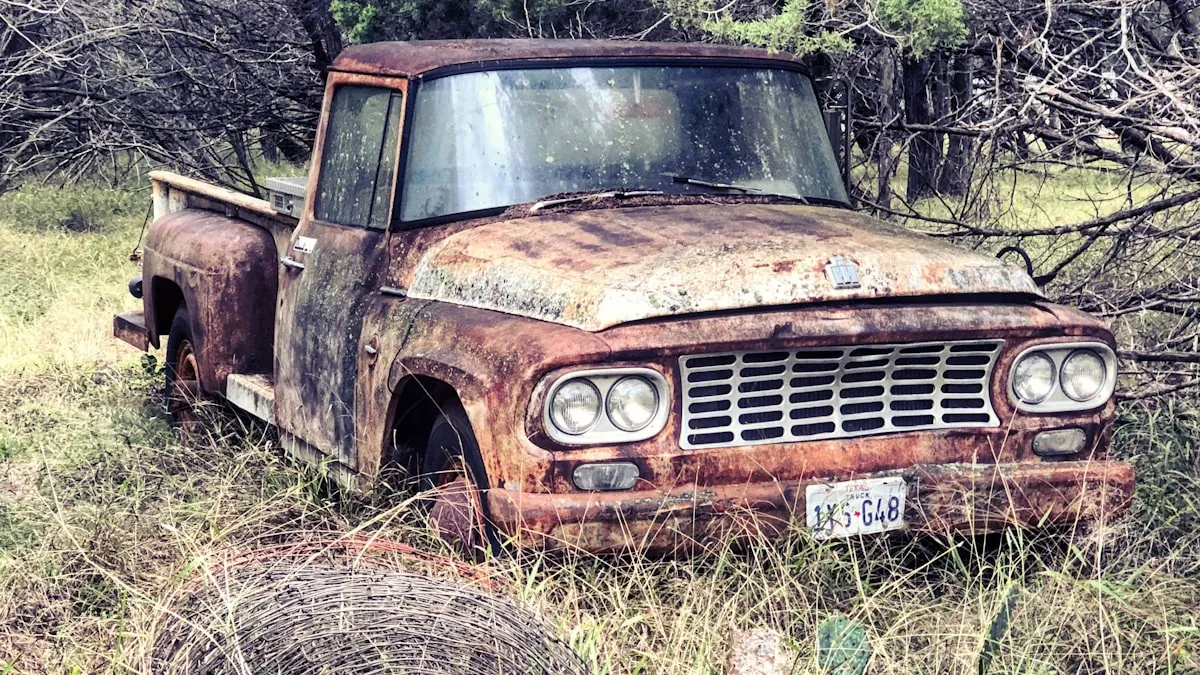
The condition of the paint going under the coating determines the condition of the paint for the life of the coating. This is where light-colored car owners often need a direct conversation. If white paint has developed surface etching from hard water or tree sap, if silver has accumulated oxidation hazing, or if gray has fine scratches from years of automated car wash brushes, those defects need to be addressed through paint correction before the ceramic layer is applied. Coating over existing damage seals it in permanently.
At EuroLuxe, every ceramic coating service begins with a thorough inspection under controlled lighting in our climate-controlled installation bay. On lighter colors, we pay particular attention to mineral etching and micro-marring that tends to be invisible in outdoor light but shows clearly under a focused inspection lamp. The severity of what we find determines how much correction is needed. Some cars need only a single-stage polish to remove light contamination and restore gloss. Others need more aggressive cutting to address etched water spots before polishing to a refined finish.
The decontamination stage also matters more on lighter paint than most people expect. A full chemical decontamination — iron remover, clay bar treatment, and panel wipe — removes bonded contamination that polishing alone cannot address. Skipping this step leaves a contaminated surface for the coating to bond to, which compromises adhesion and long-term durability. The prep work is not an upsell; it is the foundation the coating depends on.
Maintenance after coating: what changes for light colors
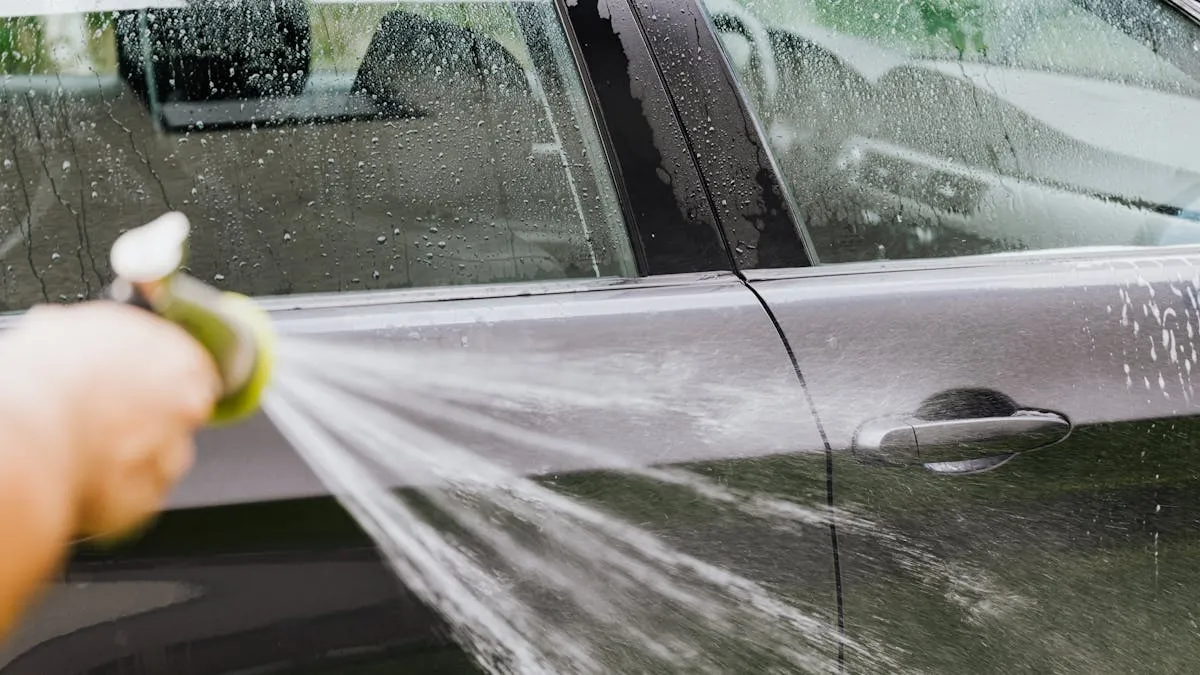
Once a ceramic coating is cured, the maintenance routine simplifies compared to unprotected paint, but it does not disappear. White, silver, and gray cars still need regular washing, and the method matters. Two-bucket hand washing or a touchless wash using pH-neutral products will preserve the coating’s hydrophobic properties far longer than an automated brush tunnel, which mechanically abrades the surface and progressively strips the coating’s performance over time.
For water spots that still form despite the coating — and in a hard-water area like North Houston, some will — a dedicated coating-safe water spot remover resolves them quickly when used promptly. The window for easy removal closes once mineral deposits have had time to thermally bond into the coating surface, so addressing them within a day or two of formation is the practical habit to build. Periodic toppers or maintenance sprays, applied every six to twelve months, refresh the hydrophobic layer and extend the service interval between professional refreshes.
Iron decontamination once or twice per year is also worth doing even on a coated car. The coating slows contamination accumulation but does not stop it entirely. A light chemical iron treatment on a coated vehicle is straightforward and carries no risk to the coating when the correct product is used, and it keeps the surface in the clean condition that lets the coating perform at its rated level.
Choosing the right coating tier for your vehicle
Not every coating is the same, and the differences matter over a multi-year ownership period. EuroLuxe uses Gyeon ceramic coatings across our service menu, with multiple tiers suited to different vehicles and ownership timelines. A daily-driven silver pickup spending its life on TX-249 and I-45 has different exposure than a weekend silver sports car kept in a climate-controlled garage. The coating tier, prep depth, and scheduled maintenance interval should reflect that difference.
Owners planning to keep their vehicles three years or fewer should consider a single-layer consumer-tier coating with annual maintenance. Owners planning longer-term ownership or who carry clear coat in their asset value — classic vehicles, low-production sports cars, trucks with significant resale value — benefit from a multi-layer professional coating with a longer warranty and a deeper prep protocol. The Gyeon product lineup covers both ends of that spectrum, and the right choice depends on an honest conversation about how the vehicle is used and what the owner wants from protection.
If you have questions about where your white, silver, or gray vehicle falls on that spectrum, the right starting point is a direct conversation. Call EuroLuxe at (936) 292-6056 to discuss your vehicle’s current condition and what preparation and coating tier makes sense before booking service.
Light-colored paint is not maintenance-free paint — it just fails quietly and in ways that are easy to dismiss until the damage has compounded. The owners who protect it early, and maintain that protection consistently, are the ones who still have clean, glossy surfaces after five or six years of Texas roads and weather.