Ceramic coating and water spots: what Houston owners should know
Water spots are one of the most common paint complaints we hear from owners in North Houston, and they are also one of the most misunderstood. People assume that because a ceramic coating makes water bead and sheet off, water spots can no longer form. That assumption leads to neglected maintenance and, eventually, etched clear coat that is difficult and sometimes impossible to remove without cutting into the paint. The reality is more nuanced, and understanding it will help you get the most out of whatever coating product is protecting your car.
The greater Houston area sits on notoriously hard water. Municipal water supplies throughout Montgomery County, Harris County, and the surrounding communities carry dissolved calcium, magnesium, and other minerals at concentrations that consistently rank among the higher readings in Texas. When that water evaporates off a surface — whether from a rinse, a rainstorm, or lawn sprinkler overspray — it leaves behind a concentrated mineral deposit. On bare or wax-protected paint, those deposits bond directly to the clear coat. On a properly maintained ceramic coating, the chemistry is different, but that does not mean water spots are impossible.
Understanding where the risk actually sits, and what a Gyeon coating does and does not prevent, gives owners a realistic framework for protecting their investment.
How a ceramic coating changes water spot behavior
A professional ceramic coating like those in the Gyeon product lineup bonds to the clear coat at a molecular level and creates a semi-permanent layer with a much higher contact angle than bare paint or wax. In practical terms, water forms tighter beads and rolls off more readily rather than spreading into a thin sheet that evaporates in place. This is the hydrophobic effect most owners associate with ceramic coatings, and it is real.
Because water moves off a coated surface faster and more completely, the opportunity for mineral deposits to concentrate and dry in one spot is reduced. A rainstorm followed by a breeze will leave far less residue on a coated car than on an unprotected one. This is a meaningful difference, particularly for vehicles that spend a lot of time outdoors in North Houston’s climate.
The important distinction is between reduced risk and eliminated risk. If coated paint is exposed to hard tap water — from a hose rinse, a car wash that uses unfiltered water, or a sprinkler system hitting the car overnight — and that water is allowed to dry in direct sunlight, mineral deposits can still form. The coating does not absorb or neutralize dissolved minerals. It simply gives water less surface area to cling to before gravity and air movement carry it away.
Why sunlight and temperature make this worse in Houston
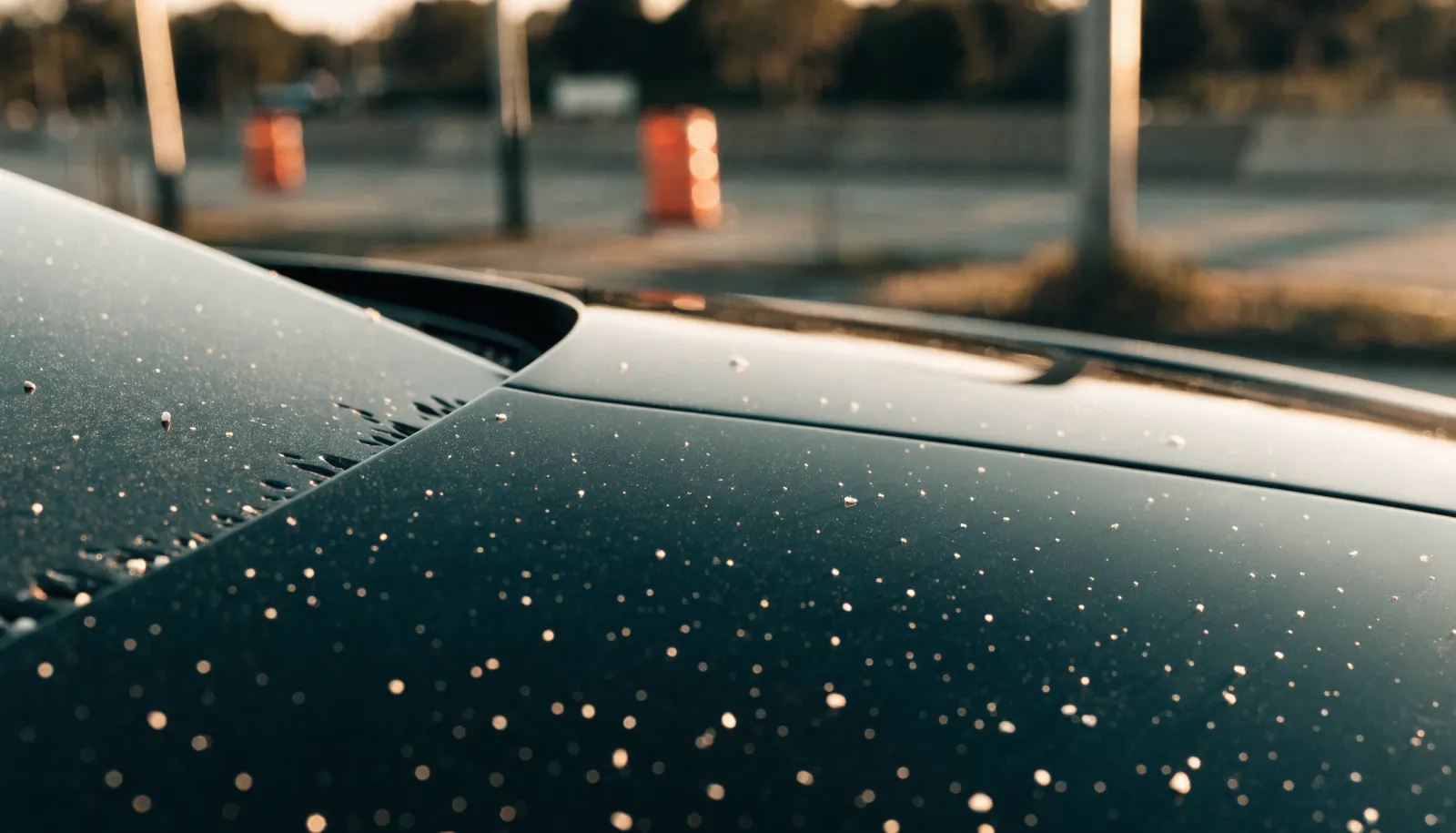
Houston’s climate accelerates the water spot problem in two specific ways. First, the UV index here is high for most of the year, which means surface temperatures on a car hood or roof can reach 150 to 180 degrees Fahrenheit on a clear afternoon. Water evaporates at those temperatures almost instantly. When evaporation is fast, minerals concentrate quickly in a very small area, and the resulting deposit is denser and more difficult to remove.
Second, Houston’s high ambient humidity means that even after visible water is gone, the surface can retain moisture that continues the deposit-forming process. An owner who rinses their car in the morning and thinks it has dried clean may not notice fine mineral haze until the light catches the paint at the right angle hours later.
This combination — hard municipal water, intense surface heat, and high humidity — is precisely why water spot prevention needs to be treated as an active maintenance habit rather than a problem that coating alone solves. The coating buys you time and reduces the frequency of problems, but it does not remove the need to dry the car properly after washing or to address standing water from rain and sprinklers.
What ceramic coatings do protect well
Where ceramic coatings provide a substantial and well-documented advantage is in preventing the mineral deposits from bonding to the paint itself. On unprotected clear coat, hard water deposits can begin chemically etching the paint surface within hours in hot, sunny conditions. Over months, this creates a textured or hazy finish that requires machine polishing — and removal of actual clear coat — to correct. That is real, permanent damage.
On a properly applied and maintained ceramic coating, the deposit sits on top of the coating rather than into the paint. This is a critical distinction. When a water spot forms on a coated surface, it is typically removable with a dilute water spot remover or, in mild cases, a quality spray detailer applied at the right time. The coating acts as a sacrificial layer, accepting the mineral deposit so the paint beneath does not have to. Owners who maintain their coating correctly can address water spots without ever touching the clear coat underneath.
That said, ceramic coatings are not infinitely sacrificial. A coating that has been neglected, has not been maintained with appropriate top-coat products, or has simply reached the end of its service life will exhibit reduced hydrophobic performance and reduced resistance to etching. This is why the two-year inspection and top-coat service exists — it refreshes the contact angle and restores the coating’s ability to shed contamination.
Washing practices that prevent most water spot problems
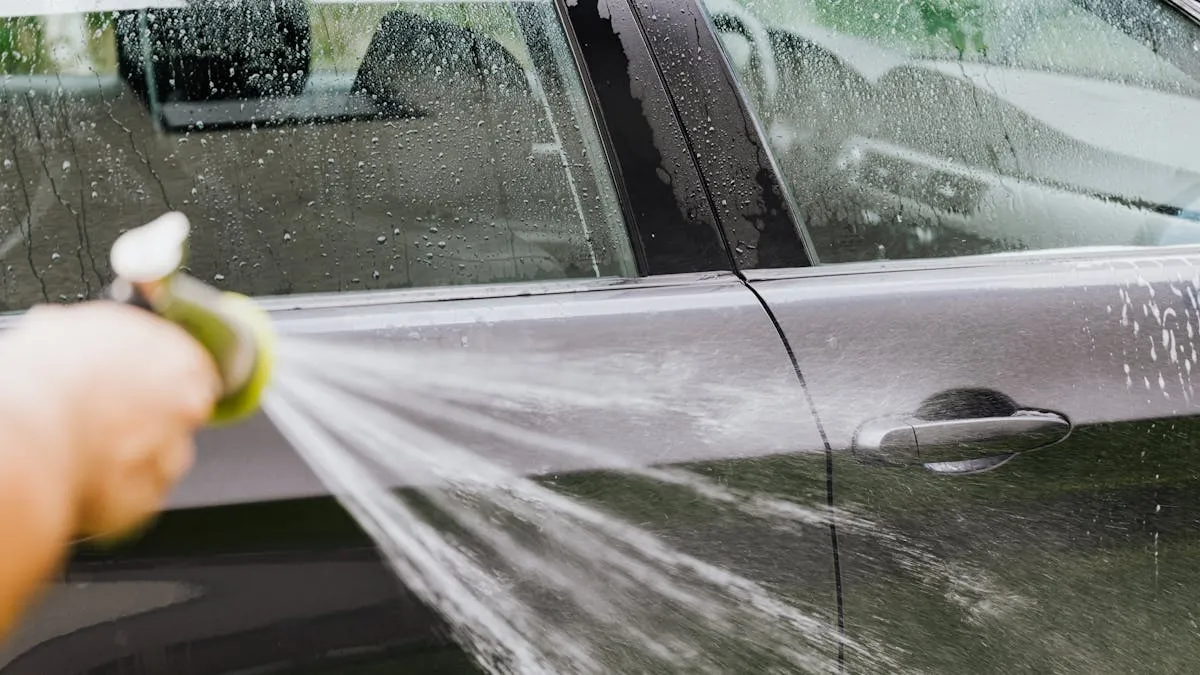
The majority of severe water spot cases we see came from washing habits rather than rainfall or coating failure. Washing in direct sunlight is the most common culprit. When soap or rinse water dries faster than you can work through a panel, you are essentially baking mineral and soap residue onto the surface under intense UV. On a Texas summer afternoon, that window can be as short as two to three minutes on a dark panel.
The fix is straightforward: wash in shade, wash in the morning before surface temperatures climb, and dry the car immediately with a clean microfiber or a filtered air blower rather than allowing any water to air-dry. If you use a foam cannon or contact wash method, work one panel at a time and rinse before moving to the next. These habits apply to all vehicles but matter more on coated ones because owners are sometimes less attentive, assuming the coating handles everything automatically.
For vehicles parked near irrigation systems, address the sprinkler exposure directly. Mineral water from a residential irrigation system that hits the car three mornings a week and dries in the sun will eventually defeat any coating over time. Repositioning sprinkler heads or covering the vehicle during watering cycles is more effective than any chemistry you can apply after the fact.
If you want a thorough prep and coating application that sets the surface up correctly from the start, our paint correction process before coating matters here too — water spots that are already etched into clear coat need to be removed mechanically before a coating can be applied over a clean substrate.
What to do when water spots appear on a coated car
Acting quickly is the most important variable. A water spot that has been sitting for two hours in Houston summer heat is harder to remove than one addressed within thirty minutes of formation. A dilute solution of water spot remover — formulated specifically for coated vehicles — applied with a soft microfiber towel will resolve most fresh deposits without any abrasion. Rubbing hard is counterproductive and risks marring the coating surface.
For stubborn or older water spots, a clay bar decontamination or a light application of a coating-safe polish may be needed. This is a service worth scheduling before the spots have time to penetrate to the paint below. If the spots have already etched through a degraded or thin coating layer into the clear coat itself, that requires machine polishing to level the surface, which means removing coating and reapplying.
The takeaway is that the window between a manageable detail job and a more involved paint correction is often just a matter of weeks in this climate. Regular inspections — walking the car under direct sunlight or a focused light source — let you catch early-stage water spot accumulation before it becomes a correction job.
If you are not sure what stage your coated paint has reached, or if you want a professional assessment of how your current coating is holding up against Houston’s water chemistry, call us at (936) 292-6056 and we can schedule an inspection at our Tomball facility.
Ceramic coatings are a proven and practical layer of protection against water spot damage in a climate like Houston’s, but they work best when owners understand what they are and are not doing. The coating shifts the odds heavily in your favor — it does not remove maintenance from the equation entirely. Owners who pair a quality coating with correct washing habits and periodic professional attention consistently get five or more years of strong surface performance out of a single application, which is exactly what the technology is designed to deliver.