What actually happens before a ceramic coating goes on
Most conversations about ceramic coatings focus on the finished result: the gloss, the water behavior, the protection. That makes sense. But the outcome of any coating job is almost entirely decided before a single drop of product touches the paint. The prep phase is where a professional installation separates itself from a rushed one, and it is what most shops under-explain to their customers.
At EuroLuxe Detailing in Tomball, every Gyeon ceramic coating installation follows a fixed sequence of prep steps. None of them are optional, and none can be substituted with shortcuts. What follows is a straightforward account of what that process looks like, why each step exists, and what happens to a coating that skips any part of it.
If you have been researching ceramic coating for your vehicle, understanding the prep side of the process will help you ask the right questions when you talk to any shop.
Why prep quality determines coating longevity
A ceramic coating bonds to the clear coat at a molecular level. That bond depends on the surface being clean, decontaminated, and free of microscopic defects that would prevent uniform adhesion. When any of those conditions are not met, the coating does not fail instantly. It fails gradually, unevenly, and often invisibly until the protection has already degraded.
Think of it this way: applying a ceramic coating over contaminated or compromised paint is similar to painting over rust. The topcoat may look acceptable at first. Over time, the underlying problem undermines everything above it. The coating starts to delaminate, water sheeting becomes inconsistent, and the original investment is wasted.
Professional prep work is not about perfection for its own sake. It is about creating the conditions under which the coating can actually do its job for its full rated lifespan.
Step one: a thorough wash and paint inspection
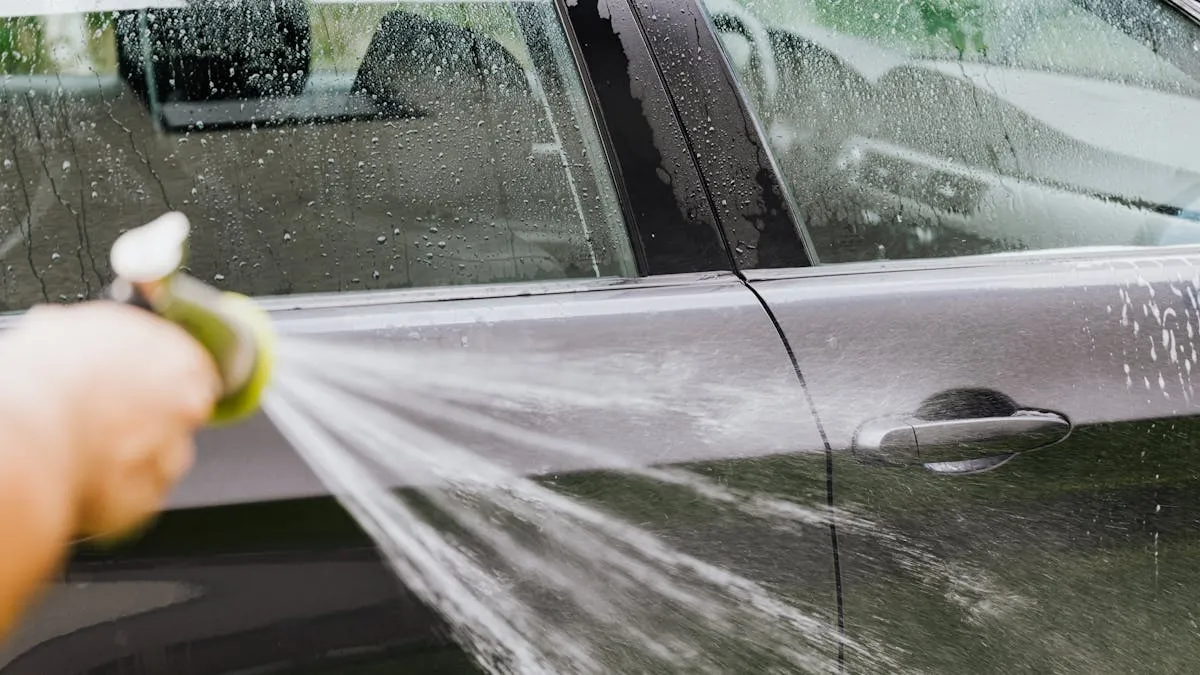
The process starts with a full exterior wash, but not the kind done at a drive-through tunnel. A proper pre-coating wash uses pH-neutral soap, the two-bucket method, and careful hand contact to lift surface contamination without introducing new scratches. Wheels and wheel wells are cleaned separately to prevent transferring brake dust and road tar to paint surfaces.
After the wash, the paint is inspected under proper lighting. This means both natural light and a dedicated inspection lamp that reveals surface texture, swirl marks, scratches, water spots, and oxidation that would be invisible under shop overheads or in sunlight alone. This inspection step determines whether paint correction is needed before coating and, if so, how many stages of correction are appropriate.
Skipping or rushing this inspection is one of the more common shortcuts taken by inexperienced installers. A coating applied over undetected defects will lock those defects in place permanently. Unlike wax or sealants, ceramic coatings are not easily removed and reapplied. The paint surface you coat is the paint surface you are committing to for years.
Step two: chemical decontamination
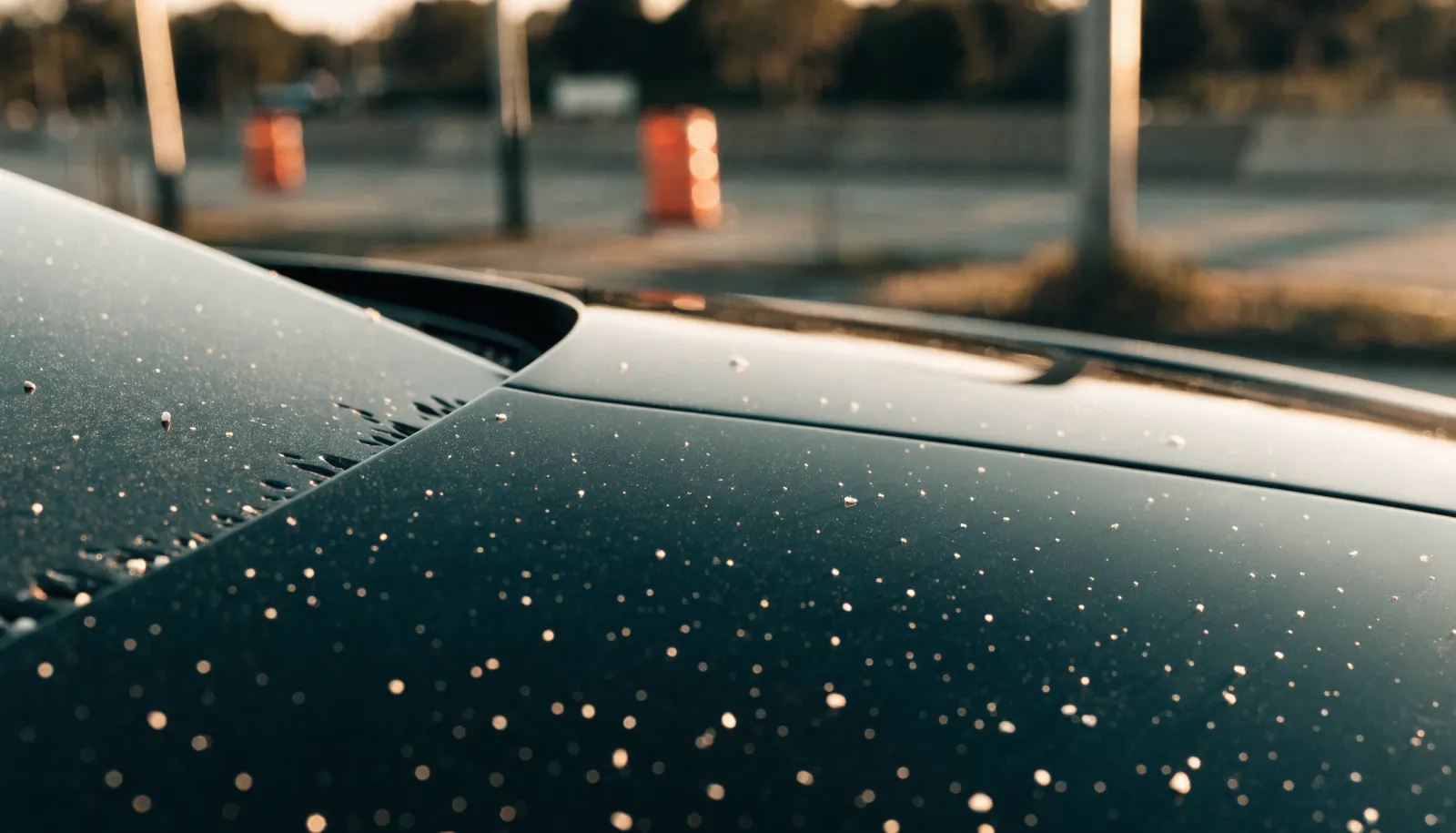
Even a freshly washed car carries contamination that soap and water cannot remove. Iron particles from brake dust, rail dust, and airborne industrial fallout embed themselves into clear coat and sit flush with the surface. They are invisible to the naked eye but detectable with an iron decontamination spray, which reacts with embedded iron and turns a purple or violet color on contact.
An iron decontamination step is non-negotiable before any ceramic coating application. After the iron remover is rinsed, the car typically receives a clay bar treatment to physically remove bonded contamination that chemical products leave behind. This includes tar, industrial fallout, overspray, and mineral deposits. Running a clay bar across a panel that has been through iron decon makes the difference between a surface that feels smooth and one that still has micro-texture under your fingertips.
After clay, the paint is wiped down with a panel wipe or isopropyl alcohol solution. This removes any remaining oils, residues, and the lubricant used during the clay process. The surface needs to be completely clean and dry before any polishing or coating contact.
Step three: paint correction where it is warranted
If the inspection reveals swirl marks, water etching, light scratches, or oxidation, those issues need to be addressed before the coating goes on. Paint correction involves machine polishing the clear coat with a combination of cutting compounds and finishing polishes, depending on the severity of the defects and the hardness of the paint.
Not every car needs aggressive correction. A newer vehicle with well-maintained paint might only need a light one-stage polish to refine the surface and maximize gloss before coating. A car with years of automatic car wash damage might need a full two-stage correction. The appropriate level of correction is determined by that initial inspection, not by a default package.
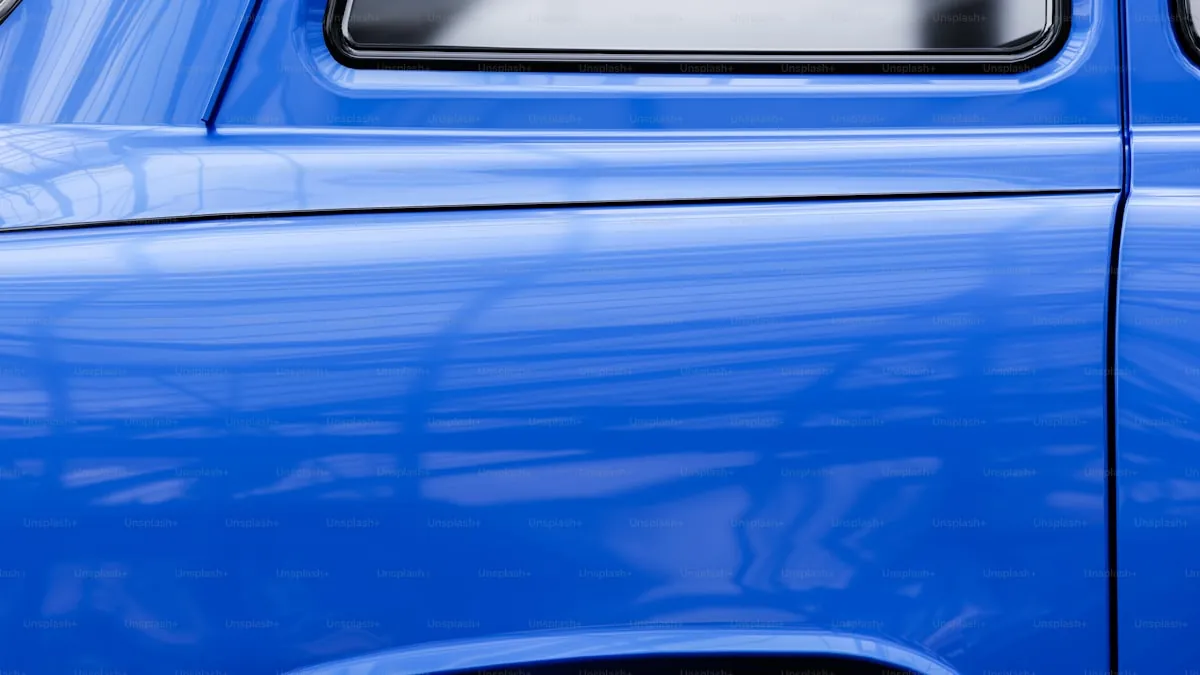
What paint correction does in the context of pre-coating prep is twofold. It removes defects that would otherwise be sealed under the coating permanently, and it creates a uniformly smooth surface that allows the ceramic to bond evenly across every panel. A well-corrected surface under a ceramic coating produces noticeably deeper gloss than a coating applied over uncorrected paint, even if the uncorrected paint looks acceptable in casual lighting.
All polishing work at EuroLuxe is done inside a climate-controlled installation bay. Temperature and humidity affect how polishing compounds behave and how quickly they break down on the surface. Doing this work in uncontrolled outdoor conditions is an unnecessary variable that affects consistency.
Step four: panel wipe and final surface prep
Once correction is complete, every panel is wiped down again with a clean panel wipe product. This removes polishing oils, dusting from the compound, and any fingerprints or contact residue introduced during the polishing phase. At this stage, the surface is essentially bare clear coat with no protection of any kind on it.
This final wipe-down is the last step before coating application begins. It is also the step that many DIY attempts get wrong. Consumer panel wipe products vary widely in formulation. Using the wrong one can leave a residue that interferes with coating adhesion. Professional installers use products that are matched to the specific coating chemistry they are working with.
The car is kept in the climate-controlled bay from this point forward. Dust, humidity, and temperature swings during application and initial cure can all affect the outcome. A controlled environment is not a luxury in this work. It is a basic requirement for consistent results.
What this prep sequence means for your coating’s lifespan
A Gyeon ceramic coating applied over properly prepared paint will behave as rated. Hydrophobic performance will be strong from day one and will remain consistent for years with appropriate maintenance washing. Gloss depth will be maximized. The coating will resist UV degradation, environmental fallout, and light abrasion in the way the product is engineered to.
A coating applied over contaminated or defect-laden paint will underperform from the beginning and degrade unevenly. There is no way to compensate for poor prep after the coating is applied. The chemistry does not work that way.
If you are evaluating shops for a ceramic coating installation and a quote comes back unusually fast or unusually cheap, the prep sequence is usually where the time and cost were cut. Ask specifically what decontamination steps are included, whether paint correction is assessed before quoting, and where the work is performed. Those three questions will tell you a great deal about what you are actually buying.
For vehicles in the North Houston area, including The Woodlands, Spring, Cypress, Conroe, and Tomball, the combination of heat, humidity, road construction debris, and pollen makes proper prep more important, not less. This environment puts coatings under continuous stress. A coating that was given the best possible foundation will hold up under those conditions. One that was not will show it within the first season.
If you want to talk through what your specific vehicle needs before a ceramic coating appointment, call EuroLuxe at (936) 292-6056. The conversation will start with what the paint looks like now, not with what package you want to buy.
Prep is the part of a ceramic coating job that customers rarely see and shops rarely photograph. It is also the part that determines everything else. Understanding it puts you in a better position to make a decision that holds up over time.