Why paint decontamination matters before ceramic coating
When a vehicle comes in for a ceramic coating, the coating itself is often the last thing installed during a multi-hour process. Before a single drop of Gyeon quartz goes on the paint, the surface has to go through a thorough decontamination sequence — chemical and mechanical — that most owners never see and rarely think about. That sequence is not a formality. It is the step that determines whether the coating bonds correctly and lasts the way it should.
Paint looks clean to the naked eye far more often than it actually is. A freshly washed car can still carry embedded iron particles from brake dust and rail fallout, industrial contamination from highway exhaust, bonded tar spots from road spray, and a fine layer of oxidized clear coat that looks normal in sunlight but reads as rough under a lighting panel. If you coat over any of that, you are not protecting the paint — you are sealing the problem in place.
This is worth understanding before you compare quotes or schedule an appointment, because decontamination is where a proper installation diverges from a rushed one. Shops that skip it or compress it are not saving you money. They are shortening the useful life of the coating you paid for.
What contamination actually looks like
The most common contaminant on any vehicle driven in the Houston metro is iron fallout. Every time a brake rotor heats and cools, it sheds microscopic steel particles that travel through the air and embed in surrounding surfaces — your own car’s paint, the cars behind you on 249 or the Grand Parkway, and vehicles parked near rail lines or industrial corridors around the port. These particles oxidize on contact with moisture, producing the reddish-brown staining visible on white or silver paint and invisible but still present on darker colors.
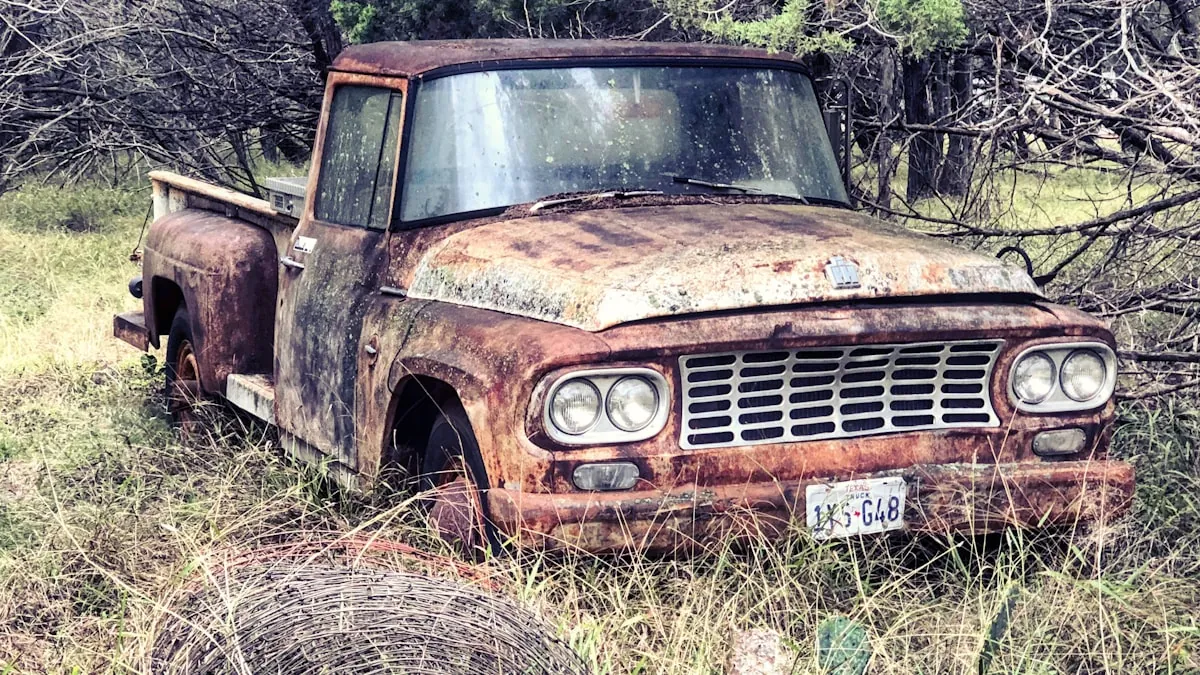
Beyond iron, road tar accumulates along lower panels and rocker areas. Tree sap and insect proteins bond to the clear coat through enzymatic adhesion — they are not sitting on the surface, they are chemically attached to it. Older vehicles and those with high highway miles often show significant industrial fallout: silica-based particulates from highway concrete grinding and airborne manufacturing byproducts that settle onto horizontal surfaces over months and years.
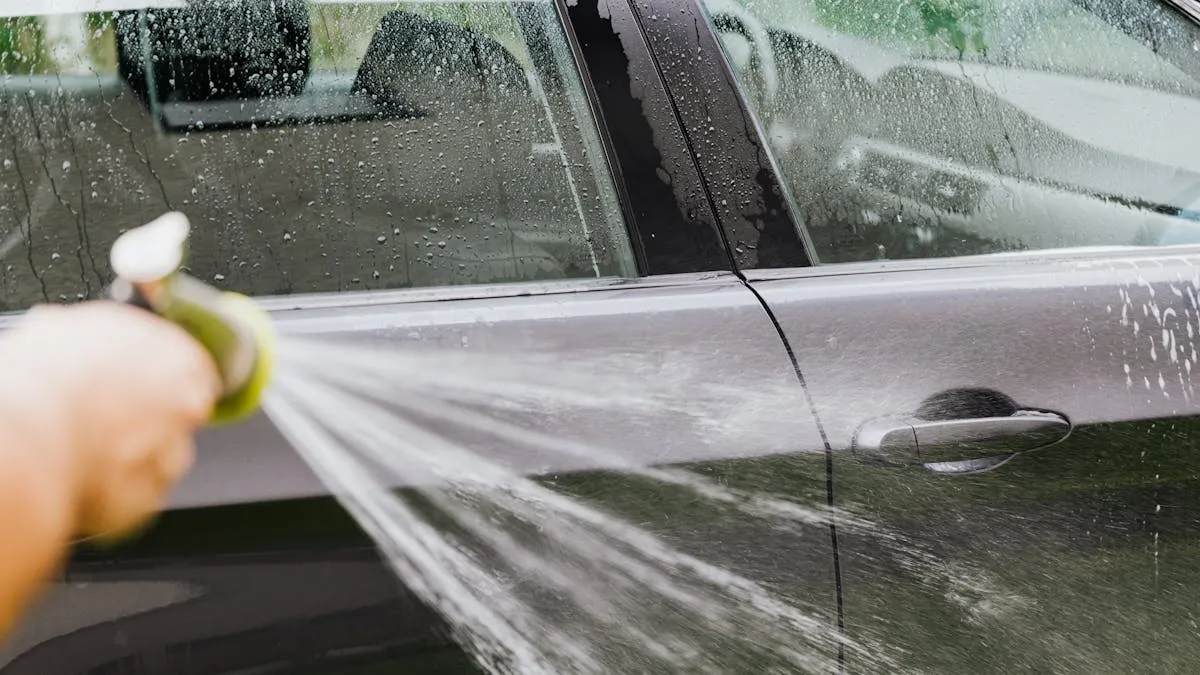
None of this washes off with soap and water, which is why the standard wash before a coating appointment is not a substitute for actual decontamination.
The chemical decontamination step
Chemical decon typically runs in two passes. The first is an iron remover — a pH-neutral or slightly acidic solution that reacts with ferrous contamination and breaks its bond with the paint surface. You can watch this work in real time: the solution turns purple or red as it oxidizes the iron particles, which then rinse away cleanly. On heavily contaminated vehicles, the color change is dramatic.
The second chemical pass targets organic contamination: tar, adhesive residue, sap, and industrial wax. A hydrocarbon-based panel wipe or dedicated tar remover dissolves these compounds without damaging the clear coat. This step also removes any existing wax or sealant left on the paint from previous products, which is critical — Gyeon ceramic coatings require a bare, uncoated surface to cross-link with the clear coat properly. Any wax or polymer residue left behind acts as a barrier between the coating and the paint.
After chemical decon, the paint is still not ready. It is cleaner, but it is not clean enough.
Clay bar and mechanical decontamination
Once chemical contaminants are addressed, the surface goes through mechanical decontamination — typically clay bar work, though clay mitts or synthetic clay pads serve the same purpose. The clay medium is worked across the paint with a lubricant and physically shears off anything still bonded to the surface that chemistry alone could not dissolve.
You can feel the difference as you work. A contaminated panel offers resistance — the clay grabs and catches. A properly decontaminated panel becomes slick and smooth, the clay gliding without drag. Installers often run a bare hand across the paint in a plastic bag after claying to amplify the tactile feedback. That test, simple as it sounds, tells you more about surface readiness than most instruments.
Mechanical decon also reveals surface defects that were masked by the light-diffusing effect of contamination. Swirl marks, fine scratches, and marring become more visible after a clean clay pass. This is the correct time to assess whether paint correction is warranted before coating — not after the coating has amplified every remaining imperfection under direct light.
Why contamination under a coating accelerates failure
A ceramic coating does not just sit on the surface like wax. It chemically bonds to the clear coat through a condensation reaction that requires molecular-level contact between the SiO2 and the paint substrate. If iron particles, tar residue, or wax films interrupt that contact at the bonding surface, the coating does not fully cross-link in those areas. The result is micro-regions of poor adhesion distributed across the panel.
In practice, this creates a coating that looks fine at installation and looks acceptable for the first six to twelve months, then begins to show premature hydrophobic degradation, water spotting sensitivity, and uneven gloss in high-UV areas like the hood and roof. The coating was not defective. The surface prep was.
In a climate-controlled installation bay — which is the correct environment for any coating application — temperature and humidity are managed throughout the decontamination and application process. That controlled environment is only as useful as the surface prep that precedes it. Temperature control does not compensate for contamination.
What to expect at a professional appointment
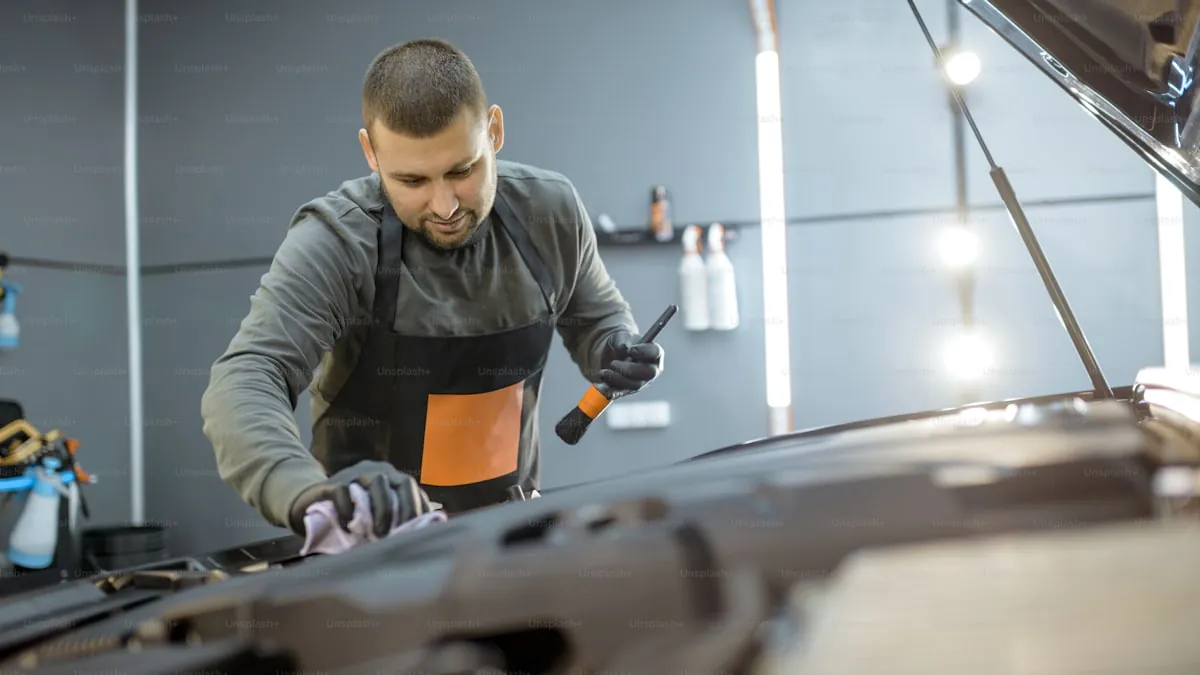
At EuroLuxe, decontamination is built into every coating package — it is not a line-item add-on. The process runs in sequence: wash, chemical iron removal, tar and adhesive treatment, clay, paint thickness measurement, defect inspection under dedicated lighting, and then the decision on whether correction precedes coating. Most vehicles that come in without recent professional prep need at least a single-stage correction pass before the surface is ready.
The full prep sequence adds hours to the appointment. That is the point. A coating applied in two hours total is almost certainly going on unprepared paint. Gyeon products are premium materials, and premium materials still fail when the substrate is not right.
If you have questions about what your vehicle’s paint needs before a ceramic appointment, or you want to understand exactly what the inspection process involves, call us at (936) 292-6056 and we can walk through the assessment before you book.
Paint decontamination is not glamorous, and it does not photograph as well as a finished coating with water beading across the hood. But it is the step that determines whether that coating is still performing correctly two years from now or already showing signs of early failure. Every coating job starts with the surface, not the product.