Ceramic coating on red and dark cars: gloss depth explained
Red, dark blue, and black paint have something in common that lighter colors do not: they make every surface condition visible. Under direct sunlight or shop lighting, a swirl mark on a white car reads as a faint haze. The same mark on a candy red or midnight blue finish reads as a web of fine scratches. That contrast works in both directions. When those same colors are properly corrected and coated, the depth and saturation of the finish is more striking than anything you can achieve on silver or light gray. Ceramic coating on high-contrast paint is not just about protection. It is about making the most of a finish that was already designed to draw attention.
Before getting into the chemistry, it is worth being direct about expectations. Ceramic coating does not add gloss the way a show wax does by filling surface irregularities with product. A coating bonds to the clear coat and creates a harder, slicker surface that reflects light more cleanly. On a paint surface that is already flat and swirl-free, that translates to a noticeable increase in depth and clarity. On a paint surface that is covered in machine-wash swirls or fine scratches, the coating locks those defects in place permanently. This is why the approach to red and dark paint starts well before a single drop of coating is applied.
Why dark and saturated colors demand more prep
The physics of light reflection on dark paint amplifies every surface irregularity. A scratch or swirl mark scatters light in a way that disrupts the uniform reflection the color was designed to produce. On a deep red or dark blue car, the eye perceives that scattered light as a loss of saturation and a milky, flat appearance in the mid-tones. Owners of these vehicles often describe their car as looking dull or tired even when the paint is structurally intact.
Paint correction on dark paint requires a level of care that lighter colors simply do not demand. The abrasive compounds and polishing pads used to remove scratches and swirls can themselves introduce new marks if the process is not dialed in correctly. Rotary polishers moving too fast, pads that are too aggressive, or a single wipe-down with the wrong towel after compounding can all show up under inspection lighting as new defects. At EuroLuxe, every correction on a dark or heavily saturated vehicle is checked under multiple lighting angles before moving forward.
How ceramic coating amplifies gloss on corrected paint
Once the surface is flat and defect-free, the ceramic coating chemistry becomes relevant. Gyeon coatings, which is what we use here, form a Si-O bond matrix on top of the clear coat. This layer is harder than the clear coat beneath it and has an extremely low surface energy. The result is a surface that water beads and sheets off of and that reflects ambient light with very little scatter.
On a corrected dark paint surface, this matters because the color reads deeper and more saturated. The clear coat on an uncorrected or uncoated car has microscopic texture from wash marring, fallout, and normal surface wear. That texture diffuses reflected light slightly, which translates to a flat or chalky appearance in person. The combination of a polished clear coat and a ceramic layer on top removes that diffusion. Candy red looks wet. Dark blue looks like it has depth. Black looks like a mirror rather than a blackboard.
This is also why the difference between a single-stage correction and a two-stage correction becomes visible on dark paint in a way it often does not on lighter colors. A single-stage pass removes most defects but leaves some micro-marring from the compounding stage. On a white car, that residual texture rarely matters. On a dark car heading into a ceramic coat, it will show under direct sun as a slightly hazy finish beneath the coating’s sheen. The extra polishing step pays off on these colors in a way that is visible to the owner every time they walk to their car.
Common issues specific to red paint
Red paint carries a few characteristics that set it apart from other dark or saturated colors. Many red formulations, particularly reds from European manufacturers and certain domestic performance brands, use pigment systems that are chemically softer than the clear coat above them. This matters less under normal circumstances but becomes relevant in two situations: paint correction and long-term UV exposure.
During correction, softer red base coats are more prone to strike-through, which is the point at which a polishing pad removes enough clear coat to expose the color layer beneath. A competent installer uses a paint depth gauge before touching the machine to the surface, working with the measurement data rather than guessing. On a car where the clear coat is thin from a respray or prior correction work, the approach changes accordingly.
UV exposure is where ceramic coating makes a more concrete difference on red vehicles. Red pigments fade under ultraviolet light more visibly than most other colors because the fading process shifts the hue toward orange. A properly applied ceramic coating with meaningful UV-blocking properties slows this degradation. Gyeon’s professional-grade products include UV blockers as part of their formulation, which is one of the reasons we selected that product line. The difference over several years of Texas sun is a car that holds its original hue rather than drifting toward a washed-out version of itself.
Maintenance after coating on dark vehicles
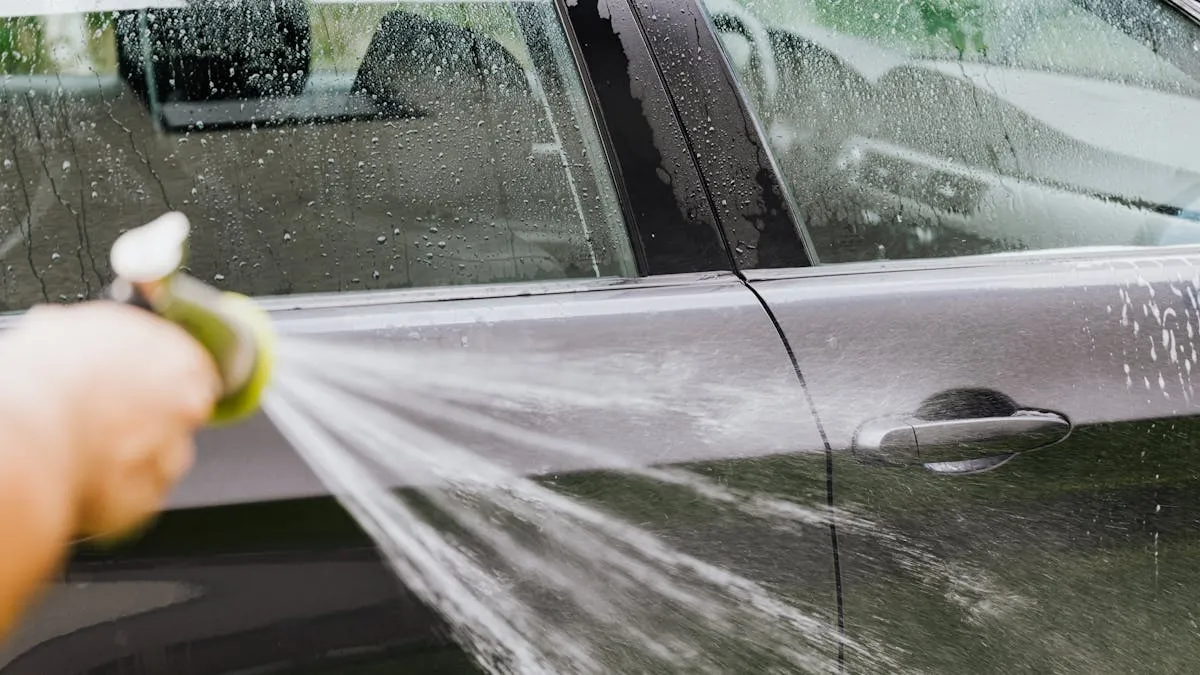
The hydrophobic layer on a ceramic-coated car makes maintenance easier, but dark and saturated paint still requires more discipline than lighter colors. A white car with light water spots from an unfiltered garden hose rinse may not show much damage. The same water spots on a dark blue or black hood will be visible from twenty feet away once the water evaporates and the minerals deposit on the surface.
The right approach is a two-bucket hand wash with a quality pH-neutral soap, a clean microfiber mitt, and a proper drying process using a soft waffle-weave towel or an air blower rather than dragging fabric across the surface. Touchless washes are acceptable for regular maintenance between hand washes, but brushed or cloth-contact tunnel washes should be avoided entirely on coated paint. They will not penetrate the coating and cause structural damage, but they will introduce swirls into the coating surface that make the finish look progressively worse over time.
Periodic application of a spray topper between annual inspections helps maintain the hydrophobic behavior and surface gloss between professional services. This is not strictly necessary on a coated car, but on a dark vehicle where the visual payoff of a clean and maintained coating is most apparent, it is worth the fifteen minutes.
Booking and what to expect from the process
The process for a dark or highly saturated vehicle at EuroLuxe starts with a visual inspection under our shop lighting and a paint depth reading across all major panels. From there, the correction stage is determined based on the actual condition of the surface rather than a standard package. Some vehicles come in needing a single-stage polish. Others that have been through automatic washes for several years need a two-stage process to get the finish to the point where ceramic coating will deliver the expected result. We walk through the findings before any work begins so there are no surprises on completion day.
If you have questions about the condition of your paint or what correction and ceramic coating would involve for your specific vehicle, call us at (936) 292-6056 and we can talk through what makes sense before you commit to anything. The shop is at 11701 Holderrieth Rd in Tomball, and most vehicles are completed within one to three days depending on the extent of correction work required.
Dark and saturated paint is unforgiving in the worst way when it is neglected, and extraordinary when it is done right. Paint correction before a ceramic coating is not an upsell on these vehicles. It is the difference between a coated swirled finish and a finish that actually delivers what a well-chosen color was designed to show.