Ceramic coating a used car: what to do before you apply
Buying a pre-owned vehicle is a practical decision, but it brings a specific problem that new-car purchases sidestep entirely: you have no idea how the paint was treated before it landed in your driveway. The previous owner may have run it through automatic car washes every week, left bird droppings on the hood for days, or had a body shop respray a panel after a minor collision. All of that history is embedded in the clear coat before you ever think about applying a ceramic coating.
The appeal of coating a used car is legitimate. A quality ceramic coating adds a durable hydrophobic layer that simplifies washing, slows contamination buildup, and protects whatever paint condition you have underneath. But that last phrase carries the weight of the whole conversation. Ceramic coating locks in whatever is present on the surface. If the paint has swirl marks, oxidation, water spot etching, or industrial fallout embedded in the clear coat, the coating preserves all of it under a hardened layer. What you apply over isn’t cleaned up by the product — it’s preserved by it.
That’s why the preparation process for a used vehicle is fundamentally different from coating a car that came off a transporter 72 hours ago. The steps are more involved, the inspection is more thorough, and the decision-making about how much correction is necessary requires an honest look at the paint as it actually exists.
Start with a thorough paint inspection
Before any chemical touches the car, a proper evaluation has to happen. This means inspecting the paint under high-intensity lighting — not sunlight, not a fluorescent shop fixture overhead, but directed lighting at a low angle that reveals surface defects. Swirl marks that look like minor scuffs in normal light often reveal themselves as widespread marring when lit correctly.
A paint thickness gauge is equally important. It tells you where you’re working with factory clear coat, where a previous owner may have had a panel repainted, and whether any areas have been wet-sanded down to a marginal film thickness. If a panel is already thin, aggressive machine polishing to remove defects becomes a risk rather than a remedy. Knowing the numbers before you start determines how far you can safely push the correction.
Inspection also means looking at the jambs, the leading edges of doors, and under the hood lip. Paint condition in those areas compared to the flat panels often reveals whether a car has had genuine paint work or just a surface-level detail at some point.
Decontamination is non-negotiable on pre-owned paint
Even if a used car looks clean, the surface almost certainly has embedded contamination that a wash won’t remove. Iron fallout from brake dust bonds to paint over time and creates a rough texture you can feel with bare skin. Road tar spots, industrial fallout, and mineral deposits from hard water all accumulate in the clear coat and have to be removed before any coating is applied.
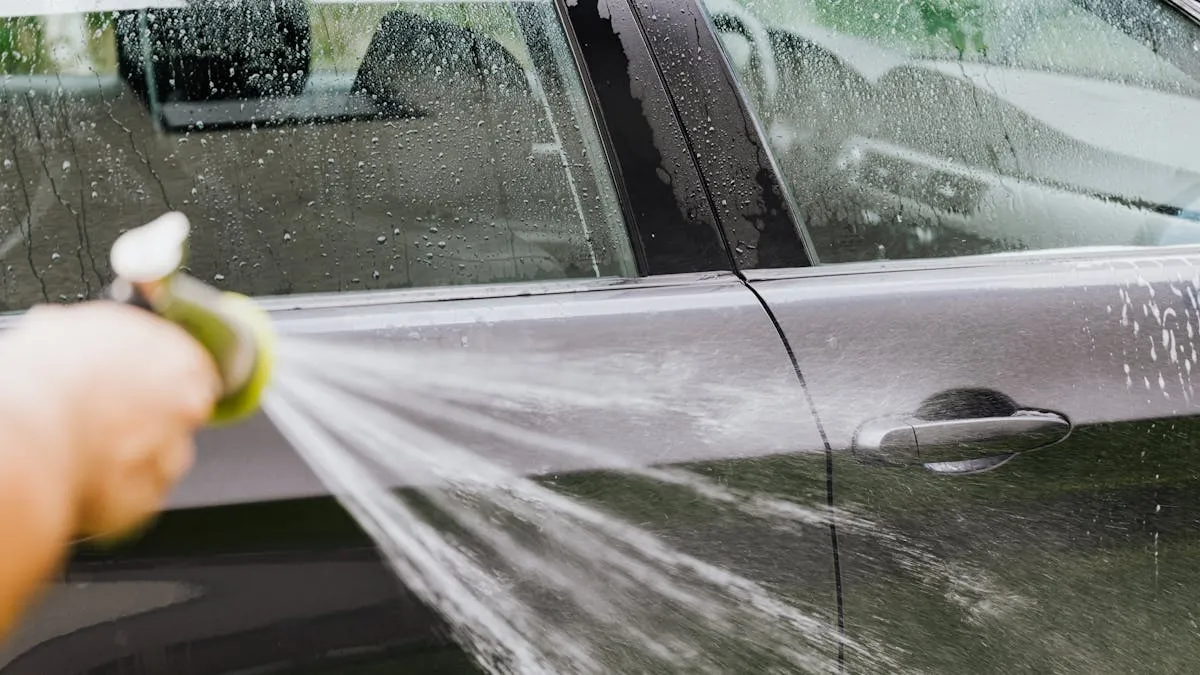
The decontamination sequence is consistent regardless of paint condition. A thorough chemical wash removes surface grime. An iron remover — applied as a spray, allowed to dwell, then rinsed — chemically dissolves ferrous particles bonded to the paint. A clay bar or clay mitt follows to mechanically lift any contamination that survived the chemical step. On a used vehicle that hasn’t been professionally decontaminated before, the amount of material the clay pulls off can be substantial.
Skipping this step and coating over embedded contamination means the coating bonds partially or unevenly. It also means anything left under the coating can continue to react with the clear coat over time, causing staining or micro-etching that no amount of surface maintenance will address.
How much paint correction does a used car actually need
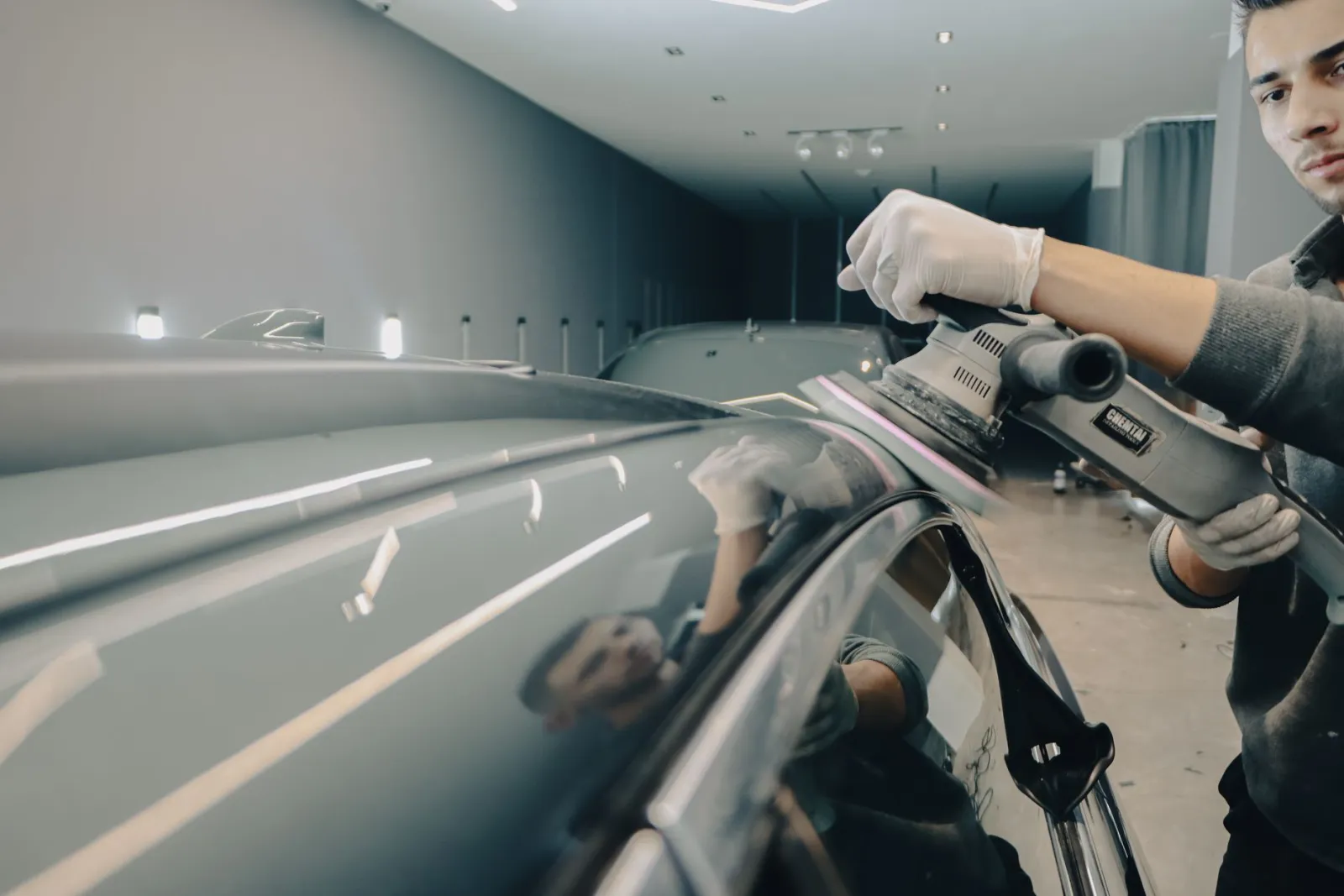
This is the question that determines the budget and the timeline. Paint correction involves machine polishing with abrasive compounds to remove a controlled amount of clear coat, leveling the surface so that scratches and swirl marks disappear. On a used vehicle, the range of what’s needed varies considerably.
Some pre-owned cars come with paint that’s in reasonable condition — a one-step polish to remove light swirls and hazing may be enough before coating. Others need a true multi-stage correction: a cutting compound to address deeper scratches and oxidation, followed by a finer polish to refine the surface and eliminate any haze left by the heavier abrasive. A small number of used cars arrive with paint that has been so neglected or previously polished so aggressively that correction has limited utility, and honest conversation about what’s achievable is necessary.
The goal before applying a ceramic coating is to get the paint to the best condition it can reach within the constraints of remaining clear coat thickness. That’s not always perfection, but it should represent a significant improvement over what came in the door.
Panel repaints and their effect on the coating process
Used vehicles frequently have at least one repainted panel. Body shops vary in quality, and aftermarket paint differs from factory paint in several ways that matter during the coating process. Aftermarket clear coats often have different hardness levels, different chemical sensitivities, and sometimes still contain residual solvent even months after application if the shop didn’t bake the paint properly.
A panel that hasn’t fully outgassed — released all its solvents — can cause a ceramic coating to cure poorly or develop low spots and cloudiness. This is why it’s worth asking whether any panels have been repainted and, when in doubt, allowing additional time before coating freshly painted areas. In a climate-controlled installation bay, you can control temperature and humidity, but you can’t accelerate how long it takes for shop-applied clear coat to fully harden.
Identifying repainted panels also informs the correction stage. Aftermarket paint is sometimes softer than factory clear and cuts faster, meaning the same polishing pressure that’s appropriate for an OEM panel can remove too much material from a repainted one. These variables require adjusting technique based on what the paint thickness gauge and visual inspection tell you about each individual panel.
What the coating process looks like on a properly prepped used car
Once decontamination is complete and correction is done, the surface has to be wiped down with an IPA solution to strip any polishing oils before the coating goes on. Polishing oils fill microscopic surface imperfections and make paint look better immediately after correction, but they also interfere with ceramic bonding if they’re not fully removed. An IPA wipe reveals the true surface and ensures the coating forms the strongest possible chemical bond with the clear coat.
Application in a climate-controlled environment matters here. High humidity, temperature swings, and airborne dust during application are the primary enemies of a clean, even cure. Once the coating is applied panel by panel, leveled, and left to flash, the car typically remains in the shop for an initial cure period before it’s safe to move outdoors.
Post-coating, a used vehicle benefits from the same maintenance discipline as any other coated car: two-bucket hand washing with a pH-neutral soap, avoiding automatic tunnels, and periodic application of a coating-compatible spray to maintain the hydrophobic layer.
Realistic expectations for a coated pre-owned car
A ceramic coating on a properly prepared used vehicle will perform as well as one applied to a new car — within the limits of what the paint underneath allows. If the paint had 80 percent of its clear coat remaining before correction, it has less now. That doesn’t make the coating less effective, but it does mean you’re working with a finite resource and should treat the painted surfaces accordingly going forward.
The coating won’t reverse paint that was in genuinely poor condition before the process started. What it does is protect the improved condition achieved through correction and prevent new contamination from bonding to the surface the way it would to bare, unprotected clear coat. For a vehicle you plan to own for years, that protection is meaningful regardless of whether the car was purchased new or with 60,000 miles on it.
If you have a used vehicle and want a straightforward assessment of what its paint actually needs before committing to a coating, the conversation starts with an in-person inspection. Reach out to EuroLuxe at (936) 292-6056 to schedule a look.
Ceramic coating a used car isn’t a shortcut — it’s a process that requires honest evaluation, proper preparation, and realistic conversation about what the paint can and can’t become. Done correctly, it’s one of the more effective ways to reset the condition of a pre-owned vehicle and protect it for the next several years of ownership.