Ceramic coating vs. wax: what actually protects your paint
Most vehicle owners have waxed a car at some point. It is familiar work — apply a product, let it haze, wipe it off, and the paint looks better for a few weeks. Ceramic coating occupies a completely different category, even though it is often marketed as a premium upgrade to wax. The two products work differently at a chemical level, protect against different threats, and require different commitments to maintain. Understanding those differences before you spend money on either one will save you from being disappointed by whichever you choose.
This is not a case where one product is universally right and the other is wrong. A weekend driver stored in a garage has different needs than a daily commuter logging miles on Texas Highway 249. The goal here is to explain what each product actually does so you can match the protection to the use case.
What wax does and where it falls short
Carnauba wax and synthetic polymer sealants sit on top of the clear coat as a sacrificial layer. They fill minor surface texture, add a warm depth to the finish, and provide a degree of UV and water resistance. The chemistry is straightforward: the product bonds loosely to the paint surface through mechanical adhesion and eventually wears away through washing, heat, and environmental exposure.
In North Houston’s climate — consistent heat from May through October, frequent afternoon rain, and heavy pollen seasons — a quality carnauba wax will last roughly four to eight weeks before protection drops off measurably. Synthetic sealants stretch that to three to five months under the same conditions. Neither bonds permanently to the clear coat, which means both require regular reapplication to stay effective.
The bigger limitation is chemical resistance. Wax offers minimal protection against acidic contaminants like bird droppings, tree sap, or industrial fallout. A bird dropping left on a waxed surface for a few hours in July heat can etch through the sacrificial layer and into the clear coat. The wax slowed the damage, but it did not stop it.
What ceramic coating actually is
A professional ceramic coating is a liquid polymer, typically silica dioxide (SiO2) or a blend that includes titanium dioxide, that cures to form a semi-permanent bond with the clear coat surface. Once cured, it becomes an additional hard layer on top of the paint — not a film sitting loosely on top, but a chemically cross-linked structure that is measured in pencil hardness ratings and resists washing off.
Gyeon ceramic coatings, which EuroLuxe uses for all coating services, are formulated to deliver consistent performance in humid climates. The cure process is sensitive to temperature and humidity, which is why installation in a controlled environment matters. Product applied in a hot parking lot with fluctuating humidity will not cure uniformly, and uneven cure means uneven protection.
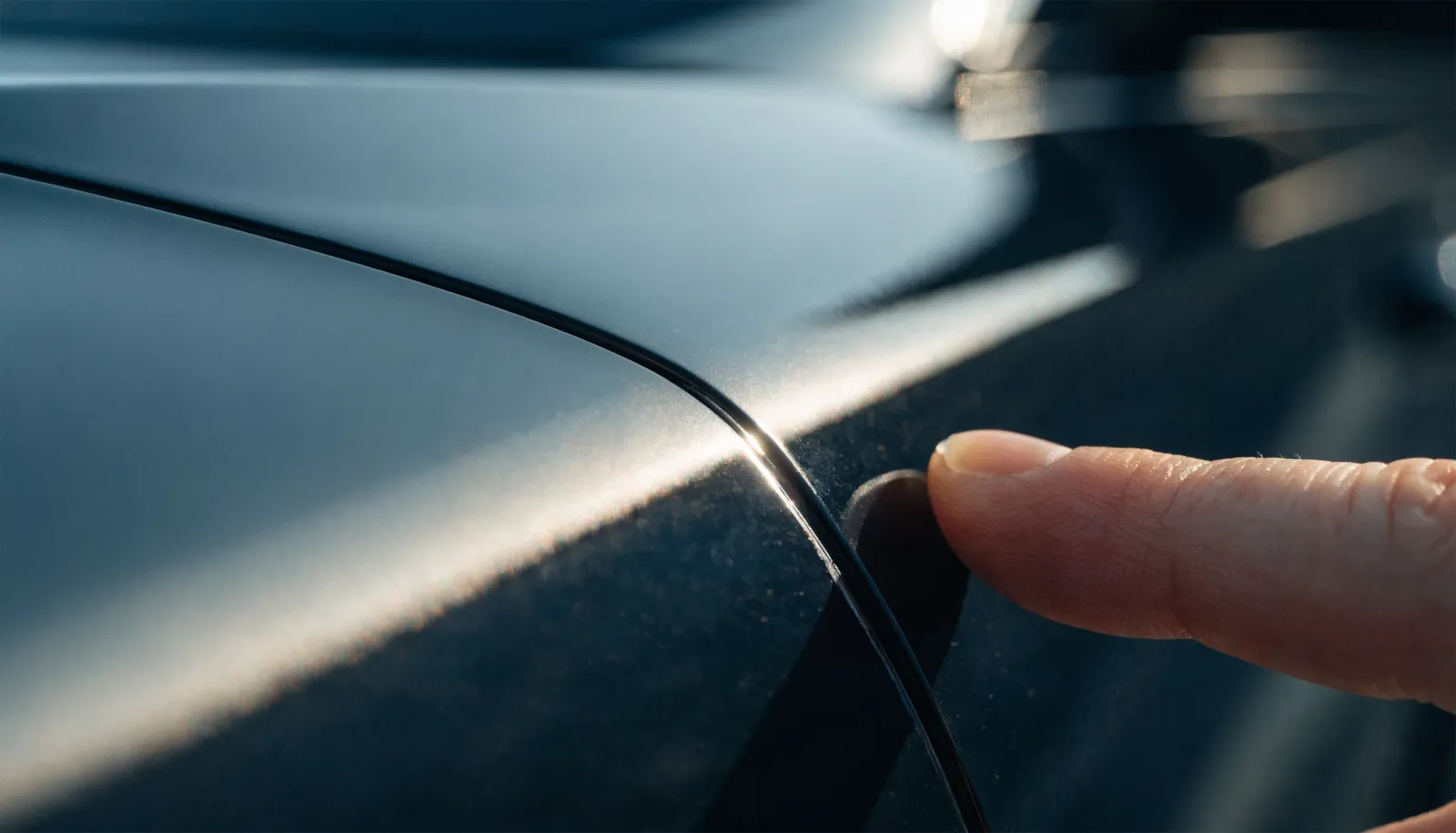
The practical outcomes are different from wax in every meaningful way. Ceramic coating does not wash off in four weeks. It does not need to be reapplied every season. The hydrophobic effect — water sheeting and beading off the surface — persists through normal washing rather than degrading after a few rain events. And the chemical resistance is substantially higher, which is the most important difference for daily-driven vehicles.
Chemical resistance: the number that matters most
Paint damage in real-world conditions is overwhelmingly chemical in origin. UV oxidation, acid rain, bug splatter, bird droppings, road grime with embedded iron particles — these are the threats that degrade paint over years of ownership. Swirl marks and rock chips get more attention, but slow chemical degradation is what turns a five-year-old paint job dull and hazy.
Wax creates a sacrificial barrier with limited chemical resistance. Once the wax layer is compromised, the clear coat is exposed. A professional-grade ceramic coating raises that resistance significantly. Gyeon coatings carry pH resistance ratings that cover the range of most environmental contaminants a daily driver encounters. That does not mean ceramic coating is impervious to everything — concentrated chemicals and prolonged exposure to strong acids will still cause damage — but the margin of protection is considerably wider.
For owners in North Houston dealing with oak pollen seasons that coat every horizontal surface in yellow dust, or summer thunderstorms carrying acid deposits, that chemical resistance is the core reason to consider ceramic coating rather than wax.
Longevity and what it costs over time
Wax costs less upfront. That is the straightforward part. A quality carnauba or synthetic sealant applied professionally runs significantly less than a ceramic coating service. But the comparison changes when you account for frequency. A ceramic coating applied correctly and maintained with appropriate wash chemistry will last three to five years on a vehicle that sees regular use. Some Gyeon formulations are rated to seven years under ideal conditions.
A wax or sealant applied every three to four months across the same five-year period requires a minimum of fifteen to twenty applications. When you price those out — including detailing labor if you are not doing it yourself — the cost differential compresses. For vehicles where the paint condition matters to the owner, ceramic coating often costs less per year of protection when the calculation accounts for the full service life.
There is also a prep factor that shapes cost. Ceramic coating is only as good as the surface it is applied to. Any swirl marks, oxidation, or contamination present when the coating goes down will be locked under that cured layer. Professional installation requires thorough decontamination and, in most cases, paint correction to address existing defects before the coating is applied. Wax is more forgiving in that respect — it fills minor imperfections temporarily rather than preserving them permanently.
Maintenance expectations after coating
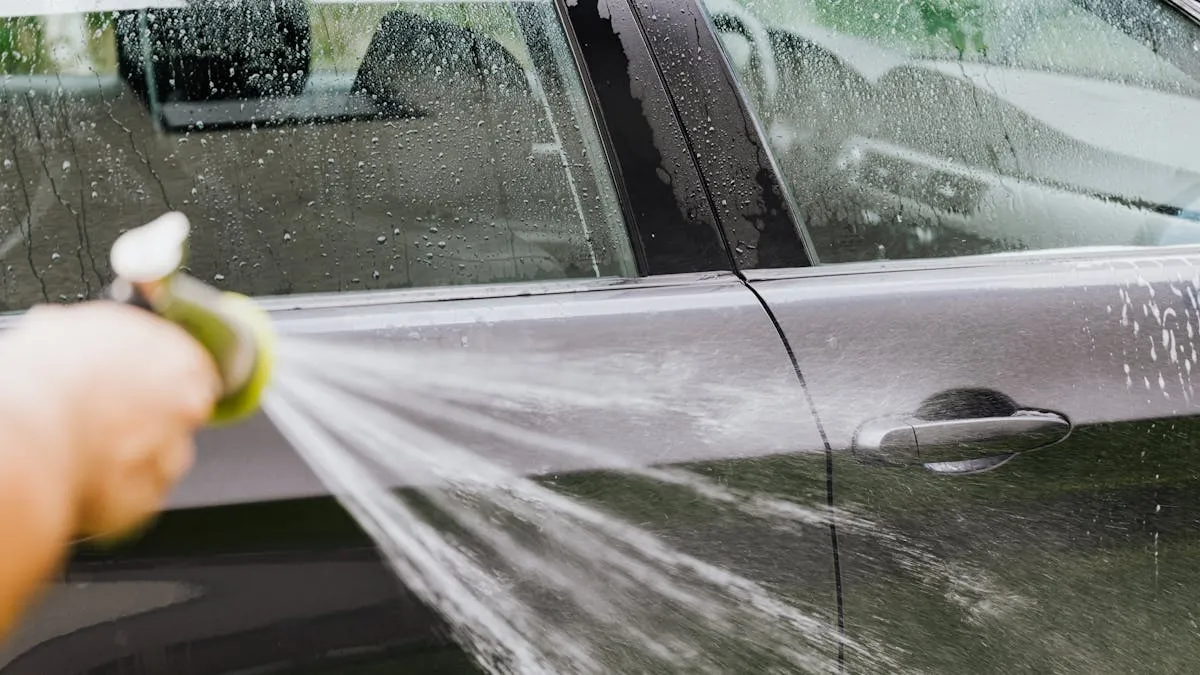
One persistent misconception is that ceramic coating eliminates car washing. It does not. What it changes is the ease and frequency of washing needed to keep the paint clean. Contaminants that would bond aggressively to bare clear coat or sit on wax do not adhere as readily to a properly maintained ceramic surface. A two-bucket hand wash or a touchless wash removes them more completely and with less physical contact, which reduces the swirl risk from each wash cycle.
Maintaining a ceramic coating correctly means washing with a pH-neutral shampoo, avoiding automatic brush washes, drying properly with quality microfiber, and applying a coating-compatible spray topper periodically to refresh the hydrophobic layer. Following those steps consistently extends the coating’s service life and keeps the surface performing as intended.
Omitting that maintenance does not mean the coating fails immediately, but it does shorten its effective life. Coating a vehicle and then running it through a brush tunnel wash every week will degrade performance faster than the service life rating suggests. The chemistry works in your favor when the maintenance supports it.
Which one fits your situation
If you own a vehicle you plan to keep for several years, drive it regularly, and want to reduce the time and cost of paint maintenance over that period, ceramic coating is the rational choice. The upfront investment is higher, the prep requirements are more involved, and the installation needs to be done in a controlled environment by someone experienced with the product.
If you drive a leased vehicle approaching turn-in, own a second car that sees limited use and lives indoors most of the time, or simply want to improve the look of a daily driver for a season without a long-term commitment, a quality sealant applied correctly serves that purpose adequately. It is a different tool, not a defective version of ceramic coating.
The conversation EuroLuxe has with most owners is about matching the product to the actual use case rather than upselling the most expensive option. Some vehicles benefit more from targeted paint correction followed by a professional sealant than from a ceramic coating applied over uncorrected paint. The prep and chemistry have to make sense together.
For owners in the Tomball, Woodlands, Cypress, Conroe, and surrounding North Houston area who want to discuss what their specific vehicle needs, the direct line to EuroLuxe Detailing is (936) 292-6056.
The right product applied correctly on properly prepared paint is what delivers lasting results. Whether that is a ceramic coating rated for five-plus years or a premium sealant refreshed seasonally depends on the vehicle, the owner’s maintenance habits, and what the paint needs going in. Neither answer is wrong when it fits the situation honestly.