The Complete Paint Protection Film Guide for Houston Drivers
Why Houston Paint Gets Destroyed Faster Than Almost Anywhere Else
Houston drivers face a combination of environmental conditions that is genuinely hostile to automotive paint in a way that drivers in most other American cities simply do not encounter at the same scale or intensity. Understanding those conditions is the starting point for understanding why paint protection film is not a luxury in this market — it is the most practical investment you can make in a vehicle you intend to keep in good condition.
The UV exposure here is extreme by any measurable standard. Texas receives a UV index of 10 to 11 — rated “very high” to “extreme” — during summer months, with that range beginning as early as April and persisting through October. UV radiation at those levels does not just fade paint. It chemically attacks the clear coat, breaking down the polymer chains that give it gloss and flexibility. Clear coat on an unprotected vehicle in this climate can show measurable degradation within two to three years. By five years, oxidation and micro-crazing — the network of tiny cracks visible when light hits the surface at a low angle — are visible to the naked eye on most vehicles sitting outside daily.
Highway debris is the other constant threat. Texas 249, the Grand Parkway 99, and FM 2920 carry heavy commercial truck traffic year-round, and the rock chips generated on those corridors are a practical reality every North Houston driver knows. A single rock at highway speed striking an unprotected hood creates an impact that punches through the clear coat and into the base coat. Left alone, that chip becomes a rust initiation point within months in Houston’s humidity. Multiply that by a commute season, and an unprotected vehicle accumulates chip damage that would require full panel repaints to restore.
Bug splatter from spring and summer months presents a less obvious but chemically serious problem. The acidic enzymes in insect remains begin etching into clear coat within hours of contact at Houston temperatures. Bird dropping acid is worse — pH levels in the range of 3.5 to 4.5, capable of etching clear coat permanently within a single afternoon of sun exposure. Industrial fallout from the petrochemical corridor east of Houston deposits iron particles that embed in paint and begin oxidizing on contact with moisture.
None of this is unique to Houston — but the combination of extreme UV, year-round road use, high summer temperatures, and high ambient humidity creates a compounding effect that accelerates every form of paint damage simultaneously. Paint protection film addresses all of it at once, which is why it has moved from a niche product for luxury vehicle owners to the most practical protective investment available for any vehicle driven regularly in this region.
What Paint Protection Film Actually Does
Paint protection film is a thermoplastic polyurethane film applied directly to the painted surface of a vehicle. The film is optically clear — when properly installed, it is invisible at normal viewing distances — and it acts as a sacrificial layer between the environment and the paint. The chemistry and physics of how it works are worth understanding because they explain both why the material costs what it does and why cheap alternatives perform so poorly.
The base layer of a quality PPF is aliphatic thermoplastic polyurethane, typically between 8 and 9.5 mil thick depending on the product. Aliphatic polyurethane was developed for aerospace applications where long-term UV resistance was critical — the same molecular structure that makes it stable on aircraft fairings makes it stable on automotive paint under Houston sun. The material has natural flexibility and impact absorption properties, meaning that a rock strike that would transfer all of its energy into bare paint dissipates across the film and into the adhesive layer instead, dramatically reducing the probability of a chip reaching the paint surface.
The self-healing capability built into modern premium films works through a molecular memory effect in the polyurethane top coat. Light surface scratches — the kind generated by automated car wash brushes, keys brushing the surface, or abrasive road debris — close themselves when the film is exposed to heat. Sun exposure, warm water, or a heat gun activates the molecular chains and causes them to return to their original configuration, eliminating the scratch without any intervention. This is not a coating applied over the film — it is a property of the polyurethane material itself. The implication is practical: the film maintains its optical clarity over time in a way that conventional paint without protection cannot.
The adhesive system in quality PPF is engineered to bond to automotive clear coat without damaging it. The bond is permanent enough that the film will not lift, bubble, or peel under normal operating conditions, but it does not chemically bond to the paint in a way that would make removal destructive. A properly installed film removed by a trained technician after five or ten years comes off cleanly, with the paint beneath in the same condition as when the film went on — minus whatever environmental damage the film prevented from reaching the surface.
What Does PPF Cost in Houston?
The cost of paint protection film installation in Houston varies substantially based on coverage area, film product, and installer quality. Understanding what drives those variations is important before you request a quote, because the cheapest option and the best-value option are rarely the same thing in this category.
Full-front coverage — hood, front fenders, front bumper, mirrors, and door edges — typically runs between $1,200 and $1,800 at a certified installation shop in the North Houston market. This is the most common entry point because the front of the vehicle takes the majority of rock chip and road debris impact. Full-body coverage, which adds the doors, rocker panels, rear bumper, and roof, typically ranges from $3,500 to $6,000 depending on vehicle size and complexity. A full wrap on a large SUV or truck can reach $7,000 to $8,000.
The variables that move price within those ranges are the film product, the amount of hand-fitting required, and the installer’s labor rate. A certified installer using a premium film with a nano ceramic top coat and a 10-year warranty is going to cost more than a shop using a commodity film with a 5-year warranty and no self-healing capability. That cost difference is real and reflects a real difference in performance and durability over the ownership period.
What is not captured in the upfront price comparison is the cost of not having protection. A single panel respray on a modern vehicle runs $800 to $1,500 depending on color and complexity. If your hood accumulates rock chips that require repainting within three years, that cost exceeds what the PPF film on the hood would have cost. The economics of PPF are most favorable when viewed over the ownership horizon rather than as an upfront sticker number.
Ready to get a quote for your vehicle? Our installs start at $1,200 for full-front coverage. Call 713-298-8819 or request a free quote online.
UltraFit XP Series: Why We Use It
We chose UltraFit as our PPF product at EuroLuxe and became a certified dealer because the XP Series solves the two most common failure modes we see in PPF installations — yellowing and delamination — more effectively than competing films at its price tier.
UltraFit is manufactured by INOGROW, a Korean materials science company with installations in over 60 countries. The XP Series uses an aliphatic thermoplastic polyurethane base layer with a nano ceramic top coat integrated into the film itself. That nano ceramic layer is not a separate product that needs to be applied after installation — it is built into the film structure, which means it is consistently present across the entire surface and cannot be missed during application the way a separately applied coating can be. The nano ceramic chemistry provides the UV resistance that prevents yellowing, the hydrophobic behavior that causes water to bead and sheet off rather than sitting on the film surface, and the self-healing activation characteristics that close surface scratches under heat exposure.
The XP Crystal variant is the optically clearest version in the line. The Ultra Clear PET construction minimizes haze and maximizes light transmission, which matters significantly on darker paint colors where any optical distortion is visible. On a midnight black or deep navy vehicle, the difference between a high-clarity film and a budget film is visible in direct sunlight — the budget film shows a slight milky appearance at certain angles, while high-clarity film disappears into the paint.
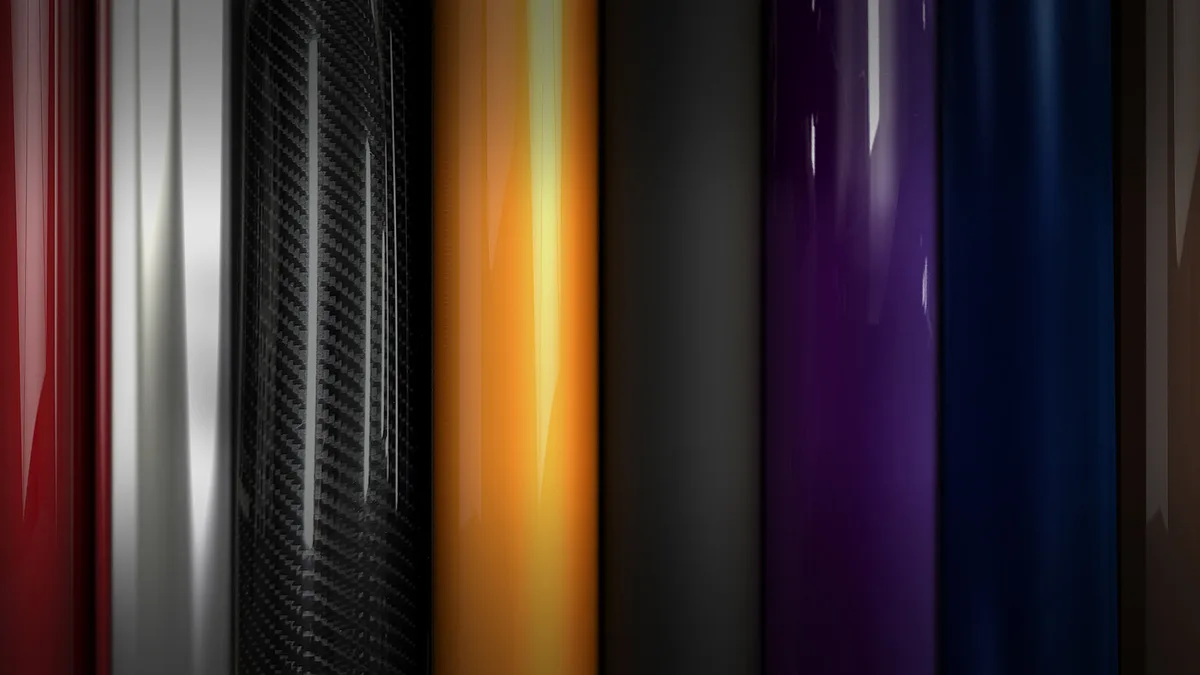
The product line also extends beyond clear PPF. The Aurora, Deep Chroma, Phoenix Red, Matte, and Carbon variants provide color-change options within the same film system, allowing clients who want to change their vehicle’s appearance to do so with the same protective properties as the clear film. This is a growing category — color-change PPF allows appearance customization without the permanence or expense of a full repaint, and the protection benefits are identical to clear film.
Film Clarity and Anti-Yellowing: What Separates Premium from Budget
The single most important long-term performance difference between premium and budget paint protection film is not self-healing or warranty terms — it is yellowing resistance. This is the failure mode that makes PPF visible in the worst possible way, and it is the reason clients who installed cheap film five years ago are now paying to have it removed and replaced.
Yellowing in PPF is caused by UV degradation of the polyurethane film material. When polyurethane is exposed to UV radiation over time, the molecular chains in the material undergo a photooxidation reaction that produces chromophores — chemical groups that absorb and re-emit light in the yellow-orange spectrum. The result is a film that starts optically clear and progressively develops a yellow cast, most visible on white, silver, and light-colored vehicles. In severe cases, the film can turn a deep amber within three to five years. On a white car, this is catastrophic — the painted panels beneath the film remain white while the protected areas yellow, inverting the entire purpose of having protection.
Premium films prevent this through two mechanisms. The first is an aliphatic polyurethane base. Aliphatic polyurethane uses a molecular structure that is inherently more UV-stable than aromatic polyurethane, the cheaper alternative used in budget films. The chemistry is the same reason aliphatic coatings are specified for outdoor architectural applications while aromatic coatings yellow quickly in sunlight. The second mechanism is a UV-blocking nano ceramic top coat that filters the wavelengths responsible for photooxidation before they reach the base material.
The UltraFit XP Series uses both mechanisms — aliphatic base plus nano ceramic top coat. The result is a film rated for no color fading over its warranty period, which currently stands at 10 years. This is not a marketing claim — it is backed by the material science of the film construction and verified by the warranty structure, which would not be financially viable if the films were actually yellowing at the rates older products did.
For practical comparison: a budget film at $600 for a front-end install that yellows visibly within three years is not a bargain. It is an investment in a product that will either embarrass the vehicle or need to be removed and replaced before it delivers any reasonable return on the investment. Premium film installed correctly by a certified dealer and maintained appropriately should look optically clear on a 10-year-old vehicle.
Clarity is a related but distinct specification. Optical haze — the haziness or milkiness that reduces the depth and gloss of the paint visible beneath the film — is measured as a percentage of scattered light transmission. Films with haze levels above 1 percent are perceptibly duller than bare paint at typical viewing distances. The UltraFit XP Crystal’s Ultra Clear PET construction targets the low-haze end of the market, producing installed results where the film is genuinely invisible rather than merely hard to notice. The difference is most apparent on dark paint and gloss finishes where any optical interference is visible.
UltraFit vs XPEL vs STEK vs Ceramic Pro: Honest Comparison
We get asked regularly how UltraFit compares to XPEL, since XPEL Ultimate Plus is the most recognized PPF brand in the US market and the one most buyers have heard of before they come to us. The honest answer is that both films are excellent, and the comparison between premium film brands is far less important than the comparison between film quality tiers and installer quality. But the differences are real and worth understanding.
XPEL Ultimate Plus is an 8 mil aliphatic polyurethane film with a self-healing top coat, a 10-year warranty, and the benefit of being installed by a very wide dealer network. The wide dealer network is XPEL’s primary commercial advantage — they have more certified installers than any other brand in North America, which means there is almost always an XPEL installer nearby regardless of where you are. The drawback of a wide dealer network is variable quality. XPEL sells to a large number of shops, and the range of installation quality across that network is correspondingly wide. A perfect XPEL install from a skilled technician will outperform a mediocre install of a marginally better film.
STEK DYNOshield is a Korean-manufactured film that has grown significantly in the US market over the past several years. STEK’s primary differentiation is in their color and matte film options — their color-change PPF line is considered among the best available. The clear DYNOshield is a competitive product with a 10-year warranty, self-healing capability, and strong UV resistance. Like UltraFit, STEK uses a more controlled dealer network than XPEL.
Ceramic Pro KAVACA is available exclusively through Ceramic Pro franchise locations. It is engineered as a bundled product — most Ceramic Pro dealers sell it as part of a Ceramic Pro coating package. If you are already committed to the Ceramic Pro ecosystem, KAVACA makes sense. As a standalone PPF product evaluated purely on film performance, it is competitive at the premium tier but does not offer a meaningful advantage over UltraFit, XPEL, or STEK.
3M Pro Series is one of the original clear bra products and carries significant brand recognition among older buyers who have known the 3M name in automotive applications for decades. The Pro Series at 6 to 8 mil is thinner than the 8 to 9.5 mil range of current premium films, and 3M’s warranty terms are not as strong as the competition at the premium tier. The 3M name is a comfort factor, not a performance advantage at current market specifications.
| Brand | Origin | Top Coat | Warranty | Dealer Model | Self-Healing |
|---|---|---|---|---|---|
| UltraFit XP Series | Korea (INOGROW) | Nano Ceramic | 10 years | Certified dealer network | Yes |
| XPEL Ultimate Plus | USA | Elastomeric | 10 years | Wide open network | Yes |
| STEK DYNOshield | Korea | TPH top coat | 10 years | Certified dealers | Yes |
| Ceramic Pro KAVACA | USA | Ceramic infused | 10 years | Franchise only | Yes |
| 3M Pro Series | USA | Standard | 10 years | Wide open network | Limited |
The honest framing we give every client: the film brand matters less than the installer. A certified UltraFit installation from a trained technician who hand-fits the material to your specific vehicle will outperform a poor installation of any other premium film. We chose UltraFit because of the nano ceramic top coat built into the film — an anti-yellowing and hydrophobic mechanism that competing brands either charge extra for as a separate coating step or do not offer at the same level — and because the certified dealer model ensures we are working with material from the same supply chain that backs the warranty.
Full Front vs Full Body vs Partial Coverage: Which Do You Actually Need?
Coverage selection is the question we spend the most time on with clients who are new to PPF, and the right answer is genuinely vehicle-specific. There is no universal correct choice — it depends on how the vehicle is used, where it is primarily driven, how long the owner plans to keep it, and what their tolerance is for visible damage.
Full-front coverage — hood, front fenders, front bumper, mirrors, and door edge guards — addresses approximately 80 to 85 percent of the rock chip and road debris exposure a vehicle receives in normal driving. The front of the vehicle is what faces oncoming debris, and a well-designed full-front package provides meaningful protection against the most common damage modes. For a vehicle that is primarily highway-driven in the North Houston corridor, full-front coverage alone will protect against the vast majority of chip damage that would otherwise accumulate over a three to five year period.
Full-body coverage adds the door panels, rocker panels, rear bumper, and roof. The additional cost over full-front is justified when the vehicle sees frequent parking lot exposure — door dings, shopping cart impacts, and door edge contact are panel-level events that full-front coverage does not address — or when the owner wants the vehicle to be genuinely pristine for the long term. If you are protecting a vehicle you plan to keep for ten years or more, or a vehicle whose value makes preservation financially meaningful, full-body coverage delivers a return on investment over the ownership period that partial coverage cannot match.
Partial coverage — a custom combination of specific high-exposure areas — is appropriate for targeted protection without a full commitment. Common partial configurations include hood and front bumper only (the highest-impact zone for highway driving), rocker panels only (for lifted trucks and SUVs where debris from the road surface directly contacts the rockers), or a track pack that adds the full hood, A-pillars, and door cups for driving enthusiasts who take their vehicles to autocross or track days.
The coverage selection that does not make sense is protecting only the bumper or only a partial hood. The logic of partial protection breaks down when the unprotected area immediately adjacent to the film accumulates chips while the protected area stays clean. The visual result — chips and damage up to the film edge, pristine surface under the film — draws more attention to the damage than having no film at all. When budgeting limits the coverage, the right response is usually to wait and save for full-front rather than install a token partial that creates an aesthetic problem while only partially solving the damage problem.
Not sure what coverage level makes sense for your vehicle? We do free multi-point paint inspections and give you an honest recommendation before you commit to anything. Call 713-298-8819 or book your inspection online.
The Installation Process at EuroLuxe
The quality difference between a premium PPF installation and a mediocre one is almost entirely in the preparation and the fitting — the film itself is the same material regardless of where it is purchased. Understanding what good installation looks like helps you evaluate any shop you are considering, regardless of which film brand they offer.
Preparation begins with a thorough wash and decontamination of the vehicle. Any contamination — iron particles from brake dust fallout, road tar, tree sap residue — left on the paint surface before the film goes on is permanently sealed under the film for the life of the installation. A proper prep process includes a chemical decontamination step using an iron fallout remover and a clay bar treatment to pull bonded contamination from the paint surface. Rushing this step, or skipping it in the interest of saving time, produces an installation that looks fine on day one and develops visible contamination under the film within months.
Film fitting is where the most significant quality variation occurs between installation shops. The two primary approaches are computer-cut kits using pattern databases and hand-cutting. Computer-cut kits are pre-cut to the dimensions of specific vehicle makes and models from a database of patterns. They are faster to install and more consistent across high-volume shops. Hand-cutting — where the installer manipulates material directly on the vehicle and cuts to fit — is more time-consuming but allows for custom coverage shapes and avoids the edge-exposure issues that can occur when a pattern kit does not precisely match a particular vehicle variant or generation.
At EuroLuxe we use a combination of both approaches depending on the vehicle and coverage configuration. Standard configurations on common vehicles use precision-cut kits from verified pattern databases. Custom configurations, unusual vehicle profiles, or situations where the pattern database does not have a sufficiently precise fit are hand-fitted directly on the vehicle. We do not apply a film that we are not confident will perform correctly for the length of the warranty.
The installation environment matters as well. PPF adhesive requires a controlled environment — temperature, humidity, and particulate levels all affect the adhesive bond quality and the final appearance. We install in a temperature-controlled indoor space to eliminate the variable of outdoor ambient conditions affecting adhesive cure, and we manage the installation environment to minimize airborne particulates that would otherwise become trapped under the film during application.
Post-installation, the film requires a cure period before the adhesive reaches full bond strength. We recommend keeping the vehicle dry for 24 to 48 hours after installation and avoiding high-pressure washing directly at film edges for the first week. Normal washing resumes after full cure, and the ongoing maintenance requirements after that are minimal — the hydrophobic nano ceramic top coat means water sheets off the film surface and the vehicle requires less physical contact during washing.
PPF and Ceramic Coating: The Right Combination
The most complete paint protection configuration currently available combines paint protection film as the impact and debris barrier with ceramic coating applied over the top of the film. Understanding why these two products work better together than either does alone clarifies whether the combined investment is right for your situation.
PPF and ceramic coating address different threats through different mechanisms. PPF handles impact, abrasion, rock chips, and chemical fallout through physical barrier protection — the film absorbs and distributes the energy of impacts and prevents chemical agents from reaching the paint surface. Ceramic coating on bare paint or on top of film handles UV degradation, chemical bonding of contaminants, and water behavior — the nano ceramic matrix chemically bonds to the surface and creates a semi-permanent hydrophobic layer with significantly stronger UV resistance and chemical resistance than bare paint or bare film.
When ceramic coating is applied over installed PPF, it delivers two distinct benefits. First, it enhances the gloss and depth of the protected surface beyond what the film alone provides, creating a wet look that is deeper and more reflective than uncoated film. Second, it adds an additional layer of UV and chemical protection over the film’s own top coat, extending the performance life of the film and reducing the maintenance required to keep it looking optimal. The hydrophobic behavior of a ceramic-coated film is significantly better than uncoated film — water beads and sheets more aggressively, contaminants bond less strongly, and the film surface is easier to clean without aggressive contact.
For vehicles receiving full-body PPF, we typically recommend GYEON MOHS EVO ceramic coating applied over the film as part of the installation process. The coating goes on before the film has been exposed to road contamination, which means the bonding surface is in optimal condition. The combined installation delivers the broadest protection available for an automotive paint surface — impact and chip protection from the film, and gloss enhancement, UV resistance, and hydrophobic performance from the coating on top.
How Long Does PPF Actually Last?
The honest answer is that longevity depends more on the film product, the installation quality, and the maintenance approach than on any fixed calendar number. The 10-year warranty period that premium films carry is a reasonable planning horizon for a properly installed film on a properly maintained vehicle.
The primary factors that affect film longevity in Houston specifically are UV exposure intensity and maintenance practices. UV at Houston’s intensity accelerates the aging of any polymer material, including premium PPF. The nano ceramic top coat on the UltraFit XP Series provides the UV barrier that slows this process, but it does not eliminate it entirely. A film that is regularly exposed to Houston summer sun for 12 to 14 hours daily will age faster than the same film on a vehicle garaged consistently, even with a strong UV barrier in the film itself.
Signs that film has reached the end of its useful life include lifting at edges, persistent yellowing that does not improve with detailing, and surface hazing or micro-crazing that affects optical clarity. At the 8 to 10 year point on a properly installed premium film, these signs may begin to appear depending on the vehicle’s exposure history. When they do, film removal and reinstallation delivers a vehicle with paint in better condition than it would have been without any protection over that period — which is the fundamental value proposition of PPF done right.
Frequently Asked Questions
Does PPF affect the look of my paint? A properly installed premium clear film is essentially invisible at normal viewing distances. The film adds a very slight depth to the surface gloss that most clients describe as an improvement. The only context in which installed film is visible is when examining edge lines closely at low angles — a characteristic of any applied film regardless of quality.
Can PPF be removed? Yes. Professionally installed film is designed to be removed without damaging the paint beneath it. The adhesive bonds to the clear coat surface but does not chemically penetrate it. A trained technician with the proper release agents can remove film cleanly. DIY removal is not recommended — using inappropriate solvents or mechanical force can damage the clear coat or leave adhesive residue.
Will PPF void my vehicle warranty? No. PPF is a non-permanent surface protection product. It does not modify any mechanical or electronic components of the vehicle and does not affect manufacturer warranty coverage.
Does PPF require special maintenance? No special products are required. Avoid abrasive polishes or compounds on the film surface. High-pressure washing is fine after the initial cure period — angle the spray at film edges rather than perpendicular to the edge to avoid lifting. Beyond that, normal washing and detailing applies.
Can PPF be applied over a vinyl wrap? Film can be applied over vinyl wraps, but the underlying wrap must be in good condition and the adhesive must be compatible. We assess this case by case. It is more common to apply film first, then wrap over it on specific panels.
What happens if the film gets damaged? Individual panels can be replaced without replacing the entire installation. If a rock chip penetrates the film, or if a section lifts, the affected panel section is removed and a new piece of film is installed. A certified installer can match and replace sections correctly without restarting the full job.
Is PPF the same as a clear bra? Yes. Clear bra is the legacy term for paint protection film, derived from the original bra-style vinyl nose protectors used on vehicles in the 1980s. The modern product is entirely different technology, but the term persists colloquially to mean any clear paint protection film installation, particularly front-end coverage.
Do I need to remove PPF before selling my vehicle? Not necessarily. Well-maintained film in good condition is viewed positively by used vehicle buyers because it indicates the seller cared about the vehicle’s condition and the paint beneath the film is better preserved than it would be without protection. Film in poor condition — yellowed, lifting, or clouded — should be removed before sale.
Protect Your Paint Before Houston Summer Hits
The window between now and May is the best time of year to get PPF installed. Our schedule fills through April each year as spring demand builds. Booking early guarantees your choice of appointment windows and ensures your film is fully cured and performing before the heat season begins.
We offer free multi-point vehicle inspections that cover paint condition, existing chip and scratch assessment, and coverage recommendations specific to your vehicle and how you use it. No commitment is required for the inspection, and most clients find it clarifies the coverage question before they book.
All EuroLuxe PPF installations use UltraFit XP Series film, are performed by trained certified installers in a controlled environment, and are backed by the full 10-year UltraFit manufacturer warranty plus our workmanship guarantee. We are the only certified UltraFit dealer in the Tomball and North Houston market.
Call us at 713-298-8819, stop by our shop at 11701 Holderrieth Road in Tomball, or request your free quote online. We serve clients from Tomball, Magnolia, The Woodlands, Spring, Cypress, Katy, and throughout the North Houston metro.