Dealership PPF vs. Professional PPF Installation: Why the Dealer Add-On Falls Short
The Finance Office Pitch
You’ve just negotiated the price of your new car. You’ve been at the dealership for hours. You’re tired, excited, and ready to drive home. Then the finance manager pulls out the add-ons menu.
Somewhere between the extended warranty and the fabric protection is a line item: “Paint Protection Film — $995” or “Clear Bra Package — $1,995.”
The pitch is compelling: “We’ll have it done before you pick up the car. It protects your paint from rock chips. The film is guaranteed. And we can roll it right into your monthly payment.”
It sounds easy. It sounds reasonable. And for some buyers, the convenience factor alone closes the deal. But here’s what the finance office doesn’t tell you — and what could cost you thousands in the long run.
What You’re Actually Getting from the Dealer
Partial Coverage Sold as Full Protection
Most dealer PPF packages cover far less than you’d expect from the price. A $995-$1,495 dealer package typically includes:
- Front bumper (sometimes only partial)
- 12-18 inches of the hood leading edge (not the full hood)
- Mirror caps (maybe)
That’s it. The rest of your hood, your fenders, your headlights, and your rocker panels are completely exposed. The dealer describes this as “full front protection” or “paint protection package” without specifying that they’re covering roughly 30-40% of what a professional shop means by “full front.”
A proper full front kit from a professional PPF installer covers the complete hood, full front bumper, both front fenders, mirror caps, and typically headlights. That’s 100% of the forward-facing painted surfaces. The difference in coverage between a dealer package and a professional full front kit is enormous — and you’re paying nearly the same price for far less protection.
The Subcontractor Problem
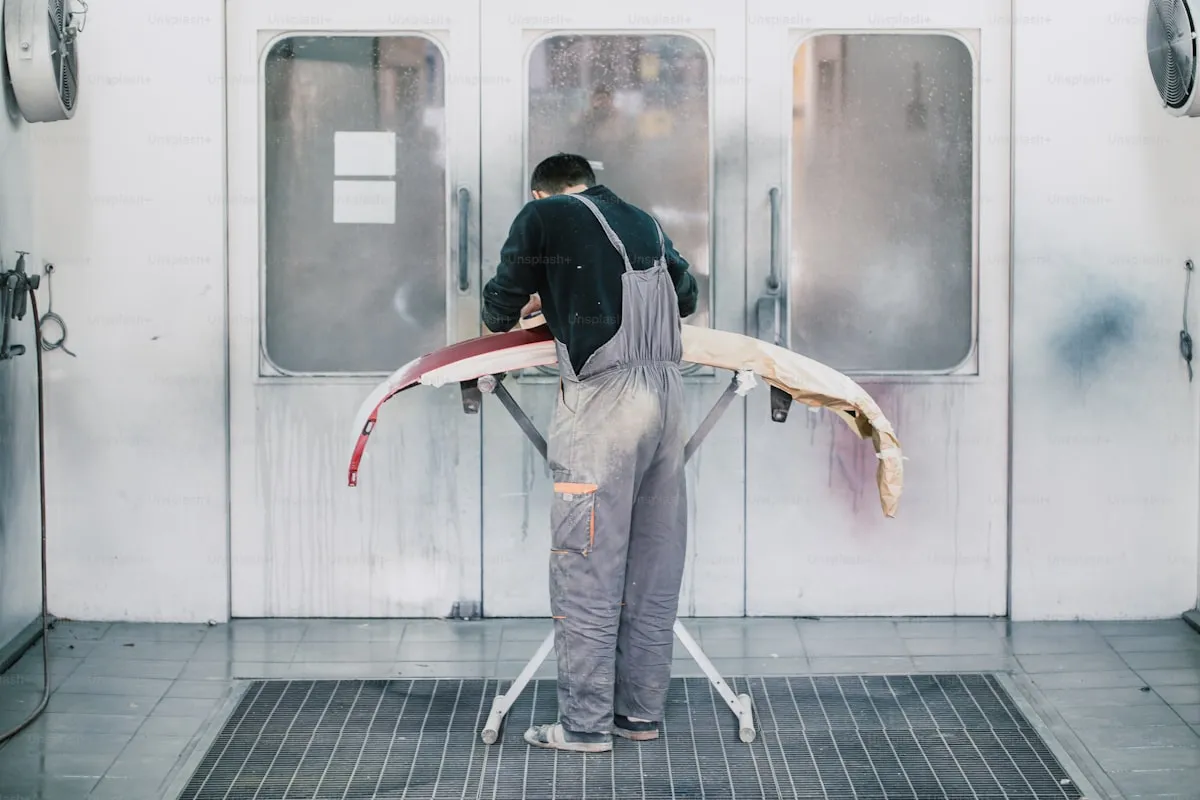
Here’s the part most buyers don’t realize: dealerships almost never install PPF themselves. They outsource the work to a subcontractor — usually whoever offers the lowest bid.
The workflow typically looks like this:
- Dealer sells you a PPF package for $1,500
- Dealer calls their subcontractor who does volume work for multiple dealerships
- Subcontractor sends a tech to the dealership (or the car is driven to a nearby shop)
- Tech installs the film in the dealer’s service bay or back lot
- Dealer pays the subcontractor $200-$500 for the installation
- Dealer keeps $1,000-$1,300 as profit
That $1,500 you paid? Roughly 70-85% of it went to the dealership’s margin, not to the quality of your installation. The person actually applying the film to your car was paid a fraction of what a dedicated PPF shop charges, and they’re expected to do the job in a fraction of the time.
The Installation Environment
Professional PPF installation requires a controlled environment. Dust, debris, and contaminants trapped under the film create visible imperfections that are permanent for the life of the installation. Professional shops invest in:
- Dedicated clean rooms with filtered air systems
- Proper lighting (LED panels at multiple angles) to spot defects during installation
- Temperature and humidity control for optimal film adhesion
- Clean, enclosed workspace isolated from other shop activities
Dealership PPF installations happen in:
- The service bay where mechanics are working on other vehicles
- The detail area in the back lot
- Sometimes literally outside in the parking area
- Shared spaces with body work, tire dust, and general shop contamination
Every speck of dust that lands on the adhesive side of the film or on the wet paint surface during installation becomes a permanent blemish. Installing PPF in an uncontrolled service bay is like performing surgery in a parking garage — technically possible, but the conditions are fighting you every step of the way.
No Paint Correction First
This is one of the most critical differences between dealer and professional installations, and most buyers don’t even know to ask about it.
Before PPF is applied, the paint surface should be:
- Washed and decontaminated — Chemical decontamination removes embedded iron particles, tar, and industrial fallout that a normal wash can’t touch
- Clay bar treated — Physical decontamination removes bonded surface contaminants
- Inspected under proper lighting — To identify any existing defects
- Corrected if needed — Paint correction removes swirl marks, light scratches, and transport damage that are already present
New cars are not perfect from the factory. They accumulate defects during manufacturing, transport (on trucks and rail cars), and during the dealer’s own Pre-Delivery Inspection (PDI). Dealer lot wash crews often introduce swirl marks before you ever see the car. Transport film removal can leave adhesive residue. Rail dust embeds in the paint during cross-country shipping.
Dealership PPF installations skip virtually all of this. The car gets a quick wash — maybe — and the film goes on. Whatever defects exist in the paint get sealed under the film permanently. You won’t see them immediately, but under direct sunlight or garage lighting, the swirl marks and micro-scratches under the film become visible. And they’re trapped there for the next 7-10 years.
Professional shops start every PPF installation with full paint decontamination and correction. At EuroLuxe Detailing, this step alone can take 2-4 hours depending on the vehicle’s condition. It’s the difference between sealing perfect paint under the film versus sealing damaged paint.
Film Quality: You Don’t Get to Choose
When you buy PPF from a dealership, you get whatever film the subcontractor uses. You typically have no say in the brand, product line, or quality tier.
Dealer subcontractors optimize for cost and speed. That means:
- Lower-cost film brands that may lack the self-healing, optical clarity, or longevity of premium products
- Thinner films that cost less per square foot but provide less impact protection
- Shorter warranties (5-year vs. 10-year on premium films)
- No top-coat technology — budget films skip the hydrophobic, self-healing surface layers that premium films include
At a professional shop, you choose your film. You can discuss the differences between brands, select the product that matches your priorities, and see exactly what’s going on your car. That level of control doesn’t exist in the dealer finance office.
The Markup Math
Let’s be transparent about the economics.
Dealer PPF Package
| Item | Dealer Charges You | Dealer’s Cost |
|---|---|---|
| Partial front PPF (bumper + partial hood) | $995 - $1,995 | $200 - $500 |
| Dealer profit margin | — | $500 - $1,500 |
Professional Full Front PPF
| Item | Shop Charges You | What You Get |
|---|---|---|
| Full front PPF (complete hood, bumper, fenders, mirrors) | $1,500 - $3,000 | Full coverage |
| Includes paint decontamination | Included | Yes |
| Includes paint correction | Included | Yes |
| Premium film brand of your choice | Included | Yes |
| Controlled clean room installation | Included | Yes |
| 10-year manufacturer warranty | Included | Yes |
For $500-$1,000 more than the dealer’s partial-coverage package, you get double the coverage area, premium film, proper surface preparation, a controlled installation environment, and a warranty backed by the film manufacturer rather than the dealership.
Common Dealer PPF Problems We Fix
We see the results of dealer PPF installations regularly. Customers come to us after noticing issues that shouldn’t exist on a professional installation.
Lifting Edges
When film isn’t properly applied or the surface wasn’t adequately cleaned, edges start lifting within weeks or months. This typically starts at the corners and areas with complex curves. Once an edge lifts, dirt gets underneath and the problem accelerates. Professional removal and reinstallation is the only fix.
Trapped Contaminants
Dust, lint, and debris trapped under the film show as raised bumps or visible specks. These are permanent — the only solution is removing that section of film and reinstalling it. In a controlled clean room, these are rare. In a dealership service bay, they’re common.
Poor Edge Wrapping
Professional installations tuck film edges under panels (called “bulk wrapping”) so the edge of the film isn’t visible or exposed. Many dealer installations leave the film edge exposed on the surface (called “raw edge” or “trim edge”), which looks less clean and is more prone to lifting over time.
Visible Seams and Overlap
When film pieces aren’t properly aligned or cut, you get visible seams where panels meet. This is a skill issue — an experienced installer makes seamless transitions, while a rushed or less experienced tech leaves obvious lines.
Yellowing Within 2-3 Years
Budget films yellow faster than premium films, especially in Houston’s intense UV environment. A film that looks clear on day one may show a noticeable yellow tint after 18-24 months. Premium films with proper UV inhibitors maintain clarity for 7-10 years.
The Professional Shop Advantage
Here’s what a proper PPF installation at a dedicated shop looks like:
Step 1: Thorough Inspection
The vehicle is inspected under multi-directional LED lighting to document its current condition. Any existing damage, swirl marks, or defects are identified and discussed with the owner before work begins.
Step 2: Full Decontamination
The vehicle goes through chemical decontamination (iron removal, tar removal, fallout removal) followed by a clay bar treatment. This removes contaminants that are invisible to the naked eye but will cause problems under the film.
Step 3: Paint Correction
Based on the inspection, the surfaces that will receive PPF get corrected. On new cars, this is typically a one-stage polish to remove transport-related swirl marks and wash damage. On vehicles with more wear, a multi-stage correction may be needed.
This step is what separates a professional result from a dealer result. The paint under your film will look better than it did leaving the factory.
Step 4: Controlled Environment Installation
The vehicle moves into a dedicated clean room — filtered air, controlled temperature, proper lighting. The installer works on a clean surface in a clean environment with no rush and no interruptions.
Step 5: Precision Application
The film is applied panel by panel, working out moisture and air with professional techniques. Edges are tucked under panels for a seamless look. Complex curves are heated and stretched to conform to the body lines without stress marks.
Step 6: Quality Inspection
After installation, every panel is inspected under proper lighting. Any imperfections are addressed before the vehicle leaves. The customer does a walkthrough with the installer.
Step 7: Cure Time
The vehicle stays in the shop during the initial cure period (typically 24-48 hours) in a controlled environment. This ensures the adhesive bonds properly before the vehicle is exposed to road conditions.
The One Exception: OEM Factory-Applied PPF
Some manufacturers now offer PPF applied at the factory as a pre-delivery option. This is fundamentally different from dealer-applied PPF and is generally a good product.
Factory-applied PPF is:
- Installed in a controlled factory environment with industrial-level cleanliness
- Applied before the vehicle sees any road exposure
- Cut using the manufacturer’s exact vehicle specifications
- Typically a premium-grade film selected by the automaker
- Covered under the vehicle’s factory warranty
If your manufacturer offers factory-applied PPF as an option at the time of order, it’s usually worth considering. The coverage may still be more limited than what a professional shop offers for full front coverage, but the quality of application is typically solid.
This is completely different from the dealership’s finance office add-on, which is applied after the vehicle has already been transported, stored on the lot, and prepped by the dealer’s wash crew.
How to Compare Quotes
If you’re weighing a dealer PPF offer against a professional shop quote, ask these questions:
To the dealer:
- Exactly which panels are covered? Get it in writing.
- What brand and product of film is used?
- Who performs the installation? Is it an in-house installer or a subcontractor?
- Is paint decontamination and correction included before application?
- Where is the installation performed? Can you see the workspace?
- What warranty is provided, and who backs it — the dealer or the film manufacturer?
To the professional shop:
- What film brands do you offer?
- Can I see your installation environment?
- What paint preparation is included?
- Can I see examples of previous installations on similar vehicles?
- How long does the installation take?
- What warranty comes with the installation?
The answers to these questions will make the difference in quality immediately obvious. A professional shop will answer every one of these in detail. A dealership finance office will likely redirect you back to the price and the convenience.
Frequently Asked Questions
Can I negotiate the dealer PPF price?
Yes, and you should. Dealer add-ons in the finance office have the highest markup of anything in the transaction. A $1,500 dealer PPF package has $800-$1,200 of margin in it. If you’re determined to have the dealer handle PPF, negotiate aggressively. But understand that even at a discounted price, you’re still getting partial coverage, no paint correction, and a subcontracted installation in an uncontrolled environment.
What if I already bought dealer PPF and I’m not happy with it?
You have options. The dealer PPF can be professionally removed and replaced with a proper installation. Removal costs $200-$500 depending on how much film is on the vehicle, and you’ll need a new full installation afterward. It’s an additional cost, but the end result will be dramatically better than what the dealer provided. We handle this at EuroLuxe regularly.
Is it worth waiting for PPF instead of having the dealer do it at delivery?
Absolutely. Driving a new vehicle for one to two weeks without PPF while you wait for a professional appointment will result in minimal damage (if any). The quality difference between a professional installation and a dealer installation is worth far more than the minor risk of a rock chip during that short wait. If you want zero risk, have the vehicle transported from the dealer to the PPF shop.
My dealer says they use XPEL/SunTek — does that change anything?
The brand of film matters less than the quality of installation. Even premium film applied in a dusty service bay without paint preparation will deliver a mediocre result. Ask the follow-up questions: Who installs it? Where? Is paint correction included? A premium film brand doesn’t override poor installation practices.
Should I tell the dealer I’m getting PPF done elsewhere?
There’s no obligation to explain your plans. If the dealer pressures you on PPF, a simple “I already have that arranged” ends the conversation. Dealers may try to create urgency by claiming the car will get damaged on the drive home — while possible, the risk is minimal and doesn’t justify accepting an inferior installation.
Does declining dealer PPF affect my vehicle warranty?
No. Declining any finance office add-on has zero impact on your factory vehicle warranty. The dealer cannot condition warranty coverage on purchasing their protection products. This is a common sales tactic, and it’s not legitimate.
Want your new vehicle protected the right way? Get a free quote from EuroLuxe Detailing or call (713) 298-8819. We offer complimentary consultations and will show you exactly what your vehicle needs — and doesn’t need. Located in Tomball, TX, serving The Woodlands, Spring, Cypress, Magnolia, and all of North Houston.