How to remove water spots from car paint and glass
Water spots are one of the most underestimated threats to a vehicle’s finish. They look like a simple cleaning problem — a few mineral rings left behind after a wash or a rain shower — but left in place for even a few days under a Texas sun, they can etch into clear coat and glass in ways that require machine polishing to fix. Understanding what they actually are, and how to remove them without causing additional damage, is worth knowing before you grab a microfiber and start rubbing.
North Houston’s water supply is notably hard. Municipal water across The Woodlands, Tomball, Conroe, Cypress, and Spring carries elevated concentrations of calcium and magnesium. When that water sits on a warm surface and evaporates — which happens within minutes on a black hood in July — it leaves a mineral deposit behind. If the surface is already warm from sun exposure, the minerals bond to the clear coat much faster. Rain is not much better. Storm runoff picks up road salts, tree pollen, organic acids, and industrial particulates before it hits your paint. The result is often worse than a garden hose left running.
The critical distinction when treating water spots is understanding how deep they go. Type 1 spots sit on top of the surface and can be removed with a dedicated water spot remover or a diluted white vinegar solution. Type 2 spots have etched into the top layer of clear coat and require light machine polishing to level the surface. Type 3 spots have etched deep enough that only wet sanding or significant paint correction can restore the finish — and even then, results depend on how much clear coat remains. Trying to treat a Type 2 or Type 3 spot with a surface-level product just wastes time.
Identifying the type before you treat
Run a clean, dry finger across the spot. If it feels raised or crusty, you are likely dealing with a mineral deposit sitting on top of the paint. If the surface feels smooth but the spot looks like a frosted ring baked into the finish, it has already begun to etch. Under direct sunlight or a detailing light held at a low angle, Type 2 and Type 3 spots will show depth — the ring edge will appear sharp and the center slightly recessed compared to the surrounding paint.
Glass is a different substrate than clear coat. Mineral deposits on glass can often be removed with a dedicated glass water spot remover or a mild abrasive glass polish. What looks like deep etching on glass is frequently just heavy mineral buildup that responds to a glass-specific treatment. Do not use a paint water spot product on glass and assume it will perform the same way.
Photograph spots before you treat them. This is not just for record-keeping — comparing before and after photos in proper light will tell you whether a treatment is working or whether you need to move to a more aggressive approach.
Safe removal for surface-level deposits
For Type 1 spots, the safest starting point is a commercially formulated water spot remover. These products contain mild acids or chelating agents that dissolve calcium and magnesium without attacking the clear coat if used correctly. Apply to a cool surface out of direct sun, work in small sections, and do not let the product dry on the paint. Rinse thoroughly after each section.
Diluted white vinegar works in a pinch and is safe on clear coat when properly diluted — roughly 1 part vinegar to 3 parts distilled water. Apply with a clean microfiber applicator, let it dwell for 30 to 60 seconds, and rinse. Do not use it on matte or satin finishes, and do not use full-strength vinegar on any painted surface. The acidity level in undiluted vinegar is high enough to damage clear coat over repeated use.
After removing surface deposits, the paint will be clean but potentially stripped of any protective layer. This is a good moment to apply a spray sealant or ceramic spray to restore hydrophobic protection before the next rain cycle hits.
Machine polishing for etched spots
If a water spot remover does not level the finish completely, the damage has etched below the surface and requires abrasive correction. A dual-action polisher with a light cutting compound is typically the first step. Work at low to medium speed with moderate pressure, check progress under a detailing light, and move to a finishing polish once the etch marks have been leveled.
This is where many DIY attempts go wrong. Using a rotary polisher without experience on a panel with existing etching can generate localized heat and uneven removal. It can also cut through thin clear coat on edges and body lines before you realize it. If the spots are extensive or the paint is already thin from prior polishing, paint correction done by a professional is the safer path. A trained installer will check paint thickness with a gauge before cutting, which eliminates the guesswork.
Prevention over treatment
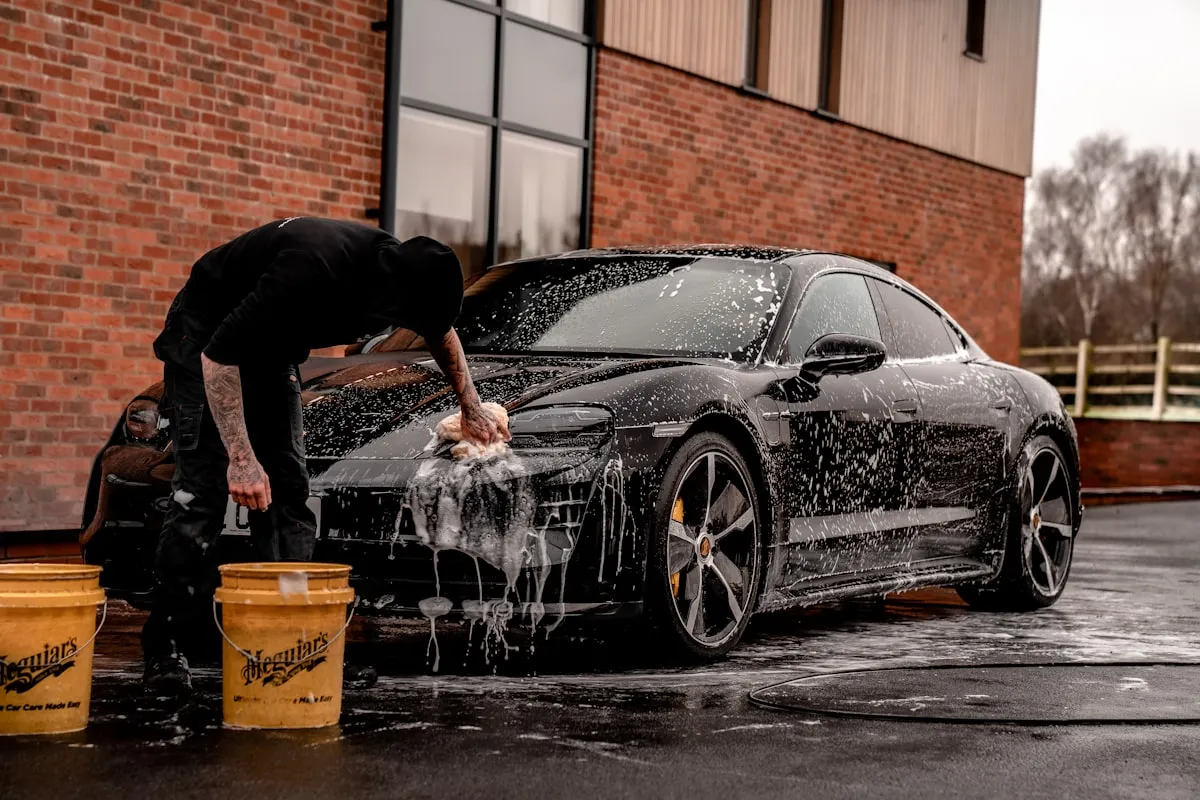
The best long-term answer to water spots is reducing mineral contact time. Dry your vehicle immediately after washing using a clean, high-quality microfiber drying towel or a forced-air dryer. Never let a washed car air-dry in sunlight. When possible, wash in shade or during cooler parts of the day.
For vehicles that sit outside regularly, a ceramic coating adds a meaningful layer of protection. The hydrophobic surface tension created by a properly cured ceramic coating causes water to bead and sheet off the paint rather than spreading flat and sitting still. Minerals that do not dwell on the surface do not etch. This does not make the paint immune to water spots — a ceramic-coated car parked under a sprinkler for two weeks will still develop deposits — but it dramatically extends the window you have to remove them before they bond.
If you are already dealing with water spot damage on a ceramic-coated vehicle, the approach changes slightly. Light deposits can often be removed with a dedicated SiO2-safe water spot treatment. If the spots have etched through the coating itself, the coating in that area may need to be stripped and reapplied after correction, which is a more involved repair.
Maintaining glass alongside paint
Windshields and side glass accumulate the same mineral deposits as paint, but they are exposed to wiper contact and direct sunlight refraction that accelerates bonding. A glass-specific water spot treatment applied periodically, combined with a hydrophobic glass coating or spray, keeps deposits from anchoring. Apply a glass treatment after every major decontamination wash — not just when you notice spots forming.
For rear glass, be cautious with any abrasive product near embedded defroster lines. A plastic card or soft cloth applicator keeps product away from the grid lines. Avoid anything abrasive directly on those elements.
If you are evaluating the condition of your paint and are not sure whether the spots you are seeing are surface deposits or etched damage, call EuroLuxe at (936) 292-6056 and describe what you are seeing. Sometimes a conversation is enough to determine the right starting point before any product touches the paint.
Water spots are a maintenance problem that compounds quickly when ignored. Catching them at Type 1 is a 20-minute job. Waiting until they have etched into the clear coat turns it into a multi-hour polishing service. The difference between those outcomes is usually just a few days of heat and sun exposure, which North Houston provides in abundance.