
How your neighborhood affects your car's paint protection needs
Where a vehicle lives matters as much as what it’s made of. Two identical trucks can leave the same dealership lot on the same day, and twelve months later one looks factory-fresh while the other carries water spots, oxidation, and stone chips across every horizontal panel. The difference usually isn’t luck. It’s environment — specifically, the combination of where the owner parks, which roads they drive daily, and what the surrounding landscape puts on the paint between washes.
North Houston is not one environment. The Woodlands is a tree canopy over manicured pavement. Cypress runs along FM 529 and Barker Cypress where construction traffic throws rock and debris. Tomball sits at the edge of where suburban sprawl meets ranch roads. Kingwood floods. Magnolia gets dust and pollen from open land. Each of those conditions creates a different priority list for paint protection. If you’re trying to figure out which service your vehicle actually needs, start with your zip code and your driveway before you look at anything else.
Tree-covered neighborhoods: The Woodlands, Kingwood, and parts of Tomball
Shade trees are a reasonable trade-off for paint longevity in most climates. In Southeast Texas, they’re more complicated. A vehicle parked under oaks, pines, or sweetgums in neighborhoods like Grogan’s Mill, Panther Creek, or Lakewood Forest collects sap, pollen, and bird droppings on a near-daily basis from spring through late fall. These are not cosmetic inconveniences — they are acidic or resinous materials that etch into clear coat if left for more than a few hours in summer heat.
For vehicles in these neighborhoods, the surface chemistry of the paint matters more than the physical chip protection. A quality ceramic coating creates a semi-sacrificial layer that makes contamination removal faster and reduces the dwell time required for sap and droppings to cause permanent damage. Hydrophobic behavior also helps during rain events — water sheets off rather than beading into standing pools that concentrate pollen and particulate.
Owners in these areas also tend to accumulate iron fallout from brake dust and airborne industrial particles that settle under tree canopies. Decontamination before coating application is not optional here — it’s the difference between a coating that bonds to clean clear coat and one that traps contamination underneath.
High-debris corridors: Cypress, Spring, and the Grand Parkway construction zones
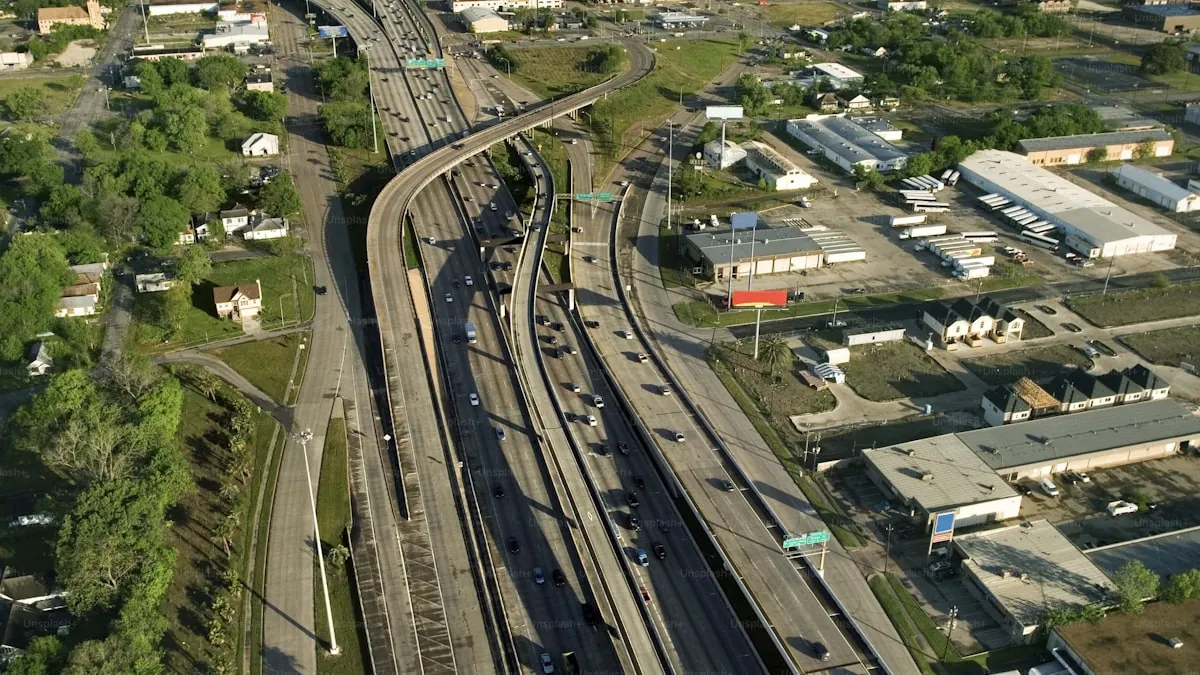
If your commute regularly puts you on TX-99, TX-249, FM 2920, or the stretch of I-45 through Spring, you are driving through one of the highest rock chip and road debris environments in the region. Construction is perpetual in these corridors. Flatbeds lose aggregate. Dump trucks shed material at highway speed. The front end of any vehicle that runs these roads daily accumulates chips on the hood leading edge, A-pillars, mirrors, and lower bumper faster than most owners track.
For these vehicles, paint protection film on the high-impact zones earns its cost quickly. A full-front package — hood, fenders, bumper cover, mirrors, and A-pillars — stops chips before they happen rather than treating them afterward. Film installed by a shop running pre-cut patterns and proper edge sealing performs very differently from film applied without heat forming over compound curves. The debris environment on these roads is aggressive enough that partial coverage, done correctly, still provides meaningful protection. Full-front is the right answer for anyone commuting these routes more than a few days per week.
Rocker panels are worth addressing separately. Road grime and aggregate kicked up from the wheel wells hits rockers constantly on these routes. Rocker coverage in film takes the abuse that would otherwise require spot paint repairs every two or three years.
Open land and ranch-adjacent areas: Magnolia, Pinehurst, and rural Tomball
The western edge of the EuroLuxe service area — Magnolia, Pinehurst, Hockley Road corridors, and the FM 1488 stretch toward Montgomery — operates in a different kind of threat environment. There’s less construction debris and fewer trees overhead, but open land generates its own issues: heavy pollen loads in spring, calcium-rich hard water from irrigation, and fine dust that coats every horizontal surface between rains.
Hard water spotting is a persistent problem for vehicles in these areas. When irrigation systems spray calcium-heavy groundwater onto a car and it dries in direct sunlight, the mineral deposits etch into clear coat over repeated cycles. A ceramic coating reduces the severity of this because contamination doesn’t bond as readily to a coated surface, but it doesn’t make the vehicle immune. Owners in these areas need to understand that more frequent maintenance washes — not just ceramic coating — are part of keeping the surface clean enough for the coating to function correctly.
Dust also matters more here than it does in denser suburbs. Fine particulate that settles on a dry surface gets dragged across the paint by owners who wipe down the vehicle between washes. That contact is enough to produce swirl marks over time. Paint correction before any protective coating is applied in these conditions because the baseline surface is rarely as clean as it appears.
Flood-risk areas: Kingwood, Humble, and low-lying parts of Spring
Kingwood, Atascocita, and the low-lying sections of Humble and Spring sit in areas that see standing water after significant rainfall events. For most paint protection decisions, flooding is less of a direct concern than what comes with it — debris, silt, chemical runoff from roads, and the repeated wash-and-dry cycles that follow.
Vehicles that regularly encounter standing water also tend to have more undercarriage and door-jamb contamination than their neighbors on higher ground. That contamination works its way into panel gaps and accelerates corrosion where clear coat is thin or chipped. For these vehicles, a complete decontamination step before any service is especially important, and owners should budget for it rather than treating it as an optional add-on.
Window tinting also plays a role in flood-adjacent neighborhoods for a different reason: vehicles parked outdoors in these areas spend more cumulative hours in direct sun between shade opportunities than vehicles parked under tree cover. Interior temperatures climb faster, dashboard materials age more quickly, and leather cracks earlier. UV-blocking window film slows all of that whether or not the vehicle is coated.
Matching protection to environment, not to a price tier
The most common mistake owners make when planning paint protection is choosing a service based on vehicle cost rather than use conditions. A mid-range daily driver running TX-249 and FM 2920 every day benefits more from a full-front PPF package than an expensive weekend car that spends most of its life in a climate-controlled garage. The environment the vehicle actually operates in determines what protection it needs.
This is also why a conversation about how and where you drive matters before any quote. What’s right for a Woodlands resident with a covered garage and a five-mile commute is different from what’s right for a Cypress resident who spends forty minutes each way on construction-corridor highways. Neither answer is the same as what makes sense for a Magnolia property owner irrigating acreage and dealing with hard water six months a year.
If you want a direct assessment of what your vehicle’s environment actually requires, call EuroLuxe at (936) 292-6056 or stop by 11701 Holderrieth Rd in Tomball. The goal is to match the service to what the paint is actually facing — not to sell the most expensive package to every vehicle that comes through the door.
Paint protection works best when it’s matched to real conditions rather than applied as a generic solution. Understanding your neighborhood’s specific threats — tree sap versus rock chips versus hard water versus UV exposure — is the first step toward a plan that actually holds up over time.