How North Houston roads damage your paint every summer
Summer in the North Houston corridor is not kind to vehicle paint. Between Memorial Day and Labor Day, temperatures regularly push surface temperatures on dark hoods past 180 degrees Fahrenheit, construction on 249, 99, and I-45 kicks road debris into body panels at highway speed, and afternoon thunderstorms deposit mineral-laden water that bakes into the clear coat before you can rinse it off. Most owners notice the damage only later, when swirl marks, water spot etching, or paint oxidation become visible in direct sunlight.
The problem is that each of these hazards works differently. UV degradation is slow and cumulative. Rock chips are immediate and mechanical. Tar and construction adhesives are chemical. Hard water spots are mineral deposits that can chemically bond with clear coat if left long enough. A protection strategy that addresses one hazard but ignores the others will leave gaps, and those gaps tend to show up at the worst possible time.
This guide walks through the specific hazards North Houston drivers face from roughly May through September, what each one actually does to paint and clear coat, and what levels of protection are worth applying before summer peaks.
What highway construction does to a vehicle
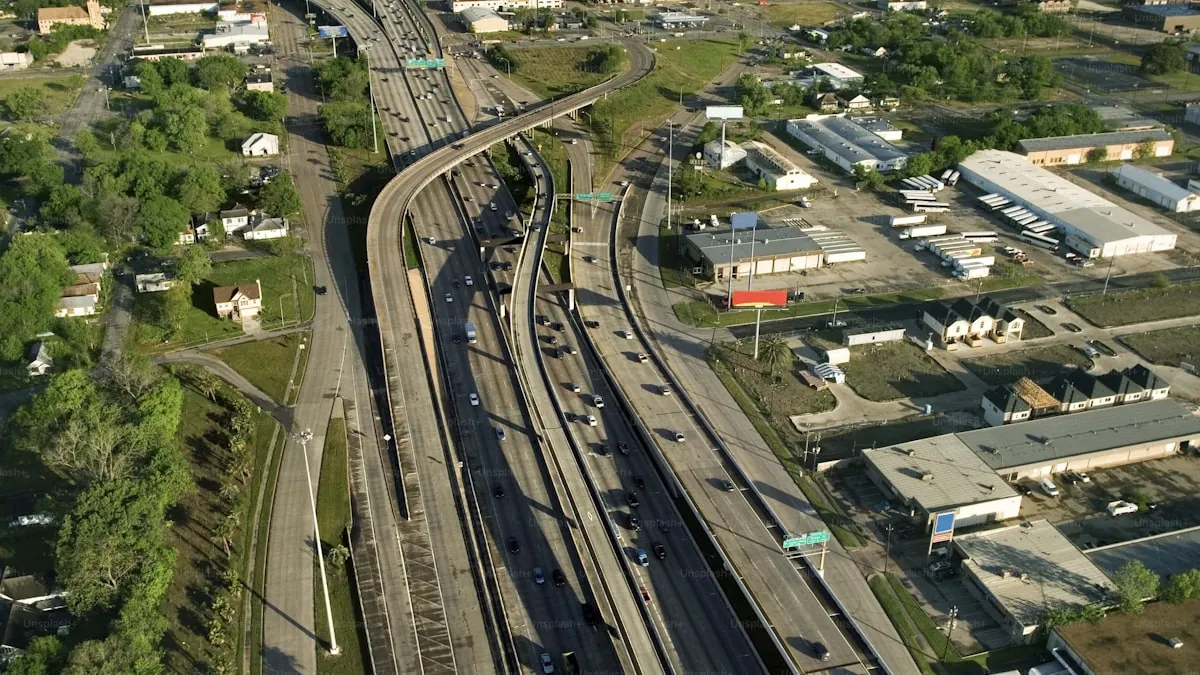
The 249 toll road expansion, ongoing Grand Parkway interchanges, and perpetual road widening along Spring Cypress and Kuykendahl generate more airborne debris per mile than most metro highways. Concrete dust, rebar rust particles, loose aggregate, and steel road staples all become projectiles once traffic accelerates. At 65 mph, a piece of gravel the size of a pencil eraser carries enough force to cut through clear coat and into the base coat in a single impact.
The resulting chip is not just cosmetic. Bare metal or bare primer exposed to Houston humidity will begin to oxidize within days, not weeks. A small chip left untreated through a summer can develop a rust halo large enough to require spot repair rather than simple touch-up. Drivers who commute on 249 between Tomball and the Beltway, or on 99 between Cypress and Spring, are logging some of the highest rock chip exposure miles in the metro.
Paint Protection Film is the only product that physically intercepts chips before they reach the paint. A thermoplastic urethane film rated at the appropriate thickness absorbs and distributes impact energy. The film surface may show a chip mark that self-heals with heat, but the paint beneath it remains intact. For commuters running those corridors daily, protecting at minimum the full front end, hood, and front fenders is not optional if you care about the paint’s long-term condition.
What the Texas sun does over a full summer
UV radiation in Houston runs high from April through October, but it is the sustained combination of UV-A and UV-B exposure with extreme surface temperatures that accelerates clear coat breakdown. Clear coat is a polymer. Extended UV exposure breaks the polymer chains, causing the surface to become dull, chalky, or develop a micro-texture that scatters light instead of reflecting it. This is the beginning of oxidation, and once it sets in across a panel, correction requires machine polishing to remove the damaged material.
Dark colors, particularly black, dark gray, and dark navy, absorb more heat and show UV degradation faster. Light colors such as white and silver show the effects more slowly but are not immune. Factory paint from most manufacturers is designed to meet regulatory standards, not to survive fifteen Houston summers without help.
A professional-grade ceramic coating provides a stable, UV-resistant layer on top of the clear coat. Gyeon’s coating products, which we install here, are formulated specifically to resist UV degradation and the thermal cycling that comes with parking in direct sun and then cooling overnight repeatedly. The coating does not prevent heat from reaching the metal beneath, but it shields the clear coat surface from the photochemical damage that leads to oxidation.
What hard water and rain actually deposit on your paint
North Houston tap water and even rainwater carries dissolved minerals, primarily calcium and magnesium carbonates. When water sits on a hot painted surface, the water evaporates and the mineral salts remain as a deposit. In moderate climates, these deposits wipe off easily. In a Texas summer, the painted surface is hot enough to accelerate evaporation dramatically, and repeated cycles of wetting and baking can etch the mineral deposits into the clear coat surface.
Afternoon thunderstorms are actually worse than a deliberate wash in this regard. Rain picks up atmospheric pollution, pollen, and road contaminants as it falls, then deposits everything on your paint in a fast-evaporating layer. A car left in a parking lot after a summer rainstorm and not rinsed before the sun comes back out is accumulating that chemistry on the paint surface every time this happens.
Ceramic coating creates a hydrophobic surface that causes water to bead and shed quickly rather than sitting flat on the panel. The faster water leaves the surface, the less time mineral deposits have to begin bonding with the clear coat. This is why hydrophobic behavior is a functional benefit, not just an aesthetic one. On a vehicle that parks outdoors year-round in North Houston, the difference in mineral etch accumulation over a full summer is significant.
What tar, road oil, and asphalt spray do
Freshly paved sections of road, common anywhere active construction is finishing up, release tar and petrochemical residue that attaches to lower body panels, rocker panels, and door sills. This material is not water-soluble and it bonds to paint surfaces over time, particularly in heat. Left long enough, tar deposits can chemically interact with clear coat and require careful chemical removal rather than simple washing.
Construction zones along Telge, Louetta, and the outer 99 loop regularly produce freshly laid asphalt shoulders and temporary road surfaces. Spray from adjacent lanes can reach vehicle panels at highway speed. Lower rocker panels and the rear bumper area directly in front of the rear tires are the most common collection points.
Both PPF and ceramic coating make tar removal substantially easier. Tar does not penetrate a film surface, and the low surface energy of a ceramic coating means tar bonds less aggressively than it does to bare clear coat. On a protected vehicle, careful solvent decontamination removes tar without threatening the paint beneath. On unprotected paint, the same decontamination process carries some risk of clear coat marring if the tar has had time to harden.
How Tomball-area drivers should approach a pre-summer protection plan
The most practical approach for a vehicle that is going to spend five months in North Houston summer conditions is to address protection in layers before the heat peaks. If the paint has accumulated swirl marks or light oxidation from prior seasons, that damage needs to be corrected before any coating or film is applied. Applying ceramic coating over compromised clear coat seals the defects in place.
For daily drivers running highway miles regularly, a full front film package addresses the mechanical hazard of road debris while a ceramic coating handles UV, water spotting, and chemical contamination across the full vehicle. For vehicles that park outside most of the day, the ceramic coating alone provides meaningful protection against the UV and mineral damage that accumulates across an entire summer. For a weekend vehicle or a new car entering its first full summer, now is the right time to install either or both before the hottest months begin accumulating damage.
If you want a direct assessment of where your paint stands and what level of protection makes sense given your driving patterns and parking situation, you can reach EuroLuxe Detailing at (936) 292-6056 to schedule a walk-around before the peak of summer sets in.
North Houston summer is not a single hazard but a combination of mechanical, photochemical, and mineral threats running simultaneously for five months. Understanding what each one actually does to the paint surface makes it easier to choose protection that addresses the real exposure rather than just checking a box.