How Pollen Season Destroys Your Car's Paint (and How to Fight Back)
The Yellow Menace Is Back
Every March, Houston-area drivers wake up to the same unwelcome sight: a thick layer of yellow-green dust coating every horizontal surface of their vehicle. Oak pollen hits first, followed closely by pine, cedar elm, and dozens of other species that thrive in our subtropical climate. By mid-March, outdoor-parked vehicles in Tomball, Spring, and The Woodlands can accumulate a visible pollen layer overnight.
Most people treat this as a cosmetic annoyance — something to rinse off when it gets bad enough. But pollen is doing real damage to your paint every hour it sits there, and the way most people remove it makes things worse.
Why Pollen Actually Damages Paint
Pollen grains aren’t just dust. They’re complex biological structures with a hard outer shell called the exine, which is covered in microscopic spikes and ridges designed to help the grain attach to surfaces. When those grains land on your paint, they grip the clear coat at a microscopic level.
Here’s where the real damage starts: when pollen gets wet — from morning dew, a light rain, or even high humidity — the grain ruptures and releases its contents. That internal material is acidic, with a pH that can drop below 4 depending on the species. On contact with your clear coat, this acid begins a chemical reaction that etches the surface.
The Damage Timeline in Texas Conditions
- 0-12 hours (dry pollen): Minimal chemical damage but physical scratch risk if wiped
- 12-24 hours (after moisture contact): Acid begins etching. Faint marks may appear after cleaning
- 24-48 hours (repeated dew cycles): Visible etching that requires polishing to remove
- 72+ hours (baked in sun after moisture): Deep etching into clear coat that needs professional paint correction
The combination of overnight dew followed by intense daytime sun is what makes Texas pollen season uniquely destructive. The moisture activates the acid, and the heat accelerates the chemical reaction. It’s a daily cycle that compounds damage every 24 hours.
The Mistake Everyone Makes
The instinct when you see a pollen-covered car is to grab a towel or duster and wipe it off. This is the worst thing you can do.
Pollen grains are abrasive. Those microscopic spikes on the exine shell act like tiny pieces of sandpaper when dragged across your paint under pressure. A dry wipe across a pollen-covered hood is essentially a light sanding pass. Do this a few times per week through pollen season and you’re grinding fine scratches into the clear coat that show up as swirl marks in direct sunlight.
The California Duster that lives in your garage? Leave it there during pollen season. Same for quick-detail sprays applied with a dry towel over heavy pollen. The lubrication isn’t enough to prevent the abrasive grains from scratching.
The Right Way to Remove Pollen
Step 1: Rinse First, Always
Use a garden hose or pressure washer to flood the surface with water before anything touches the paint. You want to float the pollen off the surface, not drag it across. Spend extra time on horizontal surfaces — hood, roof, and trunk lid — where pollen accumulates heaviest.
Step 2: Use the Two-Bucket Wash Method
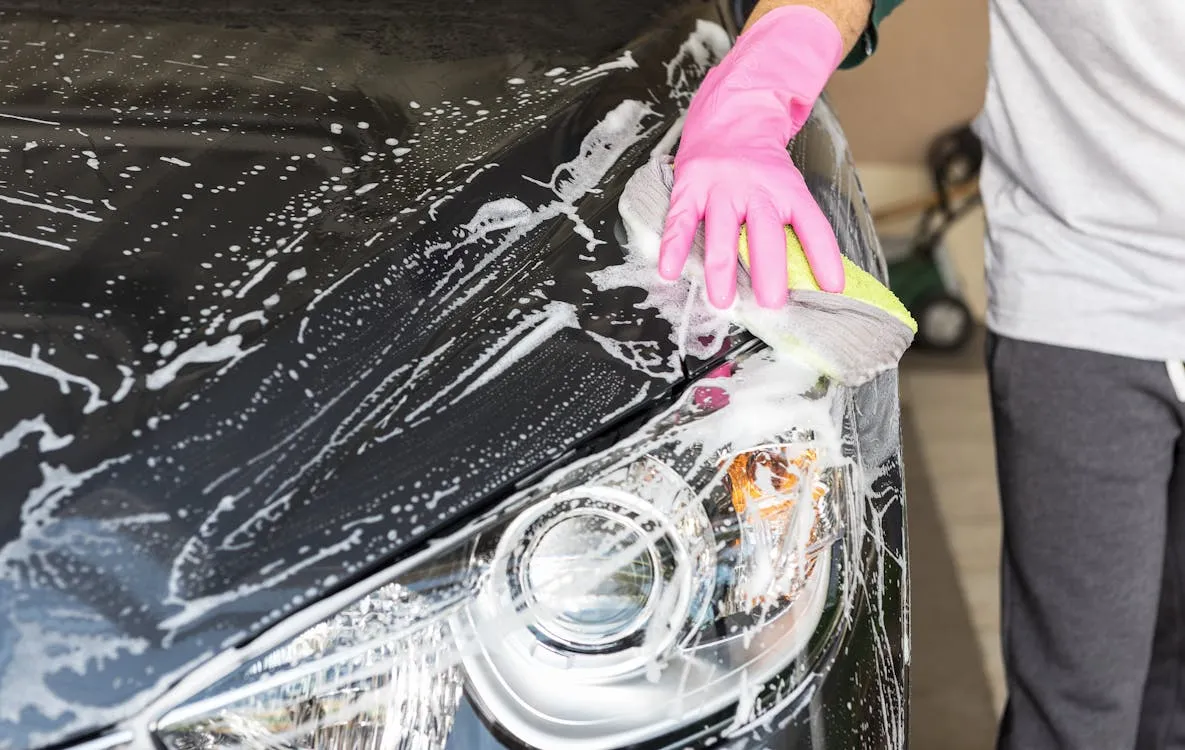
Fill one bucket with pH-neutral car wash soap and water, and a second bucket with clean rinse water. Wash one panel at a time with a clean microfiber mitt, rinsing the mitt in the clean water bucket before reloading with soap. This prevents you from grinding contaminated water back into the paint.
Step 3: Dry Properly
Use a clean, high-quality drying towel or a filtered blower. Don’t let the car air-dry — the minerals in the water will leave spots that bond to the surface, especially in our hard Houston-area water.
Step 4: Repeat as Needed
During peak pollen season (mid-February through April), you may need to rinse your vehicle every two to three days to prevent acid etching. A full wash once a week is ideal.
How Ceramic Coating Changes the Game
A professional ceramic coating fundamentally changes how pollen interacts with your paint. The coating creates a chemically resistant barrier between the pollen’s acid and your clear coat. Instead of etching into the paint, the acid sits on top of the ceramic layer where it does minimal damage.
Practical Benefits During Pollen Season
- Extended reaction time: Pollen acid that would etch unprotected clear coat in 12-24 hours has little effect on a coated surface for 48-72 hours
- Easier removal: The hydrophobic surface prevents pollen from bonding aggressively. A quick rinse removes the majority of accumulation without physical contact
- Reduced wash frequency: Instead of washing every 2-3 days, coated vehicles can often go 5-7 days during pollen season with just a rinse
- Self-cleaning effect: Rain becomes your ally. On a coated surface, rainwater sheets off and carries pollen with it rather than activating the acid against bare clear coat
At our shop, we apply GYEON MOHS EVO ceramic coating, which provides exceptional chemical resistance — exactly what you need against the sustained acid exposure of a Houston pollen season.
PPF for the Heavy-Hit Areas
If your vehicle parks under oak or pine trees regularly, the hood and roof take the heaviest pollen accumulation. Paint protection film on these panels provides a sacrificial barrier that absorbs any etching damage instead of your factory paint. Combined with ceramic coating on the rest of the vehicle, this is the most comprehensive defense against seasonal pollen damage.
Your Pollen Season Action Plan
- If your vehicle is already coated: Rinse weekly, full wash biweekly. The coating is doing the heavy lifting.
- If your vehicle is unprotected: Rinse every 2-3 days minimum. Never dry-wipe pollen. Consider getting coated before next season.
- If you park under trees: Consider PPF on the hood and roof where pollen sits heaviest. Rinse daily if possible.
- If you see etching after cleaning: Don’t panic, but don’t wait. Light etching can be polished out. Deep etching requires professional correction — and it gets worse the longer you leave it.
Get Ahead of It
Pollen season doesn’t wait, and neither should your protection strategy. If your vehicle’s paint is unprotected heading into March, now is the time to act — not after you’ve already accumulated weeks of acid damage. Contact us for a quote and we’ll help you build a protection plan before the worst of the season hits.