
How to Wash a Ceramic Coated Car Correctly
Ceramic Coating Is Not a License to Neglect the Wash Process
One of the most common misconceptions new ceramic coating clients have is that the coating means they can wash however they want. The coating is self-cleaning, the logic goes — the hydrophobic surface beads everything off, so washing does not need to be as careful. That thinking is backwards, and it is how a coating that should last five to seven years starts looking degraded at two.
Ceramic coating does not make the car wash-proof. It makes the car easier to wash correctly and more forgiving of environmental contamination between washes, but the ceramic layer itself can be degraded by the wrong wash chemicals, the wrong tools, and the wrong habits. The coating is a layer of modified silicon dioxide bonded to your clear coat. It is hard, hydrophobic, and durable — but it is not impervious to aggressive alkaline cleaners, abrasive wash media, or the kind of sustained chemical attack that comes from repeated use of the wrong products. Protect the coating, and the coating protects the paint. Neglect the coating’s maintenance needs, and you will be calling us for a correction and recoat years before you should have to.
Here is the correct process, in the order it matters.
The Two-Bucket Method Is Non-Negotiable
The two-bucket wash method is the foundation of a swirl-free wash on any paint, coated or not, but it is especially important on ceramic-coated vehicles because swirl marks sealed under a freshly applied coating are permanent — they cannot be corrected without removing the coating first. The method is straightforward: one bucket holds your shampoo solution, and one bucket holds clean rinse water. Before reloading your wash mitt with soap, you rinse it in the clean water bucket to remove the contamination you just picked up from the paint. A grit guard at the bottom of each bucket prevents that contamination from being re-suspended when the mitt contacts the water.
The mitt itself matters. Use a dedicated automotive chenille or microfiber wash mitt. Do not use sponges, household cloths, or anything that has previously been used on surfaces other than the vehicle’s painted panels. A single pass with a contaminated sponge undoes the protective work the coating is doing by embedding new abrasion at the surface. Keep separate mitts for the painted body panels, the wheels, and the lower rocker panels and sills, which accumulate more road grime and brake dust than any other area of the vehicle.
Work top to bottom, one panel at a time. The roof and glass first, then the hood, trunk, and fenders, then the doors, then the lower panels and bumpers. This keeps the dirtiest parts of the vehicle — the lower panels and wheels — from contaminating your wash media before you have cleaned the upper panels.
pH-Neutral Soap Is the Only Acceptable Choice
This is not a preference — it is a chemistry requirement. Ceramic coatings are sensitive to pH extremes, particularly alkaline (high pH) cleaners. Many popular car wash soaps, degreasers, and wheel cleaners are alkaline because alkaline chemistry is effective at cutting through grease and road film. The problem is that alkaline cleaners also attack the silicone dioxide matrix of the ceramic coating over time. Repeated use of alkaline soap during weekly or biweekly washes is a slow but consistent degradation mechanism that shortens the coating’s effective lifespan.
pH-neutral soaps — rated 6 to 8 on the pH scale — clean the surface effectively without attacking the coating chemistry. They lift contamination from the hydrophobic surface and rinse cleanly without leaving residue that could interfere with the coating’s properties. Dedicated ceramic coating maintenance shampoos take this a step further by including ingredients that condition and top up the hydrophobic layer during the wash, which is an added benefit though not a strict requirement for routine washes.
What to avoid: dish soap, all-purpose cleaners used as car wash substitutes, wheel cleaner applied carelessly to painted panels, traffic film removers used at full concentration, and any product labeled as a wax-stripping or decontamination wash unless you are specifically performing a maintenance decontamination with the intention of topping the coating afterward.
Automatic Car Washes Are Off the Table
Automatic car washes with physical brushes or soft cloths damage ceramic coatings the same way they damage uncoated paint — through abrasive contact with contaminated media. The difference is that on a coated vehicle, the damage occurs to the coating layer first, which dulls the hydrophobic properties and eventually introduces micro-marring that compromises the coating’s optical clarity and surface performance. Touchless car washes are less mechanically damaging but typically use high-pH chemicals at concentrations that are aggressive against coatings.
The ceramic coating is a precision protective layer. Putting it through a machine car wash is the same logic as buying a quality wristwatch and then pressuring it through a generic jewelry cleaner. The surface might look similar afterward, but the mechanism protecting it has been stressed in ways that will show up over time. Hand washing is not optional if you want the coating to perform as expected throughout its rated lifespan.
Drying Without Damage
Drying a ceramic coated vehicle requires the same care as drying any properly detailed paint, with one additional consideration: water spots on a ceramic coating, if left to dry in direct sun, can etch the surface and leave mineral deposits that require a dedicated spot treatment to remove. The hydrophobic surface makes water bead aggressively, which is excellent for sheeting water off during rain, but during a manual wash the beaded water needs to be removed before it evaporates and concentrates the mineral content of your tap water onto the surface.
Use a dedicated automotive drying towel — thick, twist-pile microfiber rated for automotive use — and use it with minimal pressure. The towel should glide across the surface, lifted by the hydrophobic beads of water, rather than being pushed hard against the panel. Alternatively, a dedicated automotive blower dries the vehicle without any contact at all, which is the safest approach for preserving the coating surface long-term.
Do not wash the vehicle in direct sunlight during the heat of the day. The water and soap dry on the surface before you can rinse and dry, leaving water spots and soap residue that require additional work to remove. Early morning or after sunset is ideal in the Houston area, where midday temperatures from April through October can be brutal and afternoon sun causes wash water to evaporate almost immediately on contact with warm panels.
Maintenance Sprays and When to Use Them
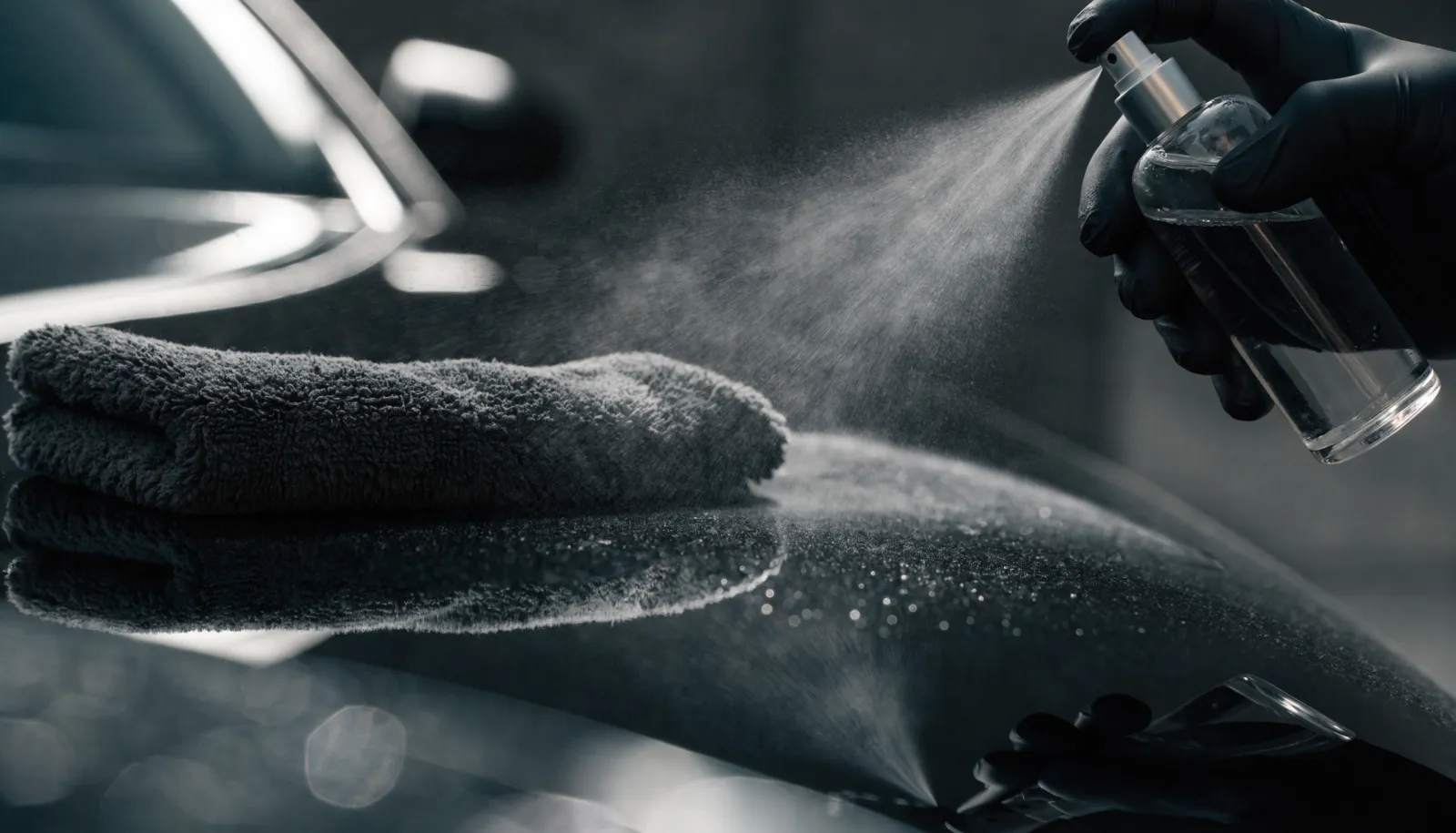
Between washes, a ceramic coating maintenance spray tops up the hydrophobic properties of the coating and adds a layer of temporary protection against light contamination. These products are designed to be applied after a wash, while the paint is still slightly damp or immediately after drying, and they bond to the ceramic layer to enhance its water-beading performance. They are not a substitute for the base coating, but they extend the interval at which the coating’s hydrophobic performance remains at its peak.
For most vehicles in the Houston area, using a maintenance spray every two to four washes is sufficient to keep the coating performing well between annual maintenance visits. If you notice that the water beading has become less aggressive — the water sheets less cleanly and starts to stick to the surface rather than beading into droplets — that is a signal to apply maintenance spray at the next wash. You can also assess the coating’s condition after a rain shower: a well-maintained coating sheds water almost entirely during highway driving, and a significant amount should bead and run at parking lot speeds as well.
GYEON offers maintenance spray products that we recommend to our GYEON MOHS EVO ceramic coating clients specifically because they are formulated to work with GYEON chemistry. Using a maintenance product from a different brand is not necessarily harmful, but using a product from the same family ensures compatibility.
When to Bring It Back to the Shop
Annual maintenance appointments are part of ceramic coating ownership, not a failure of the product. At the one-year mark, we inspect the coating under lighting to assess its condition, perform a light decontamination wash to remove any bonded contamination that regular washing has not addressed — iron fallout, industrial fallout, tar, and mineral deposits — and apply a professional top coat application that renews the coating’s hydrophobic properties to near-new levels.
If the coating has been properly maintained between annual visits, this appointment is straightforward and the coating’s surface condition is good. If it has been washed with aggressive chemicals, run through automatic washes, or neglected for extended periods, the decontamination and surface prep takes more effort. The coating can often be revived in either case, but the amount of work — and cost — scales with how it has been treated.
In the Houston area specifically, industrial fallout is a consistent issue. The area around the Ship Channel, the refineries in Baytown and La Porte, and the commercial corridors along 249 and 45 deposit metallic and chemical fallout on vehicles parked outdoors. That contamination bonds to paint and coating surfaces over time and does not come off with regular washing. Annual decontamination removes it before it can compromise the coating’s bond or cause long-term surface damage.
Schedule your ceramic coating maintenance appointment or get a quote for a new coating installation.