Washing a car protected by both PPF and ceramic coating
A lot of vehicle owners in the North Houston area are running what amounts to a full protection stack: paint protection film on the front end and high-impact zones, a ceramic coating laid on top of the film and over the rest of the car, and sometimes window tint as a fourth layer on the glass. Each of those materials has specific care requirements, and when you combine them on one vehicle, people often wonder whether a single wash routine can satisfy all of them at once. The short answer is yes, but the details matter.
The good news is that PPF and ceramic coating are largely compatible in their maintenance needs. The ceramic coating sitting on top of the film means you are mostly maintaining the coating’s surface characteristics — the hydrophobic behavior, the gloss, the resistance to minor contamination. The film underneath is doing the heavy lifting against rock chips and road debris, and it is far more durable against physical abrasion than clear coat alone. Understanding which layer you are cleaning at any given moment helps you make better decisions about products and technique.
What you are trying to avoid in both cases is the same thing: introducing friction and abrasive contamination into a wash process that should be as low-contact as possible.
Start with a thorough pre-rinse
Before any towel or wash mitt touches the car, rinse the entire vehicle with a pressure washer or a strong hose. The goal is to flush loose debris — road grit, pollen, dust, dead insects — away from the surface before contact. On a ceramic-coated car, this step is more effective than it would be on unprotected paint because the hydrophobic surface allows water to sheet and carry contaminants with it rather than letting them sit.
Pay particular attention to the lower panels and the leading edges of the hood, front bumper, and side mirrors. These are typically where PPF coverage begins, and they are also where the heaviest contamination lands. A thorough pre-rinse on these zones reduces the chance of dragging grit across the film surface during the wash phase.
If you have access to a foam cannon and a quality pH-neutral shampoo, a foam pre-soak adds another layer of lubrication and dwell time before any physical contact. This is not required, but it noticeably reduces the risk of fine scratching on the ceramic coating layer.
The wash itself: two-bucket discipline
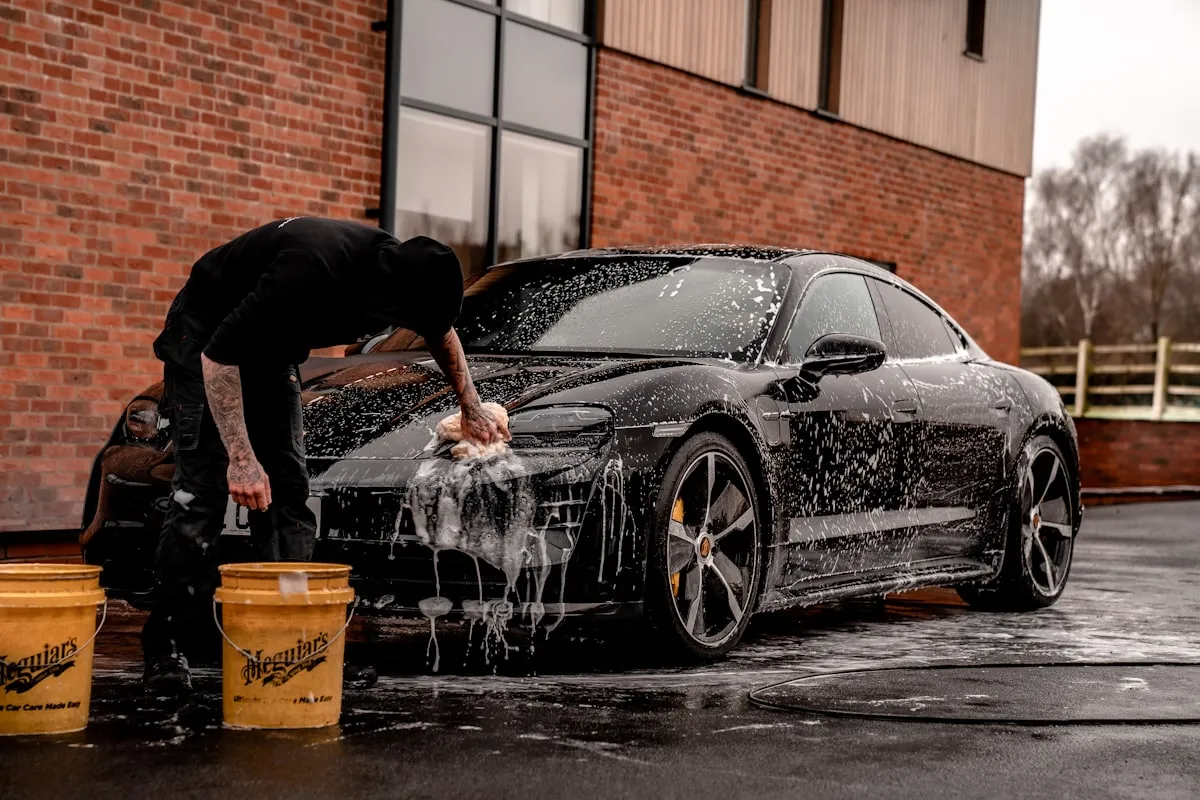
Two-bucket washing is not optional on a car with this level of investment in its finish. One bucket holds your shampoo solution, the other holds clean rinse water and a grit guard at the bottom. Every pass with the wash mitt ends with a rinse in the clean bucket before you reload with soapy water. The grit guard traps the debris you have just removed so it does not return to the mitt.
Use a high-quality microfiber or genuine lambswool wash mitt. Avoid sponges entirely — they trap grit against the surface and drag it across the panel. Work panel by panel, top to bottom, keeping the mitt loaded with lubrication. Do not let soap dry on the surface, especially in direct sun. In the Texas summer, this means washing in a shaded area or during cooler parts of the day.
On the areas covered by paint protection film, the film surface will clean similarly to clear coat but with a softer feel on matte or satin finishes if you have opted for those variants. Use the same shampoo you use on the rest of the car. Avoid anything with petroleum distillates, strong solvents, or silicone-based additives — these can degrade the adhesive at the film edges over time.
Drying: this is where most damage happens
The drying phase is where the majority of wash-induced swirl marks and micro-scratches occur on ceramic-coated cars. The ceramic coating’s hydrophobic properties work in your favor here — water beads aggressively and you can use a strong air blower to remove a large percentage of standing water before a towel ever touches the paint.
If you have access to a leaf blower or a dedicated car dryer, use it. Start at the roof and work downward, forcing water off the edges and out of panel gaps. What remains should be minimal and easy to absorb with a clean, high-pile microfiber drying towel. Use a patting or gentle dragging motion with the towel fully laid flat against the surface — never scrub or use circular pressure.
On PPF-covered areas, the same principle applies. If your film is a glossy finish, it will behave nearly identically to the ceramic-coated paint. If you have matte or satin film, avoid products during this step that add gloss — stick to water-only drying and save any detailer sprays for the non-film areas unless the product is explicitly PPF-safe.
Product selection after the wash
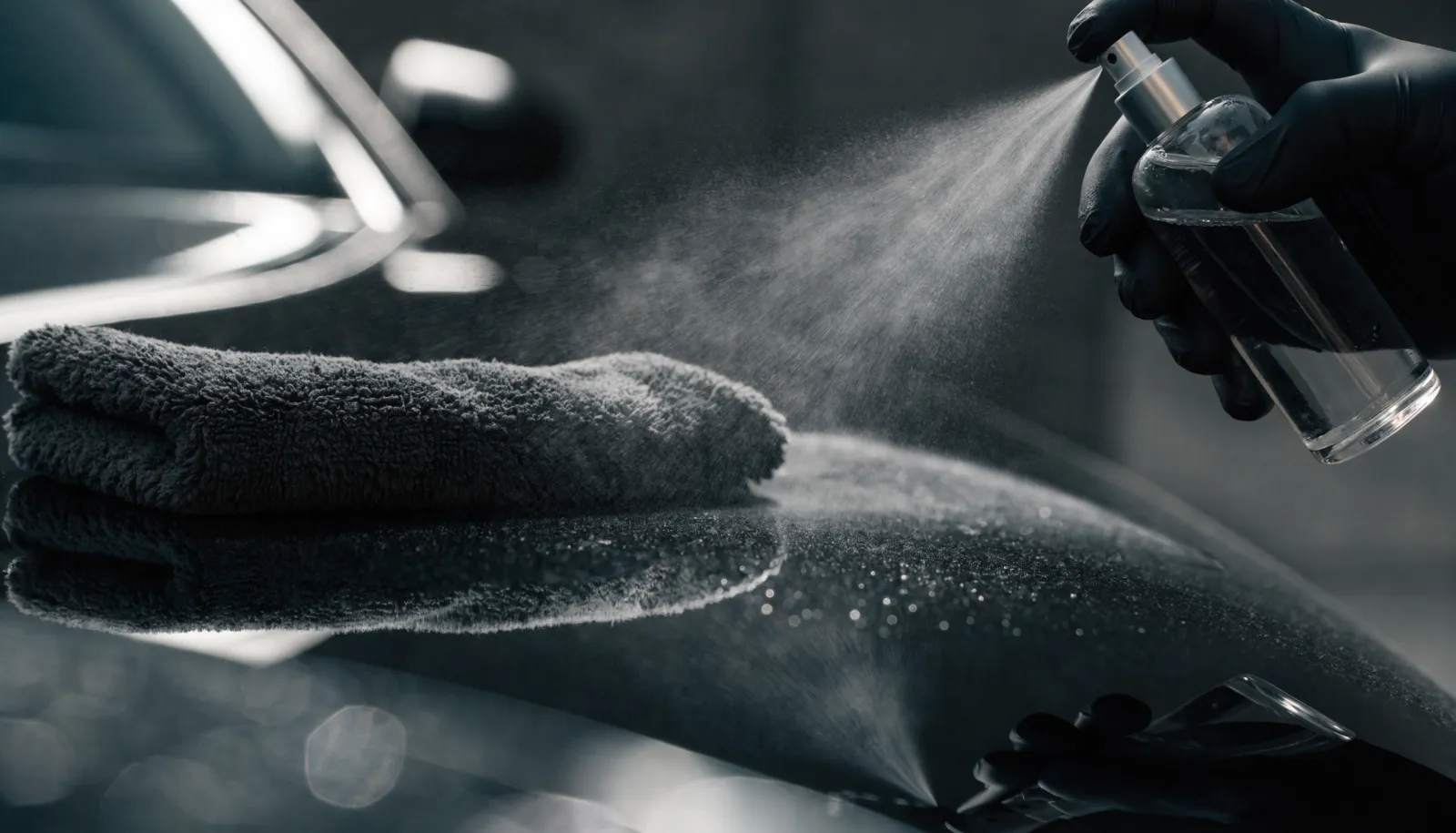
Once the car is dry, some owners like to finish with a quick detailer spray to top off the ceramic coating’s hydrophobic properties and add a layer of lubrication for any final buffing. This is where product selection gets important. Look for a spray that is labeled safe for ceramic coatings and for PPF. Avoid waxes and sealants that contain petroleum-based compounds or heavy oils — applied repeatedly to film edges, they can soften the adhesive and cause lifting over time.
A ceramic maintenance spray or a spray coating booster designed for ceramic coating maintenance is the right tool. These products bond lightly to the existing coating layer, reinforce the hydrophobic effect, and do not leave residue that attracts dust faster than it arrived. Apply with a clean microfiber applicator, buff immediately with a separate towel, and move on.
For the wheels and lower body, use a separate set of wash tools entirely. Brake dust is one of the more aggressive contaminants your paint and film will face, and cross-contaminating your panel mitts with wheel debris is a common mistake that introduces iron particles into the wash process on subsequent uses.
How often and what to watch for
For daily drivers in the North Houston area, a proper hand wash every one to two weeks is realistic from May through October when road contamination, pollen, and insect activity are at their highest. In the cooler months, you can stretch that interval slightly, but do not let visible contamination sit on the film surface for more than a few days — bird droppings and tree sap in particular can etch through the top layer of a ceramic coating and reach the film surface if left long enough.
Watch the edges of your PPF regularly. If you notice any lifting at a corner or edge, address it promptly rather than hoping it self-corrects during a wash. Water intrusion under lifted film edges leads to adhesive contamination that is difficult to correct without professional attention. If you are uncertain whether an edge is lifting or simply a normal installation characteristic, it is worth having someone with experience look at it directly.
If you have questions about your specific protection package or want a professional inspection to confirm everything is still performing correctly, you can reach EuroLuxe Detailing at (936) 292-6056.
A consistent, correct wash routine is the primary driver of how long both your film and your coating hold up in real-world conditions. The products and installation that went into protecting your vehicle can only do their job if the maintenance does not work against them. With the right process, the combination of PPF and ceramic coating requires less effort per wash than unprotected paint — it just requires that the effort you do put in is done correctly.