The GYEON Ceramic Coating Owner's Manual for Houston Drivers
The Problem Ceramic Coating Was Built to Solve
Every vehicle owner in the Houston area eventually runs into the same experience. A car that looked sharp off the lot begins to lose its depth and gloss within a year or two of regular driving. The paint still looks fine in overcast light, but in direct sun — particularly the unforgiving Texas sun of late spring through October — there is a visible network of fine scratches and swirl marks that diffuse the light rather than reflecting it cleanly. Washing the car makes it look worse in that light, not better, because the wash itself is adding micro-abrasion. Wax helps temporarily but needs to be reapplied constantly and does almost nothing against the chemical threats the vehicle faces every day.
The swirling and the fading are symptoms of the same underlying problem: bare automotive clear coat, even modern clear coat, is not durable enough on its own to maintain its integrity against the combination of UV radiation, chemical fallout, physical abrasion, and contaminant bonding that a vehicle faces in daily use in this climate. Houston specifically — with its UV index regularly reaching 10 to 11 in summer, its industrial fallout from the petrochemical corridor, its high-pollen spring seasons, and its humidity that keeps moisture in contact with the paint surface — creates conditions that accelerate clear coat degradation faster than most American cities.
Ceramic coating was developed to address this by bonding a semi-permanent protective layer to the clear coat surface that handles the threats bare paint cannot. Understanding what that layer actually does, how long it lasts, and what it requires to perform over time is the starting point for making an informed decision about whether it makes sense for your vehicle.
What Ceramic Coating Actually Is
Ceramic coating is a liquid polymer with a high concentration of silicon dioxide — the same compound in glass and quartz — that chemically bonds to automotive clear coat when applied and cured correctly. It is not a wax, not a sealant, and not a spray-on treatment available in a bottle at an auto parts store. The products marketed as “ceramic” in consumer retail typically contain trace amounts of SiO2 in a traditional polymer carrier and provide weeks of protection, not years. Professional ceramic coatings applied by trained installers operate on an entirely different chemistry and durability scale.
When a professional ceramic coating cures on a paint surface, the silicon dioxide molecules form a matrix that bonds to the clear coat at a molecular level and hardens to a rating of 9H on the pencil hardness scale — harder than the clear coat beneath it. That hardness provides resistance to light physical abrasion, the kind that causes swirl marks in unprotected paint. It does not make paint scratch-proof — a key strike or a sharp rock will penetrate any coating — but it dramatically raises the threshold at which everyday contact causes visible damage.
The chemistry that makes ceramic coating hydrophobic is distinct from the hardness. The SiO2 matrix creates a surface with a very high water contact angle — the angle at which a water droplet sits on a surface before sheeting off. Bare paint has a contact angle in the range of 40 to 60 degrees, meaning water spreads and sits on the surface, bringing dissolved contaminants into prolonged contact with the clear coat. A properly applied professional ceramic coating produces contact angles of 100 degrees or higher, meaning water beads tightly and sheets off the surface with minimal contact time. The practical result is a vehicle that stays cleaner between washes, requires less physical contact during washing to clean — which reduces the abrasion that causes swirling — and resists the bonding of iron particles, bird dropping acids, bug splatter enzymes, and industrial fallout more effectively than bare paint.
UV blocking is the third major mechanism. The ceramic matrix filters UV radiation at the surface level, reducing the amount that reaches the clear coat beneath. In Houston’s UV environment, this is not a minor benefit — it is the primary mechanism by which ceramic coating extends the interval between paint correction work. Clear coat degradation under unfiltered Houston UV is rapid enough that unprotected vehicles often need correction within two to three years. A properly maintained ceramic coating extends that interval to five years or more on the same vehicle driven in the same conditions.
What Does Ceramic Coating Cost in Houston?
Professional ceramic coating installation costs in the Houston market range from approximately $800 to $2,500 for a complete vehicle, depending on the coating product, the number of layers applied, whether paint correction is included, and the installer’s labor rate. Understanding what drives the variation within that range is important because the spread between the lowest and highest quotes is not accidental.
A single-layer entry-level coating application on a clean vehicle with no correction work typically starts around $600 to $900. The result is a thin protective layer with a warranty period of one to two years. These products are legitimate coatings — they are genuinely better than wax — but they are not the same as professional-grade multi-layer systems in terms of durability or protection depth.
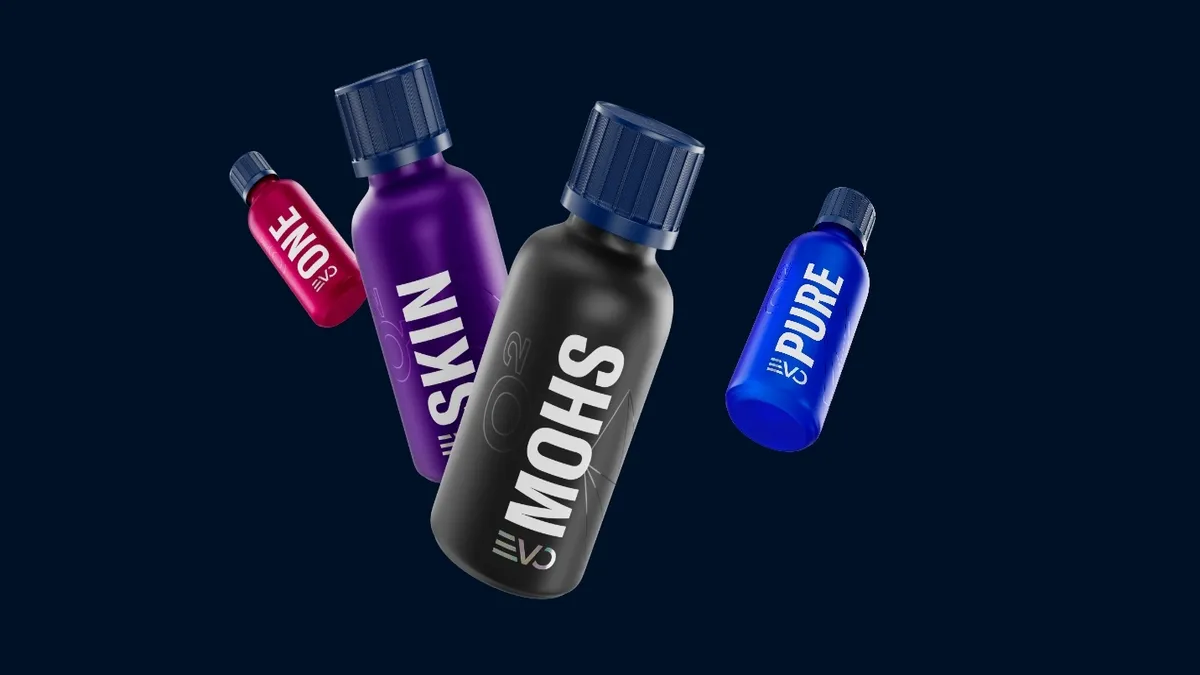
A professional-grade multi-layer system like GYEON MOHS EVO applied over a fully corrected and decontaminated vehicle typically runs $1,200 to $2,000 depending on vehicle size and the level of paint correction required before coating. This price includes the correction work, the multi-layer coating application, and the warranty registration. The protection duration for these systems is five or more years with appropriate maintenance, which changes the economics considerably when modeled over the ownership period.
Paint correction before coating is not optional for a quality result — it is built into the process. Applying ceramic coating over paint that has existing swirl marks, scratches, or oxidation seals those defects permanently beneath a semi-permanent layer. The coating will last, but the paint beneath it will look exactly as it did when the coating went on — flaws and all, forever. Every quality installation begins with honest paint assessment and appropriate correction.
Curious what ceramic coating would cost for your specific vehicle? We do free multi-point paint inspections and give you an honest quote — no commitment required. Call 936-292-6056 or request one online.
GYEON MOHS EVO: Why We Use It
We are a certified GYEON installer at EuroLuxe and have chosen GYEON MOHS EVO as our primary coating product because it consistently performs in the specific conditions Houston vehicles face: extreme UV, high summer humidity, heavy pollen loads, and chemical contamination from industrial fallout and road debris.
GYEON is a Korean coating brand built on SiO2 chemistry developed for professional detailing applications. The name MOHS references the Mohs hardness scale — the same scale geologists use to measure mineral hardness — because the hardness of the cured coating matrix is central to its protective function. EVO designates the current evolved formula, which improves on earlier GYEON formulations in UV resistance, hydrophobic performance, and layering compatibility.
The MOHS EVO system is designed as a multi-layer application. The base layer bonds directly to the paint surface and establishes the primary protective matrix. Additional layers build coating thickness and enhance the surface properties — gloss depth, hydrophobic contact angle, and UV resistance all improve with each properly applied additional layer. A complete professional application at EuroLuxe includes multiple layers applied with appropriate flash times between coats to ensure each layer bonds correctly rather than sitting on top of an uncured previous layer.
The UV resistance in GYEON MOHS EVO is one of the primary reasons we chose it for this market. The coating’s SiO2 matrix is formulated to filter the UV wavelengths that drive clear coat photooxidation — the chemical reaction that degrades gloss and causes paint to fade and oxidize. In Houston’s UV environment, this filtering function works significantly harder than it would in most American markets, and GYEON’s formulation holds up under sustained UV stress in a way that lighter or less UV-stable coatings do not. We have been using GYEON products long enough to observe multi-year performance on vehicles we originally coated, and the UV stability is consistent with what the product claims.
The hydrophobic performance is immediately noticeable after installation. Water contact angles on a freshly applied GYEON MOHS EVO surface consistently exceed 110 degrees — water beads into tight spheres and rolls off the surface with the slightest movement, taking surface contamination with it. As the coating ages and accumulates surface contamination, the contact angle naturally decreases, and periodic maintenance — either a ceramic booster spray or a light decontamination wash — restores the original behavior. This is normal and expected, and understanding it is part of getting full value from the coating.
How GYEON Compares to Ceramic Pro, Gtechniq, and Other Brands
The professional ceramic coating market has grown substantially over the past decade and now includes dozens of brands at various quality and price tiers. We are regularly asked how GYEON compares to Ceramic Pro specifically, since Ceramic Pro has significant marketing presence in the US. The comparison is worth going through honestly.
Ceramic Pro is a franchise-based coating system. The 9H product is their flagship professional coating and is a legitimate high-performance ceramic coating with a strong track record. The franchise model means that Ceramic Pro products are only available through authorized franchise shops, and the experience and quality are theoretically consistent because franchise shops undergo training and certification. In practice, the franchise model also means that shops vary in how closely they follow the process, and the added overhead of the franchise structure tends to be reflected in pricing.
The substantive difference between Ceramic Pro 9H and GYEON MOHS EVO at the formulation level is smaller than their respective marketing would suggest. Both are SiO2-based professional coatings targeting 9H hardness, multi-layer application, and 5-plus year warranties for professional installations. Where they differ meaningfully is in application process, maintenance product ecosystem, and how each handles the specific UV and humidity conditions of Houston’s climate. We chose GYEON because the formulation’s UV stability and its hydrophobic recovery under heavy contamination conditions — which Houston generates constantly — are better matched to what our clients actually experience.
Gtechniq Crystal Serum Ultra is a UK-formulated professional coating with a strong reputation in the enthusiast and concours community. Its dual-layer system — a harder base layer bonded to the paint with a softer, more scratch-resistant top layer — is technically sophisticated and produces excellent results. It is available only through Gtechniq-authorized detailers and carries a 9-year warranty with professional installation. It is a legitimate alternative to GYEON at the premium tier and worth considering for clients who specifically want Gtechniq. We do not install it at EuroLuxe because we chose to build our expertise and process around GYEON, and coating quality is substantially determined by application expertise, not just product quality.
CarPro CQuartz UK 3.0 is a well-regarded enthusiast-grade coating that occupies the tier between consumer spray products and full professional coatings. A professional application carries a 2-to-3-year warranty. It is a legitimate product frequently used by skilled detailers and enthusiasts who apply coatings themselves. As a professional installation product, it competes at a lower durability and warranty tier than GYEON MOHS EVO.
| Brand | Origin | Hardness | Pro Warranty | Dealer Model | UV Focus |
|---|---|---|---|---|---|
| GYEON MOHS EVO | Korea | 9H | 5+ years | Certified installers | High |
| Ceramic Pro 9H | Cyprus/USA | 9H | 5+ years | Franchise only | High |
| Gtechniq Crystal Serum Ultra | UK | 10H | 9 years | Authorized detailers | High |
| CarPro CQuartz UK 3.0 | Spain | 9H | 2-3 years | Open | Moderate |
| IGL Kenzo | Malaysia | 9H | 5+ years | Certified installers | High |
The honest recommendation: any professional-grade coating from the top tier of this table, applied correctly by a trained installer on properly corrected paint, will dramatically outperform bare paint or consumer products. The installer matters more than the brand name. We chose GYEON because we know it, we have invested in training with it, and we have the track record on Houston vehicles to stand behind it.
Paint Correction First: Why Sequence Matters Completely
The most important thing to understand about ceramic coating is that it does not fix or hide paint defects — it preserves whatever condition the paint is in when the coating goes on. If swirl marks, water spot etching, oxidation, or fine scratches are present in the paint at the time of coating, they will still be present after coating. The coating bonds to the surface at a molecular level and locks in the condition it finds. There is no buffing or polishing out defects after a ceramic coating has cured — the only option is to strip the coating and start over.
This is why every quality ceramic coating installation begins with honest paint assessment. We use a paint thickness gauge to measure the depth of clear coat on each panel before recommending a correction approach. This tells us how much correction is safe to perform without compromising the long-term integrity of the clear coat — a critical calculation, because clear coat has a finite thickness and over-correction on a panel that has already had work done can thin it to the point where it is no longer viable.
For most vehicles coming in for their first professional coating, a single-stage enhancement polish is the minimum preparation — removing the light swirling and surface oxidation that washing and normal driving generates over months of use, while consuming less than one micron of clear coat. Vehicles with more significant defects — deeper swirl marks, water spot etching, or paint that has been neglected for several years — benefit from a two-stage cut-and-polish correction that removes more substantial defects before the coating goes on.
The practical implication: do not budget for ceramic coating and then cut the correction step to save money. The coating will last. The flaws beneath it will also last, permanently. Budgeting correctly means including correction as a line item in the total investment, not as an optional add-on.
Want to know what your paint needs before coating? Our free inspection covers paint thickness, defect assessment, and a correction recommendation. Call 936-292-6056 or schedule online.
The Curing Process and What to Expect After Installation
Ceramic coating curing is a chemical reaction — the SiO2 molecules in the coating cross-link with the clear coat surface and with each other to form the protective matrix. That reaction requires time and appropriate environmental conditions to complete. Understanding the curing timeline helps you use and maintain the vehicle correctly in the period immediately following installation.
The initial cure phase — during which the coating is sensitive to water contact, physical contact, and contamination — lasts approximately 24 hours after the final layer is applied. During this window, the vehicle should be kept dry and sheltered if possible. Rain contact during the initial cure can cause water spotting that is very difficult to remove once the coating has hardened. We complete all installations in our temperature-controlled shop and time curing appropriately.
The coating reaches functional hardness — the 9H rating that provides full physical protection — within 7 days of application. During this period, washing is acceptable but should be gentle, avoiding high-pressure water directly at panel surfaces and avoiding aggressive contact. After 7 days, the coating is fully cured and normal maintenance resumes.
Ambient temperature and humidity affect the curing rate. Houston’s spring and summer conditions — warm ambient temperatures and moderate humidity — are generally favorable for curing. We factor ambient conditions into our application process, which is one reason installation in a controlled environment produces more consistent results than installation in variable outdoor conditions.
The coating will appear to have slightly different optical characteristics during the curing week as it fully hardens — some clients describe a very subtle transition in gloss depth as the layers fully cross-link. By day 7, the surface appearance is final and represents what the coating will look like throughout its life with proper maintenance.
Ceramic Coating Maintenance: What Actually Keeps It Performing
Ceramic coating requires less maintenance than bare paint, but it is not maintenance-free. Understanding what the coating needs to continue performing at its best is the difference between a coating that looks sharp at the 5-year mark and one that has degraded to near-bare-paint performance by year 2.
The single most important maintenance practice is regular washing. This seems obvious, but the logic behind it is important: the hydrophobic surface that makes ceramic coating effective works by preventing contamination from bonding strongly to the surface. That property only works while the surface is relatively free of accumulated contamination. A ceramic-coated vehicle that is not washed regularly still accumulates iron fallout, bird dropping residue, industrial deposits, and road film — and under those accumulated layers, the coating’s properties are effectively neutralized. Regular washing removes the contamination before it has time to chemically interact with the coating surface.
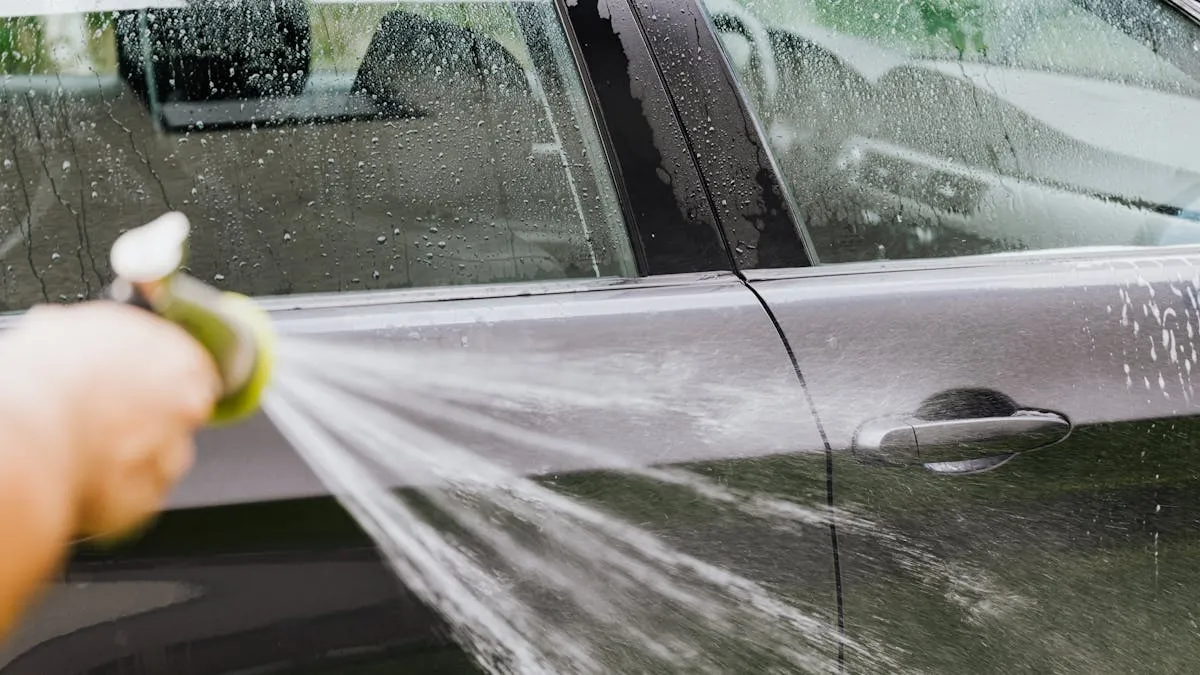
The washing method matters as well. Touchless or contactless washing is ideal for ceramic-coated vehicles because it eliminates the abrasive contact that generates swirl marks in bare paint. If contact washing is used, a clean, high-quality microfiber wash mitt and the two-bucket method — one bucket for wash solution, one for rinsing the mitt — minimizes the abrasion risk. Avoid automatic car washes with abrasive brush systems entirely.
A ceramic booster spray — GYEON makes several maintenance products designed to work with MOHS EVO — applied during or after washing refreshes the hydrophobic behavior and extends the active life of the coating. We recommend applying a booster every 3 to 6 months depending on how aggressively the vehicle is used and how frequently it is washed. This is not restoring a coating that has failed — it is maintaining the surface layer that takes the most direct environmental contact so the base coating beneath performs for its full warranty period.
Annual decontamination — an iron fallout remover wash followed by clay bar treatment if needed — removes the embedded contamination that regular washing does not address. In Houston’s environment, this is an important step, particularly for vehicles that park outdoors regularly. Iron fallout from brake dust and industrial sources embeds in any surface, including ceramic coatings, and the oxidation process beneath the embedded particles can eventually compromise the coating bond if left unchecked.
How Long Does Ceramic Coating Last in Houston’s Climate?
GYEON MOHS EVO carries a 5-year warranty for professional installations. In Houston’s specific conditions, achieving 5 years of strong performance requires appropriate installation — correctly corrected and decontaminated paint, proper multi-layer application in a controlled environment, full curing — and appropriate maintenance in the ownership period.
The factors that most commonly cause coatings to underperform their warranty period in Houston are UV intensity and maintenance gaps. UV at Houston’s levels is more aggressive than the conditions under which most coating warranty periods are validated, and coatings applied by installers who do not account for this in their product selection and application approach sometimes show UV-driven degradation before their nominal warranty expires. GYEON MOHS EVO’s UV resistance formulation is calibrated for severe UV environments, which is one of the reasons we chose it for this market.
Maintenance gaps are the more common cause of premature performance decline. A coating that goes 6 to 8 months without washing while parked outdoors in Houston accumulates contamination that actively degrades the surface. The coating itself may still be bonded to the paint beneath the accumulated grime, but its functional properties — hydrophobic behavior, UV filtering, gloss — are compromised at the surface level. Decontamination and a booster application can recover significant performance, but consistent maintenance from the beginning produces consistently better results than sporadic deep cleaning.
The realistic performance outlook for a GYEON MOHS EVO installation with appropriate maintenance in Houston: 4 to 5 years of strong performance, declining gradually after that point and eventually requiring reapplication or a maintenance coating to restore full function. A vehicle that hits year 5 with well-maintained GYEON MOHS EVO on it has paint that is in significantly better condition than the same vehicle would be with 5 years of bare paint exposure in Houston — which is the performance benchmark that matters.
Ceramic Coating vs. PPF vs. Wax: The Right Tool
These three products serve different purposes and are not interchangeable, despite being marketed in overlapping contexts. Understanding what each does helps you allocate protection budget to the right product for your specific situation.
Wax and polymer sealants are temporary surface treatments that sit on top of the paint rather than bonding to it. They provide modest UV protection and hydrophobic behavior that lasts weeks to a few months before requiring reapplication. They offer no meaningful impact resistance and no protection against rock chips or road debris. Wax is a maintenance product, not a protection system.
Ceramic coating is a semi-permanent surface treatment that chemically bonds to the clear coat and provides UV resistance, chemical resistance, hydrophobic behavior, and scratch resistance for years rather than weeks. It does not provide meaningful impact protection — a rock chip at highway speed will penetrate a ceramic coating the same way it penetrates bare paint, because the coating is thin (measured in microns, not mils) and not designed to absorb impact energy.
Paint protection film is a thick thermoplastic polyurethane barrier (8 to 9.5 mil) applied over the paint to absorb and disperse impact energy. It prevents rock chips and road debris from reaching the paint surface. It provides its own UV resistance and hydrophobic surface properties, and premium films like UltraFit XP Series have a nano ceramic top coat built in. PPF does not provide the same gloss enhancement that ceramic coating delivers.
The complete protection configuration — PPF on impact-vulnerable areas plus ceramic coating over the PPF and on non-filmed panels — delivers both impact protection and the gloss, UV resistance, and hydrophobic performance that ceramic coating provides. For clients who want the most comprehensive protection available, this combined approach is what we recommend and install.
Frequently Asked Questions
Can I apply ceramic coating myself? Consumer-grade DIY ceramic products are available and provide modest protection. Professional-grade coatings like GYEON MOHS EVO are not sold for DIY application — they require proper preparation, application in a controlled environment, correct flash times between layers, and the experience to identify and correct application errors before they cure. Improper application produces high spots, streaks, and uneven bonding that is visible in direct light and very difficult to correct after curing.
How do I know if my car already has a ceramic coating? Perform a water test — pour a small amount of water on the paint surface. If it beads tightly and sheets off aggressively, a coating may be present. If it spreads and sits flat, the surface is likely bare paint or heavily contaminated coating. We can assess this during a free inspection.
Does ceramic coating protect against scratches? It raises the threshold at which light contact causes visible scratches — the 9H hardness provides real resistance to everyday abrasion like shopping cart contact, light keying, and car wash brushes. It does not prevent deep scratches from sharp or high-force contact.
Will ceramic coating prevent water spots? It makes water spots easier to remove because the hydrophobic surface reduces mineral deposits from bonding as aggressively. It does not prevent water spots from forming if hard water is allowed to dry on the surface. Drying the vehicle after washing remains important even with ceramic coating.
Does Houston’s humidity affect ceramic coating performance? High humidity extends flash times during application, which is one reason installation in a controlled environment matters in this market. Once fully cured, the coating is not negatively affected by humidity and in fact performs well in humid conditions because water beads and sheets rather than sitting on the surface.
Can ceramic coating be applied over paint that has been previously waxed? All wax, sealant, and prior coating product must be fully removed before ceramic coating is applied. The coating needs to bond directly to the clear coat surface. Any contamination or prior product in the bonding layer will prevent proper adhesion and shorten the coating’s life.
What happens when the coating wears out? The coating can be reapplied after the previous coating has been removed or has degraded. The reapplication process is similar to the original installation — decontamination, potentially a light correction pass, and fresh coating layers. The paint beneath a properly maintained ceramic coating after 5 years is in far better condition than it would be without protection, which means the reapplication starting point is strong.
The Most Durable Paint Protection Available for This Climate
Houston does not forgive vehicles that go unprotected. The UV intensity, chemical fallout, road debris, and humidity that define this environment accelerate every form of paint degradation simultaneously. GYEON MOHS EVO applied by a certified installer on properly prepared paint is the most effective protection currently available for those conditions on a standard vehicle budget — delivering 5 or more years of UV blocking, chemical resistance, and hydrophobic performance that bare paint cannot provide at any price.
We are the only certified GYEON installer in the Tomball and North Houston market. All installations include a full paint assessment, appropriate correction work, multi-layer coating application in our controlled shop environment, and full GYEON warranty registration. We serve clients from Tomball, Magnolia, The Woodlands, Spring, Cypress, and throughout the North Houston area.
Call us at 936-292-6056, stop by 11701 Holderrieth Road in Tomball, or request your free quote online.