
How to safely remove bird droppings and tree sap from paint
Two of the most common sources of paint damage in North Houston are also the most underestimated: bird droppings and tree sap. Neither looks catastrophic when it first lands on your hood or roof, but both are actively attacking the clear coat from the moment they make contact. Houston’s heat accelerates the damage considerably. A dropping that sits for six hours on a July afternoon in Tomball can etch itself into the clear coat in ways that no amount of washing will reverse.
The mechanics are straightforward. Bird droppings are acidic, with a pH that typically falls between 3.5 and 4.5 depending on the bird’s diet. Tree sap contains resins and organic acids that harden quickly in direct sun, bonding to the paint surface at a molecular level. When either contaminant heats up and then cools through a daily temperature cycle, the material expands and contracts, working itself deeper into the clear coat. The longer either stays on the surface, the harder the removal and the more likely you are to be looking at paint correction afterward.
The good news is that both are manageable if you catch them early and use the right technique. The damage that ends up requiring paint correction is almost always the result of delay, not the initial contact.
Why rushing the removal makes things worse
The instinct when you see a dropping on your car is to wipe it off immediately. That instinct is half right. You do want to address it quickly, but dragging a dry cloth, paper towel, or sleeve across a hardened dropping is one of the more reliable ways to scratch your clear coat. The material is gritty, and you are essentially dragging an abrasive across paint at whatever pressure your wipe applies.
Tree sap creates a similar trap. It looks soft and tacky when fresh, so people try to rub it off with a microfiber or their hand. Fresh sap does move more easily than cured sap, but it still smears across the surrounding surface and can carry embedded grit along with it. The correct approach in both cases is to soften the contaminant before you touch it with any cloth.
Patience at this stage saves money later. A two-minute soak costs nothing. A paint correction appointment to remove the etching that results from an impatient wipe costs considerably more.
The correct process for bird droppings
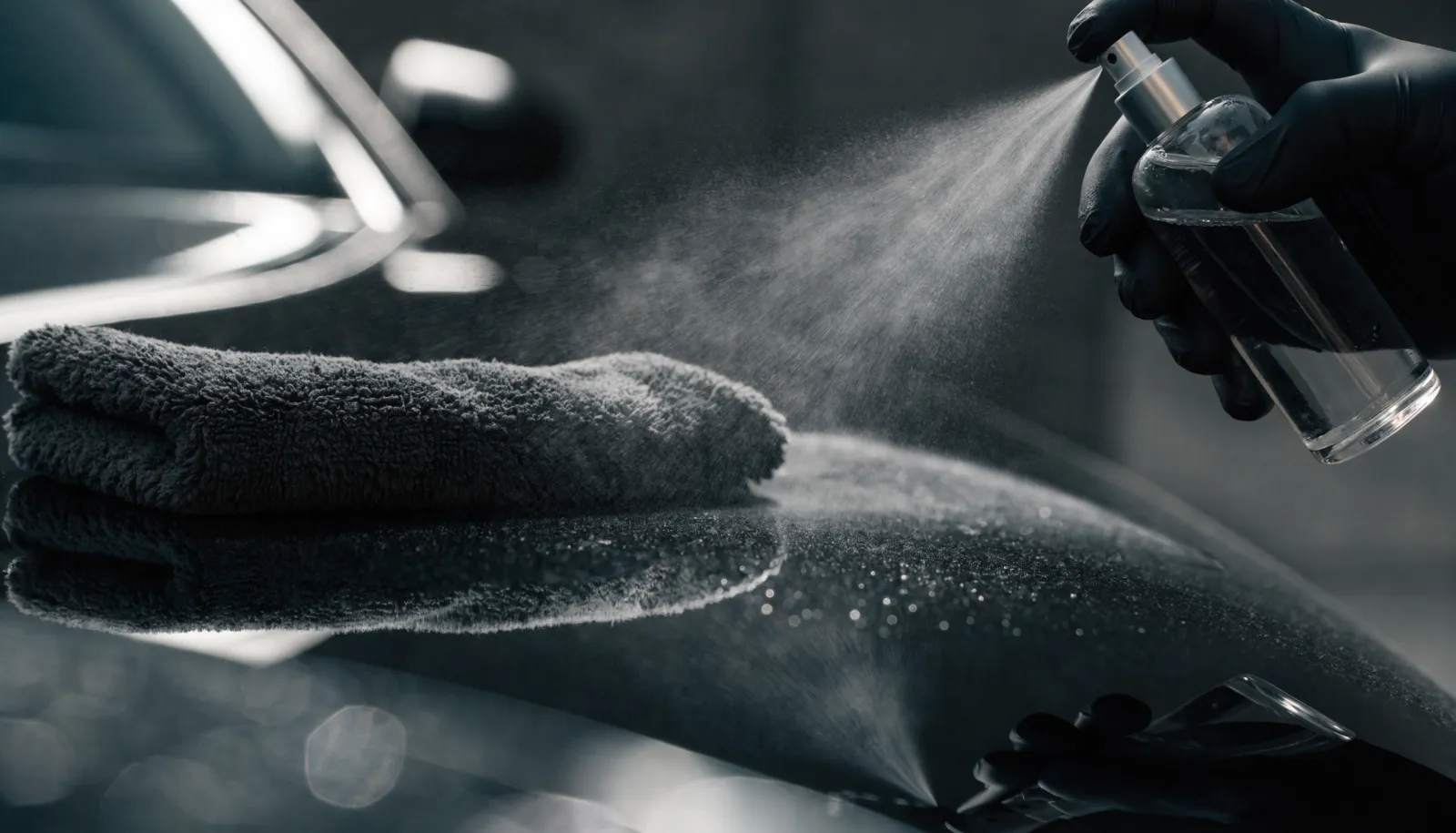
If the dropping is fresh and soft, wet a folded microfiber towel with clean water, lay it flat over the dropping, and let it sit for sixty to ninety seconds. This rehydrates the material so it lifts rather than drags. Then use gentle blotting pressure straight down and lift. Do not wipe laterally. Repeat with a clean section of towel until the surface is clear, then follow with a rinse and a proper hand wash of the area.
If the dropping has dried and hardened, plain water may not be enough. A dedicated bird dropping remover or a pH-neutral quick detailer applied directly to the area works better. Spray it on, let it dwell for a minute or two, and then blot as described above. For heavily baked-on material, a second application is preferable to applying more pressure on the first pass.
Once the area is clean, inspect it in direct or raking light. Fresh droppings removed quickly often leave no mark at all. Ones that sat in heat may leave a dull or slightly rough patch, which indicates the clear coat has been chemically etched. At that point the surface needs polishing, not just washing.
The correct process for tree sap
Fresh sap that has not fully cured will respond to isopropyl alcohol (IPA) at a 50 percent dilution or a dedicated sap remover. Apply to a folded microfiber towel rather than directly to the paint, press it onto the sap spot, and let it dwell for thirty to sixty seconds. The solvent needs time to break the resin bond before you apply any pressure. Blot and lift, do not rub in circles.
For cured sap — the kind that has been sitting through several heat cycles and feels like a hardened bead — a stronger sap remover or a small amount of undiluted IPA may be needed. Work one spot at a time. After the sap is gone, wipe the area with a clean damp cloth to remove any solvent residue, then inspect for etching.
Avoid using petroleum-based products like WD-40 on painted surfaces. They can shift sap but leave an oily residue that complicates any future coating work and can degrade existing ceramic coating if your car carries one. Stick to products designed for automotive paint.
How protective coatings change the equation
A properly applied ceramic coating does not make your paint immune to bird droppings or sap damage, but it meaningfully extends the window you have to address them. Ceramic coatings create a harder, smoother surface that is less porous than bare clear coat. Contaminants sit on top of the coating rather than bonding directly to the paint, and the hydrophobic surface makes them easier to rinse away during a wash. Acidic material still etches if left long enough, but the threshold for damage is higher and the removal process is gentler.
Paint protection film provides even more resistance. UltraFit film absorbs the chemical impact of droppings and sap, and its self-healing topcoat handles light surface marring without polishing. If you park under trees regularly or deal with heavy bird traffic around your usual parking spots, the economics of film on high-exposure panels shift in its favor pretty quickly.
None of this changes the fundamental rule: remove contaminants as soon as you notice them. The coatings buy you time, not immunity.
Building habits that prevent the damage in the first place
The most practical upgrade for anyone who deals with recurring contamination is keeping a small kit in the car. A 4-ounce spray bottle of diluted IPA or a dedicated bird dropping remover, two folded microfiber towels, and a small bottle of clean water is enough to address most incidents in a parking lot before the contaminant has time to bake in. The entire kit fits in a glove box.
Parking habits matter too. Direct sun accelerates curing on both sap and droppings. If you have a choice between a shaded spot under a tree and an open spot in full sun, weigh the fact that shade reduces thermal damage but increases your sap exposure. Neither is automatically the right answer depending on the season and what trees are overhead. Oak and pine trees are prolific sap producers in the spring and early summer across the Conroe, Magnolia, and Tomball areas, and that timing overlaps with some of the highest daily temperatures of the year.
Regular washing also helps. Paint that is clean and either waxed, sealed, or coated is less susceptible than bare or oxidized clear coat. A car that goes four or five weeks between washes is accumulating a layer of pollen, road film, and industrial fallout that acts as a secondary bonding agent for anything organic that lands on top of it.
If you are dealing with etching that has already worked its way into the clear coat, or if you want to understand what level of protection makes sense for how and where you park, you can reach the EuroLuxe team directly at (936) 292-6056 to talk through the options.
Most paint damage from bird droppings and tree sap is preventable with a good removal process and a short response time. The cars that end up needing significant correction are almost never the ones where the owner acted fast with the right tools — they are the ones where the contamination sat through a weekend or a work week before anyone addressed it.