PPF for Luxury and Exotic Cars: Why It's Non-Negotiable
European Paint Is Softer Than You Think
There’s an irony in the automotive world that nobody talks about enough: the more expensive the car, the softer the paint. Porsche, Ferrari, Lamborghini, McLaren, BMW M-cars, and Mercedes-AMG vehicles all use paint formulations that prioritize depth, color richness, and metallic brilliance over hardness and chip resistance.
German manufacturers in particular use water-based paint systems that produce stunning finishes but are measurably softer than what you’ll find on a Honda or Toyota. Porsche’s paint is notorious among detailers for being thin — often measuring 90-110 microns total (primer, base, and clear), compared to 120-150 microns on many Japanese vehicles. Ferrari’s multi-stage metallics look incredible but mark up just from a car wash mitt that’s slightly past its prime.
This isn’t a manufacturing defect. It’s a deliberate choice. Thinner, softer paint allows for richer color depth and better metallic flake orientation. It just means the paint needs protection from day one.
The Real Cost of Unprotected Exotic Paint
A rock chip on a Civic is a $50 touch-up. A rock chip on a Porsche, Ferrari, or Lamborghini is a completely different financial conversation.
Here’s what you’re looking at for OEM replacement parts and resprays on common luxury vehicles:
- Porsche 911 front bumper: $3,000-5,000 (part + paint match + labor)
- Ferrari 488/F8 hood respray: $4,000-8,000 (multi-stage color matching is brutal)
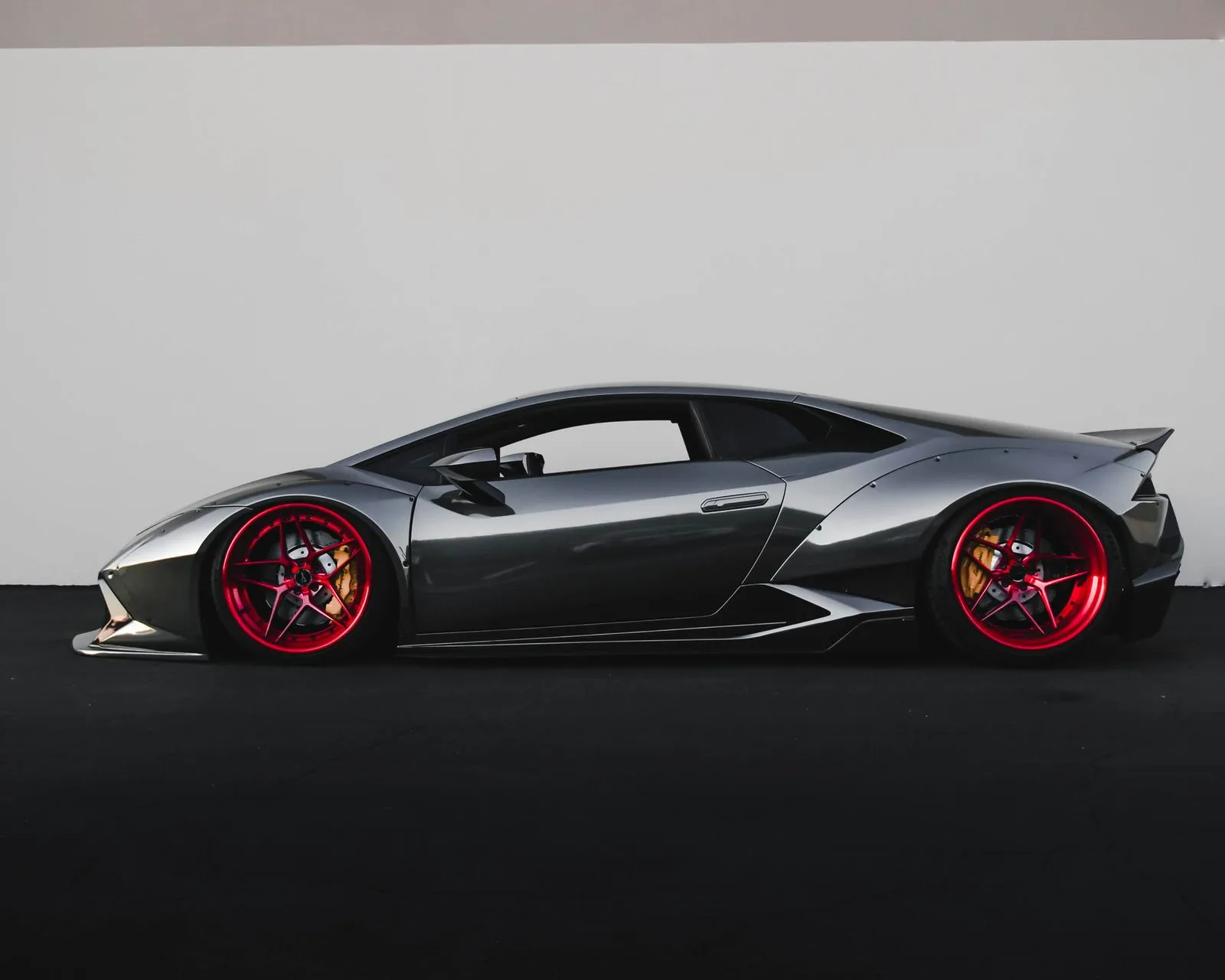
- Lamborghini Huracan front bumper: $4,500-7,000
- McLaren 720S front splitter/bumper: $5,000-9,000 (carbon fiber components)
- BMW M3/M4 hood respray: $1,500-3,000
- Mercedes-AMG GT bumper: $3,000-5,500
And that’s for a single panel. Accumulate damage across the hood, bumper, fenders, and mirrors over 2-3 years of daily driving, and you’re looking at $8,000-15,000+ in paint restoration before you even think about selling.
Compare that to full front PPF coverage, which typically runs $2,500-4,500 for these vehicles. The math is obvious.
Soft Paint Means Faster Damage Accumulation
Because luxury and exotic paint is softer, it doesn’t just chip — it chips more easily and more frequently than you’d expect. A piece of highway gravel that would bounce off a truck’s clear coat will leave a visible divot in Porsche paint.
We see this constantly at EuroLuxe. Owners bring in 6-month-old Porsches, AMGs, and M-cars with 10-15 rock chips on the hood already. Some of these cars haven’t even hit 5,000 miles. Houston’s highways don’t discriminate based on how much you paid for your car — if anything, lower ride heights on performance vehicles mean your front end catches more debris.
Swirl marks are another issue. Soft paint swirls more easily, which means even careful hand washing can introduce fine marring over time. Paint correction can remove swirls, but it removes clear coat in the process — and on paint that’s already thin, you don’t get many chances at correction before you’re through to the base coat.
PPF as Resale Insurance
High-end vehicles depreciate significantly, but the condition of the paint can swing resale value by 10-20% on a luxury car. A Porsche 911 GT3 with flawless paint commands a substantial premium over one with scattered rock chips and amateur touch-up work.
PPF creates a documented protection history that savvy buyers and dealers recognize. When you can show that the vehicle has had full front PPF since delivery — and then remove it to reveal factory-perfect paint — you’re demonstrating a level of care that translates directly into dollars at resale.
For limited-production vehicles (GT3, GT4, 296 GTB, Huracan Tecnica, AMG GT Black Series), paint condition is even more critical. These cars often hold or appreciate in value, and paint damage represents a permanent mark against their collectibility.
The Allocation Car Argument
If you waited months or years for a Porsche allocation, went through the spec process, chose your exact color, and paid a premium for delivery — putting PPF on it isn’t an expense. It’s protecting an investment you can’t easily replace. You can’t just walk into a dealer and order another Shark Blue GT3 Touring. Protect the one you have.
What Coverage Makes Sense for Exotics
For luxury and exotic vehicles, we recommend more coverage than the average daily driver:
Minimum: Full Front Kit
Hood, front bumper, fenders, mirror caps, and headlights. This covers the highest-impact zones and protects against highway debris. For vehicles that are primarily weekend or fair-weather cars, this is a reasonable baseline.
Recommended: Full Front + High-Impact Extras
Full front kit plus door edges, door cups, rocker panels, and rear bumper kick plate. This adds protection for the areas most vulnerable to parking lot damage — door dings from adjacent cars, heel scuffs getting in and out, and shopping cart rash on the rockers.
Ideal: Full Body Coverage
For six-figure vehicles, full body PPF is the ultimate preservation package. Every painted surface gets covered. No stone chips, no parking lot scratches, no damage from careless valets. Yes, it’s a significant investment ($6,000-10,000+ depending on the vehicle), but on a car worth $150,000-300,000+, it’s a small percentage of the total value you’re protecting.
Common Concerns from Exotic Car Owners
”Will PPF change the look of my paint?”
Modern premium PPF is optically clear. On a properly installed film, you won’t see it. The gloss level matches factory paint. We also offer matte PPF for vehicles with matte or satin finishes — standard gloss film would ruin the factory matte look.
”What about my ceramic coating?”
PPF and ceramic coating work together. The correct approach is PPF first, then ceramic coating applied on top of the film. The ceramic layer makes the PPF hydrophobic, easier to clean, and more resistant to environmental contamination. It’s the ultimate protection stack for high-value vehicles.
”Can PPF be removed without damaging the paint?”
Yes. Quality PPF from reputable manufacturers is designed for clean removal. The adhesive is pressure-sensitive, not chemical-bonding. When it’s time to replace the film (typically 7-10 years), a professional removal leaves the paint underneath in the same condition it was in on installation day. That’s the entire point.
Why Installation Quality Matters Even More on Exotics
A mediocre PPF installation on a Camry is annoying. A mediocre installation on a Ferrari is unacceptable. Exotic vehicles have complex body lines, deep curves, aggressive front splitters, and air intakes that require precision fitting. Edges that lift or film that wrinkles on a $250,000 car look worse than no film at all.
This is where installer experience with specific marques matters. Cutting patterns need to be exact. Edge wrapping needs to be tight. Compound curves need proper heat forming. And the install environment needs to be climate-controlled and dust-free — a single contaminant trapped under the film on a Grigio Silverstone Lamborghini is immediately visible.
At EuroLuxe Detailing, we work with luxury and exotic vehicles regularly and understand the specific demands these cars place on the installation process.
The Bottom Line
Skipping PPF on a luxury or exotic vehicle is a decision that costs you money every single day you drive. Between the soft factory paint, the astronomical repair costs, and the resale value impact, paint protection film pays for itself faster on high-end vehicles than on any other category of car.
If you’ve spent six figures on a vehicle, protecting the paint isn’t optional — it’s part of responsible ownership. Get a quote for your specific vehicle and let’s put together the right coverage package.