Rotary vs. Dual Action Polisher: What Your Detailer Should Be Using
Two Machines, Two Fundamentally Different Approaches
In the professional detailing world, the rotary polisher and the dual action polisher are the two primary tools used for paint correction, and understanding how they differ matters if you care about the quality and safety of the work being done on your vehicle. A rotary polisher spins the pad in a single circular direction, much like a drill, generating significant cutting power through consistent rotational force. A dual action polisher, also called a DA or random orbital, moves the pad in two simultaneous motions: it rotates around a central point while also oscillating in a wider orbit. This dual motion creates a random pattern that distributes energy more evenly across the paint surface. Both machines have their place in professional correction, and knowing when each is appropriate separates skilled shops from careless ones.
How Rotary Polishers Work
The rotary polisher is the traditional workhorse of the automotive paint correction industry, and it has been used by body shops and detailers for decades. Its single-direction rotation concentrates cutting energy, which makes it extremely effective at removing deep scratches, heavy oxidation, and severe defects. The speed is adjustable, typically from 600 to 2,500 RPM, and the operator controls the amount of cutting by adjusting speed, pressure, and dwell time on each area. This concentrated energy is also what makes the rotary dangerous in untrained hands because the pad stays on the same spot with full rotational force, and holding it in one place too long can burn through clear coat within seconds. At our shop, we use rotary polishers for specific situations where no other tool can achieve the necessary correction level.
How Dual Action Polishers Work
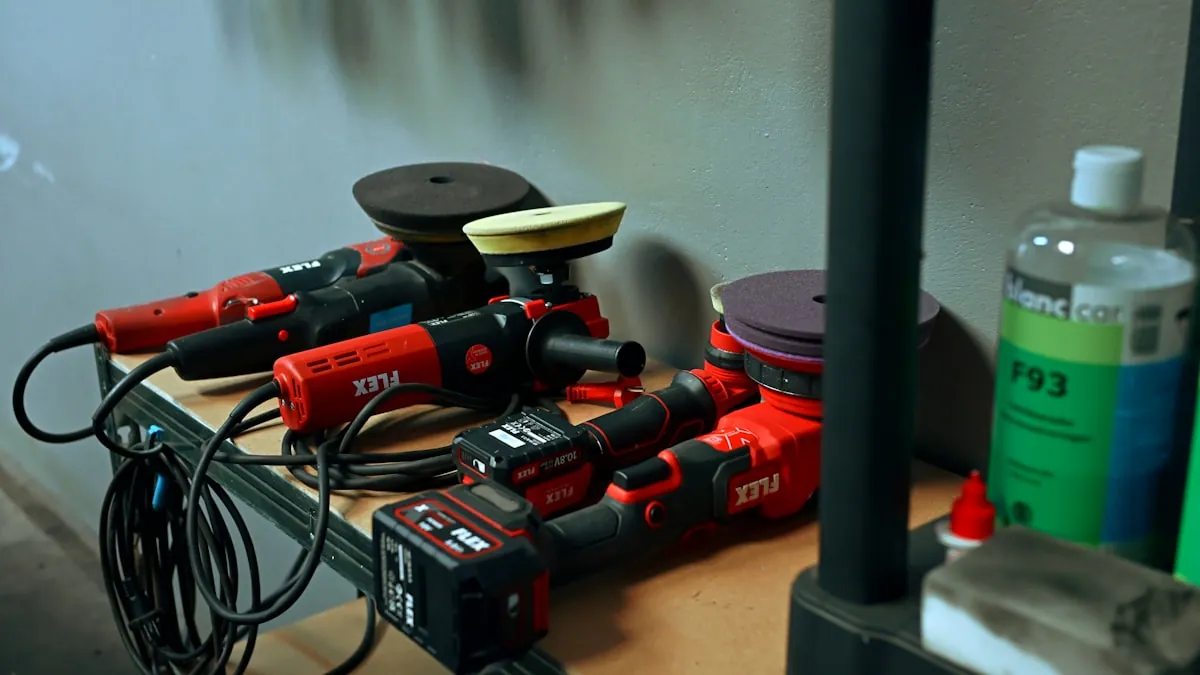
The dual action polisher represents a significant advancement in safety and accessibility for paint correction work. Its random orbital pattern means the pad never stays in contact with the same point on the paint for consecutive rotations, which distributes heat and cutting energy across a wider area. Modern forced-rotation DA polishers, such as the Rupes BigFoot and Flex units we use, generate enough cutting power for the vast majority of paint correction scenarios. The throw size, which is the diameter of the orbital pattern, typically ranges from 12mm to 21mm and affects how aggressively the machine cuts and how efficiently it covers large panels. We use a 15mm throw for general correction work and a 21mm throw for large, flat panels like hoods and roofs where coverage efficiency matters.
Safety Profiles Compared
The safety difference between these machines is not academic, it is the difference between a flawless correction and a ruined panel. A rotary polisher can burn through clear coat, create holograms, and leave permanent damage if used with too much speed, pressure, or dwell time. A dual action polisher is significantly more forgiving because its oscillating pattern naturally prevents heat concentration, and the machine will often stall rather than burn through paint if too much pressure is applied. This does not mean a DA polisher is risk-free because an aggressive compound on a microfiber pad at high speed can still cause damage, but the margin for error is substantially wider. For this reason, reputable shops use DA polishers as their primary correction tool and reserve the rotary for the small percentage of jobs where its unique capabilities are genuinely needed.
When a Rotary Is the Right Tool
There are legitimate scenarios where a rotary polisher is the best choice, and experienced detailers know exactly when to reach for it. Severe oxidation on older vehicles where the paint has degraded significantly may require the concentrated cutting power that only a rotary provides. Wet sanding follow-up is another scenario where the rotary excels because it can quickly flatten and refine the aggressive sanding marks from 2000 or 3000 grit sandpaper. Some hard paint systems, particularly the ceramic clear coats used by certain European manufacturers, respond better to the consistent rotational energy of a rotary than to the oscillating pattern of a DA. At EuroLuxe Detailing, we estimate that approximately 15 percent of our paint correction jobs involve a rotary polisher at some stage of the process, and it is always used by our most experienced technician.
When a DA Polisher Is the Better Choice
For the remaining 85 percent of our work, the dual action polisher delivers equal or better results with a significantly lower risk profile. Modern DA polishers with forced rotation can remove moderate swirl marks, light to medium scratches, and surface contamination without the heat concentration risks of a rotary. They also produce a more consistent finish across large panels because the random orbital pattern avoids the directional haze patterns that rotary polishers can leave. For dark-colored vehicles where any correction artifact is visible, the DA polisher is almost always our first choice because it leaves a cleaner finish with less risk of hologram trails. The technology in DA polishers has improved so dramatically in the last decade that many corrections that previously required a rotary can now be accomplished just as effectively with a forced-rotation DA.
What to Ask Your Detailer
If you are considering paint correction for your vehicle, asking your detailer about their tools and process reveals a lot about their expertise and approach. A shop that uses only a rotary polisher may be stuck in outdated methods or may be cutting corners by relying on one tool for every situation. A shop that refuses to use a rotary under any circumstances may lack the skill to handle severely damaged paint when the situation calls for it. The best shops, and this is the standard we hold ourselves to, have both machines available and select the right tool based on the specific paint system, defect level, and panel being corrected. Ask about their process, which machine they plan to use and why, and whether they take paint depth readings before starting.
Our Approach at EuroLuxe Detailing
Every paint correction at our shop starts with a thorough inspection and paint depth measurement, followed by a test spot on an inconspicuous area to determine the least aggressive method that achieves the desired result. We start with a DA polisher and the mildest effective compound-pad combination, stepping up in aggressiveness only if the defects demand it. The rotary comes out only when the DA has been tested and found insufficient for the specific defect or paint system. This graduated approach ensures we remove the minimum amount of clear coat necessary while achieving maximum defect removal. The result is a correction that looks exceptional today and leaves enough clear coat to protect your vehicle for years to come.
Get a quote for professional paint correction using the right tools for your vehicle.