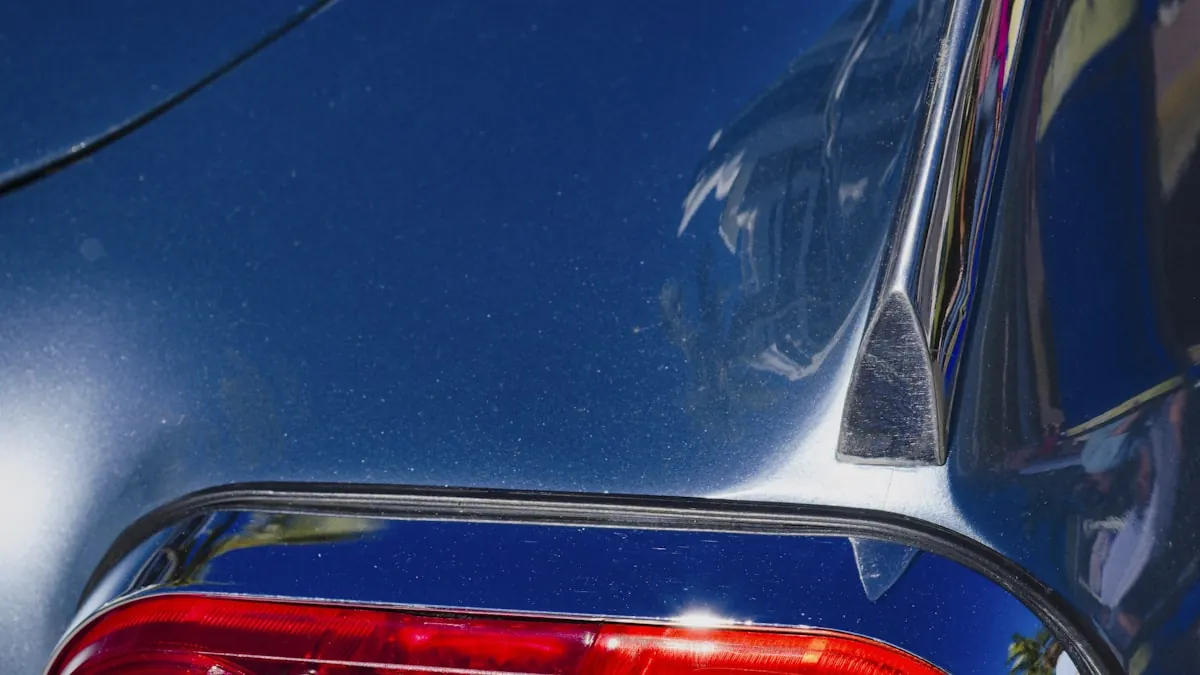

The Science Behind Hydrophobic Coatings: How Water Beading Actually Works
Water Beading Is More Than a Visual Trick
When most people see water beading tightly on a ceramic-coated vehicle, they think of it as a satisfying visual effect. But the water beading behavior is actually a measurable indicator of the coating’s chemical and physical properties, and understanding the science behind it explains why some coatings perform better than others and why that performance matters for protecting your vehicle. At EuroLuxe Detailing, we believe that informed clients make better decisions about their vehicle protection, and demystifying the science behind hydrophobic coatings helps you evaluate the products and services you are investing in rather than relying on marketing claims alone.
Surface Energy and Wettability
The key concept behind hydrophobic behavior is surface energy. Every surface has a measurable energy level that determines how readily liquids spread across it or bead up on it. High-surface-energy materials like clean glass and bare metal allow water to spread flat and wet the surface completely. Low-surface-energy materials cause water to contract into tight beads and resist spreading. Automotive paint and clear coat have moderately high surface energy in their uncoated state, which is why water tends to sheet across and pool on an unprotected vehicle. A ceramic coating like GYEON MOHS EVO fundamentally alters the surface energy of the clear coat by depositing a low-surface-energy layer that water cannot easily wet, forcing it to form discrete beads rather than spreading.
Contact Angle: The Measurement That Matters
The degree to which a water droplet beads on a surface is quantified by measuring its contact angle, which is the angle formed between the droplet’s edge and the surface it sits on. A flat pool of water on a high-energy surface has a contact angle near zero degrees. A standard wax might produce contact angles of 90 to 100 degrees. Professional-grade ceramic coatings routinely achieve contact angles of 110 degrees or higher when freshly applied, with premium formulations reaching 115 to 120 degrees. At these angles, water droplets sit as nearly spherical beads on the surface, minimizing their footprint and their ability to deposit contaminants as they evaporate. We measure contact angles during our product evaluation process to verify that the coatings we apply meet their stated performance specifications.
SiO2 Chemistry: How Ceramic Coatings Bond
The foundation of most ceramic coatings is silicon dioxide, or SiO2, the same compound that forms the basis of glass and quartz. In a coating formulation, SiO2 nanoparticles are suspended in a solvent carrier along with bonding agents that allow the coating to chemically react with the vehicle’s clear coat. When the solvent evaporates and the coating cures, the SiO2 particles form a cross-linked network that bonds to the clear coat at a molecular level. This is fundamentally different from a wax or sealant, which sits on top of the surface through mechanical adhesion and wears away over time. The covalent bonding of a ceramic coating means it cannot be removed through normal washing or environmental exposure. It becomes part of the surface rather than a temporary layer on top of it.
Why Not All Hydrophobic Coatings Are Equal
The concentration of SiO2, the quality of the solvent system, the bonding agents used, and the curing conditions all affect the final hydrophobic performance and durability of a ceramic coating. Consumer-grade spray coatings typically contain SiO2 concentrations well below what professional coatings offer, and their simplified application processes do not achieve the same depth of cross-linking. The result is a coating that beads water impressively for a few weeks but degrades rapidly under UV exposure, chemical attack, and mechanical abrasion. Professional-grade coatings like the GYEON MOHS EVO we apply at our shop use higher SiO2 concentrations and more sophisticated chemistry that produces a thicker, harder, and more durable hydrophobic layer. The difference in longevity between a consumer spray and a professional coating is typically measured in years, not weeks.
Beyond Water: What Hydrophobic Surfaces Actually Repel
The low surface energy that causes water beading also resists the adhesion of a wide range of contaminants that damage vehicle paint. Bird droppings, tree sap, industrial fallout, pollen, and mineral-laden water all have reduced ability to bond to a hydrophobic surface. This is where the protective value of a ceramic coating goes beyond aesthetics and into genuine paint preservation. In the Houston area, where paint correction is frequently needed to address damage from these contaminants on unprotected vehicles, a ceramic coating prevents most of that damage from occurring in the first place. The contaminants land on the surface but cannot establish the chemical bonds that allow them to etch or stain the clear coat. A quick rinse removes them before they can cause harm.
Hydrophobic Performance Over Time
All hydrophobic coatings experience some reduction in contact angle over time as the surface layer is subjected to UV exposure, chemical exposure, and mechanical abrasion from washing and environmental contact. The rate of this decline is a critical differentiator between coating products. Lower-quality coatings may lose significant hydrophobic performance within six to twelve months, requiring reapplication or topping with a maintenance spray to restore water beading. Higher-quality coatings like GYEON MOHS EVO maintain elevated contact angles for multiple years when properly maintained. We track hydrophobic performance on client vehicles during maintenance visits and can objectively verify that the coating is still performing as expected. Maintenance coatings can be applied periodically to refresh the top layer and extend peak performance further.
Practical Value for Texas Vehicle Owners
Understanding the science behind hydrophobic coatings translates into practical benefits that Texas vehicle owners experience every day. Morning dew rolls off the surface rather than leaving mineral spots. Afternoon thunderstorms rinse the vehicle clean rather than depositing contaminants. Highway driving does not result in a layer of road film that requires aggressive cleaning. Window tinting paired with exterior ceramic coating means both the inside and outside of the vehicle are protected from the Texas climate with minimal ongoing effort. The science is fascinating, but the real value is in the daily convenience and the long-term paint preservation.
Experience the Science Firsthand
If you want to see how professional-grade hydrophobic coatings perform on a real vehicle in the Texas climate, we invite you to visit EuroLuxe Detailing and examine our coated vehicles up close. Pour water on a coated panel and watch the science in action. Visit us at 11701 Holderrieth Rd in Tomball, call (713) 298-8819, or request a quote online to discuss a ceramic coating for your vehicle. We are open Monday through Friday from 9 AM to 5 PM, with Saturday appointments available. Let the science work for you.