Ceramic Coating for Glass and Windshields: Hydrophobic Vision
Why Glass Deserves Its Own Coating
When we apply ceramic coating to a vehicle at EuroLuxe Detailing, clients often ask whether the same product goes on the glass. The answer is no, and for good reason. Glass surfaces require a completely different coating chemistry than painted panels because the substrate is fundamentally different. Automotive glass is a non-porous, silica-based surface that does not bond with the same SiO2 formulations used on clear coat. Glass-specific ceramic coatings are formulated with different bonding agents that chemically adhere to the glass surface and create a durable hydrophobic layer that transforms how water, dirt, and contaminants interact with every window on your vehicle. The effect on driving visibility during Houston rainstorms is remarkable, and once you have experienced it, driving with uncoated glass feels genuinely unsafe by comparison.
How Glass Ceramic Coating Works
Glass ceramic coatings create a nanoscopic layer of protection that changes the surface energy of the glass, causing water to bead into tight spherical droplets rather than sheeting across the surface. The contact angle of water on untreated glass is typically around 20 to 30 degrees, meaning water spreads flat and clings. A properly coated glass surface achieves contact angles of 100 to 115 degrees, causing water droplets to ball up and roll off under the influence of gravity or wind at driving speeds. At highway speeds above 35 to 40 miles per hour, rain striking a coated windshield is immediately blown off by the airstream, often making wipers unnecessary during moderate rainfall. The coating also fills microscopic pits and imperfections in the glass surface, creating a smoother optical surface that reduces light scatter from oncoming headlights during nighttime driving. This smoother surface also makes it significantly harder for mineral deposits from Houston’s hard water to bond to the glass, which means water spots wipe away easily rather than requiring aggressive chemical removal.
The Windshield Application Process
Applying ceramic coating to a windshield requires thorough preparation that goes well beyond what a simple glass cleaner can accomplish. The glass must be completely stripped of any existing water repellent products, wax residue, oil film from road traffic, and mineral deposits. We use a specialized glass polish with a felt polishing pad to mechanically clean the surface and remove any contamination that is embedded in the glass texture. This polishing step is critical because any contamination left on the surface will be sealed under the coating, creating haze or adhesion problems that compromise both clarity and longevity. Once the glass is perfectly clean, the coating is applied in small sections using a specialized applicator, allowed to flash for 30 to 60 seconds, and then buffed to a uniform finish. The coating requires 24 hours of cure time before water exposure, during which the chemical bond to the glass surface fully develops. At our Tomball shop, we typically coat all glass surfaces as part of a full vehicle ceramic coating package, ensuring that every piece of glass receives the same level of preparation and application quality.
Wiper Compatibility and Wear Considerations
A common concern about glass ceramic coatings is whether they affect wiper performance or cause accelerated wiper wear. In our experience with hundreds of glass coating installations, properly applied glass coatings actually extend wiper blade life rather than reducing it. The hydrophobic surface reduces the amount of friction between the wiper blade and the glass because less water needs to be mechanically cleared, and the debris that typically grinds between the blade and glass is less likely to adhere to the coated surface. However, a poor-quality glass coating or one that is not properly buffed during application can create a slightly textured surface that causes wiper chatter, which is the stuttering, skipping motion that occurs when the blade does not glide smoothly. This is an application quality issue, not a product deficiency, and it highlights why glass coating should be performed by experienced professionals who understand the specific buffing technique required for a perfectly smooth finish. We test wiper operation on every vehicle after glass coating to confirm smooth, chatter-free performance before the vehicle leaves our shop.
Rain Visibility Improvement in Houston Storms
Houston receives an average of 50 inches of rainfall annually, and those inches tend to arrive in intense downpours rather than gentle drizzles. During a heavy Texas thunderstorm, the volume of water hitting your windshield can overwhelm even the fastest wiper speed, creating moments of near-zero visibility that are genuinely dangerous on highways. A ceramic-coated windshield fundamentally changes this experience because the hydrophobic surface actively repels water even between wiper passes. At speeds above 40 miles per hour, we have observed that coated windshields clear themselves almost entirely through wind force alone during moderate rain, maintaining visibility that an uncoated windshield could not achieve even with wipers at maximum speed. During the heaviest downpours, the coating does not eliminate the need for wipers, but it significantly reduces the water load that the wipers need to manage, which keeps the glass clearer between wiper passes. For anyone who drives I-45, Highway 290, or the Grand Parkway during Houston storm season, this visibility improvement is not a luxury but a meaningful safety enhancement.
Side Windows, Mirrors, and Rear Glass
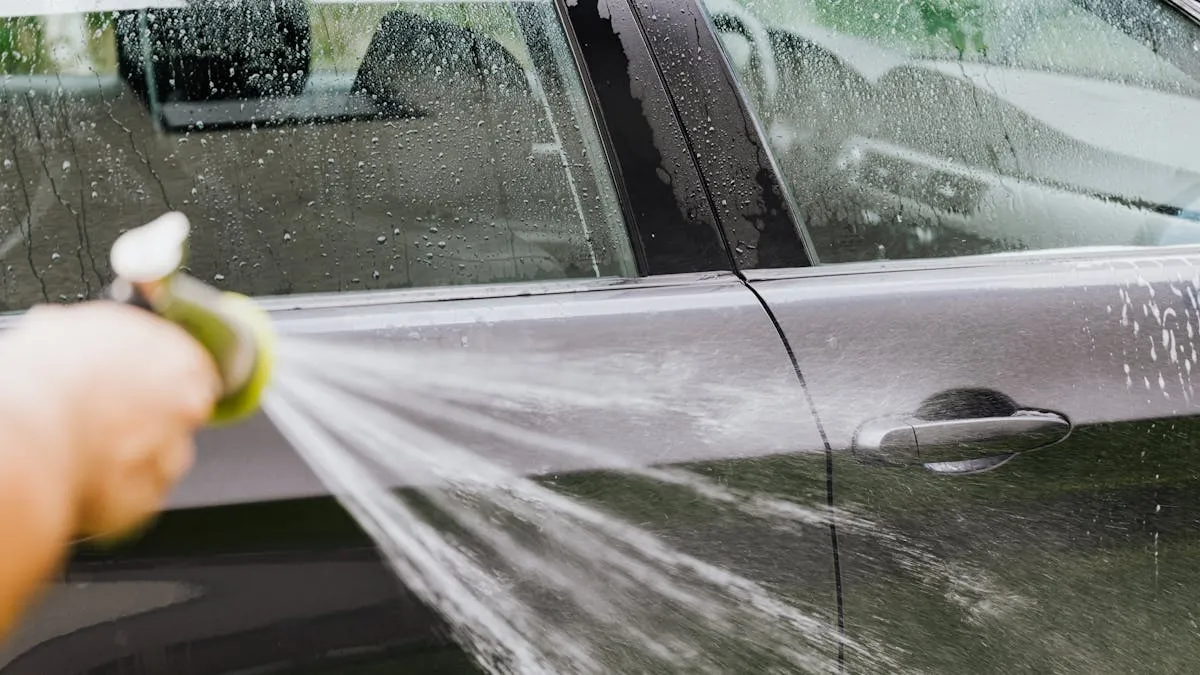
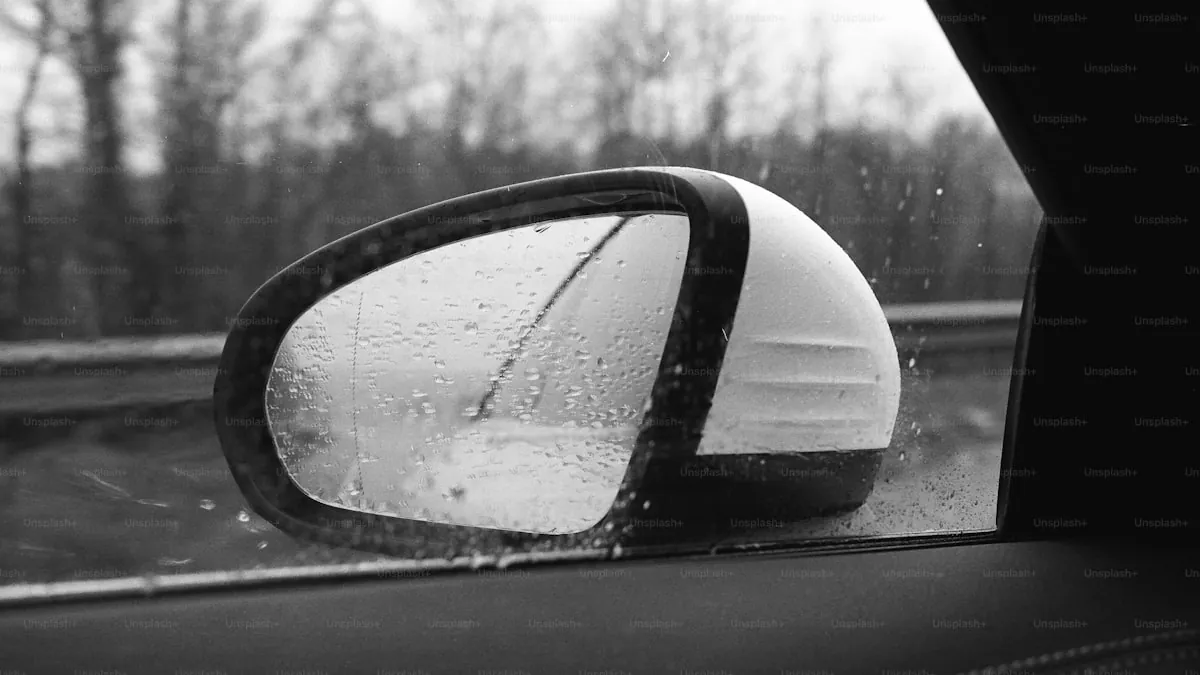
While the windshield gets the most attention in discussions of glass coating, the side windows, mirrors, and rear glass benefit equally from hydrophobic treatment. Side windows coated with ceramic repel water immediately when lowered after rain, rather than dragging a sheet of water into the door panel and streaking across the glass when raised. Exterior mirrors shed water droplets at driving speeds, maintaining clear rearward visibility in conditions that would normally obscure uncoated mirrors. The rear glass, which does not benefit from wipers on most sedans, stays substantially clearer in rain because water beads and rolls off the hydrophobic surface rather than accumulating in a vision-blocking sheet. We coat every glass surface on the vehicle, including the small quarter-panel windows and any fixed glass, because consistent hydrophobic performance across all windows provides the most complete visibility improvement. The coating on side and rear glass also makes cleaning easier during regular maintenance, as dirt, bug splatter, and road film release from the coated surface with minimal effort.
Longevity and Maintenance of Glass Coating
Glass ceramic coatings have a different wear profile than paint coatings because glass surfaces experience different types of mechanical stress. The windshield endures constant wiper abrasion, debris impacts, and aggressive cleaning, all of which gradually wear the coating. A quality glass coating on a windshield typically lasts 12 to 18 months before reapplication is needed, while the side and rear glass, which do not experience wiper wear, can maintain hydrophobic performance for two to three years. We recommend that clients include glass coating reapplication as part of their annual ceramic coating maintenance visit, since the preparation and application can be completed alongside other coating maintenance services. The good news is that reapplication is faster and less expensive than the initial application because the glass is already in better condition and requires less preparation. Using proper glass cleaners that do not contain ammonia or petroleum distillates also extends the coating’s life, and we provide specific product recommendations to every glass coating client.
Complete Your Vehicle’s Protection
A vehicle with coated paint but uncoated glass is only partially protected, and the driving experience improvement from coated glass is one of the most immediately noticeable results of any service we provide. At EuroLuxe Detailing in Tomball, we include glass ceramic coating as a standard component of our comprehensive protection packages because we believe every surface of your vehicle deserves the best available protection. Whether you are adding glass coating to an existing paint coating or starting fresh with a complete vehicle protection package, the investment in hydrophobic glass transforms your rainy-day driving confidence. Request a quote and let us show you the difference that professionally coated glass makes during the next Houston rainstorm.