Ceramic Coating Over PPF: The Ultimate Protection Stack
You Don’t Have to Choose One or the Other
One of the most common questions we hear at EuroLuxe is some variation of: “Should I get PPF or ceramic coating?” The question assumes these are competing products. They’re not. They serve completely different functions, and using them together produces a level of protection that neither achieves alone.
Paint protection film protects against physical impacts — rock chips, road debris, scratches, and door dings. Ceramic coating protects against chemical contamination, UV degradation, oxidation, and makes the vehicle hydrophobic for easier cleaning.
One blocks things that hit your car. The other blocks things that sit on your car.
Together, they cover every realistic threat your vehicle faces. This is the approach we recommend at EuroLuxe for anyone who wants maximum protection, and it’s what we install on our own vehicles.
The Correct Layering Order
Order matters. Here’s the proper sequence and why each step exists:
Step 1: Paint Correction
Before any protective product touches your vehicle, the paint surface needs to be in the best possible condition. Paint correction removes swirl marks, light scratches, water spot etching, and oxidation from the clear coat. This step ensures you’re sealing clean, defect-free paint under the protective layers.
Why this matters: PPF is transparent. Whatever is underneath the film is visible through the film. If you apply PPF over swirled, scratched paint, you’ve permanently locked in defects that will be visible for the life of the film. Paint correction before PPF is not optional on any vehicle with more than a few hundred miles.
Step 2: PPF on High-Impact Areas
After the paint is corrected and prepped, PPF is applied to the areas that need physical impact protection. For most vehicles, this means the full front end: hood, front bumper, fenders, mirror caps, and headlights. For higher-value vehicles or those with aggressive driving profiles, additional panels get covered — rocker panels, door edges, A-pillars, rear bumper.
The film needs direct contact with clean, corrected paint for proper adhesion. This is why PPF goes on before ceramic coating — the ceramic layer would interfere with film adhesion.
Step 3: Ceramic Coating Over Everything
Once the PPF has cured (typically 24-48 hours after installation), ceramic coating is applied over the entire vehicle. This means the ceramic goes on top of the PPF’d areas AND on the bare paint surfaces that don’t have film.
This creates a unified protective layer across the entire vehicle:
- PPF’d areas get physical protection from the film PLUS chemical/UV/hydrophobic protection from the ceramic
- Bare paint areas get chemical/UV/hydrophobic protection from the ceramic
The result is a vehicle where every exterior surface has the highest level of protection appropriate for its exposure level.
Why Ceramic Coating on Top of PPF Is Essential
Some people skip the ceramic layer on their PPF’d areas, thinking the film alone is sufficient. Here’s what they’re missing:
Hydrophobic Properties
Bare PPF has moderate water-shedding ability. Ceramic-coated PPF has aggressive hydrophobic properties — water beads and sheets off the surface. This means:
- Less water sitting on the film surface (reducing mineral deposit staining)
- Bug splatter, bird droppings, and tree sap release more easily during washing
- Dirt adhesion is reduced, keeping the film cleaner between washes
- Rain actively helps clean the vehicle rather than leaving deposits
UV Protection Extension
PPF has built-in UV inhibitors that prevent yellowing, but these inhibitors degrade over time — especially in Houston’s intense UV environment. Ceramic coating adds an additional UV-blocking layer on top of the film, reducing the UV exposure the film’s own inhibitors have to handle.
The practical result: PPF with ceramic coating on top maintains its optical clarity longer than PPF alone. In our experience, ceramic-coated PPF looks noticeably better than uncoated PPF after 3-4 years of Texas sun exposure.
Stain Resistance
PPF can stain over time from road tar, insect acids, tree sap, and mineral deposits. These contaminants bond to the film’s surface and become increasingly difficult to remove. Ceramic coating creates a barrier between these contaminants and the film surface, making them significantly easier to remove during regular washing.
Without ceramic on the PPF, you’ll eventually notice the film developing a slightly dingy or stained appearance — particularly on light-colored vehicles where the contrast is visible. With ceramic, the film stays cleaner and clearer for its entire lifespan.
Enhanced Gloss
This is the most immediately visible benefit. Ceramic coating adds measurable gloss depth to PPF. The film looks wetter, deeper, and more optically refined with a ceramic layer on top. On dark-colored vehicles especially, the difference between coated and uncoated PPF is noticeable side by side.
Easier Maintenance
The combined effect of hydrophobic properties and stain resistance means dramatically easier maintenance. Washing a vehicle with ceramic-coated PPF takes less time, less effort, and produces better results than washing either product individually. Contaminants that would require detail spray or chemical cleaning on bare PPF rinse off with water on ceramic-coated PPF.
Cost Advantage of the Combined Approach
Here’s something that makes the financial argument easier: adding ceramic coating to an existing PPF installation costs less than getting each service separately.
When you book PPF and ceramic coating together:
- The vehicle is already in the shop for the PPF installation
- Paint correction (Step 1) is performed once and benefits both products
- The ceramic coating application on PPF’d panels is straightforward — the film surface is clean, consistent, and ready for coating
- Total labor time is less than scheduling separate appointments
Typical Combined Pricing
For a mid-size vehicle:
-
Paint correction alone: $400-800
-
Full front PPF alone: $1,500-3,000
-
Full vehicle ceramic coating alone: $800-2,000
-
If purchased separately: $2,700-5,800 total
-
Combined package (correction + full front PPF + full vehicle ceramic): $2,200-4,800
-
Savings from combined scheduling: 10-20% vs. booking individually
The savings come from reduced setup/teardown time, single paint correction session, and streamlined workflow.
What Ceramic Coating Does NOT Do (and Why You Still Need PPF)
We want to be clear about this because the ceramic coating industry has some aggressive marketing that implies ceramic coatings provide physical protection. They don’t.
Ceramic coating DOES NOT:
- Stop rock chips (zero impact resistance)
- Prevent scratches from road debris
- Protect against door dings or parking lot contact
- Absorb impact from any physical object
Ceramic coating is a chemical barrier — it works on a molecular level to resist contamination, UV, and chemical etching. It has essentially zero thickness for impact purposes. A 1-2 micron ceramic layer cannot absorb the energy of a rock traveling at 70 mph.
If someone tells you ceramic coating can replace PPF, they either don’t understand the products or they’re trying to sell you something less expensive by promising something it can’t deliver.
The Maintenance Routine for the Full Stack
Maintaining a vehicle with both PPF and ceramic coating is straightforward:
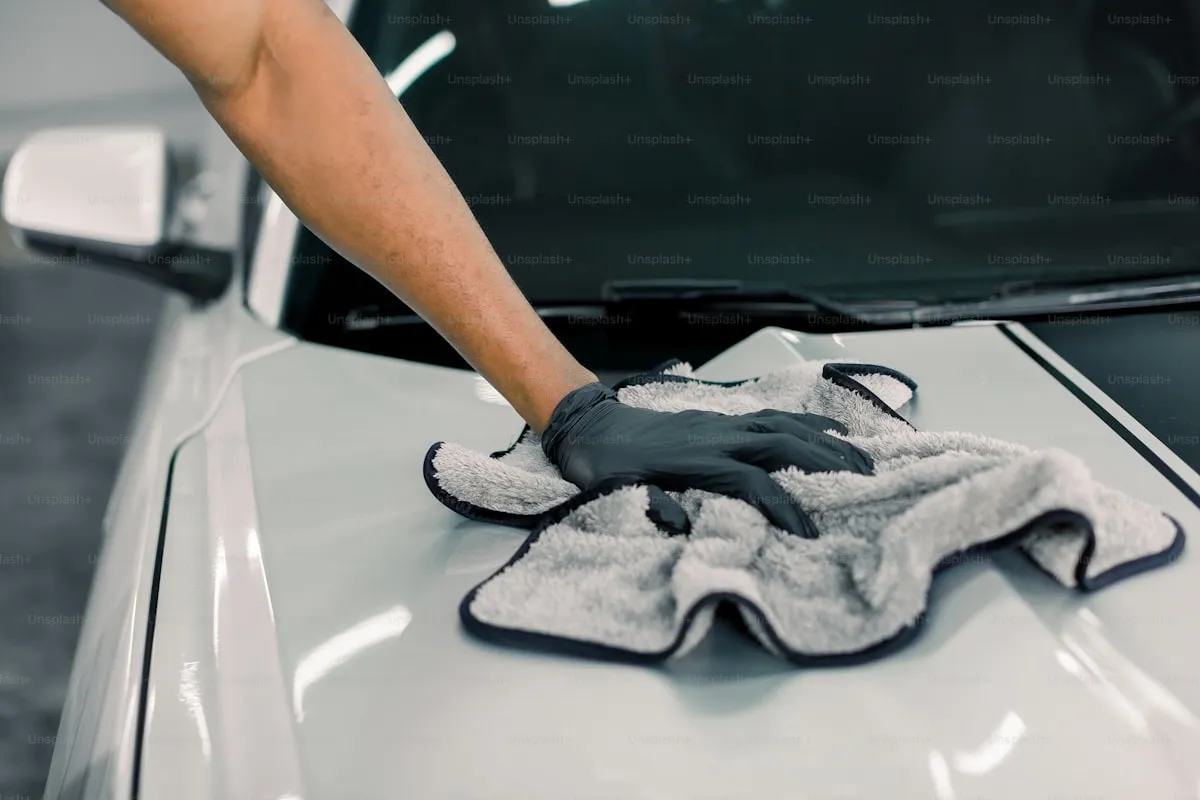
Regular Washing (Every 1-2 Weeks)
- Touchless wash or hand wash with pH-neutral soap
- Two-bucket method for hand washing
- Blow dry or use a quality drying towel — the hydrophobic surface makes drying fast
Quarterly Maintenance
- Ceramic coating maintenance spray (booster) applied to all surfaces
- This refreshes the hydrophobic layer and adds protection between full coating applications
Annual Inspection
- Visual inspection of PPF edges for any lifting
- Check ceramic coating water beading behavior (reduced beading indicates the coating is wearing)
- Professional maintenance wash and ceramic topper if needed
What to Avoid
- Automatic brush car washes (can damage both PPF edges and ceramic coating)
- Abrasive compounds or polishes on PPF surfaces
- Aggressive degreasers that strip ceramic coating
- Pressure washer held too close to PPF edges (can promote lifting)
Real-World Timeline: What to Expect
Day 1: Paint correction and PPF installation begin Day 2-3: PPF installation completes, curing period begins Day 3-4: Ceramic coating applied over entire vehicle Day 5: Vehicle released with complete protection stack
Year 1-3: Peak performance. Ceramic coating at full strength, PPF in prime condition. Maintenance is minimal. Vehicle looks better than the day it was delivered.
Year 3-5: Ceramic coating may need professional reapplication depending on exposure and maintenance. PPF remains in excellent condition with ceramic on top.
Year 5-8: PPF still performing well. Ceramic coating should be maintained/reapplied as needed. The film’s self-healing capability is still functional.
Year 8-10: PPF approaches end of life. Removal reveals protected paint in excellent condition. Opportunity to install fresh PPF and ceramic coating for another decade of protection.
Who Should Get the Full Stack?
Strong yes:
- Any vehicle worth $40,000+ that you plan to own for 3+ years
- Vehicles with soft European paint (BMW, Mercedes, Porsche, Audi)
- Highway commuters who also want easy maintenance
- Enthusiasts who want their vehicle to look its absolute best at all times
- Vehicles in designo, Individual, or special-order colors
Good value:
- Daily drivers of any price point that see highway miles
- Vehicles parked outdoors regularly (UV and environmental exposure)
- Trucks and SUVs used for both work and show
Probably overkill:
- Vehicles you’re selling within 6 months
- Low-value vehicles with significant existing paint damage
- Vehicles that rarely leave a garage
Frequently Asked Questions
Can I add ceramic coating to PPF that was installed months ago?
Yes. If you got PPF installed previously and want to add ceramic coating now, the film surface just needs to be properly cleaned and prepped before the coating is applied. There’s no requirement to do both at the same time — it’s just more cost-effective when combined.
Does ceramic coating void my PPF warranty?
No. All major PPF manufacturers (XPEL, SunTek, STEK) approve the use of ceramic coating on top of their films. In fact, some PPF manufacturers offer their own ceramic coating products specifically designed for use over their films. Ceramic coating on PPF is considered standard practice in the industry.
How long does ceramic coating last on PPF versus bare paint?
Ceramic coating on PPF typically lasts 2-4 years depending on exposure, maintenance, and the specific coating product. This is slightly shorter than on bare paint (3-5+ years) because the PPF surface has different characteristics than automotive clear coat. Regular maintenance with ceramic booster sprays extends the effective life significantly.
What if I only want ceramic coating and no PPF?
That’s your choice, and ceramic coating alone still provides significant benefits — UV protection, hydrophobic properties, easier cleaning, and enhanced gloss. Just understand that you’ll have zero physical impact protection. Rock chips, road debris scratches, and parking lot damage will still happen. Ceramic coating alone is appropriate for vehicles with low highway exposure and covered parking.
Can I get PPF without ceramic coating?
Yes, PPF alone provides excellent physical protection. The trade-offs are faster staining of the film surface, reduced UV protection for the film, and more maintenance effort required to keep the film clean. If budget is a constraint, PPF on high-impact areas is the higher priority, and ceramic coating can be added later.
Want the full protection stack for your vehicle? Get a free quote from EuroLuxe Detailing or call (936) 292-6056. We’ll put together a combined PPF and ceramic coating package tailored to your vehicle, driving habits, and budget. Serving Tomball, The Woodlands, Spring, Cypress, Magnolia, and the greater North Houston area.