
Ceramic Coating During Texas Rain Season: Timing and Performance
Texas Rain Season and Ceramic Coating Timing
Texas rain season can be unpredictable, but the heaviest rainfall in the Houston metro area typically hits between May and October, with tropical systems peaking from August through early November. For clients considering a ceramic coating, this raises a legitimate question about whether it is the right time to have the work done or if they should wait for drier weather. The short answer is that we install ceramic coatings year-round at EuroLuxe Detailing because the work happens inside our climate-controlled shop in Tomball. However, understanding how humidity and rain affect the curing process helps you make informed decisions about timing and care during those critical first few days after installation.
We have installed GYEON MOHS EVO during every type of Texas weather condition, from scorching July heat waves to the heavy downpours that accompany tropical storms rolling through the Gulf. Our shop at 11701 Holderrieth Rd maintains consistent temperature and humidity levels during the application and initial cure phase, which eliminates the primary risk factors that rain season presents. The real consideration is what happens after the vehicle leaves our shop, specifically during the 24- to 48-hour window when the coating is still completing its initial cure and is most vulnerable to contamination from water, bird droppings, and pollen.
How Humidity Affects Ceramic Coating Cure Times
Ceramic coatings cure through a chemical reaction with moisture in the air, which means humidity actually plays a helpful role in the curing process up to a point. The ideal humidity range for applying and curing a coating like GYEON MOHS EVO is between 40 and 60 percent relative humidity. During Houston’s rain season, outdoor humidity regularly sits between 70 and 95 percent, which can accelerate the surface cure but also creates challenges if moisture settles on the coating before it has had time to properly level and bond to the paint surface. This is precisely why a controlled shop environment matters so much for professional installation.
Inside our shop, we manage the environment to keep conditions within the ideal range during application and the initial flash period. The coating needs approximately 1 to 2 hours of undisturbed cure time in a controlled environment before it can handle incidental moisture contact. After that initial flash cure, the coating continues to harden over the next 24 to 48 hours, reaching its full chemical resistance and hardness within roughly 14 days. We always check the weather forecast before scheduling a pickup time so we can advise clients on how to protect the coating during those first critical hours.
Rain Performance on a Fully Cured Coating
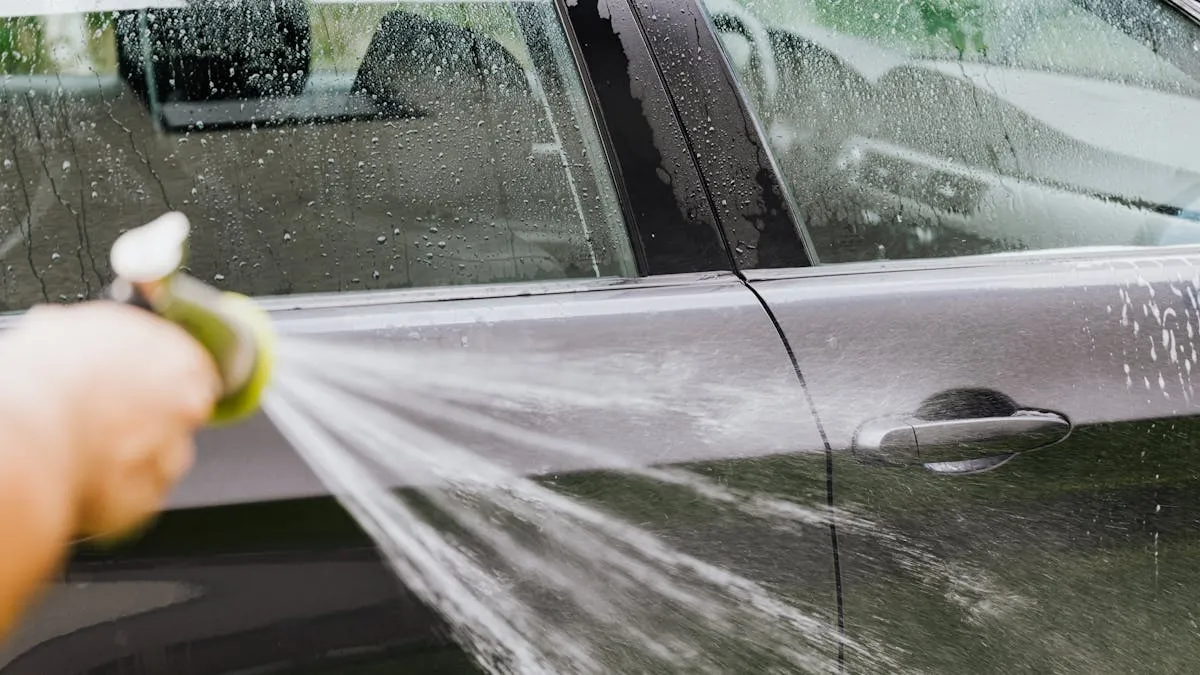
Once your ceramic coating has fully cured, rain is actually your car’s best friend. A properly applied GYEON MOHS EVO coating creates an extremely hydrophobic surface with contact angles exceeding 110 degrees, meaning water beads tightly and rolls off the surface carrying dirt and contaminants with it. During heavy Houston downpours, a coated vehicle essentially self-cleans as the sheeting water carries away accumulated dust, pollen, and light road grime. We regularly hear from clients who say their car looks cleaner after a hard rain than it did before, and that is the coating working exactly as designed.
The self-cleaning effect is most noticeable on vehicles that are maintained properly with regular SiO2 booster applications. When the hydrophobic layer is fresh and strong, water does not cling to the surface long enough to leave marks, and contaminants have nothing to grip onto. This is a major advantage during the Houston rain season, where afternoon thunderstorms can roll through daily for weeks at a time. Instead of worrying about rain damaging your finish, a coated vehicle actually benefits from the frequent rinsing that our summer storm patterns provide.
Water Spots: The Real Rain Season Concern
The biggest challenge during Texas rain season is not the rain itself but the water spots that can form when rainwater evaporates on a hot surface. Houston’s municipal water supply and rainwater both contain dissolved minerals, primarily calcium and magnesium, that get left behind as the water evaporates. When your car sits in the sun after a rain shower and the water dries on the surface rather than beading and rolling off, those minerals can etch into the coating’s sacrificial layer and create visible spots. This is especially problematic during the summer months when surface temperatures on a dark-colored car can exceed 160 degrees Fahrenheit.
Preventing water spots on a coated vehicle during rain season comes down to a few practical habits. First, park in a garage whenever possible so the vehicle is not exposed to rain followed by direct sun, which is the combination that causes the worst spotting. Second, if your car does get rained on and then sits in the sun, a quick rinse with clean water and a dry with a microfiber towel removes the mineral deposits before they can bond. At our shop, we offer paint correction and maintenance details that can remove water spot etching if it does occur, but prevention is always easier and less expensive than correction.
Scheduling Your Coating During Rain Season
We encourage clients not to postpone their ceramic coating installation just because it is rain season. Delaying protection means your paint is exposed to UV damage, bird droppings, and environmental fallout during some of the harshest months of the year. The longer you wait, the more paint correction may be needed before the coating can be applied, which adds to the total cost. Our shop handles the environmental control during application, so the weather outside our doors does not affect the quality of the installation itself.
When scheduling during the wetter months, we do make a few adjustments to ensure the best results. We try to time vehicle pickup for a clear weather window of at least a few hours so the coating has additional cure time before any potential rain contact. We also recommend that clients bring a garage spot to mind, even if that means parking in a friend’s or family member’s garage for the first night. If garage parking is not an option, we can apply a temporary sacrificial layer over the coating that takes the hit from any early moisture exposure and gets removed at your first maintenance wash.
How We Protect Your Coating in Our Shop
Our facility in Tomball is specifically set up to handle ceramic coating installation regardless of outside weather conditions. The enclosed bays maintain temperatures between 68 and 75 degrees Fahrenheit with humidity controlled to stay within the manufacturer’s recommended range. High-intensity LED lighting allows us to inspect every panel during and after application to ensure consistent coverage with no high spots, thin areas, or missed sections. These controlled conditions are non-negotiable for a professional-grade installation, and they are a major reason why shop-applied coatings outperform DIY applications, especially during Houston’s humid months.
Beyond environmental controls, our preparation process accounts for the additional contamination that rain season brings. Vehicles arriving during wet months often have more road grime, tar, and water spot residue than those coming in during the dry winter period. We factor in additional decontamination and correction time during our estimates for rain season installations so the paint surface is pristine before the coating goes down. A coating is only as good as the surface underneath it, and rushing the preparation to save time is a compromise we never make.
Long-Term Coating Performance Through Houston’s Seasons
A ceramic coating installed during rain season performs just as well over its lifespan as one installed during the driest January week. The key variable is the quality of the installation and the maintenance routine, not the weather on the day it was applied. We have tracked coating performance on client vehicles across multiple years and multiple Houston weather cycles, and coatings that receive regular SiO2 booster treatments and proper washing maintain their hydrophobic performance and gloss levels consistently regardless of when they were installed.
Houston’s climate actually helps demonstrate why a ceramic coating is worth the investment in the first place. The combination of intense UV exposure, acid rain from nearby refineries, hard water, and constant pollen means unprotected paint degrades rapidly in this region. A professional coating from EuroLuxe Detailing provides a barrier against all of these factors, performing especially well during the rain season by shedding water and contaminants before they can damage the underlying clear coat. If you are ready to protect your vehicle regardless of the season, request a quote and we will get you scheduled at a time that works for your calendar and our weather window.