Hard vs. soft clear coat: what it means for paint correction
When people bring a car in for paint correction, they often assume the process is the same regardless of vehicle. Put a pad on a dual-action polisher, work through compounds and polish, done. In reality, one of the first things a competent installer considers is the hardness of the clear coat sitting on top of the color. That single variable changes pad selection, compound aggressiveness, machine speed, and the number of passes required. Ignore it, and you either under-correct a soft clear coat or burn through a hard one before you realize the mistake.
Clear coat hardness is not printed on a sticker anywhere. It is a characteristic built into the paint chemistry by the manufacturer, and it varies considerably from one automaker to another — and sometimes from one model year to the next. European brands like BMW, Mercedes-Benz, and Porsche historically apply harder clear coats. Many Japanese manufacturers, particularly older Honda and Mazda models, have run softer clear coats. Domestic trucks from Ford, GM, and Stellantis occupy a wide middle range depending on trim level and plant. Knowing the difference is not trivia. It determines how the work gets done.
This is not a reason to be intimidated about paint correction — it is a reason to choose an installer who does the diagnostic work upfront rather than defaulting to a single technique for every vehicle that rolls through the door.
What clear coat hardness actually means
Clear coat is a transparent resin layer applied over the color base coat. It takes scratches, swirl marks, and oxidation so the color coat beneath it is largely protected from direct damage. The hardness of that resin layer refers to how resistant it is to abrasion — both the abrasion from road use that creates defects and the abrasion from polishing compounds used to remove those defects.
A harder clear coat is more resistant to scratches and marring from daily driving, but it requires more aggressive correction products to cut into it during polishing. A softer clear coat scratches more easily — which is often why soft-clear vehicles show swirl marks so readily after a trip through an automatic wash — but it responds faster to lighter compounds and polish. Both types can be corrected effectively. The process simply looks different.
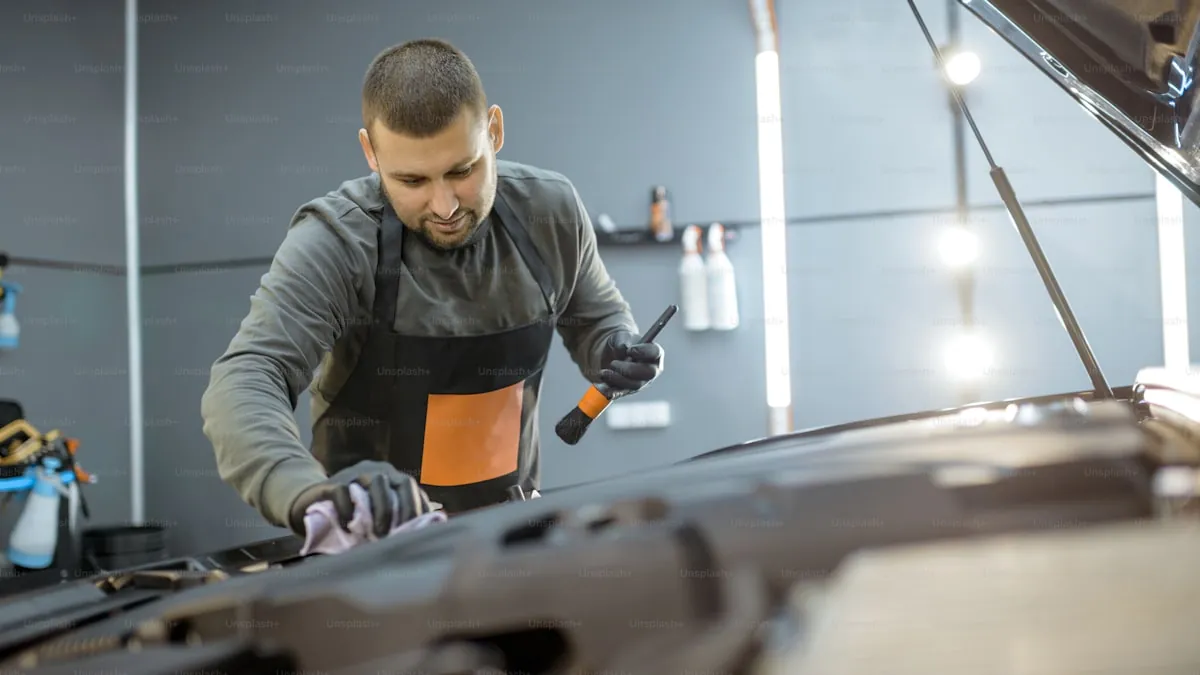
Paint thickness gauges give installers a baseline reading before any machine touches the surface, confirming there is enough material to work with safely. Clear coat that has been corrected multiple times over the years has less film remaining, and that affects how aggressively the defects can be addressed without approaching the base coat.
How soft clear coats behave under a machine
Soft clear coats are common on Japanese domestic market vehicles and on many economy-segment cars regardless of brand. They scratch readily, and that is usually obvious before anyone touches a polisher — swirl marks are visible in direct sunlight even on vehicles that have been hand washed carefully. The silver lining is that these surfaces respond well to light to medium compounds paired with foam cutting pads, and they typically reach a high level of correction without the heat management challenges that harder paints require.
The risk with soft clear coats is over-correction. Moving too aggressively, running machine speeds that generate excessive heat, or spending too many passes in one area can introduce haze or even thin the clear coat faster than intended. This is why technique discipline matters as much as product selection. A skilled operator on a soft clear coat uses the machine to let the product do the work rather than forcing correction through pure mechanical pressure.
Another consideration is that soft clear coats can leave what is called a ghost scratch — a micro-marring pattern left by a cutting compound that was not fully refined by the finishing polish. Under certain lighting, especially in an inspection bay with raking halogen lamps, this shows up immediately. Proper finishing steps and a final inspection under dedicated lighting are non-negotiable for a clean result.
How hard clear coats require a different approach
Hard clear coats — common on German luxury vehicles, many Korean performance models, and some American trucks in premium trim — do not cut as easily. A product and pad combination that would fully correct a soft clear coat in two passes may leave a hard clear coat barely touched. Installers working on these surfaces need heavier compounds, firmer cutting pads, and often a rotary or high-torque dual-action machine rather than a standard random-orbital unit.
The correction result on a hard clear coat, once achieved, is typically very durable. Because the surface resists abrasion, the refined finish holds up well to washing and environmental exposure. Hard clear coats also tend to show defects differently than soft ones. Instead of fine swirl marks that scatter light broadly, they often present with isolated deeper scratches or concentrated marring from specific contact events. Correction on these surfaces is sometimes more about addressing discrete defects than an overall refinishing of the entire panel.
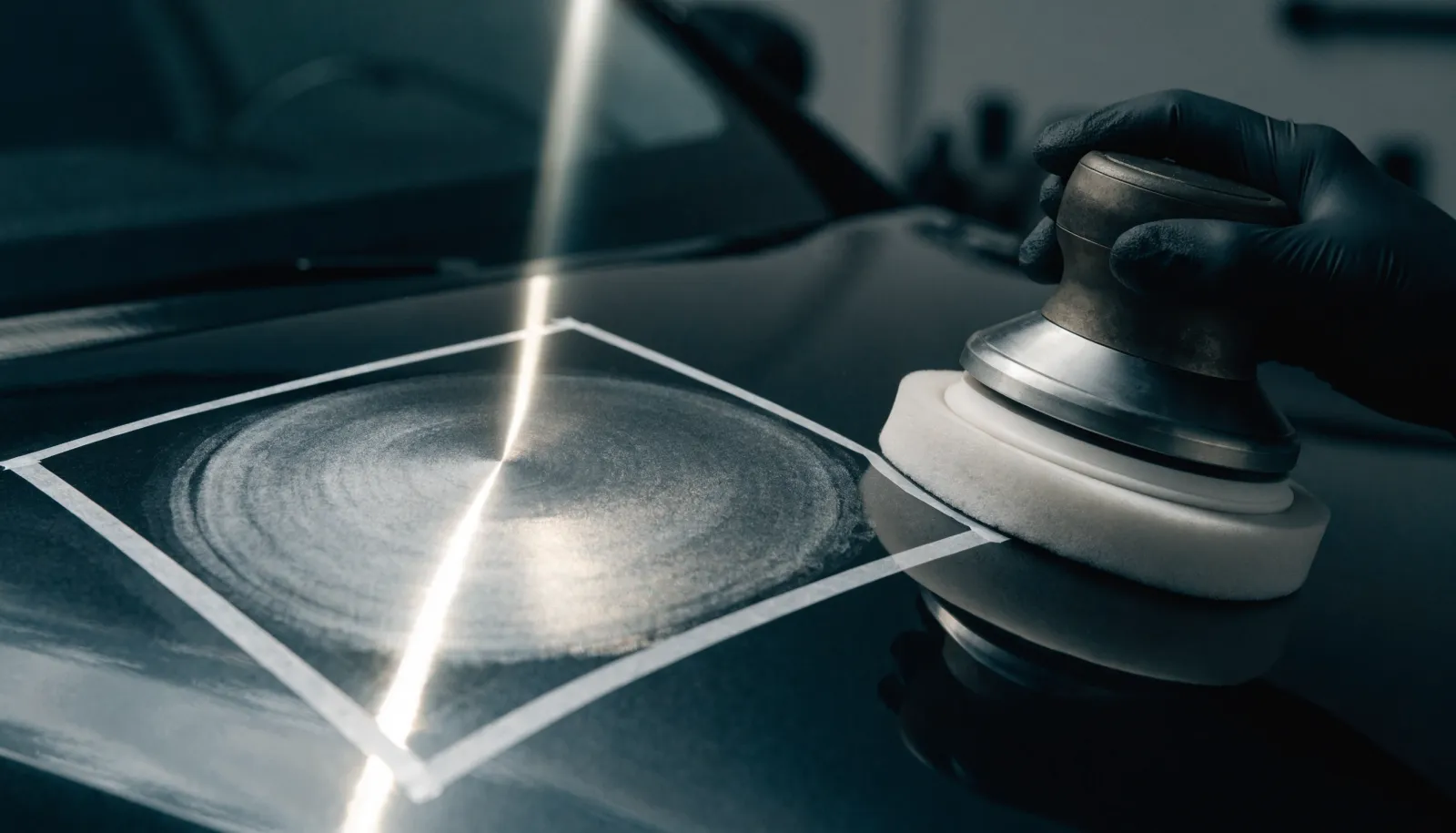
Heat management becomes more important with hard clear coats. Getting a cut compound to work effectively on a resistant surface requires sustained friction, which generates heat. Too much heat in one spot can cause hazing or, in extreme cases, coat burn. Experienced installers work in overlapping sections, check surface temperature by feel regularly, and use panel wipes between stages to assess progress rather than committing to a full pass and discovering the result too late.
What this means before a ceramic coating or PPF installation
Paint correction is commonly performed as a preparation step before ceramic coating or paint protection film. The reason is straightforward: both products lock in whatever condition the paint is in at the time of application. A ceramic coating amplifies gloss, and gloss amplification works in both directions — a refined, corrected surface looks exceptional, while a swirl-marked surface looks worse under the added depth.
Understanding the clear coat type matters here because the correction standard before coating is higher than a stand-alone detail. A soft clear coat vehicle heading into a Gyeon ceramic coating needs to be refined through a finishing polish that leaves no micro-marring. A hard clear coat vehicle heading into UltraFit PPF needs to be fully corrected down to the finest defects before the film goes on, because those defects will be visible through the film once it is applied. The margin for error is smaller, and the inspection process before sign-off is more rigorous.
At EuroLuxe, paint correction work is done in a climate-controlled installation bay specifically because temperature and humidity influence how compounds behave on the surface and how the paint responds to machine work. That consistency is not possible in an open shop environment, and it is why the work cannot simply be moved outdoors on a busy day.
Reading your car’s paint before any work begins
An honest assessment before the machine comes out covers several things: a paint thickness reading across key panels, a visual inspection under focused lighting to map the types and density of defects, and a test spot with the intended correction products to confirm the approach is right for that specific surface. The test spot is not a formality. It is the only reliable way to confirm that a compound and pad combination is cutting correctly without over-removing material.
If a shop does not do a test spot before committing to a full correction, that is a meaningful signal about how the rest of the work will go. Different vehicles genuinely require different approaches, and skipping that confirmation step is how installers get into trouble with surfaces they have not worked on before.
If you have a vehicle with heavy swirl marks, oxidation, or defects you want addressed before coating or before sale, the first conversation should cover what the paint is actually doing rather than just what product will go on top of it. Reach out to EuroLuxe Detailing at (346) 920-4372 to schedule a paint assessment and discuss what correction approach makes sense for your specific vehicle and goals.
Clear coat hardness is a variable most owners have never thought about, and there is no reason they should have to. It is the installer’s job to account for it. The difference between a result that looks average and one that holds up under scrutiny comes down to whether that diagnostic work happened before the pad touched the panel.