Paint correction on single-stage paint: what changes
Most paint correction work done today involves a two-layer system: base coat carries the color, clear coat sits on top and takes the abuse. But a meaningful number of vehicles in circulation — older pickups, classic American muscle, Euro cars from the late 1980s and early 1990s, and certain commercial fleet units — were finished at the factory with single-stage paint, where pigment and protective resin are combined into one layer. That distinction is not cosmetic trivia. It changes almost every decision a corrector makes, from pad selection to compound aggressiveness to how far you can safely push the surface.
If you own a vehicle with single-stage paint and someone quotes you a correction job without asking about the paint system first, that is a problem. The techniques are different enough that applying a clear-coat-oriented correction process to single-stage paint can cause visible, irreversible damage in minutes. Understanding the basics of why these paints behave differently will help you have a more informed conversation before any machine touches your vehicle.
What makes single-stage paint different to work with
In a clear-coat system, the clear layer is formulated to be hard and polishable. It protects the color underneath and can absorb considerable abrasive work before you risk cutting through to the base. Single-stage paint does not have that buffer. The layer being polished is the same layer containing the pigment, which means any material removed during correction is colored material. Go too deep, and you will see a color shift — lighter areas on dark cars, chalky patches on reds or blacks, or an uneven sheen across panels.
Single-stage paints also tend to be softer on average than modern clear coats, though this varies by manufacturer and era. The softness means they respond quickly to compounds and polishes, which sounds like an advantage, but it also means mistakes happen fast. A corrector who is accustomed to working on modern vehicles and running aggressive compounds with a rotary on high heat needs to recalibrate entirely for this material.
Finally, many single-stage finishes show something called color transfer during polishing — pigment comes off on the pad, turning it the color of the vehicle. This is normal and expected, not a sign that the paint is failing, but it requires more frequent pad cleaning to avoid reintroducing abrasive-laden pigment back onto the surface.
Oxidation versus swirl marks: the more common problem on older paint
Vehicles with single-stage paint that have seen years of outdoor exposure often come in with oxidation as the primary complaint rather than swirl marks. Oxidation occurs when UV radiation and atmospheric oxygen break down the resin binders in the top surface of the paint, leaving a dull, chalky, or hazy appearance. On clear-coat systems, this typically affects only the clear layer. On single-stage, it affects the pigmented layer directly.
Correcting oxidized single-stage paint requires removing the degraded surface material to expose the intact paint beneath. This is more aggressive work than removing swirl marks, and it demands a careful, measured approach. A paint thickness gauge is essential before starting — if the paint has been corrected multiple times in the past, or if the original application was thin from the factory, there may not be enough material left to correct safely. Checking thickness across multiple points on each panel before touching a machine to the surface is standard practice, not optional.
The good news is that properly corrected single-stage paint can look genuinely stunning. The depth and warmth of a well-polished single-stage red or black is different from what you see on modern clear-coat finishes — richer and more alive in certain lighting. That quality is worth preserving, and it responds well to proper technique.
How the correction process is adjusted
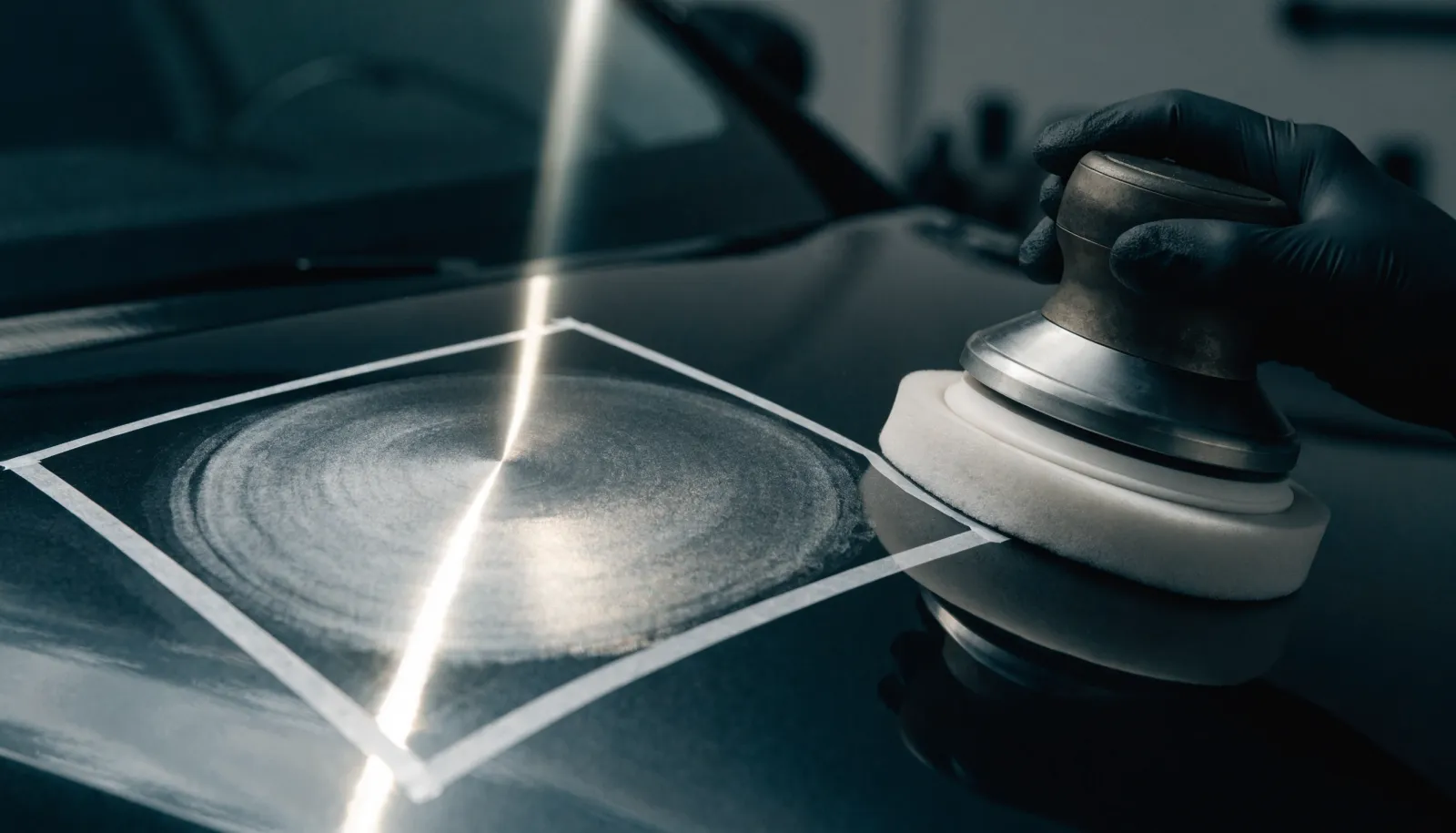
For single-stage paint, the process shifts in several concrete ways. Compound selection leans toward finer cutting compounds rather than heavy-cut products, unless the oxidation is severe enough to require an initial aggressive pass. Pad choice matters as well — foam pads with moderate cut are typically preferred over heavy-cut wool, which can generate more heat and remove more material than is prudent on a single layer.
Machine speed and pressure are dialed back compared to clear-coat work. Rotary polishers require an experienced hand on single-stage surfaces; many correctors prefer dual-action machines for the bulk of the work because they are less aggressive and less likely to cause localized burn-through. Work sections are kept small, and the paint is checked frequently under focused lighting to assess how much material has been removed.
Finishing polishes on single-stage paint serve a dual purpose: they refine the surface and help seal the pores of the paint temporarily, which slows future oxidation. After correction, single-stage paint benefits significantly from a quality protective layer. Applying a ceramic coating over corrected single-stage paint is worth considering seriously — it provides UV resistance and a hydrophobic barrier that meaningfully extends how long the correction results will last, since the paint underneath has no clear layer to shield it from the elements.
Knowing when correction is and is not the right answer
Not every single-stage paint surface is a correction candidate. If oxidation has penetrated deeply enough that removing it would take the paint below a safe minimum thickness, correction will cause more harm than good. Wet sanding can address certain issues — orange peel texture, deep scratches, heavy oxidation — but it removes material faster than polishing and should only be considered when there is confirmed film thickness to support it.
Paint chip damage on single-stage vehicles is also more visually prominent than on clear-coat cars, because the chip exposes raw metal or primer without any color layer. Correction can address the area around chips and blend the surrounding paint, but it cannot fill a chip. Touch-up work and correction often go hand in hand on older vehicles, and the sequence matters — touch-up first, correction second, protection last.
If you are unsure whether your vehicle has single-stage or clear-coat paint, there is a simple field test: apply a small amount of polish to a clean cloth and rub it on an inconspicuous spot. If the cloth picks up color, the paint is single-stage. If the cloth stays white or off-white and the paint simply looks cleaner, there is a clear coat on top. This test takes about thirty seconds and removes all guesswork.
For owners of older trucks, classic cars, or any vehicle where the paint history is uncertain, bringing it to a shop equipped to evaluate properly before committing to a service plan is the right first step. At EuroLuxe, every paint correction consultation starts with a paint thickness assessment and a conversation about the vehicle’s history, because the work plan depends entirely on what the surface can support. You can reach us at (346) 920-4372 to schedule that evaluation.
Single-stage paint is not inferior to modern finishes — it simply requires a corrector who understands the material and has adjusted their process accordingly. The vehicles wearing it are often worth considerable effort to preserve, and the results when the work is done correctly are a reminder of why people hold onto these cars in the first place.