PPF for daily drivers: is it worth it for commuters
Paint protection film has a reputation problem. Most people associate it with six-figure exotics sitting in climate-controlled garages, driven to weekend car shows and nowhere else. That reputation is not entirely wrong — PPF does make sense on a Porsche 911 or a Mercedes AMG. But it also makes a strong case on the vehicles that actually accumulate miles: the F-150 you drive down TX-249 every morning, the Highlander that sits in the Kroger parking lot twice a week, the Model Y that racks up 18,000 miles a year on the Grand Parkway.
The case for PPF on a daily driver is not about vanity. It is about the math of paint damage, the cost of repairs, and the way accumulated wear affects what a vehicle is worth when you sell or trade it. For North Houston drivers specifically, the road environment is genuinely hostile to paint — and the damage happens gradually enough that most owners do not notice until it is too late to reverse without significant expense.
This post covers what daily driver PPF actually protects against, where coverage makes the most practical sense on a working vehicle, and how to think about the cost relative to what you are already spending on your car.
What daily driving actually does to paint
The most common source of paint damage on commuter vehicles is road debris kicked up at highway speed. Gravel and aggregate from construction zones, sand from shoulder work, and small rock fragments from truck tires are constant on TX-249, I-45, the 99, and US-290. A chip that happens at 65 mph is not a slow, gentle impact — the energy transfer is enough to penetrate clear coat and reach base coat or primer in a single strike.
Over a year of regular commuting, the average vehicle accumulates dozens of rock chips on the hood, front bumper, and leading edges of the fenders. Most are small enough that owners overlook them until they see the car under direct sunlight. By that point, the exposed metal beneath those chips may already have started to oxidize, and on modern thin clear coats, the damage perimeter often extends beyond the visible chip.
Beyond rock chips, daily drivers collect abrasive contamination differently than garage queens. Brake dust settles on wheels and lower panels. Iron particles from rail freight corridors embed in paint. Bug splatter on the front bumper and lower hood etches into clear coat if it is not removed quickly — and on a working vehicle, most owners are not washing the car every two or three days. PPF creates a layer that absorbs these impacts and chemical attacks before they reach the factory paint.
Where protection matters most on a working vehicle
Not every panel takes the same abuse. On a daily driver, the highest-risk zones are predictable: the full front bumper, the hood, the leading three to four inches of each front fender, the side mirrors, and the rocker panels. Secondary high-risk areas include door handle cups, door edges, and the lower portion of the rear bumper, which takes impact from luggage, grocery bags, and tailgate drops.
A partial-front or full-front paint protection film package addresses the areas most likely to see rock chip and impact damage from the road. This is not a compromise solution — it is a rational allocation of protection budget to the surfaces that actually need it. A full-body wrap makes more sense on a vehicle that sees infrequent use and needs protection from incidental contact across every panel. For a commuter, front coverage plus rocker protection handles the majority of real-world risk.
Door handle cups are worth calling out specifically. On a vehicle driven daily by multiple household members, the cups see constant fingernail contact that gradually wears through clear coat. The repair cost is disproportionate to the size of the area, and the damage is visible at close range on any solid color or dark metallic paint. A small pre-cut film section on those cups is low cost and genuinely effective.
The self-healing property in a daily driving context
UltraFit PPF, the film we use at EuroLuxe, carries a self-healing topcoat that closes light surface scratches and swirl marks when exposed to heat. In a Texas summer, ambient temperatures and direct sunlight are sufficient to trigger the healing process on most light contact marks. This matters for daily drivers more than it might seem.
A daily driver is more likely to contact car wash brushes, errant shopping carts, jacket buttons during tight parking maneuvers, and brush-by contact from other vehicles than a car that leaves the garage twice a month. The self-healing layer does not repair deep scratches or rock chips — nothing in PPF does that — but it keeps the film surface looking clean and unmarked through the minor contact that is part of normal use. Over a three-to-five-year film lifespan, the difference in appearance between a self-healing film and a standard clear is significant on a working vehicle.
The film also absorbs UV load that would otherwise accelerate oxidation on the paint beneath it. In North Houston, UV exposure on a vehicle parked outdoors during an eight-hour workday accumulates faster than most owners account for. Paint that fades or oxidizes under film is not the film failing — it is the factory paint degrading independently — but in practice, film-covered panels consistently look better at the five-year mark than uncovered panels on the same vehicle.
PPF and resale value on daily drivers
This is where the math becomes worth doing. A daily driver that trades in after three to five years carries real depreciation, but avoidable cosmetic damage accelerates that depreciation beyond market averages. Rock-chipped hoods, oxidized fenders, and scratched lower doors all show up in dealer appraisals. Dealers account for paint correction or repaint costs in their offer, typically at retail shop rates applied against the vehicle’s value.
A paint correction service before trade-in can recover some of that loss, but it cannot reverse deep chips or oxidation that has penetrated the clear coat. Prevention is structurally cheaper than correction because there is no correction cost to recover — the paint simply does not get damaged in the first place.
For buyers who plan to sell privately rather than trade in, the condition of a vehicle’s paint under good lighting is one of the factors that separates asking price from offers. A clean, chip-free hood on a 60,000-mile vehicle signals to buyers that the car was maintained carefully. It does not eliminate negotiation, but it removes a visible lever that buyers use to push the price down.
None of this math works if the film itself is poorly installed or yellowing. Film that is lifting at the edges, hazy, or improperly trimmed signals neglect as clearly as bare paint damage. Installation quality and film brand matter for this reason — a premium film correctly installed by an experienced shop holds its appearance and remains clear for its rated lifespan.
What to expect from the process
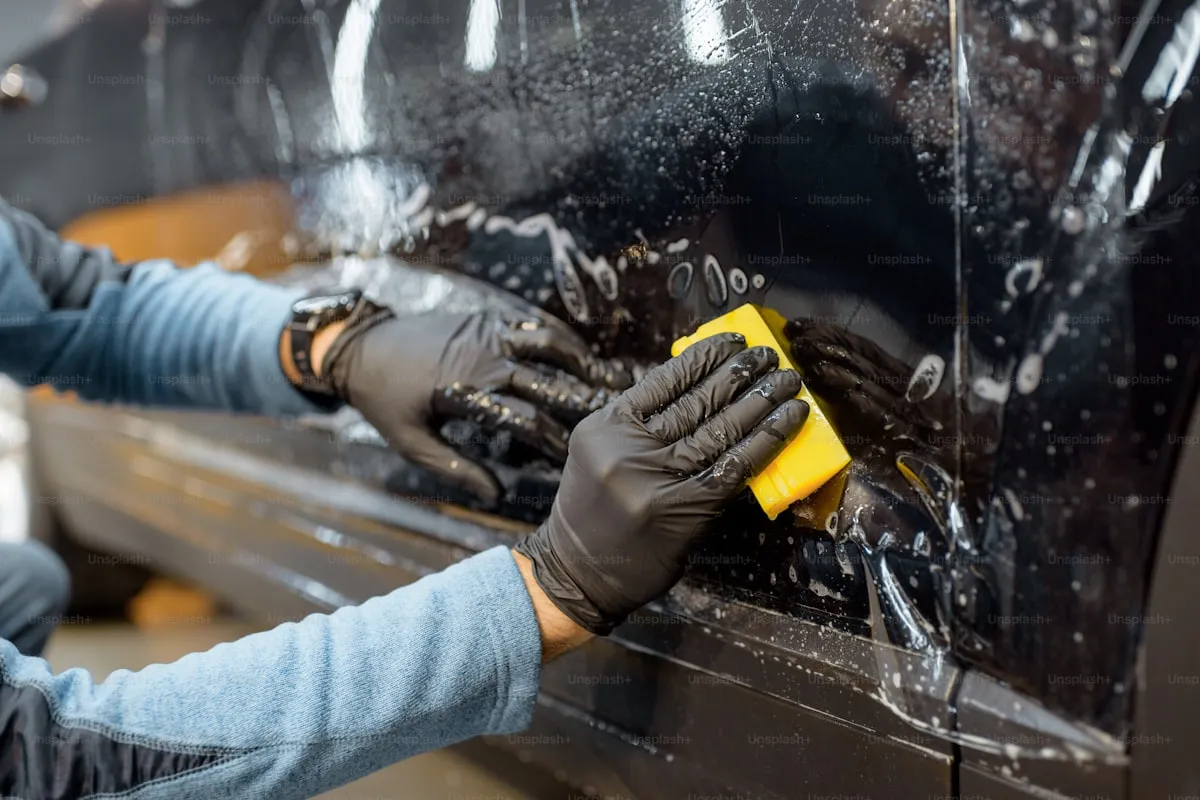
Installation on a daily driver’s front coverage package typically takes one full day. The vehicle comes in for a wash and inspection, the relevant panels are measured and the film is cut to precise templates, and installation is completed in our climate-controlled bay in Tomball. Temperature and humidity control are not incidental — they affect how the film adheres and how cleanly the edges seal, which determines whether you get a clean result or one with lifting and bubbling over time.
After installation, the film requires a short cure period before it is exposed to high-pressure water or direct wash contact. Most daily drivers can return to normal use within 24 to 48 hours, with full cure reached within a week under normal Texas driving conditions. Maintenance after that is straightforward: the same wash procedures that apply to bare paint work on PPF, with the note that harsh solvent-based products should be avoided near film edges.
If you are weighing coverage options for a vehicle you drive every day and want to talk through which zones make the most sense for your specific car and commute, call EuroLuxe at (936) 292-6056 and walk through it with someone who can give you a straight answer based on actual road conditions in this area.
PPF was never only for exotics. The film’s core job — putting a sacrificial barrier between the road and your paint — is at least as relevant on a vehicle that covers 15,000 miles a year as it is on one that covers 2,000. The investment scales with the vehicle, the coverage area, and what you expect to get back when the car moves on. For most daily driver owners in North Houston, the calculus tends to favor protection.