Quick detailer and spray sealant: how to care for paint between washes
A proper wash takes time. Between the pre-rinse, the foam, the two-bucket contact wash, the wheels, and the drying, a careful job runs the better part of an hour. Most people in North Houston cannot do that every week, and they should not try to force it on a tight schedule, because a rushed wash done badly puts more scratches in the paint than skipping a wash would. The realistic question is what to do in the days between proper washes to keep a vehicle looking clean and the finish protected.
This is where two products earn their place: the quick detailer and the spray sealant. They are often confused, sometimes sold as the same thing, and frequently misused in ways that scratch paint rather than protect it. Used correctly, on the right surface, at the right time, they extend the life of a good wash and add a thin layer of protection between full details. Used wrong, they drag dust across dry paint and undo the careful work you put in. The difference comes down to understanding what each one is for.
What a quick detailer is and what it is not
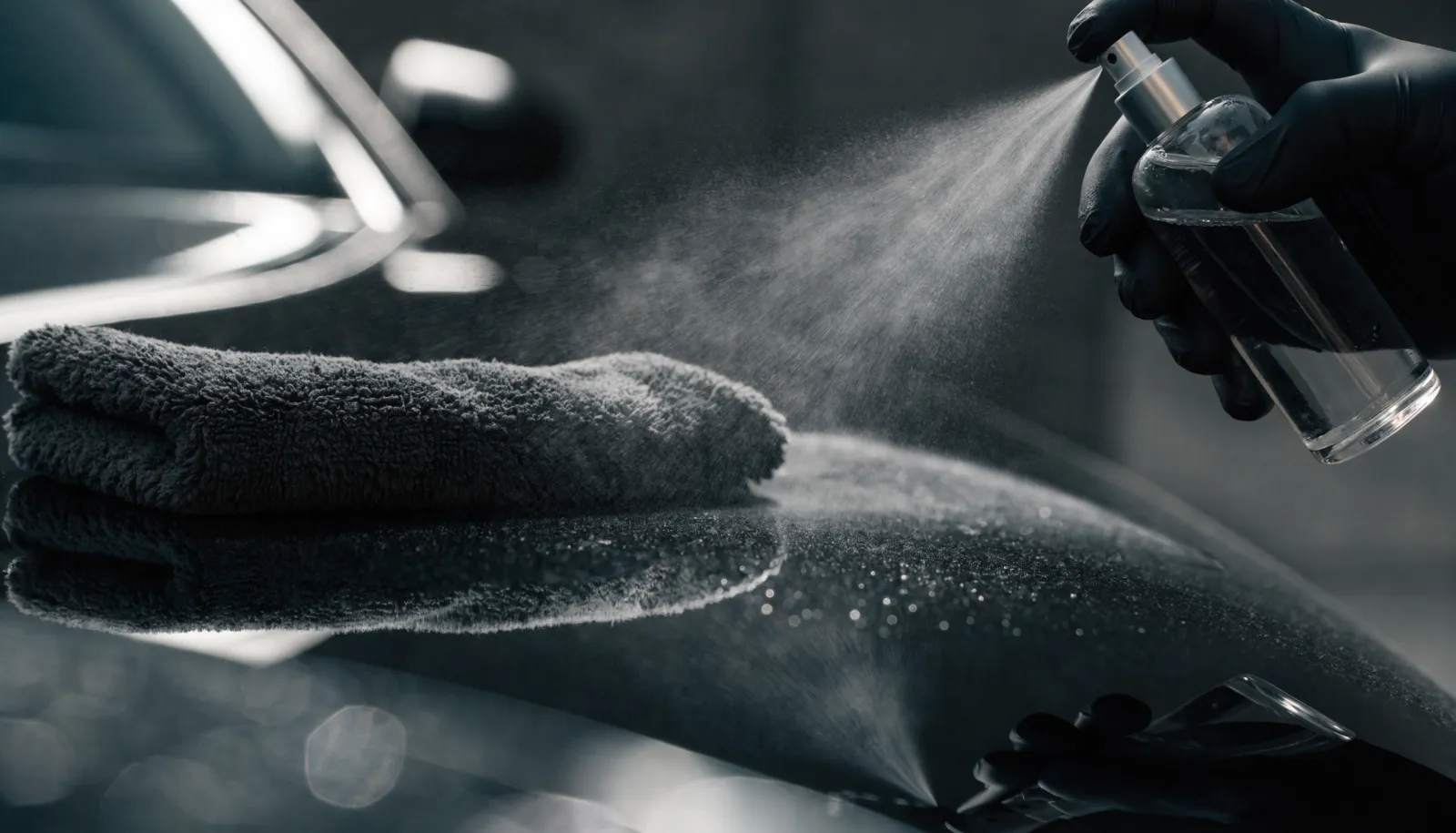
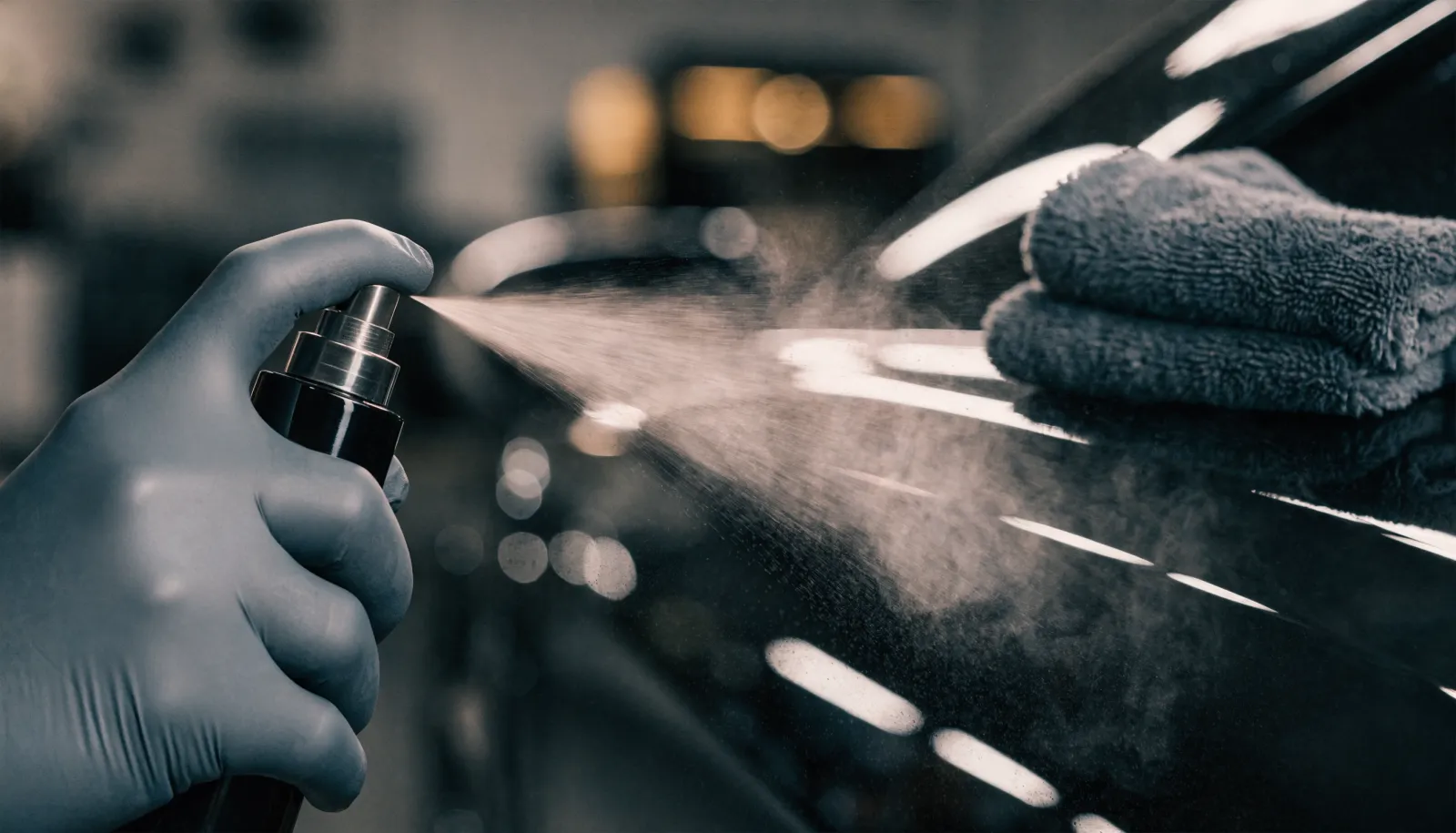
A quick detailer is a lightly lubricated spray designed to remove light, fresh dust and fingerprints from a surface that is already mostly clean. The emphasis is on light and fresh. The lubrication in the spray lets a plush microfiber towel glide across the panel and lift loose dust without grinding it in. It is meant for a car that just picked up a thin film of pollen overnight, or a single bird dropping caught within an hour, or smudges around door handles and the trunk lid.
What a quick detailer is not is a waterless wash, and it is not a tool for a genuinely dirty car. If a panel has visible road grime, dried mud, caked brake dust, or a layer of dirt you can feel, a quick detailer does not have enough lubrication to safely move that material. Spraying it on and wiping is exactly how swirl marks get created, because every grain of grit is being dragged across the clear coat with a towel. The honest rule is this: if you would hesitate to run a clean towel across the panel by hand, the panel is too dirty for a quick detailer. It needs a rinse or a wash first.
For an owner who keeps a vehicle reasonably clean, a quick detailer is the answer to the small stuff that shows up between washes. A few light dustings, the occasional bug on the mirror, the handprints a passenger leaves on the door. It keeps a freshly washed car looking freshly washed for longer without committing to a full wash for every minor mark.
How a spray sealant differs and what it adds
A spray sealant, sometimes sold as a spray wax, ceramic spray, or a coating topper, does something different. Rather than just removing light dust, it lays down a thin layer of protection on top of the paint. That layer adds gloss, improves water beading and sheeting, and makes the surface slicker so that contamination has a harder time bonding. Modern spray sealants often use the same silica chemistry found in coatings, in a much thinner and shorter-lived form, which is why many are marketed as ceramic sprays.
The trade-off is durability. A spray sealant might last a few weeks to a couple of months depending on the product, the climate, and how often the vehicle is washed. In the Gulf Coast heat and humidity around Tomball and Spring, expect the shorter end of that range. This is not a substitute for a real coating. It is a maintenance product that refreshes protection between professional services or extends the interval on a vehicle that is otherwise unprotected.
The most effective way to use a spray sealant is on a clean, dry surface right after a wash, applied one panel at a time and buffed to a clear finish with a separate clean towel. Applied that way, it bonds to a clean surface and performs as intended. Applied over dust or grime, it traps that contamination underneath and gives a streaky, uneven result. The order of operations matters more than the product you choose.
Using these products on coated and filmed vehicles
If a vehicle already carries a ceramic coating, the rules change slightly. A real coating is already providing the slickness and water behavior that a spray sealant imitates, so layering an incompatible product on top can sometimes interfere with how the coating sheds water rather than help it. For coated cars, the safe choice is a dedicated coating maintenance spray or topper made to be compatible with ceramic surfaces. Many coating manufacturers sell exactly this kind of product, and it refreshes the hydrophobic behavior without fighting the coating underneath.
Quick detailers, by contrast, are generally fine on a coated surface for knocking off light dust, as long as the surface is genuinely clean and you are using a clean, soft towel. The coating makes the paint slicker, which actually reduces the risk slightly, since fresh dust tends to sit on top of a coating rather than clinging the way it does to bare clear coat. The same applies to panels protected by paint protection film: light dusting with a quick detailer is fine, but a dirty film panel needs a wash, not a wipe.
The broad principle holds across all of these surfaces. These sprays are finishing and maintenance tools. They keep a clean, protected surface looking its best and extend the interval between bigger jobs. They do not clean a dirty car, and they do not replace the protection that does the real work. If you are not sure what is already on your paint or what is safe to use with it, that is worth a conversation before you start spraying products on the finish.
Technique, towels, and the mistakes that cause swirls
The product matters less than the towel and the technique. Use plush, high-quality microfiber towels with a thick pile, and use them clean. A towel that has been dropped on the ground, or one that has wiped up grit on a previous panel, becomes a scratch tool no matter how good the spray is. Fold the towel into quarters so you have multiple clean faces, flip to a fresh side often, and never reuse a face that has picked up visible dirt.
Work in the shade and on a cool panel. Spraying detailer onto hot paint in direct Texas sun causes it to flash off before you can wipe it, leaving streaks and doing nothing useful. Mist lightly. More product is not better; a heavy soaking just wastes the spray and increases streaking. A light, even mist with a controlled wipe in straight lines, not circles, gives the cleanest result and leaves the fewest marks under hard light.
The single most damaging mistake is using these products as a shortcut on a dirty vehicle. A quick detailer on a dusty car parked outside all week is not a time-saver. It is a swirl machine. The grit on that paint is harder than the clear coat, and dragging a towel through it leaves marks that eventually require paint correction to remove. When in doubt, the safer move is always to rinse or wash first, then use the spray on a clean surface.
A realistic between-wash routine
For most North Houston drivers, a sensible rhythm looks like this. A proper full wash on a regular schedule, every one to two weeks for a daily driver, remains the foundation. Between those washes, a quick detailer handles the small, fresh stuff: a dusting of pollen, a bird dropping caught early, fingerprints and smudges. A spray sealant or coating-compatible topper goes on after a full wash, every wash or every other wash, to keep the protection and gloss refreshed. None of it is complicated, and none of it takes long once the habit is set.
The goal of all of this is to reduce how often the paint takes a real beating, not to avoid washing entirely. A clean, protected finish stays clean more easily, and the small maintenance steps between washes mean less aggressive cleaning is needed when the full wash comes around. If you want help choosing products that are compatible with your specific coating or film, or you want your paint assessed before you start a maintenance routine, call EuroLuxe at (936) 292-6056. The shop is at 11701 Holderrieth Rd in Tomball.
Quick detailers and spray sealants are useful tools when they are understood for what they are: maintenance for a clean surface, not a cure for a dirty one. Keep that distinction clear, mind your towels, work in the shade, and these products will keep a good finish looking good between the washes that do the heavy lifting.