Why a foam cannon pre-wash matters before you touch the paint
Most of the scratches that end up in a car’s finish do not come from the road. They come from the wash. Specifically, they come from the first few minutes of the wash, when a mitt drags across paint that is still covered in dry grit, dust, and dried-on road film. Every one of those particles is harder than the clear coat, and grinding them across the surface is exactly how swirl marks and fine scratches get put there in the first place.
A foam cannon pre-wash exists to solve that problem. The idea is simple: before any wash media touches the paint, you cover the whole vehicle in a thick layer of slick soap, let it dwell, and let it do the work of softening and lifting contamination so that a good portion of the dirt rinses away on its own. What is left is far safer to wash by hand. In the North Houston climate, where vehicles pick up pollen, brake dust, bug residue, and a steady film of highway grime between washes, that pre-wash step is not optional if you care about keeping the finish swirl-free.
What a foam cannon actually does
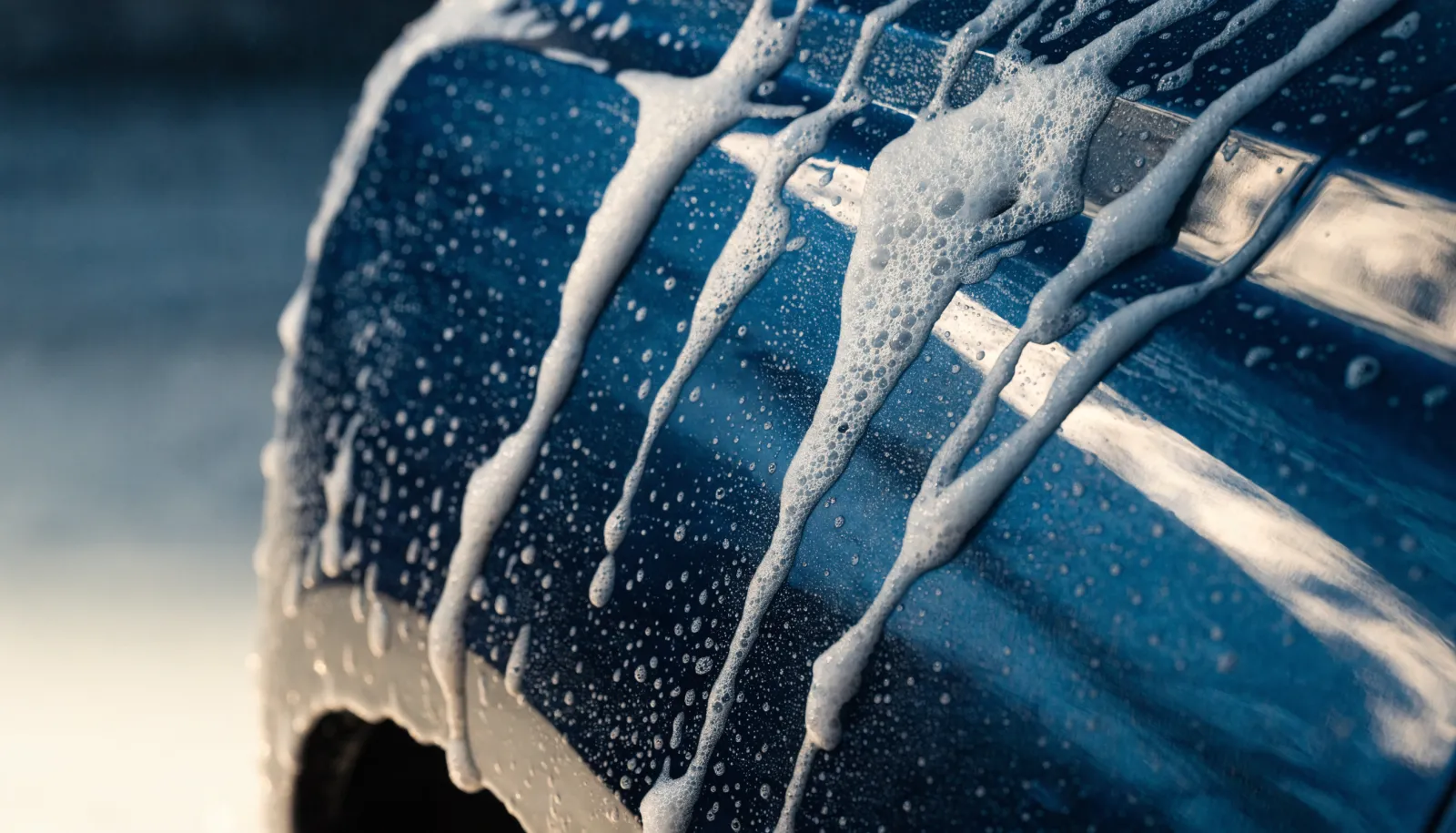
A foam cannon is a device that attaches to a pressure washer and mixes car soap with air and water to produce thick, clinging foam. That foam is not just for looks. The point is dwell time and lubrication. As the foam sits on the panel, the surfactants in the soap break the bond between the dried-on dirt and the clear coat, and gravity pulls a meaningful amount of that loosened grime down and off the vehicle before you ever make contact.
There is an important distinction here between a foam cannon and a foam gun. A foam gun runs off a standard garden hose and produces a thinner, wetter foam that runs off quickly. It is better than nothing, but it does not dwell the way cannon foam does. A true foam cannon needs a pressure washer to generate the thick, shaving-cream consistency that clings to vertical panels for several minutes. For most owners washing at home, an inexpensive electric pressure washer in the 1,800 to 2,200 PSI range is plenty. You do not need commercial pressure to make good foam.
The foam itself does not scrub. It has no abrasive action and it is not a substitute for the contact wash that follows. What it does is reduce the amount of contamination that the wash mitt has to deal with, which directly reduces the number of hard particles being dragged across the paint. Less grit in contact with the surface means fewer scratches. That is the entire mechanism.
The two-stage rinse and foam sequence
The correct order matters. Start with a contact-free rinse using the pressure washer or a hose, working from the top of the vehicle down. The goal of this first rinse is to knock off the loose surface dust and any large debris before you apply foam. Skipping this rinse and going straight to foam traps that loose grit against the paint inside the foam layer, which defeats part of the purpose.
Once the loose material is rinsed, apply the foam. Cover the entire vehicle, again working top to bottom, and make sure the lower panels, rocker areas, and the front bumper get a heavy coat. Those lower areas hold the most aggressive contamination because they sit closest to the road. Let the foam dwell. On a mild day, three to five minutes is reasonable. The one rule that overrides the clock is this: never let foam dry on the paint. In Texas summer heat, foam can start to dry in under two minutes on a panel sitting in direct sun, and dried soap residue is its own problem. Work in the shade whenever you can, and if a panel looks like it is drying, rinse it.
After the dwell, rinse the foam off thoroughly, top to bottom, before moving on to the contact wash. At this point a good amount of the dirt is already gone. What remains comes off with a proper two-bucket hand wash method and a clean mitt, with far less risk to the finish than if you had skipped the foam entirely.
Where pre-washing fits with paint protection
A foam cannon pre-wash is good practice on any vehicle, but it becomes especially valuable on a car that already carries a protection layer. A ceramic coating changes the surface chemistry so that dirt bonds less aggressively and water sheets off more cleanly. When you combine that slicker surface with a proper foam pre-wash, an even larger share of the contamination releases during the dwell and rinse, and the contact wash becomes gentler still. Owners with a coated vehicle often find that the foam stage alone removes most of the visible grime between washes.
The same logic applies to paint protection film. Film panels handle the impact load from road debris, but they still collect the same dust and film that painted areas do, and they benefit from the same low-contact washing approach. Foaming a film-equipped front end before washing reduces the mechanical scrubbing those panels see, which keeps both the film and the paint around it looking better over time.
None of this replaces the protection itself. Foam is a washing technique, not a barrier. But the pairing is worth understanding: protection reduces how aggressively contamination sticks, and a pre-wash reduces how much contamination your mitt has to deal with. Together they meaningfully lower the scratch risk every single wash.
Common mistakes that cancel out the benefit
The most frequent error is treating foam as the whole wash. People see a fully foamed car, assume the soap is scrubbing, rinse it off, and call it done. The foam loosens and lifts, but it does not remove bonded contamination on its own. The contact wash still has to happen. Skipping it leaves a film of road grime that dries back onto the paint and, over weeks, contributes to the same dullness you were trying to avoid.
Another common mistake is over-diluting the soap or using a product that is not built for foaming. Dish soap, in particular, is a poor choice. It foams, but it also strips wax and degrades coatings, and it leaves the paint less protected than before you started. Use a dedicated car wash soap with a high foaming formula, mixed to the manufacturer’s ratio. Too little soap gives you thin foam with short dwell time; too much wastes product without improving results.
Finally, pay attention to your water and your timing. Hard well water common in parts of Montgomery and Harris County can leave mineral spotting if the vehicle is allowed to sit wet in the sun. Wash early in the morning or in full shade, keep panels wet, and dry promptly when the contact wash is finished. A great pre-wash means nothing if the car bakes dry with water spots all over it.
When to let a professional handle the prep
There is a point where home washing, even done carefully, stops being enough. If a vehicle already shows heavy swirl marks under direct light, or if the paint feels rough after a wash because of embedded contamination, foam and a careful wash will not fix what is already there. That is a job for decontamination and, in many cases, paint correction to remove the existing defects before any new protection goes on. Washing well from that point forward keeps the corrected finish clean, but it cannot undo damage that is already in the clear coat.
For owners who want the prep done right but do not have a pressure washer, a climate-controlled bay, or the time to do a full multi-stage wash, having a professional handle it is the straightforward answer. At EuroLuxe, every vehicle gets a proper contact-free pre-wash and decontamination before any coating or film work, which is part of why the protection lasts the way it should. If you want to talk through your vehicle’s condition or whether it needs correction before protection, call EuroLuxe at (936) 292-6056. The shop is at 11701 Holderrieth Rd in Tomball.
The point of a foam cannon is not the foam itself. It is everything the foam prevents: the dry grit, the dragged particles, the slow accumulation of fine scratches that takes a glossy finish and makes it look tired years before it should. Get the first few minutes of every wash right, and the rest of the finish takes care of itself.