What Happens to Your Paint Inside a Texas Car Wash Tunnel
The $8 Car Wash That Costs You Thousands
Drive down any major road in the Houston area and you’ll pass half a dozen automatic car wash tunnels. They’re everywhere — the express washes with unlimited monthly plans for $20-$40, the gas station washes bundled with a fill-up, the standalone operations promising a spotless shine in three minutes.
What they don’t advertise is what’s actually happening to your paint during those three minutes. After years of correcting damage at our Tomball shop, we can identify a car that’s been through automatic washes regularly just by looking at it under a paint inspection light. The damage pattern is unmistakable.
The Three Ways Tunnels Destroy Paint
1. The Brushes: Sandpaper in Disguise
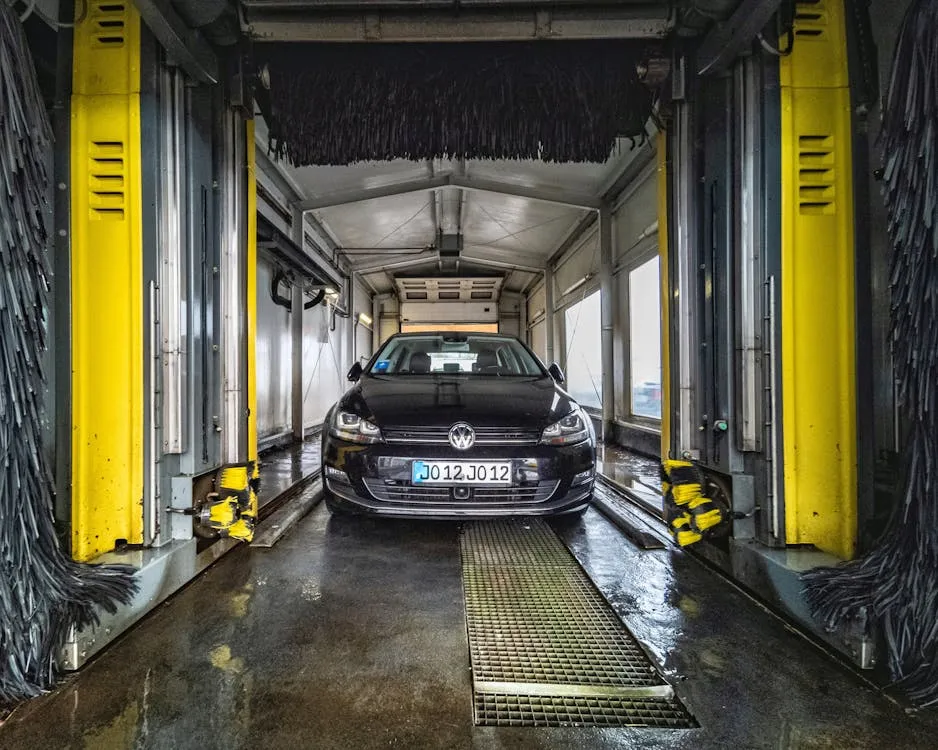
Modern tunnel washes use cloth strips, foam pads, or nylon bristles instead of the old hard-plastic brushes. They market these as “soft touch” or “gentle.” They’re not.
The problem isn’t the material — it’s what’s embedded in it. Every vehicle that passes through the tunnel leaves behind contaminants: sand, road grime, brake dust, tar, and metallic particles. These get trapped in the brush material and dragged across the next vehicle’s paint. Then the next. And the next.
A single pass through a tunnel wash creates hundreds of fine scratches across every painted surface. These scratches are the classic swirl marks you see on most daily-driven vehicles when sunlight hits at an angle. Each wash adds another layer of damage. After six months of weekly visits, a new car’s paint can look five years old under inspection lighting.
Even “touchless” washes aren’t truly touchless — they compensate for the lack of physical contact by using significantly more aggressive chemicals that strip wax, sealant, and even weaken clear coat over time.
2. The Water: Recycled and Contaminated
Water is the most expensive input for a car wash operation, so most tunnels recycle 60-80% of their water. They filter it, but no filtration system removes everything. Dissolved minerals, chemical residues, and microscopic abrasive particles circulate through the system constantly.
This recycled water is sprayed at high pressure onto your vehicle throughout the wash process. Any sand or grit that survives the filtration system becomes a high-velocity abrasive hitting your paint. The minerals in the recycled water — calcium, magnesium, and silica — leave deposits that bond to the paint surface and require chemical removal.
In the Houston area, our water is already hard. Recycled tunnel water concentrates these minerals further, making water spot etching a near-certainty unless you can dry the vehicle immediately after washing. Of course, you can’t — the tunnel’s air dryers rarely remove all moisture, and the remaining droplets evaporate and leave mineral deposits.
3. The Chemicals: Strip Everything
Tunnel washes use industrial-strength cleaning solutions designed to remove road grime in seconds. That aggressive cleaning power doesn’t distinguish between dirt and the protective layers on your paint.
A single tunnel wash can strip:
- Spray wax and sealant — Gone in one pass
- Traditional carnauba wax — Degraded in 2-3 washes, gone in 4-5
- Paint sealant — Significantly weakened in 5-10 washes
- Ceramic coating maintenance sprays — Removed in 1-2 washes
The “wax” or “ceramic” upgrade that tunnels offer for an extra $3-$5 is typically a spray sealant applied over wet paint in the final stage. It creates a temporary slick feel but provides negligible protection — certainly nothing comparable to a hand-applied sealant, let alone a professional ceramic coating.
What the Damage Looks Like
If you’ve been using tunnel washes regularly, here’s how to check your vehicle’s condition:
- Park in direct sunlight and look at the hood and roof from a low angle
- Look for spiderweb patterns — circular scratch marks radiating outward. These are classic tunnel wash swirls created by rotating brushes
- Check the doors for vertical scratch marks — these come from the side brushes that spin vertically
- Look at dark-colored panels where damage is most visible. Black and dark paint shows tunnel wash damage most dramatically
If you see dense swirl marks across every panel, that’s tunnel wash damage. It’s repairable through paint correction, but it requires hours of machine polishing work that wouldn’t have been necessary with proper washing technique.
The Alternative: What Proper Washing Looks Like
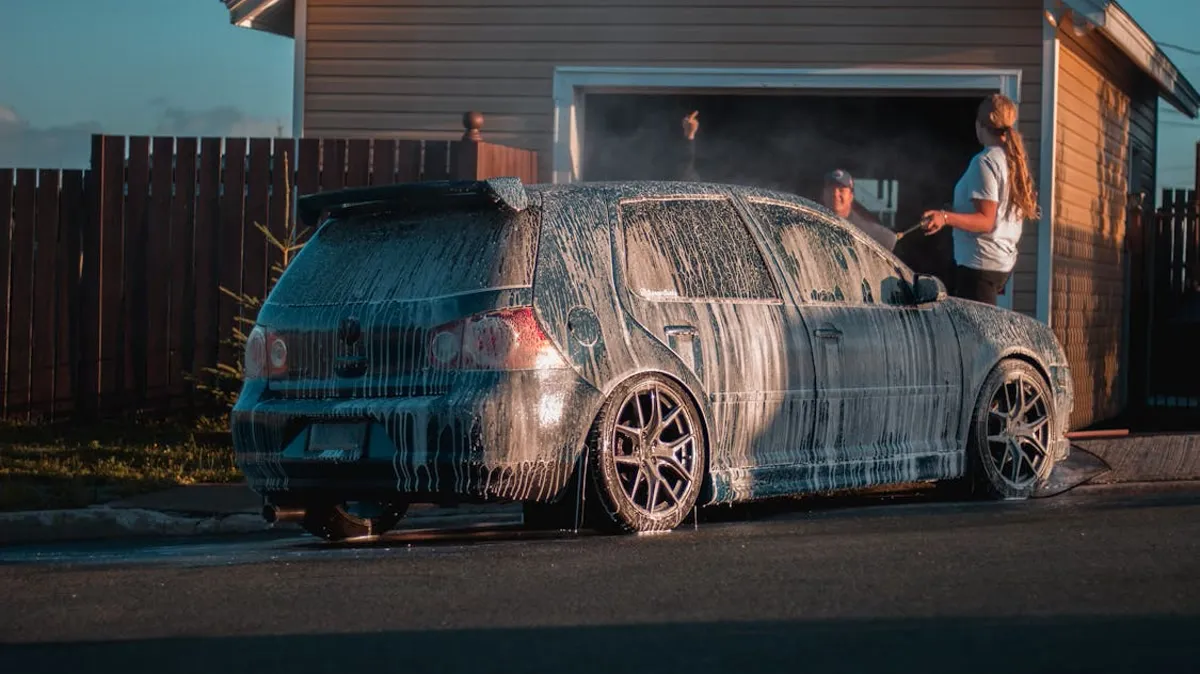
Professional-quality car care doesn’t require professional equipment. A proper hand wash takes 20-30 minutes and prevents virtually all wash-induced damage:
- Two-bucket method with grit guards to trap contaminants
- pH-neutral soap that cleans without stripping protection
- High-quality microfiber wash mitt that lifts dirt rather than dragging it
- Rinse before contact — always flood the surface with water first
- Panel-by-panel approach — wash, rinse, move to the next section
- Proper drying with a clean drying towel or filtered blower
If hand washing isn’t realistic for your schedule, a coin-operated self-serve bay with a pressure rinse is the next best option. You control what touches your paint and how much pressure is applied.
How Ceramic Coating Protects Against Wash Damage
A professional ceramic coating doesn’t make tunnel washes safe — we still don’t recommend them. But it does provide meaningful protection if you end up in one occasionally:
- Hardness: GYEON MOHS EVO creates a 9H-rated surface layer that resists scratching from the light abrasives in tunnel brushes far better than bare clear coat
- Chemical resistance: The coating withstands the aggressive detergents that strip waxes and sealants. A properly applied ceramic coating survives tunnel chemicals without degradation
- Self-cleaning: The hydrophobic surface means less dirt bonds to the paint in the first place, reducing how often you need to wash at all
- Sacrificial layer: If scratching does occur, it’s more likely to affect the coating than the underlying clear coat. The coating can be maintained or reapplied — your factory paint is preserved
That said, the best strategy is still to avoid tunnel washes entirely. A ceramic-coated vehicle that’s hand-washed properly will look dramatically better than a coated vehicle run through tunnels weekly.
PPF: The Ultimate Physical Barrier
For high-impact areas like the front bumper, hood, and fenders, paint protection film provides a physical barrier that no amount of tunnel abuse can penetrate. The film absorbs scratches, chemical exposure, and physical contact. Minor scratches in the film even self-heal with heat. If you absolutely cannot avoid automatic washes due to your schedule, PPF on the most vulnerable panels is a smart investment.
Break the Tunnel Habit
We understand the appeal of tunnel washes — they’re fast, cheap, and convenient. But the math doesn’t work in your favor. A $30/month unlimited wash plan creates $500-$2,000 worth of paint correction work within a year or two. That’s not a discount; that’s deferred damage.
If your vehicle already shows tunnel wash damage, a professional paint correction can restore the finish. Follow it with a ceramic coating to protect the corrected paint, and switch to proper hand washing going forward. The difference is dramatic, and your paint will thank you.
Ready to undo the damage and protect your vehicle properly? Get a quote for paint correction and ceramic coating.