What paint correction actually removes from your clear coat
There is a common misunderstanding about paint correction that is worth clearing up before anyone spends money on it. Correction does not add anything to your car. It does not fill scratches, coat the surface, or lay down a new layer of shine. It works in the opposite direction. Paint correction removes a thin, carefully controlled amount of your existing clear coat to bring the surface level with the bottom of the defects sitting in it. The gloss that returns afterward is not something new applied to the paint. It is the clarity your paint always had, revealed once the damaged top layer is leveled away.
That distinction changes how you think about the whole process. A wax or a glaze adds a temporary layer that hides defects by filling them. A coating adds a durable protective layer on top of the paint. Correction is the only step in the chain that actually removes material from the finish itself. Understanding what is being removed, and why, is the key to understanding both what correction can do for your car and why it has firm limits.
How abrasion levels a defect
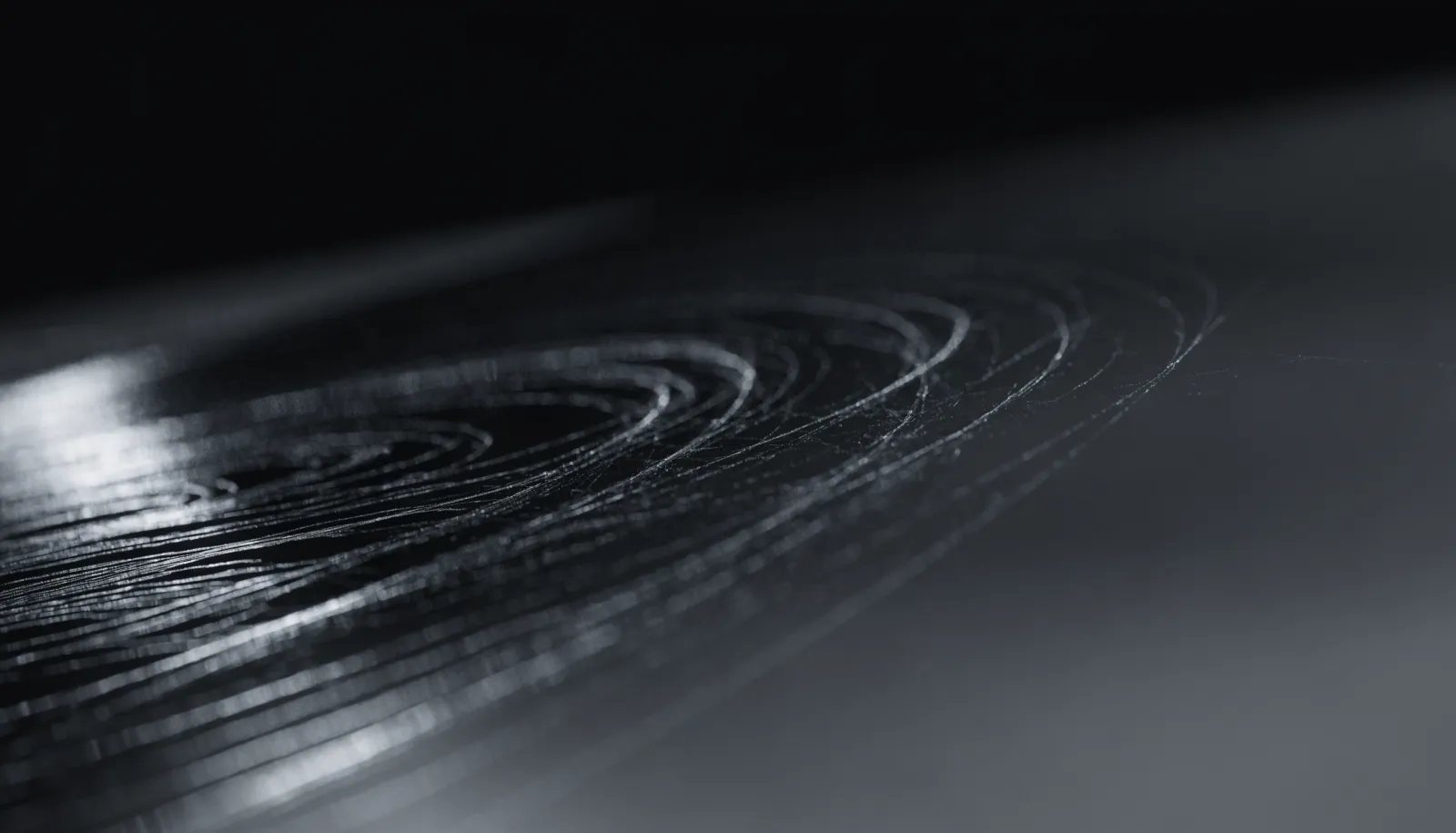
A scratch or a swirl mark is a groove cut into the clear coat. The reason it shows up, especially on a dark car under hard light, is that the edges of that groove scatter light in every direction instead of reflecting it cleanly. Your eye reads that scattered light as a white line or a cobweb haze. The paint around the groove is still glossy. It is the disruption at the edges of the defect that you are seeing.
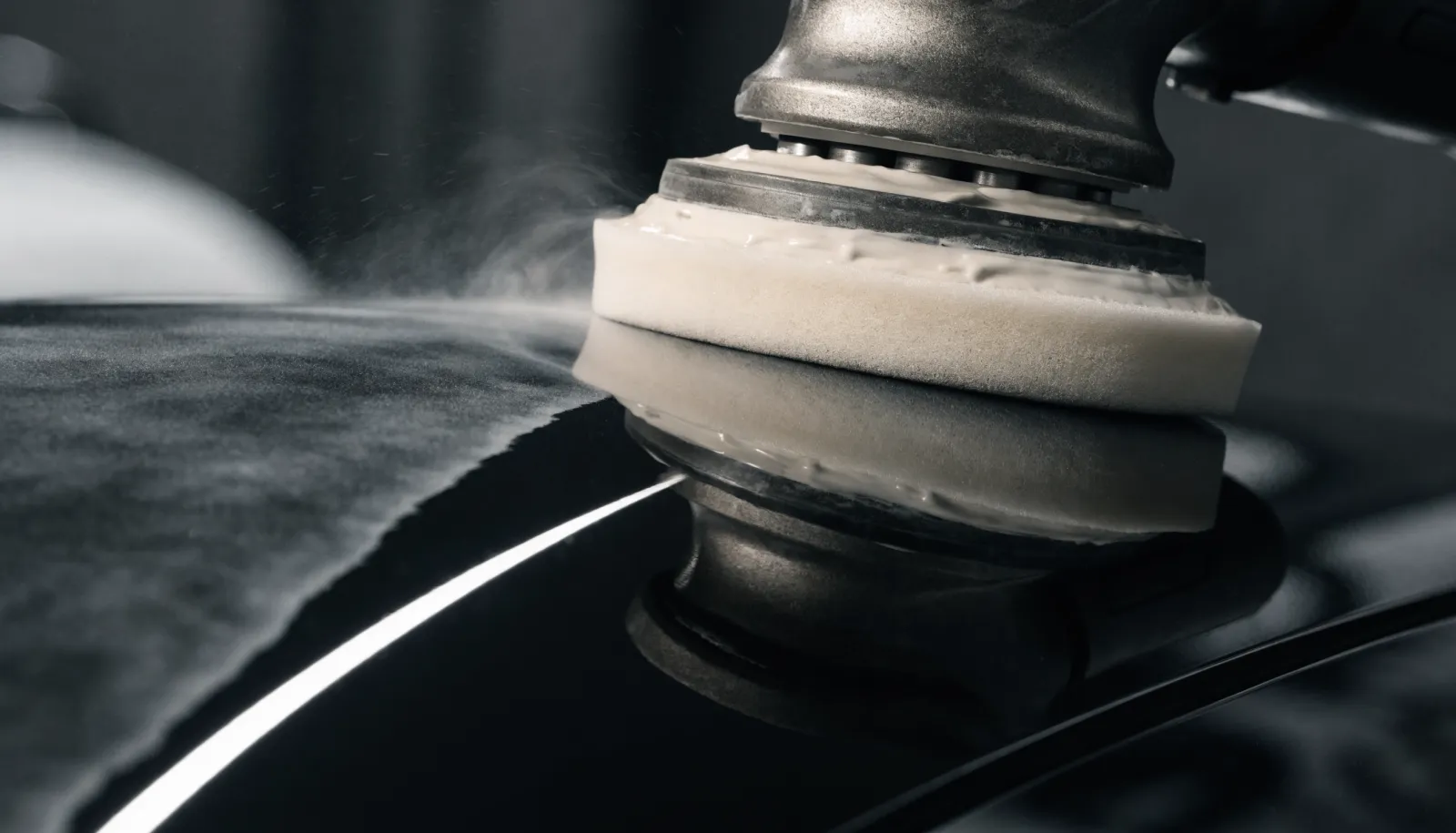
Correction fixes this by removing the clear coat down to the level of the bottom of the scratch, so the groove and the surface around it become one continuous plane. A polishing machine drives a pad loaded with an abrasive compound across the paint. The abrasive cuts the clear coat in microscopic increments, shaving down the high points around the defect until the surface is flat. Once the surface is level, light reflects off it in one direction again, and the defect is gone. Not hidden, not filled, actually leveled out of existence.
This is why the quality of the work depends so heavily on control. The installer is removing material, and the goal is to remove exactly enough to level the defect and not one bit more. Too little and the scratch remains. Too much and clear coat is wasted, or worse, the layer is thinned past what is safe. The machine, the pad, the abrasive, and the technique all exist to give the installer fine control over how much clear coat comes off and how evenly. A skilled hand on a dual action polisher is the difference between a level finish and a thinned panel.
Why your clear coat is a one-way resource
Because correction removes clear coat, and clear coat does not grow back, every car carries a finite correction budget. Factory clear coat is thin to begin with, and once it is gone it cannot be replaced without repainting the panel. This is the single most important fact behind every responsible correction decision. A detailer is not just trying to make the paint look good today. They are trying to make it look good while leaving enough clear coat to protect the color underneath for years.
In practice this means a car cannot be aggressively corrected over and over without consequence. A vehicle that gets a heavy multi-stage correction every year will eventually run low on clear coat, and a panel with too little clear coat is vulnerable to UV damage, oxidation, and failure. This is why good installers favor the least aggressive process that fully removes the defects, rather than reaching for the most aggressive option by default. Preserving clear coat is part of the job, not an afterthought.
It is also the reason protection matters so much after a correction. Once a finish has been leveled to a flawless state, the smart move is to keep it that way so it does not need correcting again. A ceramic coating applied over freshly corrected paint creates a hard, sacrificial layer that takes the wear of washing and the environment, which means the clear coat underneath stays untouched. Pairing correction with a coating turns a one-time investment into a lasting one, because it slows the rate at which the paint accumulates new defects.
What correction cannot remove
Knowing that correction works by leveling clear coat also makes its limits obvious. If a defect sits inside the clear coat, it can be leveled. If a defect reaches below the clear coat, into the color base or the primer, leveling it would mean removing the entire clear coat layer to reach the bottom of the damage, which is not safe and not something a responsible installer will do. Deep scratches that have cut through the clear coat are permanent until they are addressed with paint, not polish.
The same logic applies to damage that is not a surface defect at all. A dent is a deformation of the metal beneath the paint, so polishing does nothing for it. A rock chip that has knocked out a piece of clear coat and base coat is missing material, and correction removes material rather than replacing it, so a chip needs touch-up paint to fill, not a buffer. Etching from bird droppings or hard water that has eaten into the clear coat can sometimes be leveled if it is shallow, but if it has penetrated deeply, the same depth limit applies.
This is not a weakness of correction. It is just the nature of what the process is. Correction is a leveling tool, and it is extraordinarily good at what it does within the clear coat. Asking it to fix damage that lives below the clear coat or involves missing material is asking it to do something it was never designed to do. A good installer will tell you which of your defects fall inside its reach and which do not, before any work starts.
What the finished result really is
When a correction is done well, the car looks like it did when the paint was new, and in some cases better, because factory finishes often leave the line with light defects of their own. The depth, the clarity, and the reflection that come back are real and they last, because nothing was filled and nothing will wash away. You are looking at the true condition of your clear coat with the damage leveled out of it, which is a fundamentally different result than the temporary shine a filler product provides.
At EuroLuxe, Caleb Vasquez approaches correction as a balance between removing defects and preserving the clear coat that protects your paint, which is why the process starts with reading the paint rather than reaching for the most aggressive pad. If you want to understand what your car’s finish would take to correct, and how much clear coat it has to work with, call EuroLuxe at (936) 292-6056. The studio is at 11701 Holderrieth Rd in Tomball, and the bay is climate controlled so the work is done under consistent conditions.
Paint correction is a subtraction, not an addition, and that is exactly why it works so well. By removing a precise amount of clear coat to level the defects in it, correction reveals the finish your paint already has rather than masking the one it lost. Treated as the finite resource it is, your clear coat can deliver that result for the life of the car, especially when a correction is protected so it does not have to be repeated.