Ceramic Coating on Black Cars: What It Does and Doesn't Fix
Black is the hardest paint color to maintain. Every swirl mark, water spot, and piece of dust is visible in direct sunlight. People bring black cars to us expecting ceramic coating to solve their paint problems, and we have to have an honest conversation about what it can and can’t do.
The short version: ceramic coating is one of the best things you can do for a black vehicle, but it’s not a reset button. Prep determines the outcome, and the maintenance reality after coating is different than most people expect.
Why Black Paint Shows Everything
It comes down to how light interacts with your clear coat. On lighter colors, small surface defects scatter light in ways the eye doesn’t pick up easily. On black, the high contrast between the deep color and any surface irregularity — a swirl mark, a water spot, a micro-scratch — makes those flaws obvious the moment direct light hits them.
Swirl marks show up as circular haze patterns, especially visible in bright sunlight or under garage lights. They’re caused by improper washing — automatic car washes, dirty wash mitts, wiping dry with a bath towel, circular motions with a gas station hand wash. Nearly every black car that comes to us without prior professional care has them.
Water spots are the other constant issue. Houston water is hard, and every sprinkler hit, rain event, or rinse that dries on the paint leaves mineral deposits that etch into the clear coat over time. On black, they’re almost always visible.
What Ceramic Coating Actually Does for Black Paint
A quality ceramic coating like GYEON MOHS EVO does several things that genuinely benefit black paint:
Hydrophobic surface behavior. Water beads and sheets off rather than sitting and drying into spots. This is the single biggest day-to-day benefit for black car owners — you eliminate the constant formation of new water spots in normal conditions. After a rain, the car dries with far fewer mineral deposits because the water doesn’t cling.
Easier maintenance washes. Contamination doesn’t bond to coated surfaces the way it does to raw or waxed paint. Your maintenance washes require less mechanical agitation, which means less risk of introducing new swirl marks.
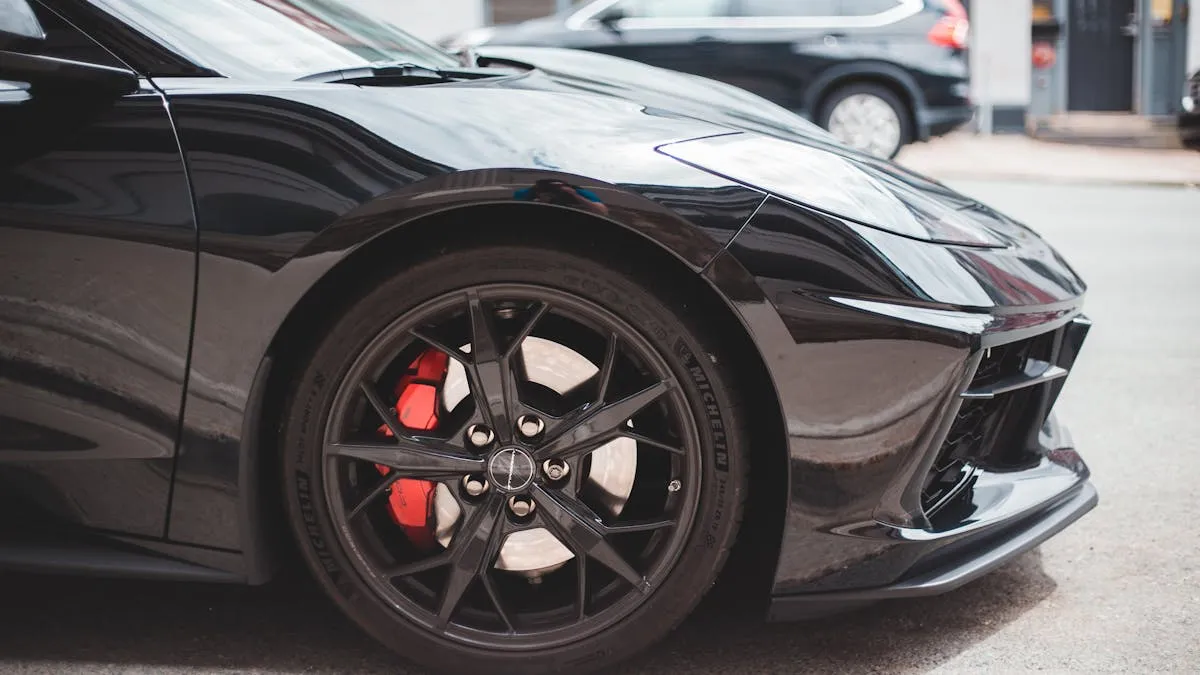
Depth and gloss. A well-applied ceramic coating on properly prepped black paint is genuinely striking. The optical clarity of the coating enhances the reflective depth of black paint in a way wax can’t match. If you’ve ever seen a freshly coated black car in sunlight, you know what we’re talking about.
Protection against light contamination. Bird droppings, tree sap, and other chemical contaminants are less likely to bond and etch if caught quickly. The coating gives you more time to remove them before they become paint damage.
What Ceramic Coating Can’t Do
This is where the honest conversation happens: ceramic coating does not hide or remove existing paint defects.
If there are swirl marks, water spot etching, or scratches in your paint before coating goes on, they will still be there after coating goes on — and in some cases, the added gloss of the coating makes them more noticeable. Coating locks in whatever condition the paint is in at the time of application.
This is why paint correction before ceramic coating is not optional for a black vehicle that has any history of improper washing or outdoor exposure.
Prep Requirements on Black Paint
Before we coat a black vehicle, we do a full paint inspection under proper lighting to assess what we’re working with. Most black cars with unknown wash history have at least light swirling. The prep process typically includes:
Full decontamination. Chemical decontamination (iron remover, tar remover) followed by a clay bar treatment to clear the surface of bonded contamination before any polish touches the car.
Paint correction. Depending on defect severity, this ranges from a single-stage light polish to a multi-stage cut-and-refine process. On black paint, we’re more methodical because over-correction — removing too much clear coat — is a real risk, and because any residual haze from a heavy cut shows on black paint if not properly refined.
Final surface prep. Panel wipe-down with an IPA solution to remove all polish oils before coating application. Coating bonds to bare, clean clear coat — any contamination in the surface prevents proper adhesion.
On black vehicles, this process is more time-intensive than on lighter colors. That’s just the reality of the color.
Maintenance Realities for Black Car Owners After Coating
Getting the coating applied is the beginning, not the end. Black paint with ceramic coating still requires proper maintenance to stay looking right:
Wash frequently. Coated or not, letting contamination accumulate on black paint means more opportunity for scratches during wash. Two weeks is typically the outer limit before you’re creating more risk than you’re mitigating by delaying.
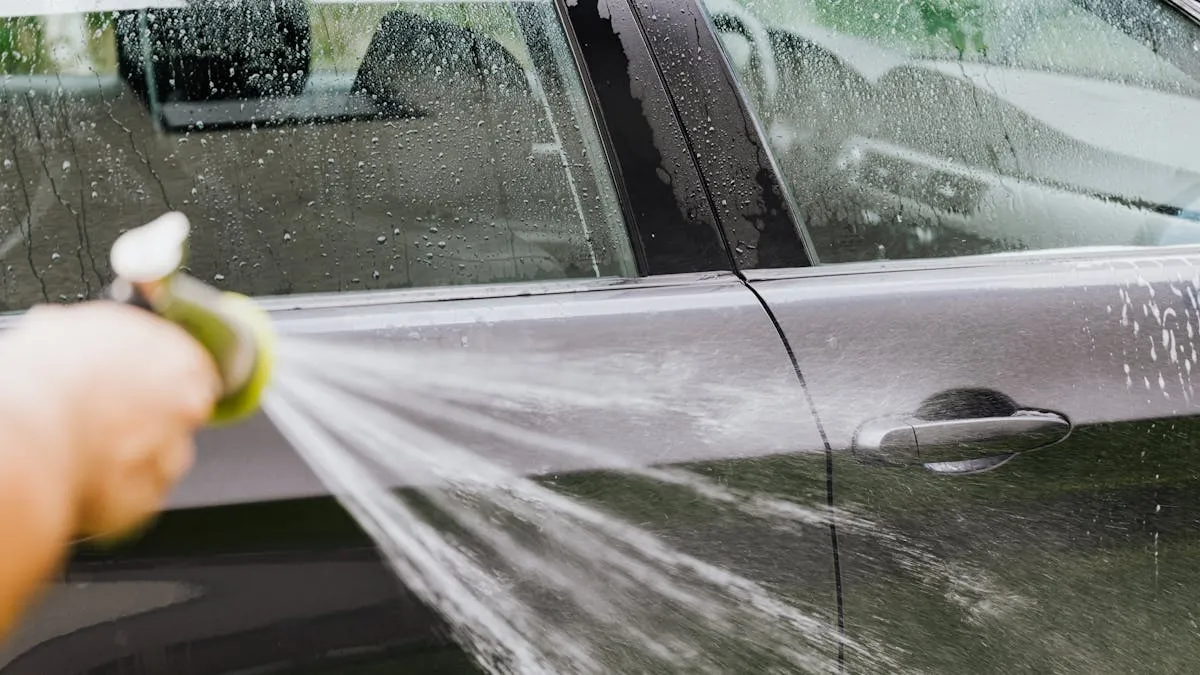
Two-bucket method only. One bucket with shampoo, one with clean rinse water. Grit guard in both. Rinse the mitt in the clean bucket between every panel. This keeps you from reintroducing the grit from the last panel into the next one.
No automatic car washes. The spinning brushes and dragged debris in tunnel washes will destroy the swirl-free finish you just paid to achieve. Touchless only if you’re in a bind, but hand washing is the standard.
Periodic decontamination. Even on a coated car, iron fallout accumulates. An annual iron decontamination keeps the surface clean and protects coating longevity.
Read our full guide on how to wash a ceramic coated car for the detailed breakdown.
The Honest Assessment
If you have a black car and you’re ready to commit to proper washing habits, ceramic coating is a genuinely excellent investment. The day-to-day hydrophobic behavior and contamination resistance make a real difference in how the car looks over time.
But it requires good prep — which often means paint correction first — and it requires you to change how you wash the car going forward. If those conditions are met, the results on black paint are some of the most visually striking we produce.
Questions about what your specific car needs? Bring it in for a paint inspection or call us at 936-292-6056.
Keep Your Vehicle Looking Its Best
What Is Paint Correction? Paint Correction Before Ceramic Coating How to Wash a Ceramic Coated Car