How protection film stretches and conforms to a car's curves
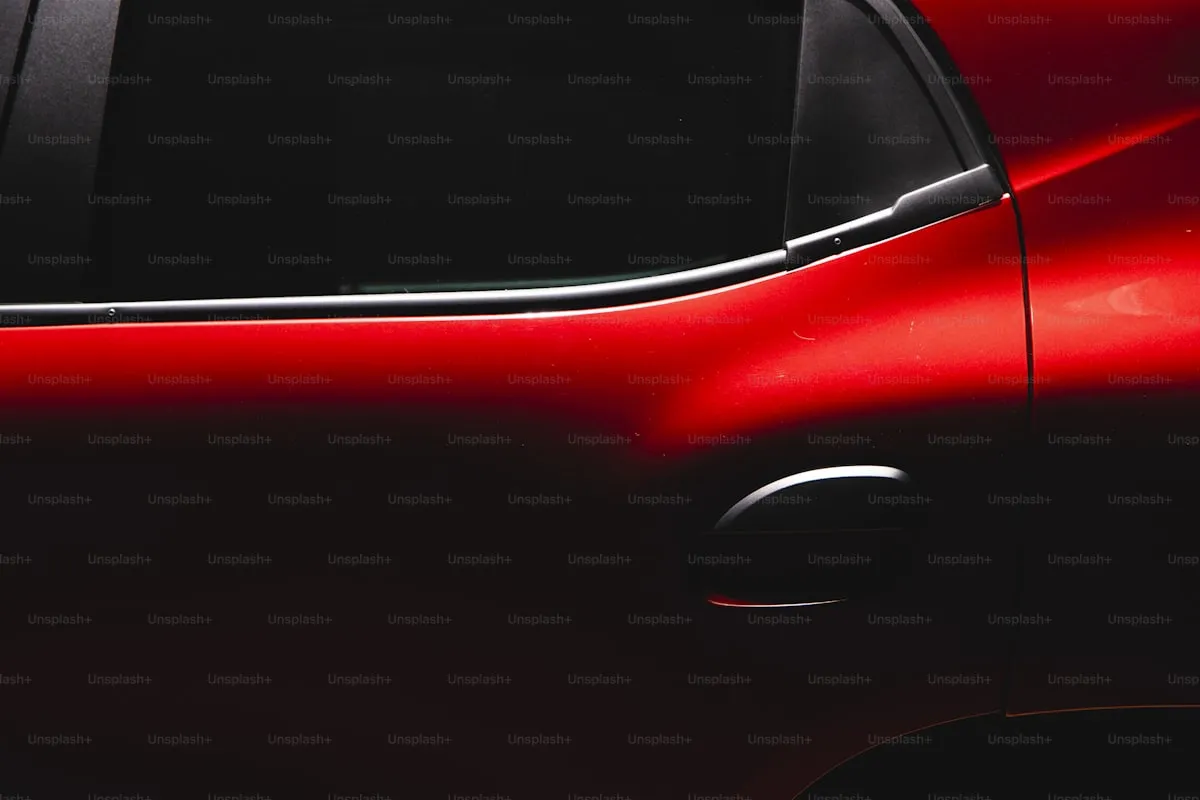
A flat hood would be easy. If a car were made of flat panels meeting at clean right angles, applying protection film would be close to wallpapering, and almost anyone could do it. Cars are not built that way. A modern bumper alone might carry four or five different curves blending into one another, a sharp character line cutting across the middle, vents and sensors interrupting the surface, and a tight radius where the corner wraps toward the wheel. Getting a flat sheet of film to lay over all of that without wrinkles, fingers, or lifting edges is the entire craft, and it comes down to how the film is stretched and relaxed into the shape.
This is the part of paint protection film that owners rarely see and rarely think about, yet it is what separates an install that disappears from one that looks like a sticker peeling at the corners within a month. The film is not simply pressed down. It is manipulated, with heat and tension and hand pressure, into a shape it did not start in. Understanding how that works makes it a lot clearer why installer skill matters more than the brand printed on the box.
Film does not bend, it stretches
A sheet of protection film is flat and has no give to it in the way a piece of cloth does. It cannot simply fold around a curve, because a flat material wrapped onto a compound curve, a surface that bends in two directions at once, wants to bunch up. The dome of a fender or the corner of a bumper is a compound curve, and laying flat film onto it without managing that excess material is impossible. The film has to be made to occupy more area than it started with, in the right places, so the extra material disappears into the shape instead of bunching at the edges.
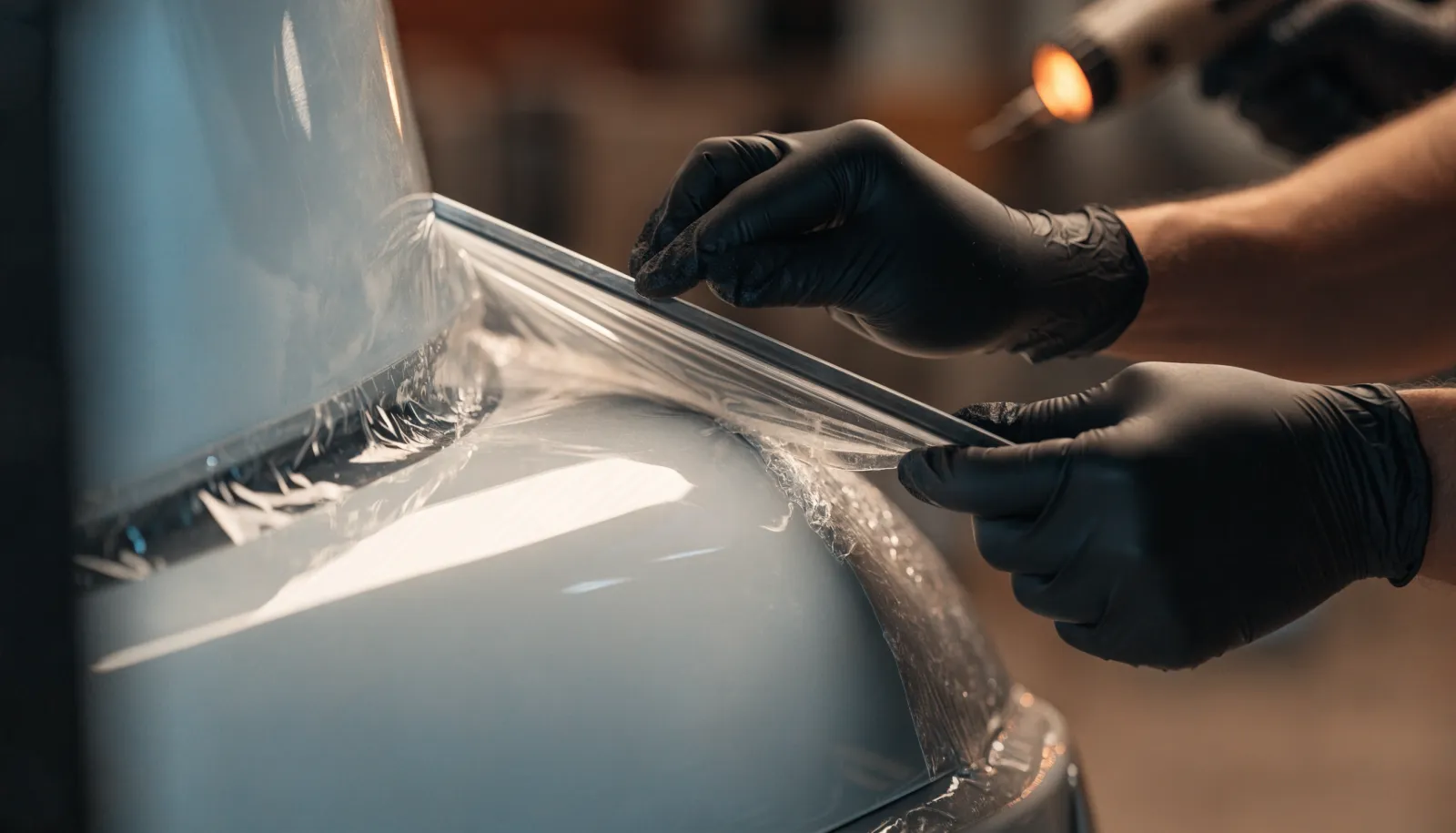
That is where stretch comes in. A quality TPU film, the kind we install, can be stretched a meaningful amount before it reaches its limit, and that stretch is what lets it conform. The installer pulls the film in specific directions to relax the bunching, working the excess outward and down into the curve until the sheet sits flat against the panel. Done correctly, the stretched film holds its new shape. Done poorly, an over-stretched section thins out, loses its self-healing reserve, or pulls back over time and lifts.
The skill is knowing how much to pull and where. Too little tension and the film fingers or wrinkles. Too much and you thin the material or pre-load it to peel later. Every panel has its own answer, learned by working hundreds of them, which is why an experienced installer reads a bumper and already knows where it will fight back.
Heat is the tool that makes it possible
Film stretches far more willingly when it is warm. Heat softens a TPU film and makes it pliable, so a section that would resist cold and snap back relaxes under a heat gun and accepts the new shape. Installers use heat in two ways. First, to stretch the film during application, warming a corner or a curve so it conforms without fighting. Second, and just as important, to set the film once it is in place, so the stretched material relaxes into its final shape and stays there rather than slowly creeping back.
This second step is the one rushed installs skip. Film that is stretched and pressed but never properly heat-set carries memory. It wants to return to flat, and over weeks and months it pulls at its edges and lifts, especially at corners and over tight curves. A proper install relaxes that memory with controlled heat so the film forgets it was ever flat. The Texas climate adds a wrinkle here: a film set in a hot open garage behaves differently than one set in a controlled environment, which is part of why we install in a climate-controlled bay where the temperature is consistent from the first panel to the last.
Heat also has limits. Too much in one spot, or held too long, can distort the film or affect its clarity and self-healing properties. The installer is balancing enough heat to conform and set against too much heat that damages the material, and that balance is felt rather than measured, built from repetition.
Edges, wraps, and the places film wants to fail
The flat middle of a panel is the easy part. Film almost always fails at the edges and at the tight wraps, because those are where tension concentrates and where the material is asked to do the most work. A bumper corner that wraps under and toward the wheel arch, the edge of a hood that folds over a lip, the curve of a mirror cap, these are the spots that test an install.
Wherever possible, a good installer wraps the film around and tucks the edge out of sight, behind a panel gap or under a lip, so there is no exposed edge for road grime or a fingernail to catch. Where a wrap is not possible, the edge is laid down with enough relaxed tension that it stays flat and sealed against the paint rather than standing proud. An edge that is even slightly lifted becomes a place where water, dirt, and air work underneath, and once that starts, the lifting spreads. This is the same reason edge work gets so much attention in any honest conversation about film quality.
Vents, sensors, parking cameras, and badges complicate the picture further. The film has to be relieved or templated around them cleanly, with cuts made off the car wherever possible rather than with a blade against the paint. Cutting on the paint risks scoring the clear coat, leaving a mark that outlasts the film. Pattern-based templates and careful relief cuts let the film flow around obstacles without ever putting a blade near the finish.
Why brand matters less than hands
Owners shopping for film often fixate on the brand and the warranty, and those things matter. But two installers working with the identical roll of film will produce visibly different results, because the film does not install itself. The stretch, the heat management, the edge work, the patience to relax a stubborn corner instead of forcing it, all of that lives in the installer, not the material. A premium film in rushed hands looks worse at one year than a mid-tier film installed with care.
This is why the question to ask an installer is not only which film they use, but how they handle the hard parts. How do they finish edges. Do they cut on the car or off it. How do they set the film once it is stretched. The answers reveal whether you are talking to someone who understands that conformity is a craft, or someone who treats film like a flat sticker and hopes the curves cooperate.
For owners weighing film against a ceramic coating, this is worth keeping in mind: a coating is a liquid that levels itself, so the prep and the installer’s discipline matter, but conformity is not a variable. Film is the opposite. Its whole value depends on being made to fit a shape it did not come in, and that fitting is hand work that varies enormously by who does it.
Closing
The reason a well-installed car looks like it has nothing on it at all is that the film was stretched, heated, and worked until it became part of the panel’s shape rather than a sheet sitting on top of it. That work is invisible when it is done right and obvious when it is not, in the form of fingers, wrinkles, and edges that lift within months. If you want film that conforms cleanly to your vehicle’s curves and stays that way, the installer matters as much as the material. To talk through your vehicle and how its panels would be handled, call EuroLuxe at (936) 292-6056. The shop is at 11701 Holderrieth Rd in Tomball, and the conversation starts with your specific car, not a generic package.