PPF on door handle cups and the other spots fingernails wreck
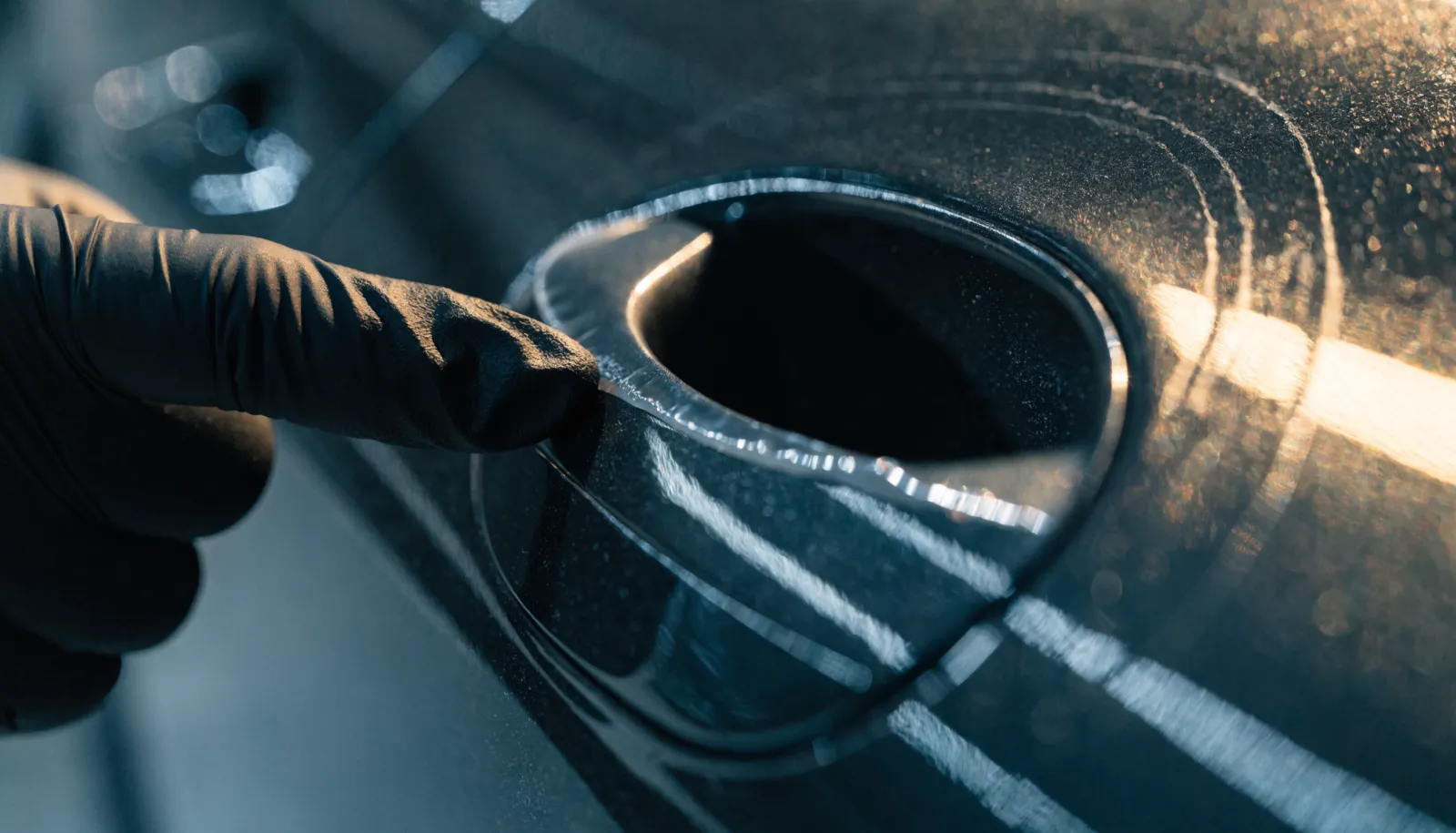
Look at a three-year-old car in good condition and the paint will usually still read clean from across a parking lot. Walk up to the driver’s door, get your eye close to the handle, and the story changes. The little recess behind the handle, the area your fingers reach into every time you open the door, is almost always covered in a fan of fine scratches. Owners who keep the rest of the car immaculate often have no idea those marks are there until someone points them out, because you only see them at close range and at the right angle to the light.
That spot has a name in the trade. It is the door handle cup, and it is one of the most reliably damaged areas on any vehicle. The cause is simple and unavoidable: fingernails, rings, keys, and grit dragged across the clear coat thousands of times over the life of the car. No wash habit prevents it, because the damage does not come from dirt sitting on the surface. It comes from contact. This is exactly the kind of problem paint protection film was built to solve, and handle cups are one of the highest-value, lowest-cost places to put it.
Why handle cups take so much abuse
Every time a door opens, a hand goes into the cup, fingers curl around the handle, and something hard makes contact with the paint at the back of the recess. Usually it is a fingernail. Sometimes it is a ring, a bracelet, or a key still in hand. The motion is a small drag, repeated by every person who gets into that seat, every single day. Over a year that is well over a thousand contacts on the driver’s door alone, and more if the car carries passengers regularly.
The geometry makes it worse. The cup is a tight curve, which means contact concentrates on a small area rather than spreading across a flat panel. Concentrated contact on a curved surface is the perfect recipe for fine scratching, and because the cup sits in shadow most of the time, the marks accumulate unnoticed. By the time an owner spots them, the clear coat in that recess is often hazed across its whole face.
There is a second, less obvious cost. Handle cups are one of the first places a buyer or appraiser looks when judging how a car was cared for, precisely because they reveal contact wear that a wash cannot hide. A car with clean, unmarked cups reads as a car that was protected and handled with care. Scratched cups suggest the opposite, fairly or not.
What film does in that recess
Protection film placed in the handle cup puts a clear, replaceable layer between every fingernail and the paint. The film takes the drag, the grit, and the ring contact, and the clear coat underneath stays untouched. Because the UltraFit film we install is a self-healing TPU, light surface marks in the film itself tend to disappear with heat. A warm afternoon in a Tomball parking lot, or warm water over the panel, lets fine scratching in the film relax and close on its own. The deeper protection, though, is structural: even marks that do not heal are in the film, not the paint, and the film can be removed and replaced without touching the finish below.
The pieces are small, which keeps the cost modest, but the install is not trivial. The cup is a compound curve in a confined space, often right next to a handle that the film has to wrap around or stop cleanly against. Getting the film to lay flat into the recess without fingers, lifting edges, or trapped solution takes the film relaxed with heat and worked into the shape by hand. A rushed cup install lifts at the edges within weeks. A careful one disappears and stays put for years.
We template these pieces to the specific recess shape rather than trimming on the paint, because trimming on the paint with a blade is how installers leave knife marks that outlast the car. The goal in a handle cup is a piece that follows the curve, tucks where it can, and presents no edge for a fingernail to catch.
The other high-touch spots worth covering
Handle cups get the most attention, but they are not the only place daily contact wears paint. The door edges, the thin painted lip you grip or bump when opening, collect chips and rub marks from adjacent cars and from hands. The leading edge of the hood and the top of the fenders pick up contact when people lean in. On many vehicles the area just behind the door handle, where a watch or sleeve drags, shows wear too.
Trunk and tailgate touch points are another commonly missed zone. The spot where you press to close a trunk, or the painted area around a liftgate handle, sees the same fingernail-and-grit contact as the doors. On SUVs and trucks the rear hatch grab area takes a beating from cargo loading. None of these spots are large, and covering them is inexpensive relative to a full panel, which makes them some of the best value in the entire protection conversation.
For owners weighing where to spend, high-touch areas deliver a lot of protection for a little film. A handle cup set plus door edges costs a fraction of a full front package, yet it defends the exact spots that show wear first and that buyers inspect most closely. If the budget allows more, the front of the car earns film for impact reasons, but the contact zones earn it for wear reasons, and the two arguments are different.
How we approach a high-touch protection job
When an owner comes in wanting these areas done, the first step is to read the existing paint. If the handle cups already carry fine scratching, we talk through whether a light paint correction makes sense before the film goes on. Putting clear film over already-hazed paint locks that haze in, visible through the film. Often a quick polish of just the recess brings the clear coat back to gloss, and the film then preserves that gloss rather than sealing in damage. Whether correction is worth it depends on how deep the marks are, and that is a judgment made by looking, not by guessing.
The film itself is templated, relaxed with heat, and worked into each recess by hand. Edges are tucked where the geometry allows and finished cleanly where it does not. The work happens in our climate-controlled bay, which matters more than it sounds: film lays and bonds differently in a hot, dusty, or humid open garage than it does in a controlled space, and handle cups are exactly the kind of tight, fussy install where dust and temperature swings cause lifting and contamination.
The result, done right, is a set of contact zones you cannot see were treated. The cups look like clean paint because they are clean paint, protected by a layer thin enough to vanish and tough enough to take years of fingernails.
Closing
Handle cups are a small spot with an outsized effect on how a car ages and how it reads to anyone looking closely. They wear from contact, not contamination, so no wash routine saves them, and the damage hides in shadow until it is well established. A modest investment in film across the cups, edges, and other touch points defends the exact areas that scratch first and that buyers judge hardest. If you want to look at protecting these zones on your vehicle, or you are not sure whether your paint needs a light polish first, call EuroLuxe at (936) 292-6056. The shop is at 11701 Holderrieth Rd in Tomball, and we will tell you honestly what your specific car needs and in what order.