PPF for rocker panels and lower doors, the road-rash zone
When people think about where a car gets chipped, they picture the front: the hood, the bumper, the leading edge that meets highway debris head-on. That is real, and it is why the front of a vehicle gets the most attention in any protection conversation. But there is a second zone that takes nearly as much abuse and gets a fraction of the attention, and it sits low on the car where most owners never look closely. The rocker panels, the lower doors, and the area behind each wheel collect a steady blast of road debris that the front never sees, thrown up from below at every mile.
This is the road-rash zone. The damage here does not come from what the car drives into. It comes from what the tires kick up: gravel, sand, salt in winter, and the grit that lives on every road in North Houston, flung backward and outward against the lower body by the rotation of the wheels. Over time the paint in these areas develops a sandblasted look, a haze of tiny chips and pitting that no wash removes because the clear coat itself is damaged. Film stops it, and the lower body is one of the more overlooked places where paint protection film earns its keep.
Where the debris actually comes from
A tire at highway speed is throwing whatever it rolls over backward and up with real force. The leading edge of each rear wheel arch sits directly in that path, which is why the paint just behind the front wheels and ahead of the rear wheels chips first and worst. The lower doors catch the spray off the front tires. The rocker panels, the sills running along the bottom of the car between the wheels, take it from both directions.
The debris is small but relentless. Individually a grain of sand does nothing. Multiplied across thousands of highway miles, the cumulative impact pits and frosts the clear coat into a dull, rough band along the bottom of the car. On darker colors it shows as a lightening or graying of the lower panels. On lighter colors it is harder to see but just as present, felt as roughness when you run a hand along the rocker. The damage is gradual and from below, so owners who keep the upper body pristine often have a frosted lower edge they have never noticed.
Texas roads add their own contribution. Construction grit, the sand and aggregate that ends up on shoulders and lanes, and the debris that follows summer storms all feed the road-rash zone. A commuter running highways daily accumulates this damage faster than someone doing short local trips, simply because speed and miles both increase the impact frequency.
Why this paint is expensive to fix later
Here is what makes the lower body worth protecting rather than ignoring: once the clear coat in this zone is pitted, it is genuinely difficult and costly to bring back. Light chips and frosting are damage to the clear coat itself, not contamination sitting on top of it, which means no amount of washing or claying recovers the gloss. Paint correction can improve the look by leveling the surrounding clear coat, but correction removes clear coat to do it, and there is a limit to how much can safely come off. Deep pitting often cannot be fully corrected at all. The honest answer in bad cases is repaint, which is expensive and never quite matches the factory finish.
Film changes that math entirely. A clear protective layer over the rocker panels and lower doors takes the debris impact that would otherwise pit the paint, and the clear coat underneath stays smooth and glossy. The film absorbs the sandblasting. When it has done its job and accumulated its own wear, it comes off and a fresh piece goes on, with the original paint preserved underneath the whole time. Compared to the cost of correcting or repainting a frosted lower body, protecting it upfront is the far cheaper path, and it is a logic that applies whether the car is new or a few years in.
There is a resale angle too. The lower body and the area behind the wheels are exactly where a careful buyer runs a hand and looks for chip damage, because it reveals how many highway miles a car has really lived. Clean, smooth lower panels read as a car that was protected. A frosted rocker reads as a hard-used one.
How much coverage makes sense down low
Lower-body protection scales to the owner. The most targeted version covers just the highest-impact spots: the leading edges of the rear wheel arches and the forward section of the rockers where debris concentrates. That defends the areas that chip first for the least film. A more complete version wraps the full rocker panels, the lower doors, and the painted areas behind both sets of wheels, covering the entire road-rash band.
For owners who do a lot of highway driving, the fuller coverage is easy to justify, because the impact is constant and the paint underneath is hard to fix once damaged. For mostly-local drivers, the targeted approach often makes more sense, protecting the worst spots without the cost of the whole lower body. Either way, lower-body film pairs naturally with front-end protection: the front handles what the car drives into, the lower body handles what the tires throw up, and together they cover the two zones that account for most chip damage on a daily driver.
The film we use, UltraFit, is a self-healing TPU, which matters down low because the lower body is also where wash brushes, curbs, and parking contact leave fine marks. Light surface scratching in the film tends to relax and disappear with heat, while the harder debris impacts are stopped before they reach the paint. The self-healing handles the cosmetic marks; the film thickness handles the chips.
Installing film where the panels are awkward
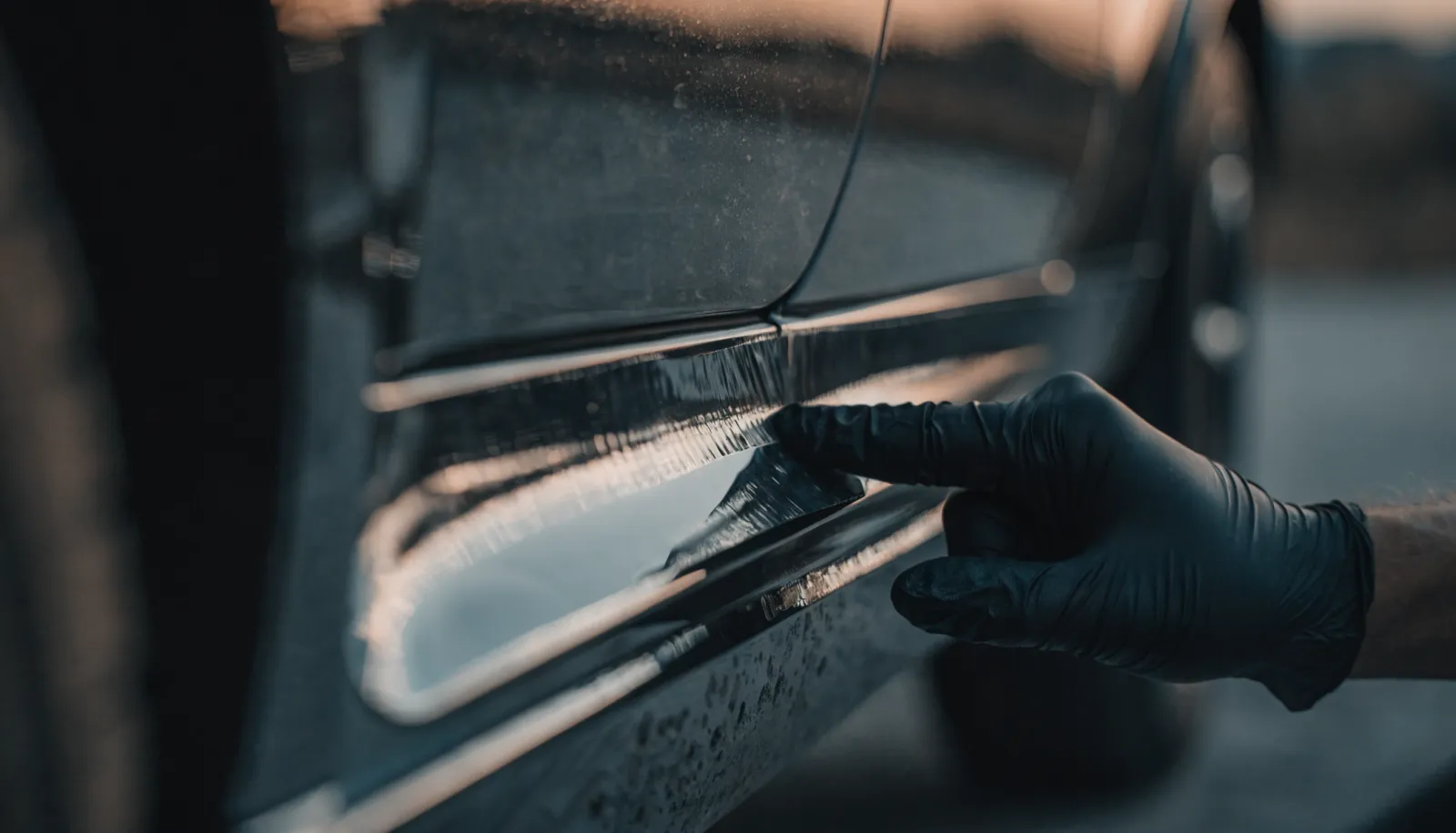
The lower body is not the easiest place to install film, which is part of why it gets skipped. The rockers are long, often slightly curved, and run right up against panel gaps and trim. Wheel arches are tight radiuses where the film has to wrap and tuck cleanly. Getting full, lasting coverage means templating the pieces to the panel shapes, relaxing the film with heat to conform it to the curves, and tucking edges out of sight wherever the geometry allows so there is no exposed edge for road grime to lift.
It also means the panels have to be genuinely clean first. The lower body collects embedded grit and road film that a normal wash leaves behind, and film laid over contamination traps it against the paint. Proper prep means a thorough wash, decontamination, and a clean surface before any film goes down. We do this work in our climate-controlled bay, which matters for the lower body specifically: these panels are the dirtiest on the car and the most prone to picking up contamination during install, so a controlled, clean environment makes a real difference to how well the film bonds and lasts.
Done right, the result is a lower body that stays smooth and glossy through years of highway miles, with the road-rash absorbed by a layer you cannot see and can replace when it has earned its retirement.
Closing
The paint behind your wheels and along the bottom of your doors takes a constant low blast of road debris that the front of the car never sees, and the pitting it causes is one of the harder, costlier things to fix after the fact. Protecting the rocker panels and lower doors with film, whether just the worst spots or the full road-rash band, defends paint that is otherwise expensive to recover and that buyers inspect closely. If you want to look at lower-body protection for your vehicle, especially if you put on highway miles, call EuroLuxe at (936) 292-6056. The shop is at 11701 Holderrieth Rd in Tomball, and we will give you an honest read on what your specific car needs and where the film does the most good.