How to keep your car's paint looking sharp between details
Most vehicle owners understand that paint correction and protective coatings are professional services. What gets less attention is what happens in the weeks and months between those appointments. That gap is where the majority of paint damage originates — not from one catastrophic event, but from accumulated small decisions: the wrong wash method, skipping a rinse when it should not be skipped, or letting a contaminant sit longer than it should. If your car carries a ceramic coating or paint protection film, these habits determine whether that investment delivers its full service life. If your car has no protection layer yet, they determine how much corrective work you will need before one can be applied.
The good news is that maintaining paint between professional visits does not require expensive equipment or hours of weekend labor. It requires understanding a short list of cause-and-effect relationships, then building habits around them. What follows is a practical framework for North Houston vehicle owners — accounting for our specific climate, road conditions, and the kind of contamination the area produces year-round.
Why between-detail care matters more than most owners realize
Professional detailing addresses the damage that has already occurred. Paint correction removes oxidation, swirl marks, and scratches from the clear coat through controlled abrasion. It restores the surface to a workable baseline. But correction does not prevent the next round of damage from beginning the moment the car leaves the shop. That prevention falls entirely on what you do — and do not do — in the meantime.
Here in the Houston metro, a few environmental factors accelerate paint deterioration more than they would in cooler, drier climates. UV intensity in a Texas summer is significant enough to degrade unprotected clear coat over a single season of daily exposure. Pollen falls in heavy volumes from late winter through spring and, when it mixes with morning dew and then dries in direct sun, it leaves an acidic residue that etches into clear coat. Iron particles from brake dust and rail fallout are constantly settling on horizontal surfaces. Bug splatter on the front end contains enzymes that begin breaking down clear coat within hours in summer heat. None of this is dramatic. All of it compounds.
Choose a wash method that does not introduce new damage
The single most common source of swirl marks and fine scratches is the wash process itself. Automatic tunnel washes with rotating brushes are the most obvious offender — the bristles trap grit from previous vehicles and drag it across your paint at speed. Even touchless tunnels rely on high-alkalinity chemistry that strips any wax or sealant you have applied and over time degrades ceramic coatings more quickly than hand washing does.
The two-bucket hand wash method is the practical standard for anyone who cares about their paint. One bucket holds your shampoo solution, the other holds clean rinse water. Your wash mitt goes into the rinse bucket before returning to the soap bucket, which prevents grit from being reintroduced to the paint surface. Work top to bottom, panel by panel. The roof, hood, and trunk get the cleanest mitt passes. The lower rocker panels and wheel wells — the dirtiest surfaces — get washed last.
A foam cannon or foam gun pre-soak before you touch the paint at all is worth considering if you wash your own car regularly. It lubricates and loosens surface contamination before physical contact begins, which reduces the scratch risk from the mitt pass considerably. Pre-soaking is not a replacement for hand washing, but it meaningfully reduces the work your mitt has to do against stuck-on grime.
Rinse and dry correctly — both steps carry more risk than most owners expect
Rinsing matters because residual soap left to dry in direct sun will water-spot and leave alkaline deposits on the surface. A thorough rinse from top to bottom, including door jambs, fuel door recesses, and panel gaps, prevents that. If you are in a hurry and think skipping a complete rinse saves time, it does not — it creates cleanup work later.
Drying is where paint gets scratched more often than most owners realize. Letting the car air-dry is not neutral: it leaves water spots, particularly in our area where municipal water is moderately hard. Chamois cloths trap grit and drag it across the surface. The correct tool is a clean, plush microfiber drying towel, ideally two of them — one to do the bulk absorption and one for a final wipe. Pat or drag lightly; do not apply pressure. If your car has a ceramic coating, a leaf blower or dedicated car dryer on a low heat setting eliminates contact drying almost entirely and is worth the investment.
Address contamination before it bonds to the surface
Bird droppings, tree sap, and bug splatter share one important characteristic: the longer they sit, the harder they are to remove without damaging the paint beneath them. Bird droppings are particularly corrosive — the uric acid in them can etch an unprotected clear coat in a matter of hours during a hot Texas afternoon. With a ceramic coating, you have more time before etching begins, but you do not have unlimited time.
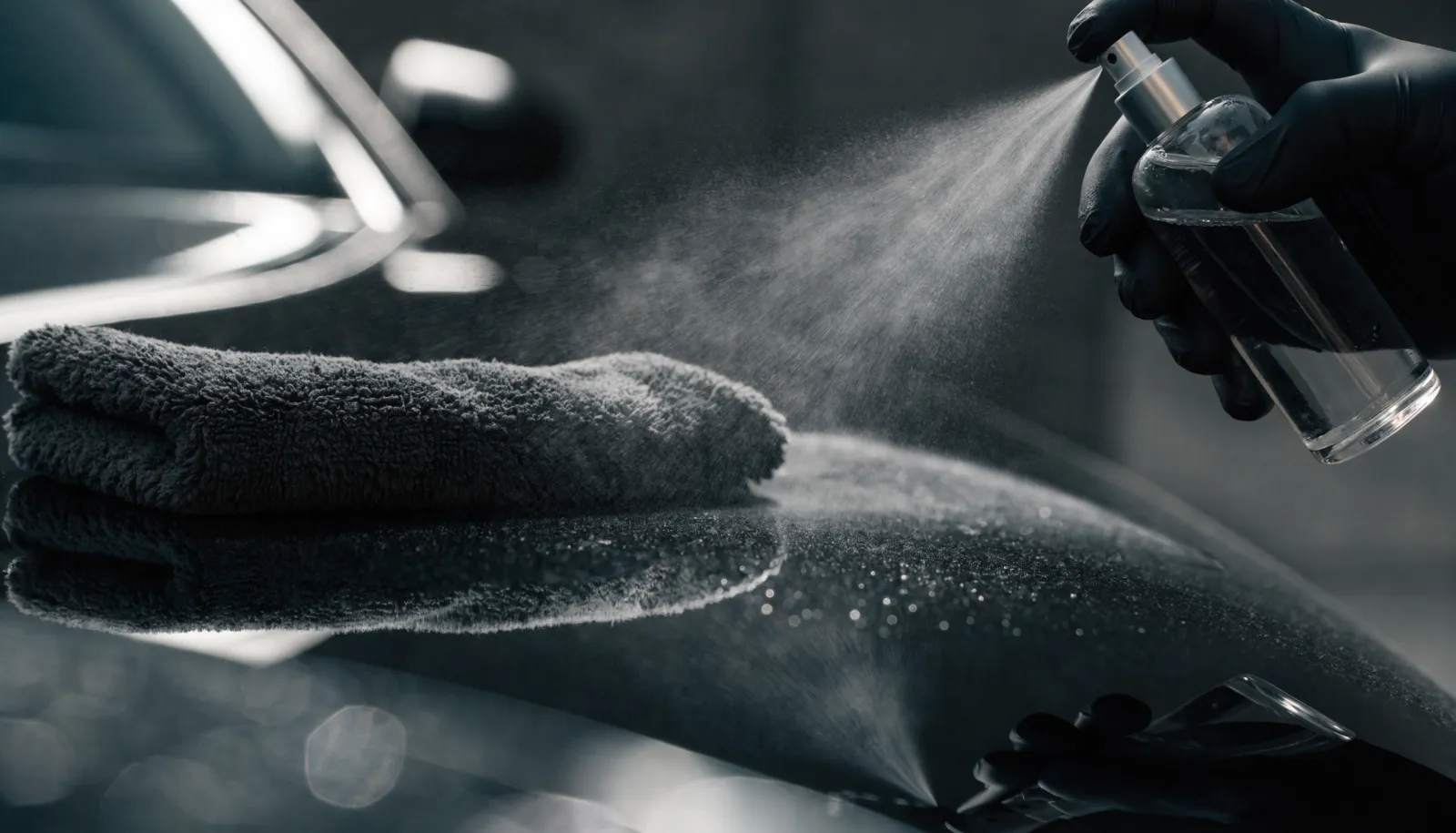
Keep a quick detailer spray and a clean microfiber in the vehicle. When you notice a fresh droppings hit, a bug splatter accumulation, or a tree sap drop while you are parked, address it then rather than waiting for your next wash day. Mist the area, let it dwell for thirty seconds to hydrate and loosen the contamination, and lift it gently with the microfiber. Do not wipe dry contamination — you will scratch the paint.
For iron fallout, which you cannot see accumulating, a pH-neutral iron decontamination spray used once every few months will chemically dissolve embedded iron particles without abrasion. If you notice a purple or reddish color change on body panels when you apply the spray, iron contamination is present and was already causing oxidation at the particle level.
What to use — and what to avoid — between professional visits
If your vehicle does not carry a ceramic coating or paint protection film, a quality spray sealant applied after each wash provides a thin sacrificial layer between contaminants and the clear coat. It is not a substitute for professional protection, but it gives the paint something to surrender before the clear coat does. Products based on SiO2 (silicon dioxide) chemistry offer better durability than traditional carnauba wax spray and are widely available.
If your car does carry a ceramic coating, check with whoever installed it before applying any additional product on top. Some topcoat boosters are formulated to work with the coating chemistry and extend its hydrophobic behavior between maintenance details. Others can interfere with the coating’s bond or leave a residue that dulls the gloss. Gyeon, the ceramic brand we use at EuroLuxe, has a maintenance line designed for exactly this purpose.
What to avoid: any product containing harsh abrasives, high-pH or high-alkalinity cleaners, or silicone-based dressings on painted surfaces. Tire shine products that are oil-based and overspray onto paint create a surface that attracts dust and contamination faster than untreated paint. If you use tire dressing, mask the surrounding painted surfaces or apply carefully and wipe any overspray immediately.
Build a realistic schedule for North Houston conditions
A practical maintenance schedule for a daily driver in our area looks like this: a full hand wash every one to two weeks during pollen season (February through April) and after heavy rain events, which deposit road contamination on paint as they dry. During summer, wash frequency can drop slightly if the car is garage-kept, but any vehicle parked outdoors in Houston summer heat should be rinsed at a minimum once a week to clear pollen, dust, and any organic contamination that has settled.
Every three to four months, do a decontamination wash — a clay bar or clay mitt pass after the shampoo wash to pull bonded contamination that regular washing will not remove. This step is especially important before applying any sealant or booster product, because bonded contaminants trapped under a new product layer create the same surface-feel problems as they would on bare paint.
Once a year, or before any major paint protection service, have the paint professionally evaluated. Small areas of clear coat damage that are not yet visible in normal lighting will show up under inspection lighting, and catching them early means a single-stage correction rather than multi-stage work.
If you have questions about where your paint currently stands or what protection level makes sense for your vehicle and driving habits, you can reach EuroLuxe Detailing directly at (936) 292-6056 or request a quote online.
Building the right habits between professional visits is not complicated, but it does require consistency. The vehicles that come through our bay in the best condition — the ones that need the least corrective work before a coating or film goes on — are almost always owned by people who wash carefully, address contamination quickly, and do not rely on a professional appointment to clean up avoidable damage. The habits outlined here are the difference between a car that looks progressively worse over time and one that holds its finish for years.