How to maintain a ceramic coating between professional services
A professional ceramic coating does a lot of the work for you. The hydrophobic layer repels water, resists contamination, and holds gloss far longer than wax or sealant ever could. But it is not maintenance-free. The coating still accumulates road film, iron fallout, and organic deposits over time, and the way you wash and care for the car in between professional visits determines how long that coating performs the way it should.
Most of the coating failures we see at EuroLuxe are not product failures. They are maintenance failures. Owners go through an automatic tunnel wash, use a dish soap they had under the sink, or let bird droppings sit for three days in August heat. None of that is catastrophic on bare paint either, but on a ceramic coating it accelerates the degradation of the sacrificial layer and shortens service intervals. The good news is that the correct habits are not complicated or expensive.
What follows is a practical breakdown of how to care for a Gyeon ceramic coating between professional inspections, written for owners who want the coating to perform at the level they paid for.
Washing frequency and technique matter more than product choice
For most North Houston drivers, washing every ten to fourteen days is the right target. In pollen season — roughly March through May — that may need to drop to once a week. Pollen is mildly acidic, and when it sits on a warm hood in humidity it bonds to the surface faster than most owners expect. The same applies to bird droppings and tree sap. Both should be addressed within hours, not days.
The two-bucket wash method is non-negotiable on a coated car. One bucket holds clean soapy water, the other holds rinse water. Dunk the mitt in soap, wash a panel, rinse the mitt in the second bucket before reloading. This keeps the abrasive grit you just removed from the paint out of your wash solution. It sounds like a small detail, but it is the primary way microscopic swirl marks accumulate on clear coats over months of washing.
Use a pH-neutral automotive shampoo. Gyeon recommends their own Bathe or Bathe+ for coated surfaces. Either keeps the coating intact and leaves a small boost of hydrophobic behavior after the rinse. Dish soap and most all-purpose cleaners are alkaline and will strip the coating’s top layer prematurely over repeated washes. This does not mean one accidental use ruins everything, but habitual use cuts coating longevity significantly.
Drying is where most owners introduce new scratches
After rinsing, do not let the car air dry. Hard water in the Tomball and Woodlands area has enough dissolved minerals to leave water spots that etch into the coating if left to evaporate under summer sun. Those spots can require professional correction to remove fully.
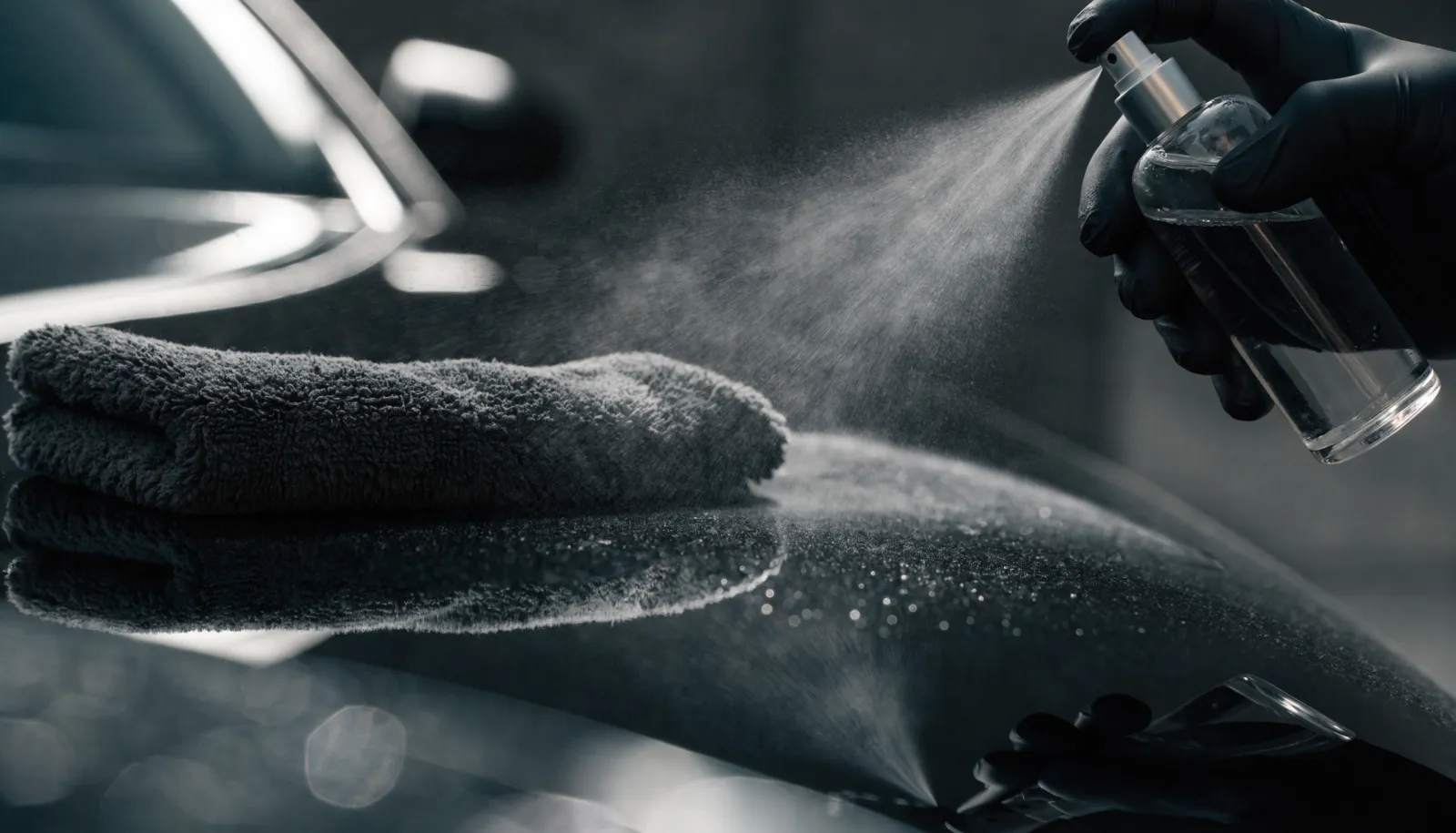
Use a clean, high-pile microfiber drying towel and a detailing spray or quick detailer as a lubricant while you dry. Lay the towel flat on the paint, do not drag it. Work panel by panel. If the car is still wet in spots, use a second towel rather than going over the same panel multiple times with a towel that is already saturated. A leaf blower or a dedicated car dryer on low heat is an excellent first step before towel drying because it removes most of the standing water without any contact at all.
The drying step is where single-stage paint corrections often originate. Owners dry correctly at first, then get complacent when the car is mostly clean and start wiping quickly. Consistent technique protects both the clear coat and the coating that sits on top of it.
What to avoid entirely
Automatic tunnel car washes are the single most damaging thing a coated car can encounter on a routine basis. The brushes and cloth strips used in most tunnels drag abrasive contamination across the paint at speed. A ceramic coating provides some resistance, but not enough to offset the swirl marks these washes introduce at scale. If you cannot hand wash and a touchless rinse-only wash is available, that is a better option. Touchless is imperfect — high-pressure detergents are often quite alkaline — but it avoids the mechanical abrasion that brushes cause.
Avoid waterless washes on anything other than lightly dusty paint. If the car has visible road grime, oil film, or insect debris, a waterless product does not provide enough lubrication to safely lift that contamination without scratching. Save waterless products for situations where the car is genuinely just dusty from sitting.
Do not apply wax or a non-compatible sealant on top of a ceramic coating. The product will not bond well to the ceramic surface, and the silicone content in some spray waxes can reduce the coating’s hydrophobic behavior rather than supplement it. If you want to add a maintenance layer, use a product specifically designed for coated vehicles. Gyeon makes a spray booster called Ceramic Detailer that is engineered to reactivate and supplement a cured Gyeon base coat.
Iron decontamination and annual inspections
Even a well-maintained coating accumulates iron fallout from brake dust and road debris. This contamination bonds to the coating surface and appears as brown or rust-colored speckling, often most visible on white and light-colored vehicles. It does not wash off with shampoo. An iron remover applied at decontamination service intervals — typically once or twice a year — dissolves these deposits chemically without the need for physical abrasion.
A clay bar or clay mitt can follow the iron treatment to remove any bonded organic or inorganic contamination the iron remover did not address. If you are not comfortable performing decontamination yourself, this is a service worth booking with a professional detailer who understands coated surfaces. Improper clay technique on a coated surface is better than none at all, but it is still possible to introduce light marring if the lubricant runs thin.
An annual inspection of the coating condition is also worth building into your calendar. A professional can check the coating’s hydrophobic performance, look for any areas where the coating has been degraded by chemical exposure or abrasion, and apply a booster layer where needed. This is less involved than a full coating service and costs significantly less, but it extends the overall life of the original application. More detail on what a ceramic coating application and ongoing service involves is available on our service page.
Handling problem contaminants before they become paint damage
Bird droppings, tree sap, and industrial fallout are the three most common sources of accelerated ceramic coating degradation in the North Houston area. The oaks and pines around Tomball, Magnolia, and The Woodlands deposit sap and pollen consistently from late winter into early summer. Parking under trees is a tradeoff many owners make, and the coating does provide meaningful additional resistance compared to bare paint — but it does not make contamination harmless.
For bird droppings, keep a spray bottle of diluted detail spray in the car. Saturate the deposit and let it soften for thirty seconds before gently lifting it with a clean microfiber. Do not rub dry. For sap, isopropyl alcohol at around 70 percent concentration on a folded microfiber works well on fresh deposits. Hardened sap may require a dedicated sap remover. In either case, follow up with a quick detailer or spray booster designed for coated surfaces to restore the surface uniformity.
When professional correction is needed
No amount of careful washing prevents all swirl marks over a multi-year period. If you notice the coating’s water-beading performance has declined noticeably, or if the paint looks hazy rather than reflective under direct sunlight, the coating likely needs either a surface decontamination and booster or a professional inspection to assess whether the base coat is still intact. In some cases, light paint correction is performed before a booster application to bring gloss back to the baseline level.
The threshold for deciding between a booster and a full recoat depends on the coating system, how the car has been maintained, and how the surface tests under a gloss meter. That assessment requires hands-on inspection, not a phone call.
If you have questions about the current condition of your coating or want to schedule an annual inspection, reach out to EuroLuxe Detailing at (936) 292-6056. Maintaining a ceramic coating correctly over its full service life is straightforward once the habits are in place. Most of the work is just consistency.