
How to protect your car's paint between wash days
Most paint damage on daily drivers does not happen at the car wash or in a parking lot collision. It accumulates between washes — during the days or weeks when a vehicle sits outside, gets driven through construction zones, collects bird droppings, or gets wiped down with whatever rag is within reach. The correction work that follows is preventable in most cases, and prevention costs far less than a polishing session.
North Houston’s climate makes this harder than average. The combination of intense UV exposure, pollen seasons that coat everything in a fine film, and afternoon storms that leave mineral-laden water spots means that a car sitting in a Tomball or Woodlands driveway is absorbing more environmental punishment than many owners realize. Understanding what is happening to the surface between washes is the first step toward stopping it.
This is not about obsessing over your paint. It is about building a handful of habits that keep your clear coat intact and delay the point at which paint correction becomes necessary.
What actually damages paint between washes
Bird droppings are the most aggressive short-term threat most vehicles face. The uric acid in bird waste begins attacking clear coat within hours in summer heat. In direct Texas sun, that window shortens. Letting a dropping sit overnight is long enough to etch the surface, and the damage is frequently below the level of paintwork that a spray detailer can address. It requires compounding to level.
Tree sap is slower but similarly corrosive. Vehicles parked under live oaks or pines accumulate sap that hardens quickly in heat. Once hardened, removing it safely requires a dedicated solvent — trying to scrub it off dry will cause marring before the sap releases. Parking position matters more than most owners consider.
Pollen presents a different problem. The waxy outer layer of pollen grains bonds to paint surfaces, particularly when wet. When pollen accumulates and then gets rained on, it forms a slurry that can stain lighter paint colors and compromise wax or sealant layers if left long enough. This is a recurring problem in spring across the Woodlands, Spring, and Conroe areas where tree density is high.
Quick-detailer spray: what it is and what it is not
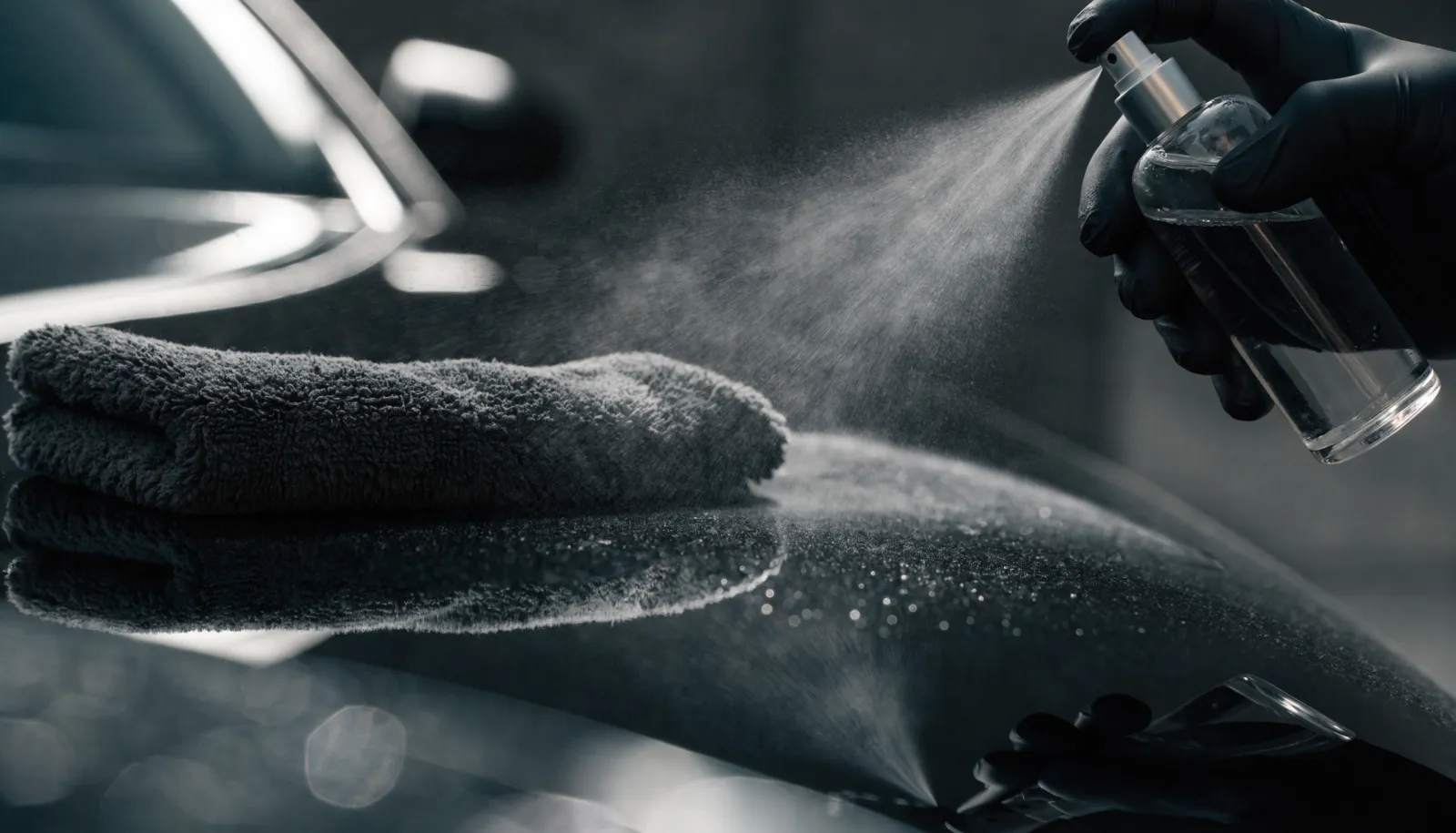
A quality spray detailer or waterless quick detailer can address light dust, fingerprints, and fresh contamination without a full wash. These products contain lubricating polymers that allow a microfiber towel to glide over the surface without dragging grit into the clear coat. Used correctly, they are a legitimate tool for maintaining paint between washes.
The mistake is using them when there is too much contamination present. If the car has visible road grime, fine sand, or dried pollen, a waterless approach will scratch the surface. The lubricant in a spray detailer is not enough to protect against particles of that size and volume. When in doubt, rinse the car first. Even a gentle rinse with a hose removes the particles that would otherwise become abrasives under a towel.
Cloth selection matters as much as product selection. A clean, plush microfiber towel — 350 gsm or higher pile — is what belongs on your paint. Terry cloth, paper towels, old t-shirts, and bath towels will induce swirl marks. Keep dedicated towels for paint work, wash them separately without fabric softener, and replace them when they develop snags or show wear.
How a protective coating changes the equation
Vehicles with a professional-grade ceramic coating have a measurable advantage here. The hydrophobic surface causes water, bird droppings, pollen, and sap to bond less aggressively to the paint. Contamination that would etch bare clear coat in hours may sit on a coated surface without penetrating during that same window. It does not make the vehicle immune — you still need to address contamination promptly — but it extends the margin significantly.
This is one of the practical, everyday reasons to consider ceramic coating beyond the gloss benefit. For a daily driver spending eight hours outside in a parking lot, the difference between a coated and uncoated surface in terms of contamination adhesion and ease of removal is real. Gyeon’s professional formulations, which EuroLuxe applies in a climate-controlled bay, are engineered specifically for high-heat, high-humidity environments where curing conditions matter.
Paint protection film provides a different layer of defense — the physical barrier is what stops rock chips, minor abrasion, and certain chemical threats that coatings alone cannot address. The two work differently and serve different purposes, though they complement each other on vehicles that warrant both.
Parking and positioning decisions
Where you park affects how much maintenance work your paint generates. Covered parking eliminates UV exposure, bird activity, and rain-induced water spots in one decision. If covered parking is not available, directional choices still matter. Parking away from trees reduces sap and pollen exposure. Parking with the hood facing east puts the longest-sitting surface in afternoon shade rather than direct western sun.
Garage storage, even partial, makes a significant difference in paint longevity. A vehicle that is garaged overnight and parked in shade during the day accumulates UV damage at a fraction of the rate of one sitting in open sun full-time. UV degradation is cumulative and eventually causes clear coat failure — the kind of oxidation that goes beyond what paint correction can address.
Car covers are a reasonable option for vehicles that sit for extended periods, but they carry their own risks if used improperly. A cover applied over a dusty surface traps abrasive particles against the paint. If you use a cover, the surface should be clean before it goes on, and the cover itself should be cleaned regularly.
Building a realistic between-wash routine
The goal is not perfection — it is removing active threats before they cause lasting damage. A practical routine for a North Houston daily driver looks like this: inspect the vehicle each morning for bird droppings, sap, and obvious contamination. Address those with a clean spray detailer and a dedicated microfiber towel before the sun has time to cook them in. Rinse the car with a hose midweek if pollen or grime has accumulated. Run a proper two-bucket hand wash or seek a touchless rinse station weekly or every ten to fourteen days depending on conditions.
Between professional services, a quarterly application of a spray ceramic booster or SiO2-based spray sealant extends the protection layer on both coated and uncoated vehicles. These are not substitutes for a professional coating, but they provide a measurable improvement over doing nothing.
If you are uncertain about the current condition of your paint — whether it needs correction before any protection is applied, or whether the surface contamination you are seeing is etching, oxidation, or something else — a consultation with Caleb and the team at EuroLuxe is the straightforward next step. Reach us at (936) 292-6056, or stop by 11701 Holderrieth Rd in Tomball.
Paint condition deteriorates incrementally, and most of the damage happens in the gaps between appointments. The habits you build between washes determine how much correction work eventually becomes necessary — and whether the investment you made in protection continues to perform the way it was designed to.