
How to Protect Matte and Satin Paint Finishes
Matte Paint Looks Incredible — Until You Ruin It
Matte and satin finishes have exploded in popularity. BMW’s Frozen line, Mercedes designo Magno, Hyundai’s Matte Gray, and Ford’s antimatter blue — factory matte options are everywhere. Aftermarket matte wraps and custom paint jobs are equally common. The look is undeniably sharp.
The problem is that most conventional car care products and techniques are designed for gloss paint and will damage or alter a matte finish. One wrong product, one trip through a car wash with brushes, one well-intentioned wax application — and you’ve permanently changed the appearance of a finish that costs thousands more than standard paint.
Why Matte Paint Is Different
Gloss paint gets its shine from a smooth, flat clear coat that reflects light uniformly. Matte and satin finishes achieve their look through a clear coat with intentional microscopic texture. This texture scatters light instead of reflecting it, creating that soft, non-reflective appearance.
That textured surface is what makes matte paint both visually striking and extremely delicate. Anything that smooths out, fills in, or alters that microscopic texture changes the finish. And once you’ve added gloss to a matte surface, you can’t take it back without repainting.
What You Cannot Use on Matte Paint
No Wax or Traditional Sealant
Waxes and most paint sealants are designed to fill micro-imperfections and create a smooth, glossy surface. That’s exactly what you don’t want on matte paint. Applying carnauba wax or a standard polymer sealant will create shiny spots and uneven gloss patches across the surface. The result looks terrible and is difficult to reverse.
No Polish or Compound
Polishing compounds work by removing a thin layer of clear coat through abrasion, leveling the surface to eliminate scratches and swirl marks. On gloss paint, this restores shine. On matte paint, it removes the textured clear coat and creates permanent glossy spots.
This means paint correction in the traditional sense is not possible on matte finishes. You cannot buff out a scratch on matte paint the way you would on gloss. If the clear coat is damaged, the only fix is repainting that panel — which on a factory matte finish can run $2,000 to $5,000 per panel.
No Glaze or Filling Products
Glazes, fillers, and all-in-one products that “clean, polish, and protect” in one step are off-limits. They all deposit material that smooths the surface texture.
No Automatic Car Washes
Brush washes physically smooth and gloss up matte finishes. Touchless washes often use harsh alkaline or acidic chemicals that can damage the matte clear coat over time. Neither is safe for non-gloss finishes.
How to Properly Wash Matte Paint
Hand washing is the only safe method. Here’s the protocol:
- Pre-rinse thoroughly with a pressure washer or hose to remove loose debris. Contact on a dirty matte surface creates scratches you can’t polish out.
- Use a pH-neutral, wax-free car soap. Products like Dr. Beasley’s Matte Body Wash or Gyeon Bathe are formulated for matte surfaces. Standard car soaps often contain gloss enhancers that will alter the finish.
- Two-bucket method with a grit guard in the rinse bucket. Use a soft microfiber wash mitt.
- Wash in straight lines, not circles. Matte finishes show wash-induced marring differently than gloss — circular swirls create visible pattern distortion.
- Dry with a forced air blower if possible. If towel drying, use a plush microfiber with a matte-specific drying aid. Never use a chamois.
Matte-Specific Ceramic Coating
Standard ceramic coatings are formulated to enhance gloss. Applying a regular coating to matte paint will increase the sheen and shift the finish toward satin or semi-gloss. That’s not what you want.
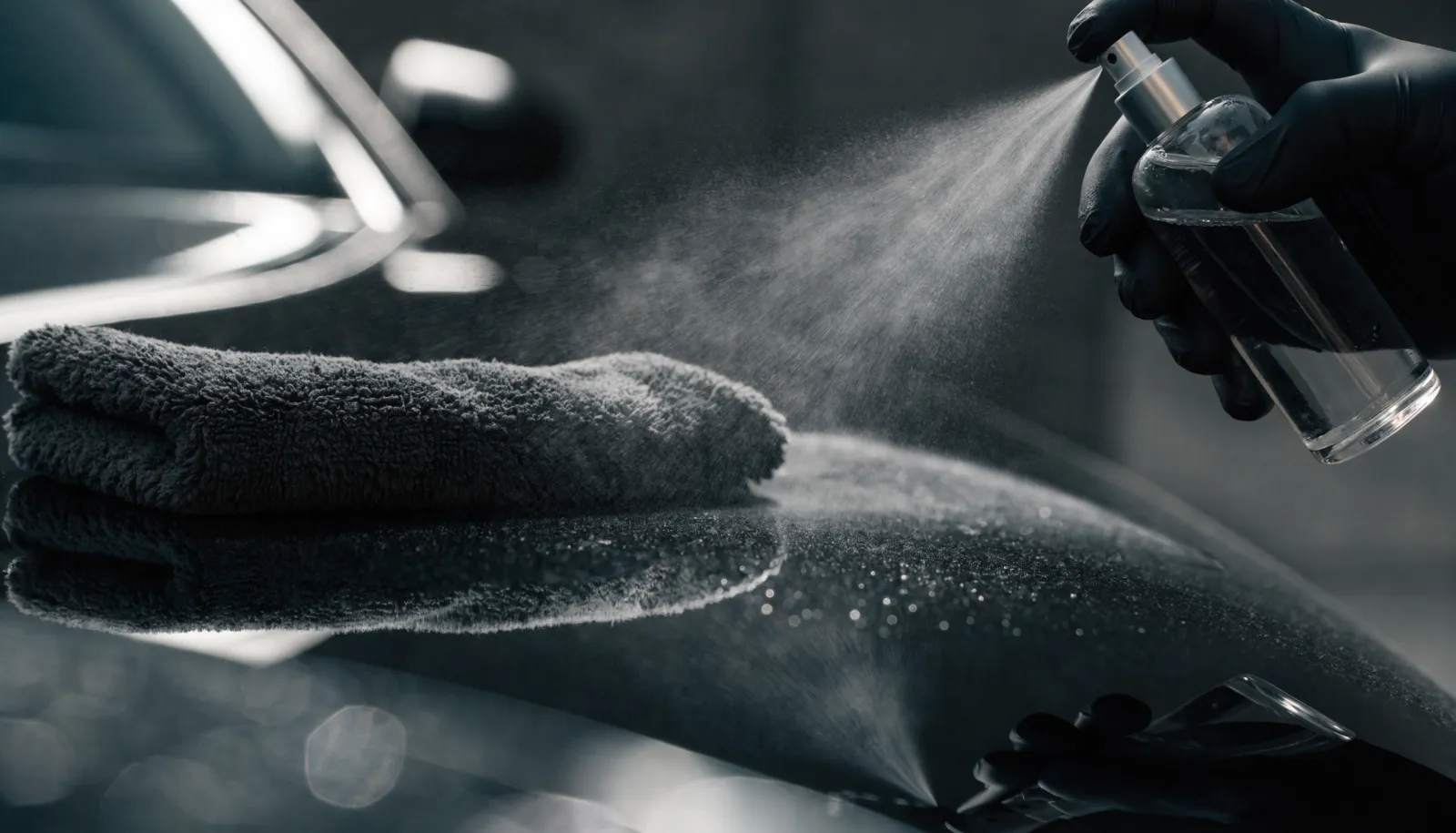
Matte-specific ceramic coatings exist and are the best protection available for these finishes. Products like Dr. Beasley’s Matte Coating, GYEON Matte, and other matte-specific professional formulations are designed to bond to the surface without altering the texture or light-scattering properties.
A properly applied matte ceramic coating provides:
- Chemical resistance against bird droppings, bug splatter, tree sap, and other acidic contaminants that can stain matte paint
- Hydrophobic properties that cause water to bead and sheet off, reducing water spot risk
- Easier cleaning because contaminants don’t bond as aggressively
- UV protection that helps maintain color depth without fading
This is arguably more important on matte paint than on gloss paint. Since you can’t polish out stains or correct damage, preventing contamination from ever reaching the clear coat is the only real defense.
PPF for Matte Finishes
Paint protection film is available in matte and satin finishes that match factory matte paint almost perfectly. Matte PPF protects against rock chips, scratches, and physical impact — all damage that would require a full repaint on unprotected matte paint.
The combination of matte PPF on high-impact areas (front bumper, hood, fenders, mirrors, rocker panels) and a matte-specific ceramic coating on the rest of the vehicle is the most comprehensive protection possible for non-gloss finishes.
One important note: some PPF products can shift the finish slightly. The matte or satin appearance may look marginally different on filmed panels versus unfilmed panels. A quality installer will show you samples on your specific paint color before committing to ensure the match is acceptable.
The Cost of Matte Ownership
Here’s the reality. Matte paint costs more to buy, more to maintain, and dramatically more to repair than standard gloss. A single scratch that would cost $150 to polish out on gloss paint costs $2,000 or more to fix on matte because the panel needs to be repainted.
That math makes protection not just a nice-to-have but a financial necessity. A matte ceramic coating runs slightly more than a standard coating, and matte PPF is comparable in price to gloss PPF. Both are a fraction of the cost of a single panel respray.
If you own a vehicle with a matte or satin finish — factory or aftermarket — proper protection isn’t optional. Get a quote for matte-specific ceramic coating and PPF to keep that finish looking the way it was designed to.