
How to store a car long term without wrecking the paint
Most vehicle owners think about protection when they are driving. What happens between drives rarely gets the same attention. But parking a car for thirty, sixty, or ninety days without preparation can cause more cosmetic damage than a year of daily commuting. Moisture, trapped contaminants, UV exposure through windows, and even the car cover itself can leave marks on paint and clear coat that require machine correction to fix.
This is especially relevant in North Houston. The region sits in a humid subtropical climate where temperature swings, pollen loads, and storm activity don’t follow a predictable calendar. Whether you are putting away a seasonal sports car, storing a vehicle while traveling for work, or simply parking a second car for the summer, the steps you take beforehand determine what you come back to.
The guidance below applies to any vehicle going into storage for more than three to four weeks. The longer the storage period, the more each step matters.
Start with a thorough wash and decontamination
Never put a car into storage dirty. Contaminants that look harmless on the surface — road film, industrial fallout, bird droppings, tree sap residue, pollen — become chemically active over time when they sit against clear coat in a warm, humid space. What wipes off easily after a week may require compound work after a month.
Wash the full exterior using a pH-neutral car wash soap and a clean wash mitt. Pay particular attention to lower panels, wheel wells, door jambs, and the area behind the mirrors — places where grime accumulates but gets skipped in routine washes. After the wash, run a clay bar or iron decontamination spray over painted surfaces to pull bonded contamination that soap alone won’t remove.
Dry the vehicle completely, including door seams, trunk seals, and the area around the fuel door. Standing water trapped in those gaps will wick into rubber seals and can leave staining on adjacent painted panels.
Apply a protection layer before you park
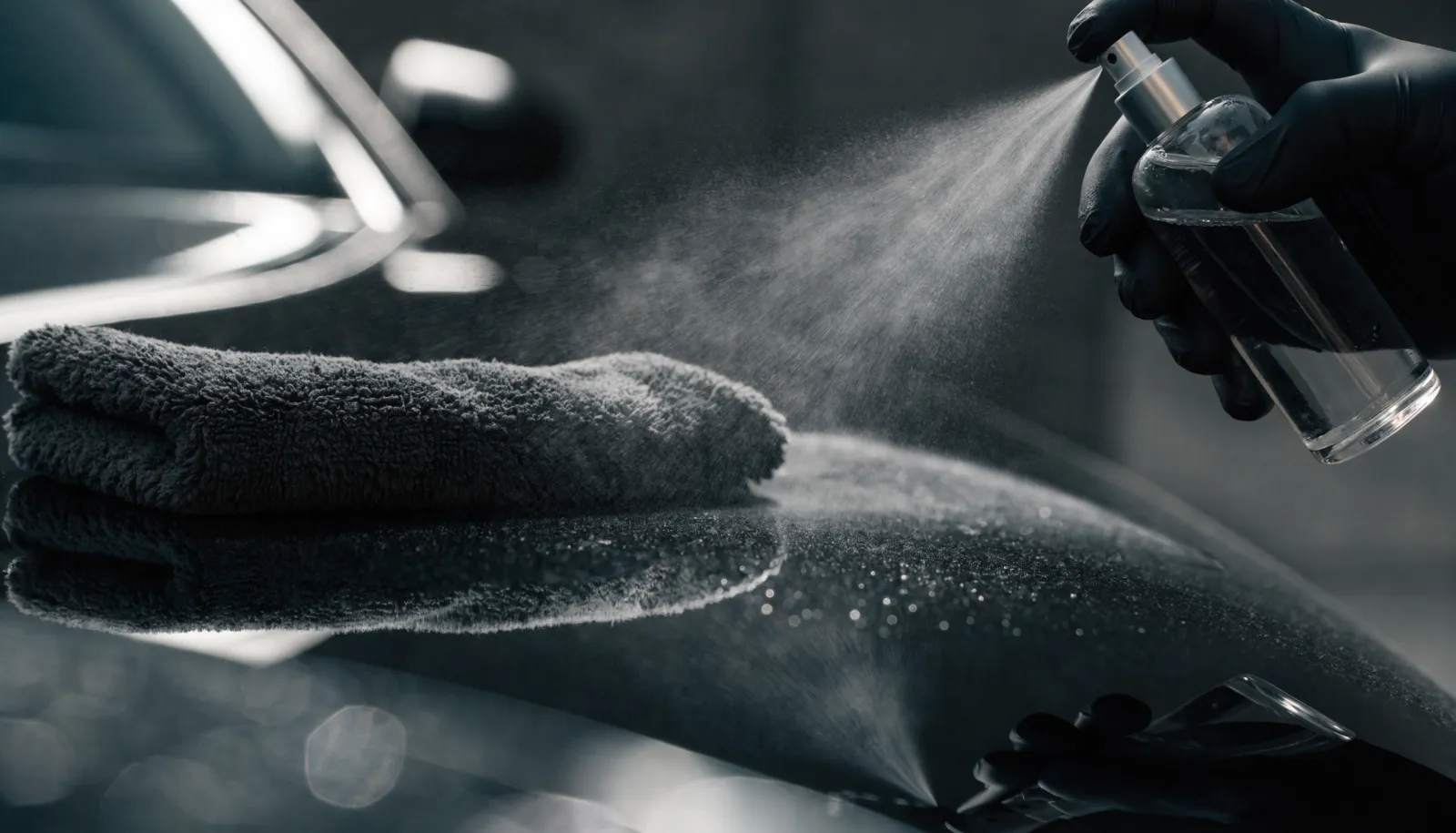
A clean surface without protection is still vulnerable. Paint sealant, carnauba wax, or a ceramic coating gives the clear coat a sacrificial layer that slows oxidation, repels moisture, and reduces the adhesion of any contaminants that settle during storage. If your vehicle already carries a ceramic coating, inspect the hydrophobic behavior before storage — water should sheet cleanly. If it has degraded, a maintenance boost product can restore the barrier.
For vehicles that don’t yet have a ceramic coating, this is a reasonable time to consider one. The coating cures during the storage period, and when you pull the car out, you are starting with a surface that has meaningful long-term protection already in place rather than wax that will need to be reapplied every few months.
Wheels and brake rotors also deserve attention. Clean the wheels thoroughly before storage, and apply a wheel coating or sealant. Rotors will develop a thin surface rust layer within days of parking — that is normal and clears with light braking — but contamination left on wheel faces can etch the finish over months.
Choose the right cover and environment
Where you store the vehicle matters as much as how you prepare it. An enclosed, climate-controlled garage is ideal. Outdoor storage under a carport or open storage exposes the vehicle to UV, pollen, bird activity, and temperature cycling that accelerates surface degradation regardless of what protection layer you applied.
If you use a car cover, use one that is designed for the environment. Outdoor covers need to be waterproof and UV-resistant. Indoor covers should be breathable — a non-breathable cover traps moisture against the paint, which is precisely the condition you are trying to avoid. Verify the cover fits the vehicle properly. Loose covers shift in air currents, and the fabric rubbing against paint creates fine scratches that show up clearly on darker colors.
Never put a cover on a car that is not fully clean and dry. Anything on the surface becomes an abrasive between the cover and the paint.
Protect glass and rubber seals
Glass is often overlooked in storage prep. UV exposure through an unprotected windshield and side glass can fade interior surfaces, particularly dashboards and leather. Window tint with UV rejection blocks the bulk of that radiation — if your vehicle doesn’t have window tinting, parking with a reflective windshield sunshade is the minimum step.
Rubber seals on doors, the trunk, and the windshield perimeter dry out and crack when left in warm storage without treatment. A silicone-based rubber protectant applied to all seals before storage keeps them flexible and maintains their sealing function. Degraded seals are one of the more common causes of interior moisture intrusion during long storage periods.
For vehicles stored in direct sun or in a very warm space, a windshield cover or dash mat is worth adding as a second layer of protection.
The inspection when you return
Before you wash the car for the first time after storage, do a slow walk-around in good light. Look for water spots on the glass and painted surfaces — these form when moisture evaporates and leaves mineral deposits behind. Check trim and rubber pieces for any signs of cracking or surface lift. Run your hand along lower panels to feel for contamination that may have settled during storage.
If the vehicle was stored outdoors, expect to find tree sap, pollen residue, or oxidation that wasn’t there when you parked. Depending on severity, that may call for a decontamination wash, clay bar treatment, or — in cases where the clear coat surface itself has dulled — a paint correction before any protection product goes back on. Trying to apply a coating or sealant over a degraded surface traps the damage rather than fixing it.
For questions about where your vehicle stands before or after storage, the team at EuroLuxe can be reached at (936) 292-6056. An honest assessment of what the paint needs takes less time than discovering the problem after the damage has progressed.
Storage prep is fundamentally the same discipline as everyday paint care — clean surfaces, physical protection, and an environment that doesn’t accelerate deterioration. The difference is that during storage, small neglected problems have weeks or months to compound without anyone noticing. Getting the prep right before you park means the vehicle comes back out in the same condition it went in.