
How to wash a car by hand without scratching the paint
Most paint damage does not happen on the road. It happens in the driveway on a Sunday morning when someone grabs a gas-station sponge and a bucket of soapy water and calls it a wash. The scratches and swirl marks that make dark paint look dull under direct sunlight are almost always the result of washing, not driving. That is not an argument against washing your car — regular washing is the single most important thing you can do to preserve a finish. It is an argument for understanding what goes wrong and building a process that avoids those mistakes.
This guide covers hand washing from the ground up: the tools worth buying, the ones to avoid, the correct order of operations, and the variables specific to washing in North Houston’s heat and humidity. If your vehicle has a ceramic coating or paint protection film, some of these steps carry additional weight, and those distinctions are noted where they apply.
The tools that determine your results
The two pieces of equipment that have the most impact on wash quality are the wash mitt and the drying towel. A quality microfiber or chenille wash mitt has long, soft fibers that lift and hold grit away from the paint surface as you work. A foam sponge, by contrast, pushes grit across the surface, acting like sandpaper with each pass. Throw the sponge away. A pair of microfiber wash mitts — one for the upper panels and one for the lower panels and wheels — costs less than twenty dollars and eliminates a major source of scratches.
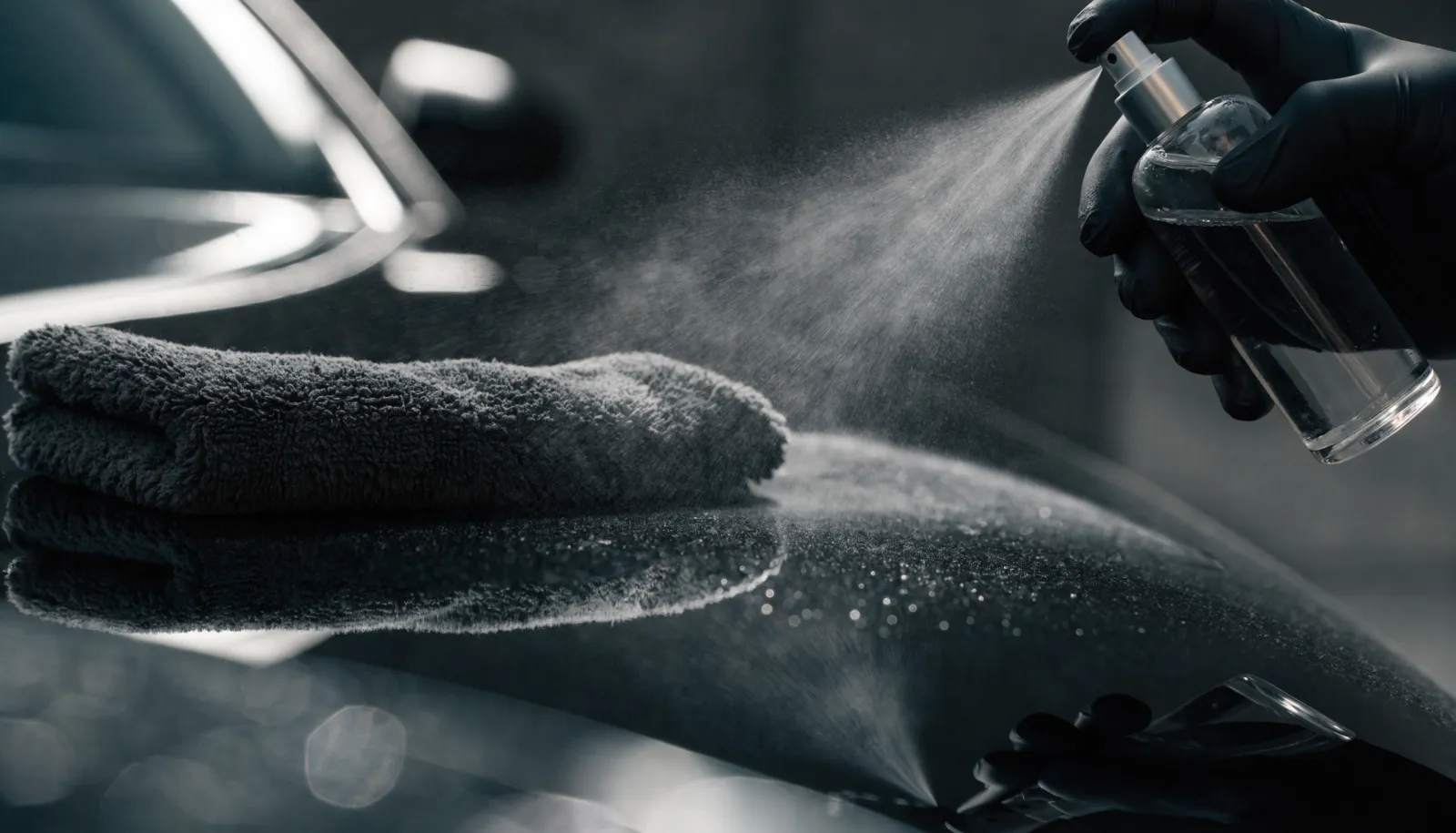
For drying, a large waffle-weave or plush microfiber drying towel is the standard tool. Chamois cloths, whether synthetic or natural, require you to drag the towel across the surface under pressure, which introduces scratches. A microfiber towel can be laid onto the panel and drawn across it with almost no downward pressure, which is the goal. A dedicated drying aid — a spray detailer or quick detailer applied to the panel before the final wipe — further reduces friction and leaves behind minor lubrication that protects the surface.
Two dedicated wash buckets with grit guards complete the basic setup. The grit guard sits at the bottom of the rinse bucket and prevents dirt from recirculating back onto the mitt when you rinse it between panels. Without grit guards, the rinse bucket becomes a container of progressively contaminated water that you re-apply to the paint on every pass.
Choosing and using the right soap
Dish soap is frequently mentioned as a cheap substitute for car wash soap. It works — if the goal is stripping wax, sealant, or ceramic coating toppers from the paint. Dish soap is formulated to cut grease and surface-applied products, which is exactly what it will do to any protection layer you have on the car. Use a dedicated pH-neutral car wash shampoo. There are products available at every price point, and even the budget options from reputable brands perform well for routine washing.
For vehicles protected with a ceramic coating, look for a shampoo that is labeled safe for coated vehicles or specifically listed as pH neutral. Some shampoos include gloss-enhancing or maintenance-coating additives that reinforce the hydrophobic layer between full decontamination washes. These are worth using, but they are not a substitute for a proper maintenance schedule — they are a supplement to it.
Foam cannons and foam guns attached to a garden hose apply a thick layer of pre-wash foam that softens and suspends loose dirt before the mitt ever touches the paint. This pre-soak phase is optional but genuinely useful, particularly on a vehicle that has accumulated road dust or pollen. It reduces the abrasive load on the paint during the contact wash, which is the phase where most damage occurs.
Order of operations matters more than most owners realize
A professional detailer washes a vehicle in a specific sequence because the order reduces cross-contamination and protects the cleaner panels from dirty runoff. The general principle is to wash from the top down and to leave the dirtiest areas — typically the wheels, wheel wells, and lower rocker panels — for last or handle them separately at the start before you touch any body panels.
Wheels accumulate brake dust, iron fallout, road tar, and general grime at a concentration higher than any other part of the vehicle. If you wash the wheels with the same mitt you use on the paint, you are dragging that contamination across your hood and doors. Dedicate separate brushes and a separate mitt to wheels and tires, and rinse the wheels and wheel wells thoroughly before moving to the body panels.
Once the wheels are done, do a thorough pre-rinse of the entire vehicle with a hose or pressure washer. The goal is to remove loose dust, pollen, and debris before contact. In spring and early summer in the Tomball and Conroe area, pollen accumulation can be heavy enough that skipping this step and going straight to the mitt is a reliable way to induce fine scratches across the entire hood.
Work in sections from top to bottom: roof, glass, hood, trunk, upper doors, lower doors, bumpers, and rockers. Rinse each section before moving to the next. Reload the mitt from the clean bucket, rinse it in the grit-guard bucket, and return to the clean bucket each time. The two-bucket method is not complicated; it simply requires the habit.
Washing in Texas heat: the timing problem
The single biggest environmental mistake North Houston vehicle owners make when hand washing is doing it in direct afternoon sunlight on a hot day. Water and soap dry on the paint surface in seconds under those conditions, leaving behind water spots, soap residue, and mineral deposits that require significantly more work to remove than the original dirt. Some water spots, particularly those allowed to bake into clear coat in high summer heat, require paint correction to fully eliminate.
Wash in the early morning, in shade, or in the early evening after the surface has cooled. Before you start, touch the hood — if the metal is warm to the touch, give it time to cool. If you must wash in sunlight, work one panel at a time and rinse immediately without allowing any product to dwell on a hot surface.
Humidity affects drying as well. On days when the relative humidity is above eighty percent — a common condition in the Houston metro from late spring through summer — microfiber drying towels become saturated faster and move water less efficiently. Having two drying towels on hand and swapping when the first becomes wet allows you to finish the vehicle before the remaining moisture begins to spot.
After the wash: drying, inspection, and protection
After the final rinse, move efficiently. Lay the drying towel flat onto each panel and draw it across the surface with minimal pressure, using a spray detailer or quick detailer as a lubricant ahead of the towel. Fold or replace the towel frequently to present a clean surface to the paint. A forced-air blower — either a dedicated car dryer or a portable leaf blower — is useful for clearing water from mirrors, door jambs, trim gaps, and body character lines where towel drying cannot reach and standing water leads to spotting.
Once the car is dry, a ceramic coating will present its hydrophobic behavior clearly: water beads and sheets quickly, drying towel contact is minimal, and the surface feels smooth and slick under a clean microfiber. If you notice the beading behavior has become less pronounced or the surface feels less slick than it once did, the coating’s top layer may be depleted. A maintenance spray or coating booster applied to a clean, dry surface at this stage can extend the service interval. If the hydrophobic performance has degraded significantly across the whole vehicle, it may be time to discuss a refresh application.
For vehicles protected with paint protection film, hand washing is strongly preferred over automatic tunnels at every stage of ownership. The film edges and seams are vulnerable to high-pressure automated equipment, and the chemical washes used in many tunnel systems are not pH neutral. Hand washing with a proper mitt and a pH-safe shampoo extends the life of the film and preserves the clarity of the clear coat layer embedded in the film itself.
Sustaining the habit
A consistent two-week wash interval is a reasonable baseline for most vehicles in the North Houston area, where pollen, road construction fallout, and summer thunderstorms keep contamination loads high. Vehicles parked outdoors or driven on highways with heavy truck traffic may need weekly attention. The wash itself, done properly with the right tools, takes thirty to forty-five minutes and prevents the kind of cumulative paint degradation that eventually requires professional correction to undo.
If you have questions about what your vehicle’s protection package — whether that is a coating, film, or both — requires for long-term wash maintenance, the team at EuroLuxe Detailing in Tomball is reachable at (936) 292-6056 and can walk through product and interval recommendations specific to what is on your car.
A hand wash done right is not complicated, but it does require intention. The tools, the water temperature, the order of operations, the time of day — each of these variables is easy to manage once you know what to control for, and the cumulative effect on a paint finish over years of ownership is significant.